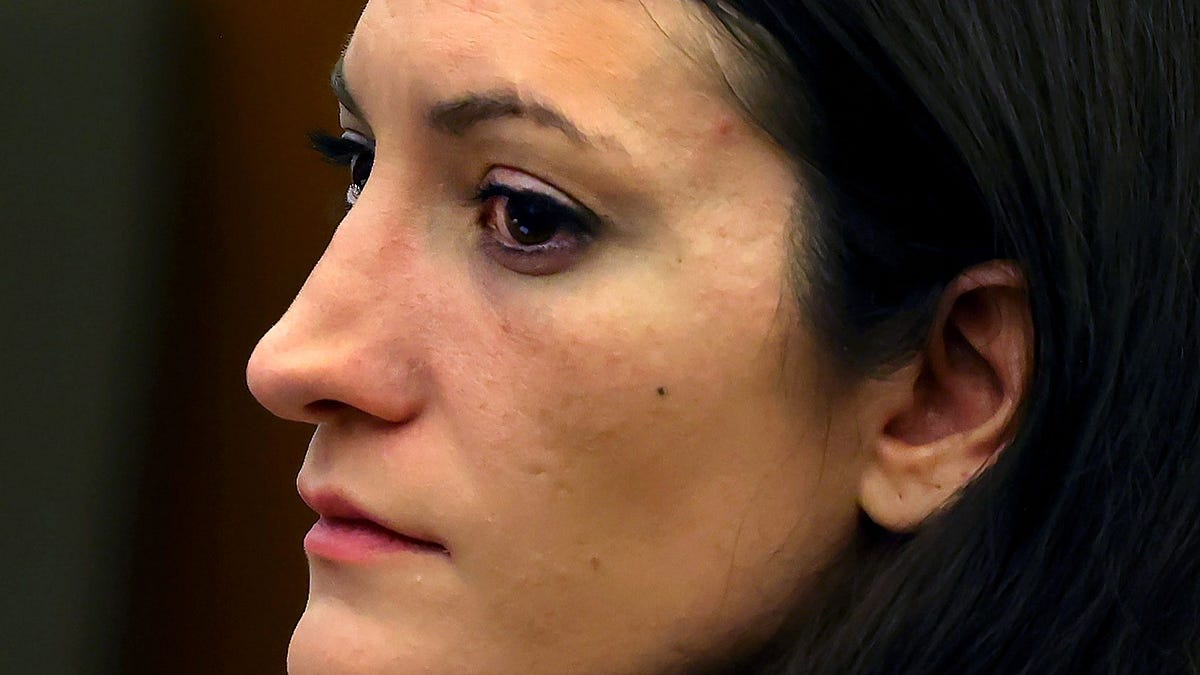
On Friday, the Lindsay Clancy trial ended in a mistrial after the jury failed to reach a unanimous verdict, ending—at least for now—one of the most miserable and upsetting cycles of discourse and speculation in recent memory.
asserted
jury → end → memory
In 2023, Clancy killed her three children and then attempted to kill herself, which left her paralyzed and confined to a mental hospital.
asserted
which → kill → hospital
Clancy was charged with first-degree murder, and the jury had to decide whether or not she was responsible for her children’s deaths.
asserted
she → charge → deaths
There was no dispute over whether Clancy had carried out the act.
asserted
Clancy → be → act
The question was whether it was deliberate, as the prosecution claimed, or if, as the defense contended, she was in the grip of psychosis.
asserted
she → claim → psychosis
In the end, 11 jurors voted for acquittal, but a single holdout juror resulted in a mistrial.
asserted
juror → vote → mistrial
As a central question, though, the contention at the heart of the case seemed not so much legal as philosophical.
asserted
contention → seem → case
How far back into the darkness of your mind do you have to go for the world to disappear and be replaced by delusions?
asserted
world → have → delusions
How far had Clancy gone down that mysterious road?
asserted
Clancy → go → road
It’s not a mystery why Clancy’s case has attracted so much attention.
asserted
case → ’ → attention
A mother killing her children is an act that inspires a primal disgust; societies have been fascinated and repelled by maternal filicide stretching back at least as far as the myth of Medea.
asserted
societies → kill → Medea
But as the trial went viral, it became the object of a sprawl of online arguments, inspiring assorted conspiracy theories and half-baked debates about gender and mental health.
asserted
it → go → gender
The brutality of Clancy’s actions, and the portal of grief that they opened up, was flattened and shrunk until it could be comfortably debated.
uncertain
it → open → that
And those arid, and unhinged, debates miss something essential here.
asserted
debates → miss → something
Leaving matters of law and psychiatry aside, what Clancy did was truly evil—whatever her legal culpability, she was clearly in the grip of something whose horror is beyond the bounds of language.
asserted
horror → leave → language
So much of the discourse has been an attempt to avoid looking squarely at that evil.
asserted
much → avoid → evil
This avoidance is maybe most obvious when commentators (everyone is a commentator these days) used the Clancy case to discuss more typical cases of postpartum depression.
asserted
everyone → use → depression
In a Substack post sub-titled “It could’ve happened to you too,” the feminist activist Reshma Saujani noted that in the lead-up to the killings, Clancy wrote things like, “I am completely overwhelmed” and “I’m really worried about going back to work.”
uncertain
I → title → work
Wrote Saujani, “If you are a mother, you could have written any of these confessions.”
uncertain
you → write → confessions
She then went on to call for more support for mothers and increased screening for postpartum depression.
asserted
She → go → depression
“We discard the mother by the time she’s given birth to the child,” she wrote, quoting a documentary film.
asserted
she → discard → film
Zawn Villines, who writes a popular Substack called Liberating Motherhood, placed Clancy’s story in “a political context in which women and their children are treated like entities that don’t matter.”
asserted
that → write → entities
She described postpartum depression as being caused in part by “a lack of support, an absence of sleep, a dearth of community.”
asserted
She → describe → community
For many women, these are deeply felt personal issues—and Clancy, in this telling, becomes a victim of a system that downplays the mental and physical suffering of women.
asserted
that → feel → women
That sentiment inspired hundreds of women to gather in support of Clancy outside the courthouse.
asserted
sentiment → inspire → courthouse
“Women are being dismissed, neglected and ignored when we speak up,” one of these supporters told the Associated Press.
asserted
one → dismiss → Press
“We’re scared because nobody takes us seriously.
asserted
nobody → ’re → us
But public sympathy for Clancy went well beyond concern for mothers writ large.
asserted
sympathy → go → mothers
As the New York Times reported, over 25 pro-Clancy t-shirts are available on Etsy, including one reading “Team Lindsay.”
asserted
shirts → report → Lindsay
A GoFundMe campaign has raised more than $1 million to support the living expenses of Clancy’s parents.
asserted
campaign → raise → parents
And there has been a pronounced tendency to cast blame on anyone but Clancy—her doctors, society as a whole, her ex-husband, whom some particularly unhinged posters accused of masterminding the murders somehow.
asserted
posters → cast → murders
Villines, in the midst of her discussion of postpartum mental health, carved out some time to denounce Clancy’s husband and men in general, who are, she wrote, “a leading cause of postpartum depression.”
asserted
she → carve → depression
According to Villines, Patrick Clancy, Lindsay’s ex-husband, “prioritized his pleasure over her life”—per trial testimony, Patrick had frequently gone on ski trips and to brunches with friends—and “was an active participant in every moment of suffering that came before.”
uncertain
that → accord → suffering
(Patrick has testified in support of his ex-wife, and has asked the public to forgive her.)
asserted
Patrick → testify → her
Reactions like Saujani and Villines’ prompted a backlash from people (primarily conservatives) who were appalled that anyone could sympathize with Lindsay Clancy.
uncertain
anyone → prompt → Clancy
That’s perhaps understandable, but it wasn’t long before some of the backlashers came up with vile, beyond-the-pale takes of their own, including theorizing that postpartum depression itself is fake.
asserted
depression → ’ → own
“Children, especially babies, are demanding and difficult and require us to subordinate our own needs and desires for their sake,” the right-wing pundit Matt Walsh wrote on X. “The more selfish you are, the more of an adjustment it’s going to be.”
asserted
it → demand → adjustment
Clancy’s “depression,” he went on, using scare quotes, was actually “a selfish hatred of her children.
asserted
he → go → children
So much of the discourse has relied on either misrepresenting or simplifying the facts of the Lindsay Clancy case.
asserted
much → rely → case
Certainly, postpartum depression deserves more consideration generally, but what was afflicting Clancy, according to her defense, was postpartum psychosis, a rarer and more severe condition that is estimated to occur in one out of every thousand births, and with the rate of harm to a child vanishingly small even within that.
uncertain
that → deserve → that
…and 11 more, not listed.
 The Aporia