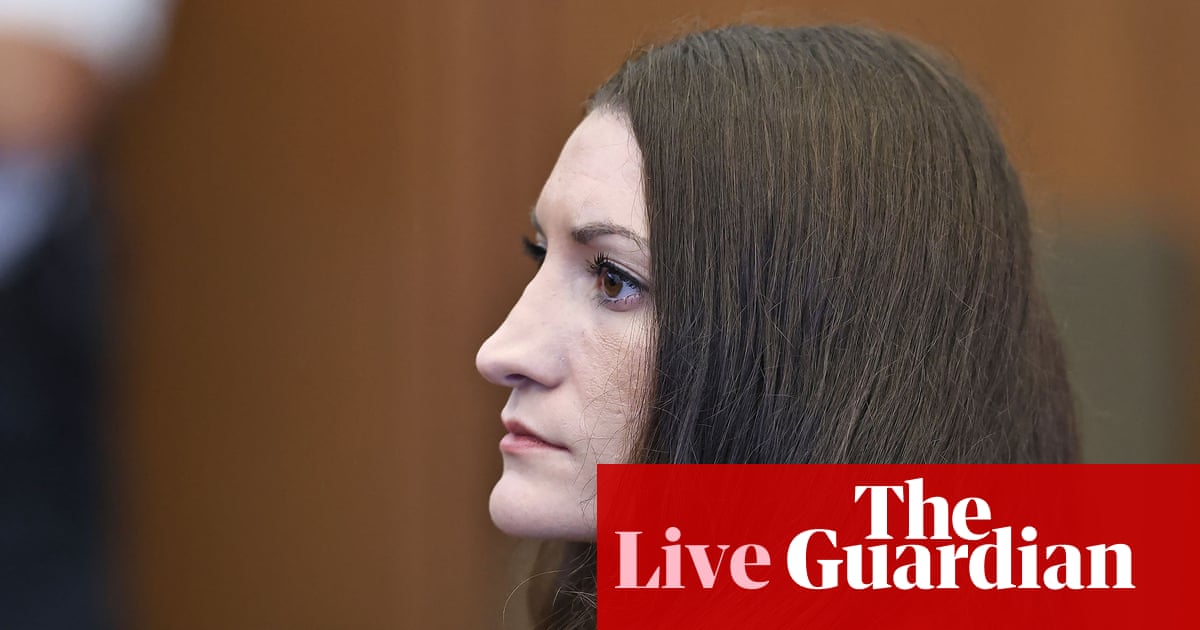
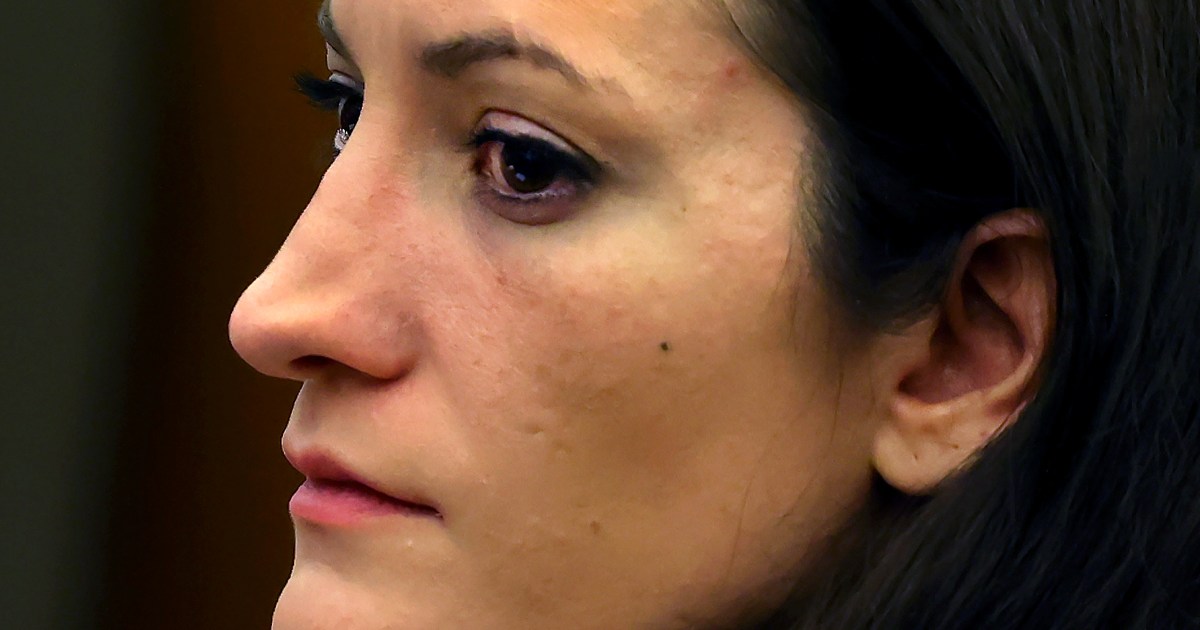
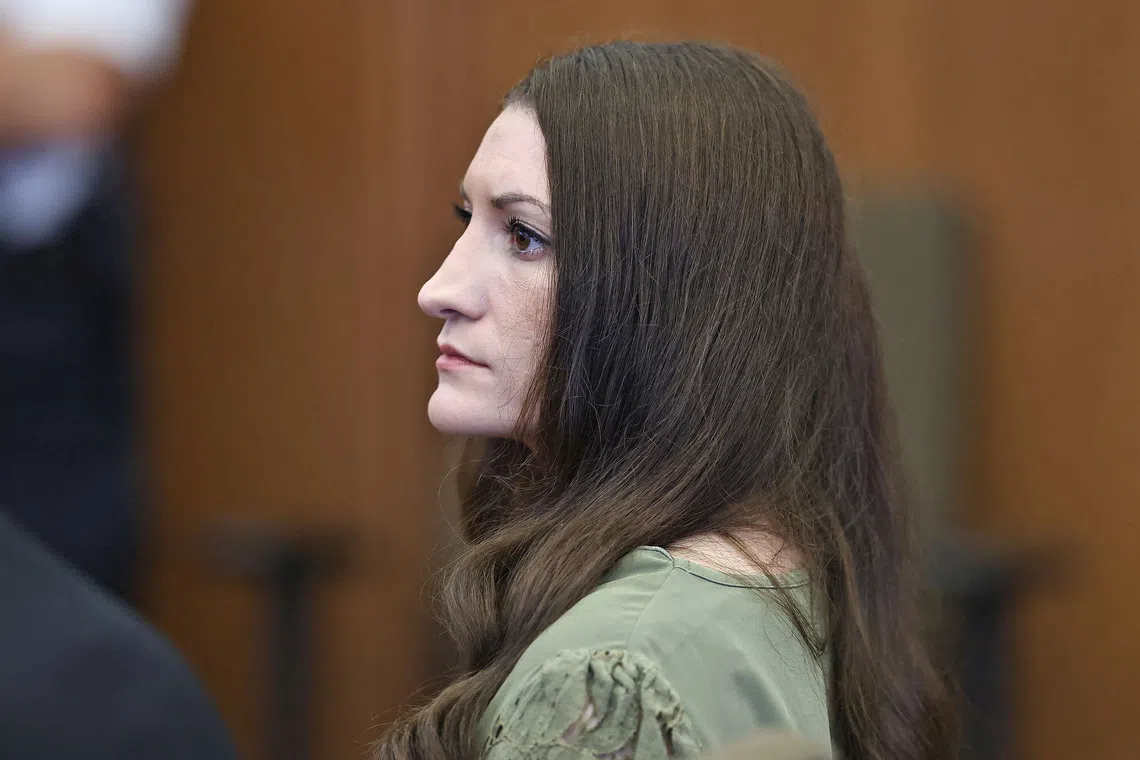
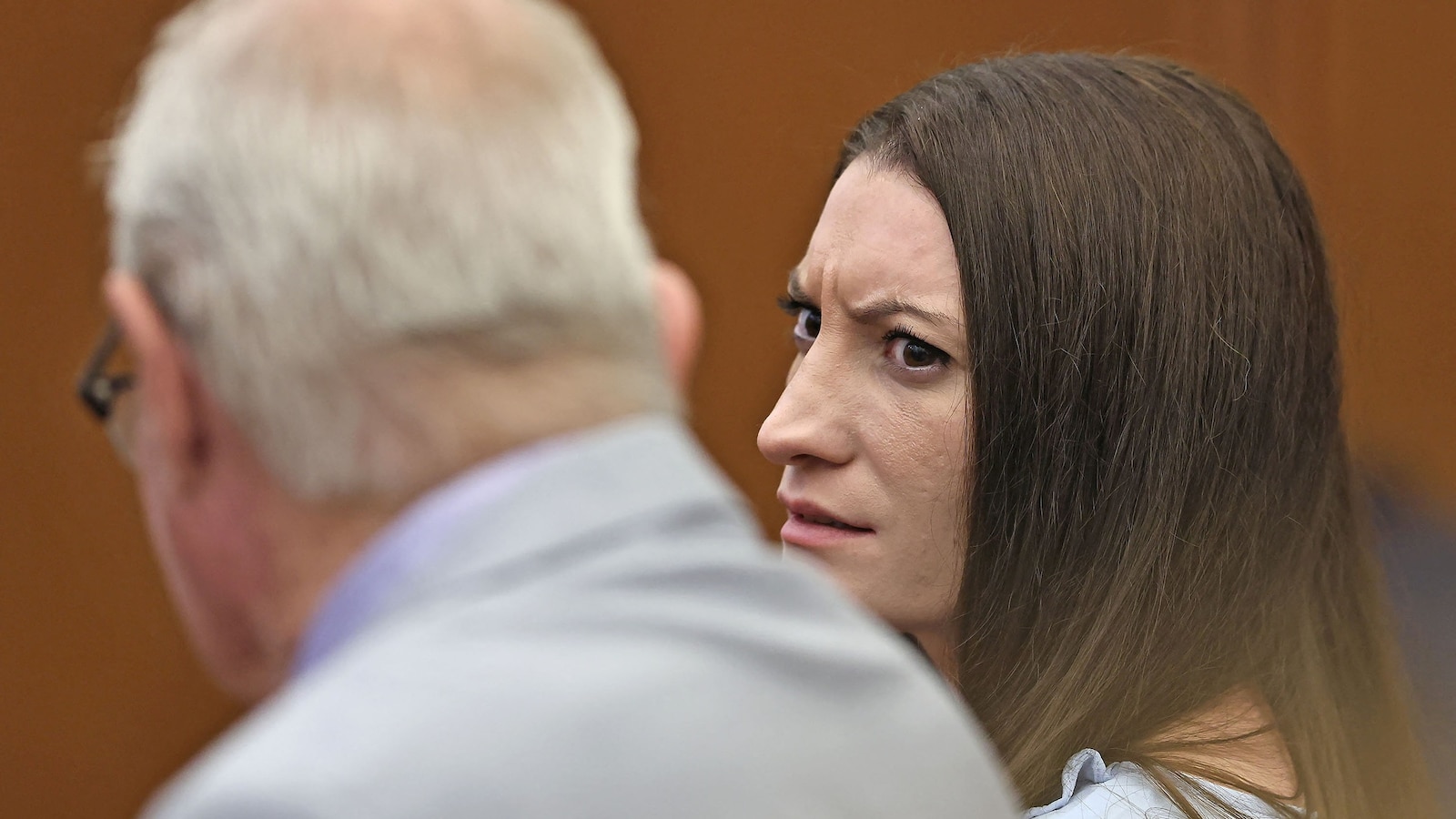
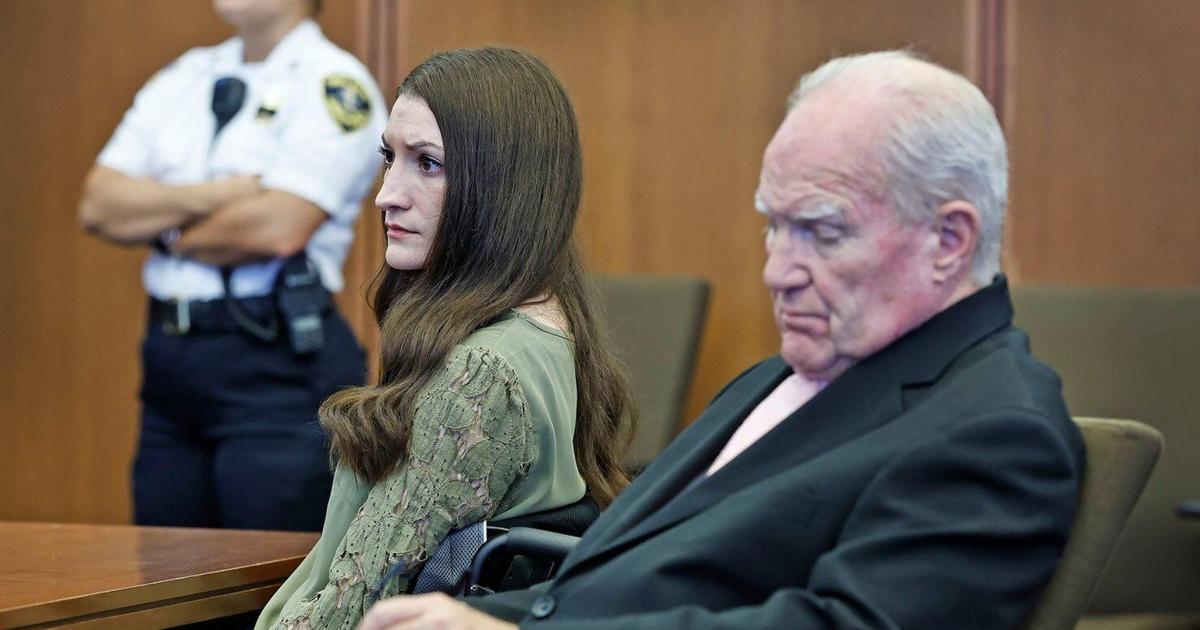
The judge in the trial of Lindsay Clancy, the Massachusetts mother accused of killing her three young children, has declared a mistrial after the jury could not reach a unanimous verdict and remained deadlocked after a week of deliberations.
uncertain
jury → accuse → deliberations
Jurors in Plymouth state court spent more than 38 hours in deliberations over the charges against the 36-year-old mom, which came on the heels of a weeks-long trial that directed national attention to maternal mental health issues that can occur postpartum.
asserted
that → spend → issues
The 12-person jury was made up of nine women and three men and, according to the notes given to the court, was split 11 to one.
uncertain
jury → make → one
After the jury returned without a verdict for the third time, Judge William Sullivan declared a mistrial but was interrupted by a last-minute request from Clancy’s lead defense attorney, Kevin Reddington, who requested one hour to petition for an emergency stay to seek relief from a superior court judge.
asserted
who → return → judge
That emergency filing with the Massachusetts supreme judicial court asked a single justice to order Sullivan to further question the juror arguing the juror was “biased” and, per jury notes, unwilling to follow the court’s instructions on reasonable doubt.
asserted
juror → ask → doubt
“Intervention is necessary in this case to avoid an avoidable mistrial of a case that is so time and labor intensive and that has captured so much public attention,” the filing reads, which also claimed that the court had “abdicated its responsibility to ensure the integrity of the jury”.
asserted
court → avoid → jury
The filing also asked that the juror be barred from further deliberations if Sullivan determined that they could not follow the instructions issued by the court.
uncertain
they → ask → court
“A mistrial at this point is entirely avoidable, but only if the court does its job,” the filing says.
asserted
filing → do → job
Additionally, the filing claimed the court “reflects a bias against those who suffer from debilitating mental illness”, arguing that mental illness is a “protected category” under the fifth and 14th amendments of the US constitution.
asserted
illness → claim → constitution
The filing was discussed with the Massachusetts supreme court justice Dalila Argaez Wendlandt during a Zoom hearing that was open to the public for viewing.
asserted
that → discuss → viewing
Prosecutor Jennifer Sprague summarized what happened with the jury and their repeated notes indicating a deadlock before defense attorney Dana Goldblatt argued that the supreme judicial court had the discretion to order the trial court to make the inquiry of the juror.
asserted
court → summarize → juror
Wendlandt then said she would take the matter under advisement.
asserted
she → say → advisement
The petition was subsequently denied.
asserted
petition → deny → ?
Clancy, a former neonatal and delivery nurse, had been accused of strangling her three children, Cora, five, Dawson, three, and Callan, eight months, in the family’s Duxbury home in January 2023.
asserted
Clancy → accuse → January
Prosecutors argued in opening statements that Clancy had “coldly and efficiently executed” her children, doing so with “no hesitation, with deliberate premeditation and extreme atrocity and cruelty” after she “drew her husband out of the house, their father, so that she had the opportunity and the time to carry out these murders”.
asserted
she → argue → murders
But Clancy’s defense team argued she was “suffering from psychosis” when she killed her children and allegedly attempted suicide by jumping from an upper window in her home, which left her partly paralyzed.
uncertain
which → argue → her
Reddington told jurors that Clancy suffered from postpartum depression after giving birth to her third child, Callan, and been prescribed a cocktail of medications.
asserted
Clancy → tell → medications
“This is a young woman who, with her husband, tried very hard to get the help she needed,” he said.
asserted
he → try → help
Clancy has not denied that she had killed her children but her not guilty plea was predicated on a lack of criminal responsibility because, as her defense team said, she was suffering from postpartum psychosis, which included auditory hallucinations that commanded her to harm her children, and undiagnosed bipolar disorder.
asserted
that → deny → children
Under Massachusetts law, the defendant must have “retained the substantial capacity to appreciate the wrongfulness or criminality of their conduct and to conform their conduct to the requirements of the law” in order to be found guilty.
asserted
defendant → retain → law
Throughout the trial, jurors heard from Clancy’s former husband Patrick Clancy, her mother and aunt, and an array of psychologists and treating physicians.
asserted
jurors → hear → psychologists
The court heard that Clancy had been prescribed 13 different medications for anxiety and sleep, which the defense said may have exacerbated her symptoms of depression.
uncertain
defense → hear → depression
Clancy had checked herself into psychiatric clinic in the weeks before the killings.
asserted
Clancy → check → killings
Later, on 24 January 2023, she had sent her then husband out for food and to collect pharmacy medications.
asserted
she → send → medications
In that time, police say she strangled their children with exercise bands.
asserted
she → say → bands
Her ability to orchestrate a window of time to carry out the killings, prosecutors argued, was evidence of premeditation.
asserted
prosecutors → orchestrate → premeditation
Before resting his case last week, Reddington called forensic psychiatrist Dr Phillip Resnick to testify that Clancy had “severe depression” and a history of anxiety, which increased after the birth of her children to the point that she “felt she couldn’t function”.
asserted
she → rest → point
“At the time of the crime on Jan 24, 2023, Ms Clancy was frankly psychotic,” Resnick said.
asserted
Resnick → say → Jan
After the declaration of Clancy’s mistrial, prosecutors have the option of trying her again.
asserted
prosecutors → have → her
The court has set a status conference for 9am ET on 29 September.
asserted
court → set → September
Clancy’s criminal trial will be followed by a civil claim brought by both Lindsay and Patrick Clancy against her medical and mental healthcare providers. The former couple claim the providers committed medical malpractice by failing to properly diagnose, treat and monitor her severe postpartum psychiatric condition.
uncertain
providers → follow → condition
After formally declaring the mistrial, the judge thanked the jury for their time and consideration.
asserted
judge → declare → time
“Each one of you knew how long the case was going to go.
asserted
case → know → you
You knew how difficult the case was going to be to listen to facts-wise, but still, you braced for that duty
asserted
you → know → duty
,” Sullivan said before dismissing them.
He also indicated that should there be a re-trial, he would want it to happen “sometime in the fall”.
asserted
it → say → fall
Plymouth county district attorney Tim Cruz told reporters that Clancy’s had been “an emotional trial for everybody”.
asserted
Clancy → tell → everybody
“This was and has always been about getting justice for those three little babies,” Cruz said.
asserted
Cruz → get → babies
“We’re here at this courthouse today because those children are not.
asserted
children → ’re → courthouse
Our priority has always been to fight for Cora, for Dawson and for Callan.”
asserted
priority → fight → Callan
Cruz also praised assistant district attorneys Jennifer Sprague and Shanan Buckingham, who he said “are both mothers themselves – and went home to their families after each long day in court”.
asserted
he → praise → court
…and 20 more, not listed.
 The Aporia