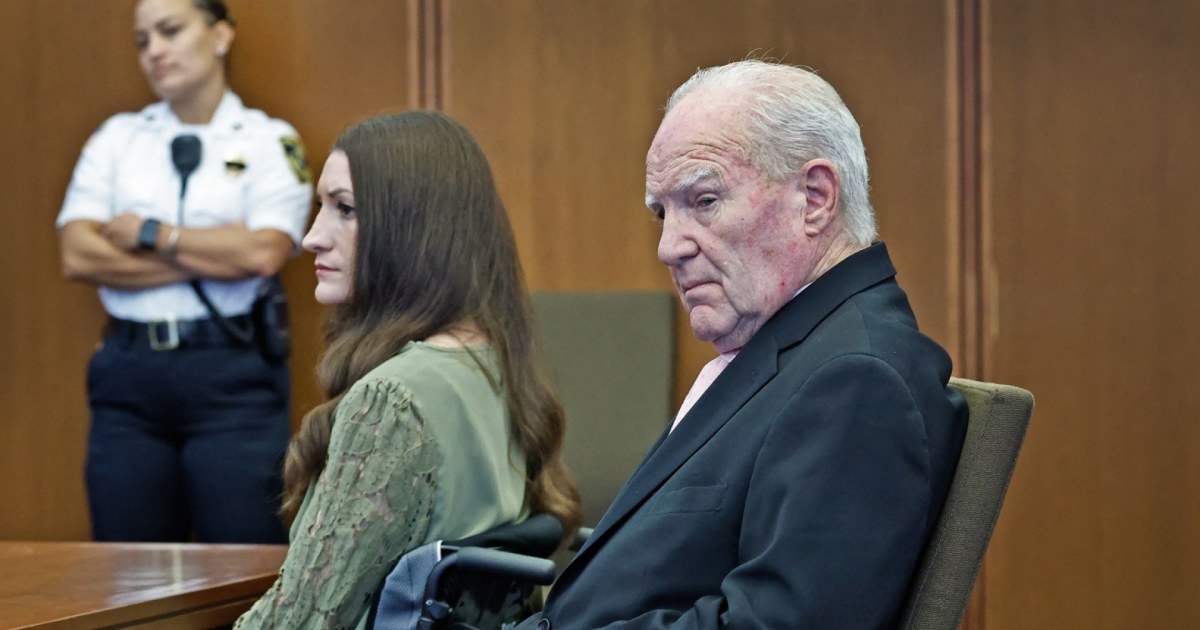
How Would You Have Applied Massachusetts Law in the Lindsay Clancy Trial?

Reason Magazine · collected 2026-09-05 · by Eugene Volokh
Read the original at Reason Magazine ↗

Summary

This opinion piece is written by a law professor who is asking readers to imagine they were jurors in the Lindsay Clancy trial and apply Massachusetts state laws regarding insanity defenses. According to the standard instructions for Massachusetts, if evidence of a mental disease or defect is raised, the prosecution must disprove it beyond a reasonable doubt. In this case, the defense claimed that Clancy suffered from postpartum psychosis, which would require the prosecution to prove her guilt beyond a reasonable doubt. The author notes that only about 1/3 of states follow Massachusetts' approach on insanity defenses.
Written by the local model on 2026-09-05, using this article's own text rather than the other coverage of the same event.

Signals How these are calculated →

Claims extracted
64
claim-shaped sentences
Uncertain
20%
13 of 64 hedged
Leaning
not political
takes no side on a contested political question
Publisher trust
86.1
red-flag proxy, not a credibility rating
Outlets on this story
unclustered
not grouped into a story yet
Narrative spread
1
articles carrying this framing
Analyzed 2026-09-05 · how these are computed

AI analysis (generated at analysis time, not now)

Why this leaning score
This article does not take a side on a contested political question, so it has no leaning score. That is an answer rather than a gap: a match report or a rescue can be warmly or critically written without being left or right, and scoring it anyway is how approval of a subject gets recorded as a political position.
No political leaning scored for article 4672 · logged 2026-09-05

How this is being covered How these are calculated →

Article leaning vs. publisher reliability
Source leaning vs. consistency

Compared with similar articles

This article reads unscored and hedges 20% of its claims. Each row says how that neighbour differs.
CBC | Top Stories News
⚖️ leaning not scored 🔴 8% hedged 4 of 49 📰 publisher trust 95
“Both articles report on the mistrial declaration in Lindsay Clancy's murder trial, with Article A providing more immediate news and details about the court proceedings.”
Latest & Breaking News on Fox News
⚖️ leaning not scored 🔴 0% hedged 0 of 4 📰 publisher trust 94
“Article B refers to the Lindsay Clancy trial and asks for hypothetical application of Massachusetts law, while Article A reports on a recent development in the case, specifically the judge's consideration of declaring a mistrial”
Home - CBSNews.com
⚖️ leaning not scored 🔴 5% hedged 9 of 190 📰 publisher trust 59
“Both articles describe the same trial of Lindsay Clancy, referencing the same judge, attorney, and mistrial declaration.”
NBC News Top Stories
⚖️ leaning not scored 🔴 2% hedged 1 of 42 📰 publisher trust 95
“Both articles refer to the Lindsay Clancy trial, the judge declaring a mistrial, and the defense's appeal attempt on September 4, 2026.”
The Independent World
⚖️ leaning not scored 🔴 3% hedged 2 of 67 📰 publisher trust 58
“Article B appears to be discussing the broader context of the trial and seeking opinions from law professors, whereas Article A reports on a specific incident (the mistrial declaration) that occurred within the trial”
US news | The Guardian
⚖️ Leans left 🔴 8% hedged 4 of 48 📰 publisher trust 95
“Both articles describe the trial of Lindsay Clancy coming to an end with a mistrial declaration, at the exact same time, due to jury's inability to reach a verdict.”
US news | The Guardian
⚖️ leaning not scored 🔴 10% hedged 6 of 60 📰 publisher trust 95
“Both articles describe the same trial of Lindsay Clancy, where a mistrial was declared after the jury deadlocked.”
ABC News: Top Stories
⚖️ leaning not scored 🔴 0% hedged 0 of 4 📰 publisher trust 94
“Article A reports on a judge declaring a mistrial, while Article B is about hypothetical legal analysis of the case and does not mention a mistrial.”
Home - CBSNews.com
⚖️ leaning not scored 🔴 5% hedged 1 of 21 📰 publisher trust 59
“Both articles describe the Lindsay Clancy trial proceedings on September 4, 2026, including the judge's indication of a mistrial and a subsequent one-hour delay granted to the defense.”
Washington Examiner
⚖️ leaning not scored 🔴 25% hedged 1 of 4 📰 publisher trust 96
“Both articles report on the ongoing murder trial of Lindsay Clancy, specifically mentioning the jury's deadlock after seven days of deliberation and a potential mistrial”

Publisher

Reason Magazine · 39 article(s) · 1 correction(s) detected
SignalValueWeight
Correction rate 0.026 0.4
Uncertainty density 0.141 0.25
Assertive mismatch rate 0.000 0.35
Running correction rate · 1 correction(s)
2026-09-05
Lawyers' Responsibility for Hallucinations in Briefs That They Sign

Who wrote this

Eugene Volokh
25 article(s) here · 1 carrying a prediction
🔮 Perhaps most analogously to alienation of affections, if Alan breaches his contract with Betty, and Cathy encouraged him to breach it, she will in many situations be liable for intentional interference with contract.
2026-09-06 · assertive framing · Alienation of Affections as Complicity
🔮 In a phone call on March 2, Gelb told Netrebko to issue a statement specifically denouncing Putin, or she would be fired.
🔮 A malicious act "include[s] any intentional conduct that would probably affect the marital relationship.
🔮 If you have followed the factual allegations in the case, please post a comment and indicate how you would have voted if you were a juror, based on your knowledge (even if limited) of the factual allegations, and why you would have so voted.
🔮 As part of this mea culpa, Ms. Hall assured the court that she had taken the remedial measure of verifying that the remaining citations in the brief were legitimate authority and pledged that, going forward (presumably in her representation of other clients), she would not rely on any AI tool "for legal research without confirming each authority" or file anything that includes citations she has not independently verified.
🔮 Such a requirement would be impractical, unduly burdensome, and unnecessarily duplicative given the availability of reasonable alternative procedures to guard against erroneous citations.
🔮 If it were, then any profit-seeking news organization could face liability for its failure to investigate, contrary to the principle that a publisher is not "required to seek out contrary stories" to insulate itself from a finding of actual malice.
🔮 Under the rational basis standard, government conduct "is presumed to be valid and will be sustained if the classification drawn by the statute is rationally related to a legitimate state interest."
🔮 To state a violation of § 784.049, a plaintiff must plausibly allege - Defendant published a sexually explicit image of Plaintiff on an internet website; - The image contained or conveyed Plaintiff's personal identification information; - Defendant acted willfully and maliciously, for no legitimate purpose, and with the intent of causing substantial emotional distress to Plaintiff; - Plaintiff did not consent to the publication…. The dispute was about whether the video showed a "sexually explicit image," and the court said no: [T]he statute defines {"sexually explicit image"} as any photograph or video that depicts "nudity" or depicts "any person engaging in sexual conduct." …
🔮 Roe is a Saudi Arabian citizen who, until May 2021, was living full-time in Riyadh and working as a result estate [real estate? -EV] investor.
Also by Eugene Volokh
Alienation of Affections as Complicity
2026-09-06 · Reason Magazine
Open Thread
2026-09-05 · Reason Magazine
Nothing else under this byline is closely related to this article, so these are simply their most recent.
All 25 articles by Eugene Volokh →

Topics

Massachusetts Paul Robinson et al U.S.

Subjects

Massachusetts GPE · 7× Clancy PERSON · 5× Duxbury GPE · 1× Lindsay Clancy PERSON · 1× Paul Robinson et al ORG · 1× Sally Satel PERSON · 1× The Free Press ORG · 1× U.S. GPE · 1×

Narrative

[2.] The substantive rule is that a defendant is not criminally responsible if (a) he or she "suffer[ed] from a mental disease or defect at the time of the alleged offense" (with no further definition of the terms, at least as part of the standard instruction) and (b) either (i) the defendant lacked "the substantial capacity to appreciate the wrongfulness or criminality of their conduct" or (ii) the defendant lacked "the substantial capacity … to conform their conduct to the requirements of the law."
framing: mixed · carried by 1 article(s) · first seen 2026-09-05
🔮 If you have followed the factual allegations in the case, please post a comment and indicate how you would have voted if you were a juror, based on your knowledge (even if limited) of the factual allegations, and why you would have so voted.
2026-09-05 · Reason Magazine
How Would You Have Applied Massachusetts Law in the Lindsay Clancy Trial? · mixed framing

Claims (64 extracted, 13 hedged)

[A.] I know lots of people have opinions about the Lindsay Clancy trial, and I wanted to pass along the Massachusetts standard criminal jury instructions for such matters. asserted
I → know → matters
(I can't be certain that this is the instruction that was actually given in the case, but it's the recommended instruction for such cases, so I assume the actual instruction wasn't far off.) asserted
instruction → give → cases
If you have followed the factual allegations in the case, please post a comment and indicate how you would have voted if you were a juror, based on your knowledge (even if limited) of the factual allegations, and why you would have so voted. asserted
you → follow → allegations
Please keep in mind two important things: [1.] Once evidence triggering the defense is raised, the government must disprove it beyond a reasonable doubt. asserted
government → keep → doubt
To draw an analogy from how people talk about the reasonable doubt standard as to other guilt/innocence questions, Massachusetts takes the view that it is better that 10 non-insane people are wrongly acquitted than that one insane person is wrongly convicted. asserted
person → draw → view
This is not the uniform rule in the U.S.; for instance, in federal cases, the law is almost the opposite—the defendant must prove insanity by clear and convincing evidence. asserted
defendant → prove → evidence
Indeed, my quick research suggests that this is the rule only in a minority of states. uncertain
this → suggest → states
But the law in Massachusetts on this is as settled. asserted
law → settle → this
[2.] The substantive rule is that a defendant is not criminally responsible if (a) he or she "suffer[ed] from a mental disease or defect at the time of the alleged offense" (with no further definition of the terms, at least as part of the standard instruction) and (b) either (i) the defendant lacked "the substantial capacity to appreciate the wrongfulness or criminality of their conduct" or (ii) the defendant lacked "the substantial capacity … to conform their conduct to the requirements of the law." asserted
defendant → suffer[e → law
(From what I understand of the Clancy defense, it is that she suffered from a mental disease and lacked the substantial capacity to refrain from killing her children—or at least there's a reasonable possibility that this was so.) asserted
this → understand → children
This substantive standard is likewise not a uniform view throughout the country; many other states follow different approaches. asserted
states → follow → approaches
According to a Paul Robinson et al. study from 2015, about 1/3 of the states take the same substantive approach as Massachusetts does. uncertain
Massachusetts → accord → approach
[B.] Please focus in your comment on how you would apply Massachusetts law, not whether you think the law should be changed (either as to the burden and quantum of proof, or as to the substantive definition of when the defendant isn't legally responsible). asserted
defendant → focus → definition
Also, please focus on how you think this standard should apply in this case to this person. asserted
standard → focus → person
The question isn't the prevalence of postpartum psychosis as such, or of how often women can be highly distraught and not kill their children. asserted
women → kill → children
Nor is it whether Clancy's public supporters or detractors are acting badly or opining foolishly. asserted
supporters → act → ?
Rather, the question is whether, on the facts of this case, you would think that there's a reasonable doubt about Clancy's sanity (as defined by the Massachusetts law summarized in item A.2 above). asserted
you → think → item
[C.] If you want more details on the Clancy case, here's a summary by Dr. Sally Satel (The Free Press), whom I know in some measure and whose work I've generally found to be thoughtful and balanced. asserted
I → want → measure
She ultimately comes down in favor of acquittal, but the factual summary generally appears consistent with what I've heard from other news sources: On January 24, 2023, Clancy took her children, one by one, into the basement of the family's home in Duxbury, Massachusetts. asserted
Clancy → come → Duxbury
"Go to God, baby," she allegedly said as she asphyxiated each of them with exercise bands. uncertain
she → go → bands
She then made cuts on her wrists and neck, and jumped out of a second-story window in a suicide attempt that left her paralyzed below the waist. asserted
that → make → waist
She did these things during the hour it took her husband to complete an errand she asked him to run. asserted
she → do → him
Although Clancy said she initially felt well following Callan's birth in May 2022, she saw a psychiatrist in late summer for help with depression, severe insomnia, and feelings of being overwhelmed by simple tasks like dressing or showering. uncertain
she → say → tasks
Over time, she allegedly began having suicidal ideation and experiencing what have been variously described as "intrusive thoughts" and "auditory hallucinations" telling her that she was "damaged" and would "not be the same," and that "the only option is to die." uncertain
option → begin → her
In December 2022, she told her husband and mother that she had thoughts of harming her children and was worried that other people could hear those thoughts. uncertain
people → tell → thoughts
After Clancy's husband left to pick up food and medication on January 24, 2023, she said that a loud, demanding male voice told her over and over, "This is your last chance. asserted
This → leave → her
You have to kill the kids so you can kill yourself." asserted
you → have → yourself
She allegedly entered "a dreamlike state" and watched herself act, feeling as if she had "no choice." uncertain
she → enter → choice
A hospital chaplain who met with Clancy within weeks of the crime testified that Clancy said the voice "told her that if she did not follow the command, neither she nor her children would be safe." asserted
she → meet → command
From September 2022 to January 2023, Clancy received several formal diagnoses: adjustment disorder and generalized anxiety disorder at the Aster Mental Health clinic, and major depressive disorder at McLean Hospital. asserted
Clancy → receive → Hospital
A psychiatric nurse practitioner raised the possibility of postpartum depression before the killings, though it was never formally diagnosed, and Clancy's bipolar disorder and PTSD were not fully diagnosed until afterward. asserted
disorder → raise → killings
And why might postpartum psychosis have been missed until after the killings? uncertain
psychosis → miss → killings
Unlike postpartum depression, a relatively common diagnosis that occurs in one out of eight deliveries, postpartum psychosis is rare, occurring just once or twice in every 1,000 deliveries. asserted
psychosis → occur → deliveries
She did not have symptoms for three months after Callan's birth, although, according to the DSM-5, postpartum psychosis manifests rapidly within the first month after delivery. uncertain
psychosis → have → delivery
Also, expert witnesses at her trial debated whether Clancy suffered actual psychotic episodes before the killing and whether the voice she heard in her basement on January 24 was a true command hallucination or merely an insistent internal thought that she chose to obey. asserted
she → debate → that
Also, Clancy did not consistently report suicidal or homicidal thinking or hallucinations to clinicians, perhaps because her mood and ideation fluctuated over the course of the day—a standard feature of postpartum psychosis…. asserted
mood → report → psychosis
In reaching these conclusions, I have accepted the truth of Clancy's description of the voice she heard and her explanation of why she followed its command. asserted
she → reach → command
I believe her account because absolutely nothing in her past foreshadowed her cataclysmic act. asserted
nothing → believe → act
She was uniformly regarded by family members, friends, and her nanny as an excellent mother and a caring, sensitive woman. asserted
She → regard → mother
She had no history of aggression, child abuse, or violence—apparently, she had never even spanked her kids. asserted
she → have → kids
…and 24 more, not listed.

💬 Give feedback
🕘 History 🎫 Support