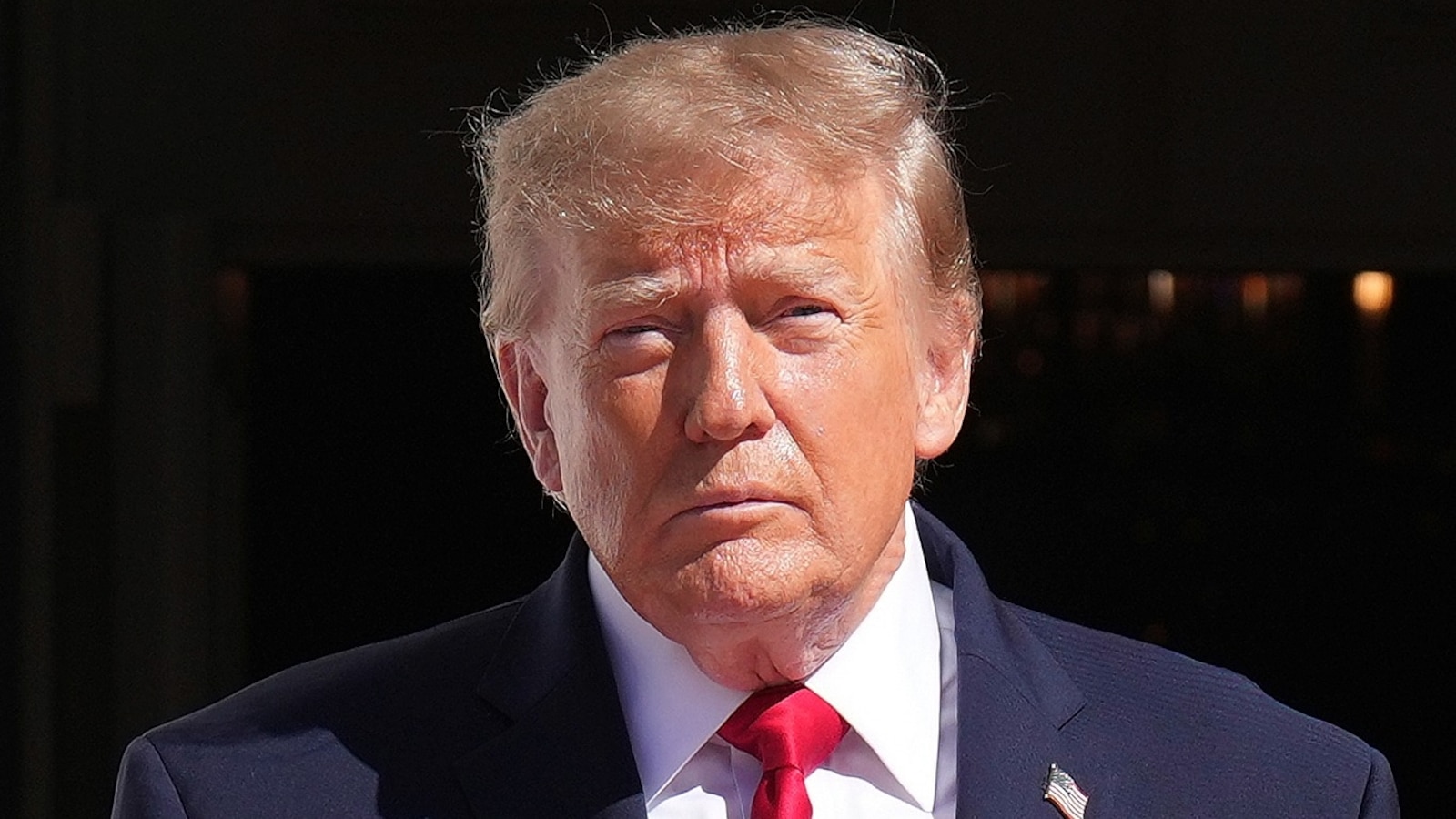
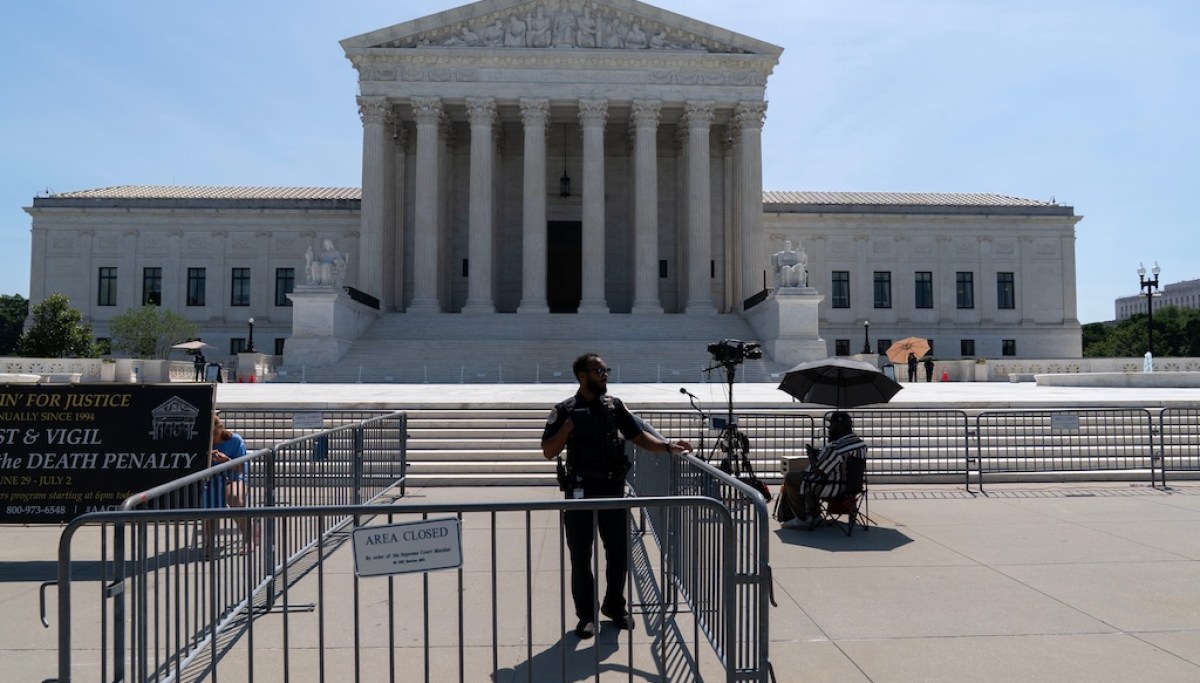
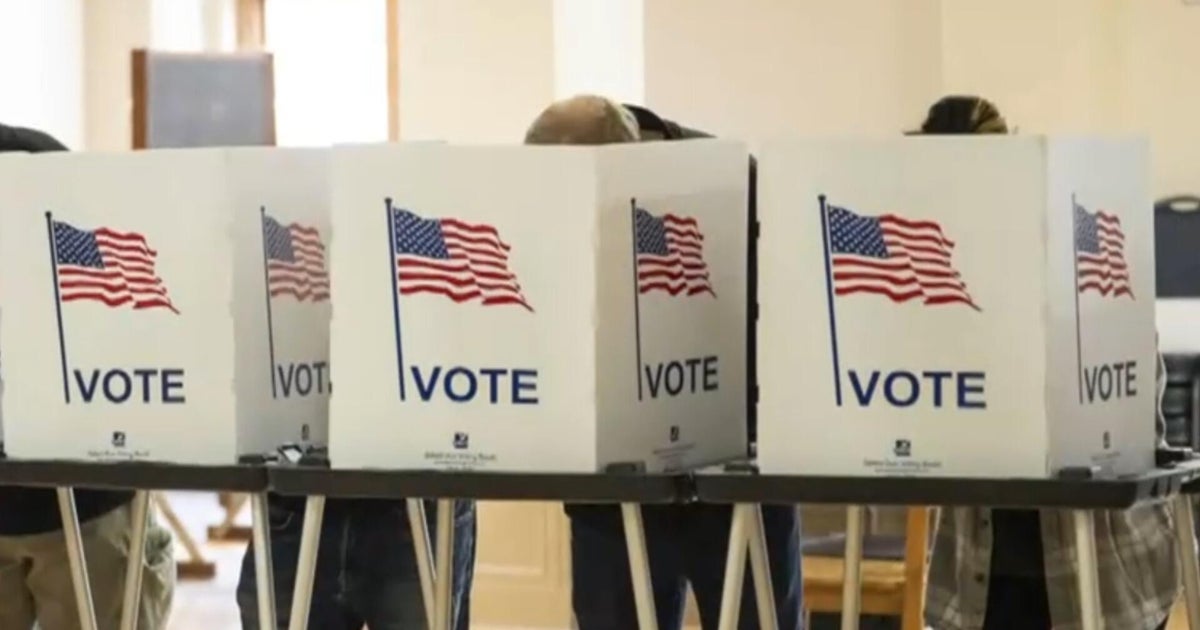
Photo via Reason

A Limited Supreme Court Win for Trump's Voter Database

Read the original at Reason ↗
Cite

Root, D. (2026, September 29). A Limited Supreme Court Win for Trump's Voter Database. Reason. https://reason.com/2026/09/29/a-limited-supreme-court-win-for-trumps-voter-database/

Dated when The Aporia collected the article, usually within hours of publication. Check the original for its exact date and byline.

Reason · collected 2026-09-29 · by Damon Root

Quick Summary

The U.S. Supreme Court recently allowed President Trump’s efforts to expand a database for verifying voter immigration status to continue temporarily while legal challenges proceed. The ruling was split along ideological lines, with Justice Jackson and two other liberal justices dissenting. Despite this initial win for the administration, the impact on upcoming elections is limited due to existing federal laws that restrict how such databases can be used.
Written by AI on 2026-09-29, from this article's own text only (the story summary below draws on all the coverage).
See how they differ ↓

AI analysis

Story summary

On Friday, the Supreme Court issued a 6-3 decision allowing the Trump administration to temporarily use the Systematic Alien Verification for Entitlements (SAVE) database during the appeal process. The SAVE system was expanded last year to help states verify voter eligibility by accessing citizenship and Social Security data, but it faced legal challenges due to privacy concerns and potential inaccuracies in the information provided. Justice Sonia Sotomayor, Elena Kagan, and Ketanji Brown Jackson dissented against this ruling. The decision has been met with support from several Republican-led states like Texas, which see it as a means of ensuring accurate voter rolls ahead of the November midterms. However, some election law experts warn that the immediate impact on upcoming elections may be limited due to federal laws prohibiting systematic purges within 90 days before an election.

Written for “SupremeCourtRulesOnVoterDatabaseUse” on 2026-11-18, grounded in this article and the 13 other(s) covering the same event.

How they differ

12 outlets covered “SupremeCourtRulesOnVoterDatabaseUse”.

What each outlet says

One AI summary per outlet of its latest article on this story, written from that article alone and checked against it. Open the article for the outlet's own words.

ReasonThis outlet29 Sep

The U.S. Supreme Court recently allowed President Trump’s efforts to expand a database for verifying voter immigration status to continue temporarily while legal challenges proceed. The ruling was split along ideological lines, with Justice Jackson and two other liberal justices dissenting. Despite this initial win for the administration, the impact on upcoming elections is limited due to existing federal laws that…

A Limited Supreme Court Win for Trump's Voter Database (this article)
CBS News26 Sep

The Supreme Court has ruled in favor of the Trump administration, permitting the use of a disputed database to review state voter registration lists. This decision was made on Friday. David Becker, an expert from the Center for Election Innovation and Research, provided commentary on CBS News about the implications for American voters.

Supreme Court allows use of database to review voter rolls →2 articles from CBS News on this story
The Independent25 Sep

The Supreme Court has allowed Donald Trump’s administration to proceed with using a government database called SAVE, which collects sensitive information like citizenship status and Social Security numbers for millions of Americans. Voting rights groups warn this could lead to wrongful purges of eligible voters from state databases due to the potential unreliability of the data. However, experts predict that this…

Supreme Court opens the door for Trump’s mass voter purges — but not before midterms, experts say →2 articles from The Independent on this story
Fox News25 Sep

The Supreme Court has issued an emergency order allowing the Trump administration to continue using the federal voter verification system known as SAVE while legal challenges proceed. States can now utilize the Department of Homeland Security’s Systematic Alien Verification for Entitlements database to check voter eligibility, pending further court action. This decision is part of ongoing efforts by the…

Supreme Court allows Trump admin to use federal voter eligibility database during appeal →
ABC News (US)25 Sep

The Supreme Court, in a 6-3 decision, allowed the Trump administration to use a federal citizenship database called SAVE to help states identify noncitizens on their voter rolls before midterms. The ruling temporarily lifts an earlier lower court order that had blocked this action, though state laws prevent them from purging voters within 90 days of Election Day.

Supreme Court allows use of citizenship database ahead of midterms →
Los Angeles Times25 Sep

The Supreme Court has upheld President Trump's expanded use of federal data checks aimed at identifying noncitizens who have registered to vote. This decision supports state efforts to maintain accurate voter rolls but may have limited impact in Democratic-led states like California, which already have robust measures in place. The ruling allows Texas and other Republican-led states to efficiently verify citizenship…

Supreme Court upholds Trump's expanded data checks to spot noncitizens who registered to vote →
Show 6 more outlets
Washington Examiner25 Sep

The Supreme Court has lifted an injunction blocking modifications to the Systematic Alien Verification for Entitlements (SAVE) database, which combines Social Security information with citizenship records to verify voter eligibility. In a 6-3 ruling, Republican-appointed justices ruled that claims by left-wing groups alleging violations of privacy laws and other statutes likely lack merit. The decision allows the…

Supreme Court unblocks voter verification database linking Social Security and citizenship records →
New York Post25 Sep

The Supreme Court has allowed the Trump administration to use a federal database called SAVE to check Americans' citizenship status for the November midterm elections, reversing a previous lower court ruling. The court's six conservative justices decided that while states cannot remove voters from rolls within 90 days of an election, the Department of Homeland Security can assist in verifying voter eligibility…

Supreme Court lets Trump admin use federal database to check citizenship, reversing lower court →
Daily Mail25 Sep

The Supreme Court has allowed states to use government databases, including Social Security information, to verify citizenship for voting rolls, supporting President Donald Trump’s initiative against voter fraud. Previously, lower courts had halted the administration's plan to permit this verification method. This decision marks a significant victory for Trump’s efforts to ensure electoral integrity by identifying…

Trump scores Supreme Court win as justices let him hunt for noncitizens on voter rolls using Social Security data →
Toronto Star25 Sep

The Supreme Court has temporarily allowed states to use a federal voter database, known as SAVE, which verifies citizenship and immigration status, ahead of November’s elections despite legal challenges. This ruling overrules a previous decision by U.S. District Judge Sparkle L. Sooknanan that deemed the program illegal due to privacy concerns. The court’s three liberal justices dissented, arguing that the program…

Supreme Court lets Trump administration use revamped federal voter eligibility database for now →
CBC25 Sep

The U.S. Supreme Court recently allowed states to use the Department of Homeland Security’s Systematic Alien Verification for Entitlements (SAVE) program ahead of November's elections, overturning a lower court decision that had blocked its implementation due to privacy concerns. The ruling is seen as a victory for President Trump in his efforts against non-citizen voting, though critics argue it could lead to…

In win for Trump, U.S. Supreme Court lets states use revamped voter verification system →
Al Jazeera25 Sep

The U.S. Supreme Court allowed President Trump’s administration to use the SAVE program for voter verification just weeks before the November midterm elections. Voting rights groups argue that this system could incorrectly identify citizens as non-citizens and lead to wrongful purging from voter rolls. The court's decision is an emergency order only, not a final ruling, and several Republican-led states have chosen…

US top court allows Trump to use controversial voter verification system →

Where they agree and split

Agreed

AI · cited, from two or more outlets

  • The Supreme Court temporarily allowed the Trump administration to use a voter verification system called SAVE.12
  • Voting rights groups are concerned that the database could lead to wrongful purging of eligible voters from rolls.34

Disputed

Picked by our model, which is sometimes wrong

  • CBS News and Reason differ on the extent to which the Supreme Court's decision will impact the upcoming midterm elections.65
  • Fox News and Al Jazeera present different views on the implications of the voter verification system, with Fox focusing more on procedural aspects while Al Jazeera highlights concerns about potential misuse.13

Framing

How the first headlines put it

  • CBS News frames the decision as a temporary allowance for the Trump administration to use SAVE, whereas The Independent emphasizes the broader implications and limitations of the ruling.24
  • Fox News highlights the procedural aspect of allowing the voter verification system during an appeal, while Al Jazeera focuses on the controversial nature of the decision.13
Stated as fact11
The headlines (11)

Supreme Court allows Trump admin to use federal voter eligibility database during appeal Fox News · stated as fact

Supreme Court allows use of citizenship database ahead of midterms ABC News · stated as fact

Supreme Court lets Trump administration use SAVE database for now CBS News · stated as fact

Supreme Court upholds Trump's expanded data checks to spot noncitizens who registered to vote Los Angeles Times · stated as fact

Supreme Court unblocks voter verification database linking Social Security and citizenship records Washington Examiner · stated as fact

Supreme Court lets Trump admin use federal database to check citizenship, reversing lower court New York Post · stated as fact

Trump scores Supreme Court win as justices let him hunt for noncitizens on voter rolls using Social Security data Daily Mail · stated as fact

Supreme Court restores Trump administration’s mass voter verification database The Independent · stated as fact

Supreme Court lets Trump administration use revamped federal voter eligibility database for now Toronto Star · stated as fact

In win for Trump, U.S. Supreme Court lets states use revamped voter verification system CBC · stated as fact

US top court allows Trump to use controversial voter verification system Al Jazeera · stated as fact

The full story: what happened, how it changed, and all 14 articles →

Compared with similar articles

This article reads leans right and hedges 11% of its claims. Each row says how that neighbour differs.
ABC News (US)
Centre further left than this Hedges 2 of 8 claims Outlet record 67/100
Washington Examiner
Leans right Hedges 4 of 16 claims Outlet record 67/100
Daily Mail
Leans right Hedges 0 of 1 claims Outlet record 70/100
The Independent
Leans right Hedges 5 of 26 claims Outlet record 59/100
CBC News
Leans right Hedges 5 of 22 claims Outlet record 60/100
The Independent
Leans strongly left further left than this Hedges 8 of 22 claims Outlet record 59/100
CBS News
Leans right Hedges 0 of 2 claims Outlet record 67/100
Fox News
Hedges 0 of 4 claims Outlet record 67/100
CBS News
Leans right Hedges 1 of 7 claims Outlet record 67/100
Los Angeles Times
Leans right Hedges 6 of 44 claims Outlet record 95/100

Story

SupremeCourtRulesOnVoterDatabaseUse
Politics · 14 article(s) covering the same event. Compare every outlet's account →
How this article was measured signals, leaning charts, publisher record, byline, topics and claims

Signals How these are calculated →

Claims extracted
18
sentences that state something as happening or true
Uncertain
11%
2 of 18 hedged ("reportedly", "may", "according to")
Leaning
Leans right
of the writing, not the subject · beta estimate
Publisher signals
67/100
Reason's corrections and hedging, across everything collected from it. Not a measure of accuracy.
Outlets on this story
14
Politics
Same framing elsewhere
1
articles that frame the event the way this one does
Analyzed 2026-09-29 · how these are computed

How this is being covered How these are calculated →

Article leaning vs. publisher reliability
Source leaning vs. consistency

Publisher

Reason · 1377 article(s) · 4 correction(s) detected
Running correction rate · 4 correction(s)

Who wrote this

Damon Root
12 article(s) here · 1 carrying a prediction
But that may be about to change.
McNamara acknowledged that state law "wouldn't apply to the United States if it took land in its own name."
Yesterday, the justices heard oral arguments in a case that could further insulate federal officials from facing any civil liability for their misdeeds.
2026-11-10 · mixed framing · A Bad Day at SCOTUS for Government Accountability
In a recent edition of this newsletter, I asked whether Justice Samuel Alito would come to regret making "the same mistake" as Justice Ruth Bader Ginsburg, who famously declined to retire from the U.S. Supreme Court when the Democrats still had control of the Senate and Barack Obama was still president.
Is it any wonder that Locke's radical case for self-ownership would appeal to a young woman like Wollstonecraft, who longed to break free from the sexist laws and cultural strictures that held her back?
2026-10-29 · assertive framing · When Mary Wollstonecraft Read John Locke
The 5th Circuit also denied that the federal ban on home distilling could be saved by the government's appeal to the Necessary and Proper Clause, which says that Congress has the authority "To make all Laws which shall be necessary and proper for carrying into Execution the foregoing Powers, and all other Powers vested by this Constitution in the Government of the United States, or in any Department or Officer thereof.
So declared a recent attention-grabbing headline at Politico, which probably caused a blood pressure spike among those readers who got the mistaken impression that the retirement under consideration might be imminent.
2026-10-06 · mixed framing · Alito Talks Retirement
But you may be forgiven if you didn't realize the justices had actually gone away on a summer break.
2026-10-01 · assertive framing · 2 Supreme Court Cases to Watch This Month
Last year, President Donald Trump issued an executive order directing federal officials to create new systems that would allow state and local authorities to check the immigration status of both registered voters and would-be voters who were seeking to register.
2026-09-29 · assertive framing · A Limited Supreme Court Win for Trump's Voter Database
Last month, the U.S. Supreme Court ruled 6–3 that the executive branch may begin to implement President Donald Trump's executive order that seeks to restrict the use of mail-in ballots in the fast-approaching midterm elections this November.
Also by Damon Root
Nothing else under this byline is closely related to this article, so these are simply their most recent.
All 12 articles by Damon Root →

Topics

DHS Democratic Department of Homeland Security SAVE the U.S. Supreme Court

Subjects

Trump PERSON · 5× DHS ORG · 2× Department of Homeland Security ORG · 2× the Supreme Court's ORG · 2× Damon Root PERSON · 1× Democratic NORP · 1× Donald Trump PERSON · 1× Reason ORG · 1× Supreme Court ORG · 1× the U.S. Supreme Court ORG · 1×

Narrative

"If there is a bright side to today's opinion," Jackson added, "it is that the per curiam will likely have minimal short-term impact" because of yet another federal law, the National Voter Registration Act, which says: "A State shall complete, not later than 90 days prior to the date of a primary or general election for Federal office, any program the purpose of which is to systematically remove the names of ineligible voters from the official lists of eligible voters.
framing: assertive · carried by 1 article(s) · first seen 2026-09-29
Last year, President Donald Trump issued an executive order directing federal officials to create new systems that would allow state and local authorities to check the immigration status of both registered voters and would-be voters who were seeking to register.
2026-09-29 · Reason
A Limited Supreme Court Win for Trump's Voter Database · assertive framing

Claims (18 extracted, 2 hedged)

Last year, President Donald Trump issued an executive order directing federal officials to create new systems that would allow state and local authorities to check the immigration status of both registered voters and would-be voters who were seeking to register. asserted
who → issue → voters
In an unsigned opinion issued on Friday, the U.S. Supreme Court, with all three Democratic appointees voting in dissent, allowed the Trump administration's efforts to proceed while the case plays out. asserted
case → issue → dissent
However, thanks to a different federal law, the ruling's impact on the fast-approaching 2026 midterm elections will be a very limited one. asserted
impact → approach → elections
You’re reading Injustice System from Damon Root and Reason. asserted
You → read → Root
At issue is a Department of Homeland Security (DHS) program known as Systematic Alien Verification for Entitlements (SAVE). asserted
program → know → Entitlements
State and local officials have already used the SAVE program's national database for purposes of verifying citizenship status in the context of employment and voting. asserted
officials → use → employment
What Trump's executive order did was expand the SAVE program so that the DHS could also draw on Social Security Administration records when processing these state and local requests. uncertain
DHS → expand → requests
The League of Women Voters and other groups challenging the expanded SAVE program argue that this executive expansion goes beyond what Congress actually authorized while also violating several federal privacy and administrative procedure laws. asserted
Congress → challenge → laws
The groups also argue that lawful voters are likely to be purged by mistake as an unavoidable byproduct of putting these sweeping new procedures in place. asserted
voters → argue → place
Those arguments by the legal challengers persuaded both the U.S. District Court for the District of Columbia and the U.S. Court of Appeals for the District of Columbia Circuit, which both ruled against the Trump administration. asserted
which → persuade → administration
But now the Supreme Court, by a vote of 6–3, has granted the administration's request for a stay, which places those lower court rulings on hold while the administration fights it out on appeal. asserted
administration → grant → appeal
And the order further indicates that the administration has a likelihood of winning in the end. asserted
administration → indicate → end
"Although the plaintiff organizations likely have standing, their claims likely lack merit," the Supreme Court's unsigned order stated. uncertain
order → have → merit
Because "an information-sharing regime like the modified SAVE program" is likely permissible under federal law, "this Court is likely to reverse the District Court's holding that the federal defendants violated the Social Security Act, the Privacy Act, and the [Administrative Procedure Act]." asserted
defendants → share → Act
Writing in dissent, Justice Ketanji Brown Jackson, joined by Justices Sonia Sotomayor and Elena Kagan, faulted the majority for bending federal law in Trump's favor. asserted
Jackson → write → favor
"If there is a bright side to today's opinion," Jackson added, "it is that the per curiam will likely have minimal short-term impact" because of yet another federal law, the National Voter Registration Act, which says: "A State shall complete, not later than 90 days prior to the date of a primary or general election for Federal office, any program the purpose of which is to systematically remove the names of ineligible voters from the official lists of eligible voters. asserted
purpose → be → voters
In other words, because the Supreme Court's ruling in this case happened less than 90 days out from the 2026 midterms, any state that wanted to make use of the expanded SAVE program for a systemic removal of ineligible voters is barred from doing so in this year's election. asserted
that → happen → election
The 2028 election, however, will be a different story and will undoubtedly give rise to even more litigation as the expanded SAVE program is put to its intended use. asserted
program → give → use
Give feedback · no sign-in needed

No sign-in needed for now. Your note is sent without a name, so it cannot be answered.

History Support