Photo via Reason

A Bad Day at SCOTUS for Government Accountability

Read the original at Reason ↗
Cite

Root, D. (2026, November 10). A Bad Day at SCOTUS for Government Accountability. Reason. https://reason.com/2026/11/10/a-bad-day-at-scotus-for-government-accountability/

Dated from the outlet's own feed. Check the original for its byline.

Reason · collected 2026-11-10 · by Damon Root

Quick Summary

Yesterday, the U.S. Supreme Court heard arguments in Nielsen v. Watanabe, a case involving federal inmate Kekai Watanabe who claims he did not receive adequate medical treatment after being injured in a prison fight, leading him to sue nurse Francis Nielsen for violating his Eighth Amendment rights. This hearing follows a trend where the court has limited Bivens claims, which allow individuals to sue federal officials for constitutional violations, by refusing to extend such claims beyond previously established cases like Carlson v. Green (1980). Damon Root’s commentary highlights how recent decisions have made it increasingly difficult to hold federal officers accountable in civil courts.
Written by AI on 2026-11-11, from this article's own text only (the story summary below draws on all the coverage).

AI analysis

Story summary

As of November 10, 2026, the U.S. Supreme Court heard oral arguments in a case that could further shield federal officials from civil liability for constitutional violations. This development builds on previous decisions that have made it increasingly difficult to sue federal officers over alleged Fourth Amendment rights infringements since 1971 when the Court first allowed such lawsuits in Bivens v. Six Unknown Named Agents of the Federal Bureau of Narcotics. The case currently under review may exacerbate an already restrictive environment for holding officials accountable, following criticisms from judges like Don Willett, who argued that reducing Bivens claims undermines citizens' ability to seek redress for constitutional violations by federal officers.

Written for “Supreme Court Ruling Against Government Accountability” on 2026-11-11, grounded in this article and the 0 other(s) covering the same event.
Why this leaning score
The article's own words the score was based on. Each is quoted verbatim and was checked against the article text before being stored, so you can find it in the original.
Reading Leans strongly left (beta estimate) Confidence high
Leaning: leans strongly left for article 141467 (high confidence, 4 verified quotes) · logged 2026-11-11

Story

Supreme Court Ruling Against Government Accountability
Politics · 1 article(s) covering the same event.

Compared with similar articles

This article reads leans strongly left and hedges 45% of its claims. Each row says how that neighbour differs.
Reason
Outlet record 67/100
“Article A discusses oral arguments in a case possibly expanding on Bivens v. Six Unknown Named Agents, while Article B marks an historical date in Supreme Court history, not a specific current event.”
How this article was measured signals, leaning charts, publisher record, byline, topics and claims

Signals How these are calculated →

Claims extracted
22
sentences that state something as happening or true
Uncertain
45%
10 of 22 hedged ("reportedly", "may", "according to")
Leaning
Leans strongly left
of the writing, not the subject · beta estimate
Publisher signals
67/100
Reason's corrections and hedging, across everything collected from it. Not a measure of accuracy.
Outlets on this story
1
Politics
Same framing elsewhere
1
articles that frame the event the way this one does
Analyzed 2026-11-11 · how these are computed

How this is being covered How these are calculated →

Article leaning vs. publisher reliability
Source leaning vs. consistency

Publisher

Reason · 1253 article(s) · 4 correction(s) detected
Running correction rate · 4 correction(s)

Who wrote this

Damon Root
10 article(s) here · 1 carrying a prediction
Yesterday, the justices heard oral arguments in a case that could further insulate federal officials from facing any civil liability for their misdeeds.
2026-11-10 · mixed framing · A Bad Day at SCOTUS for Government Accountability
In a recent edition of this newsletter, I asked whether Justice Samuel Alito would come to regret making "the same mistake" as Justice Ruth Bader Ginsburg, who famously declined to retire from the U.S. Supreme Court when the Democrats still had control of the Senate and Barack Obama was still president.
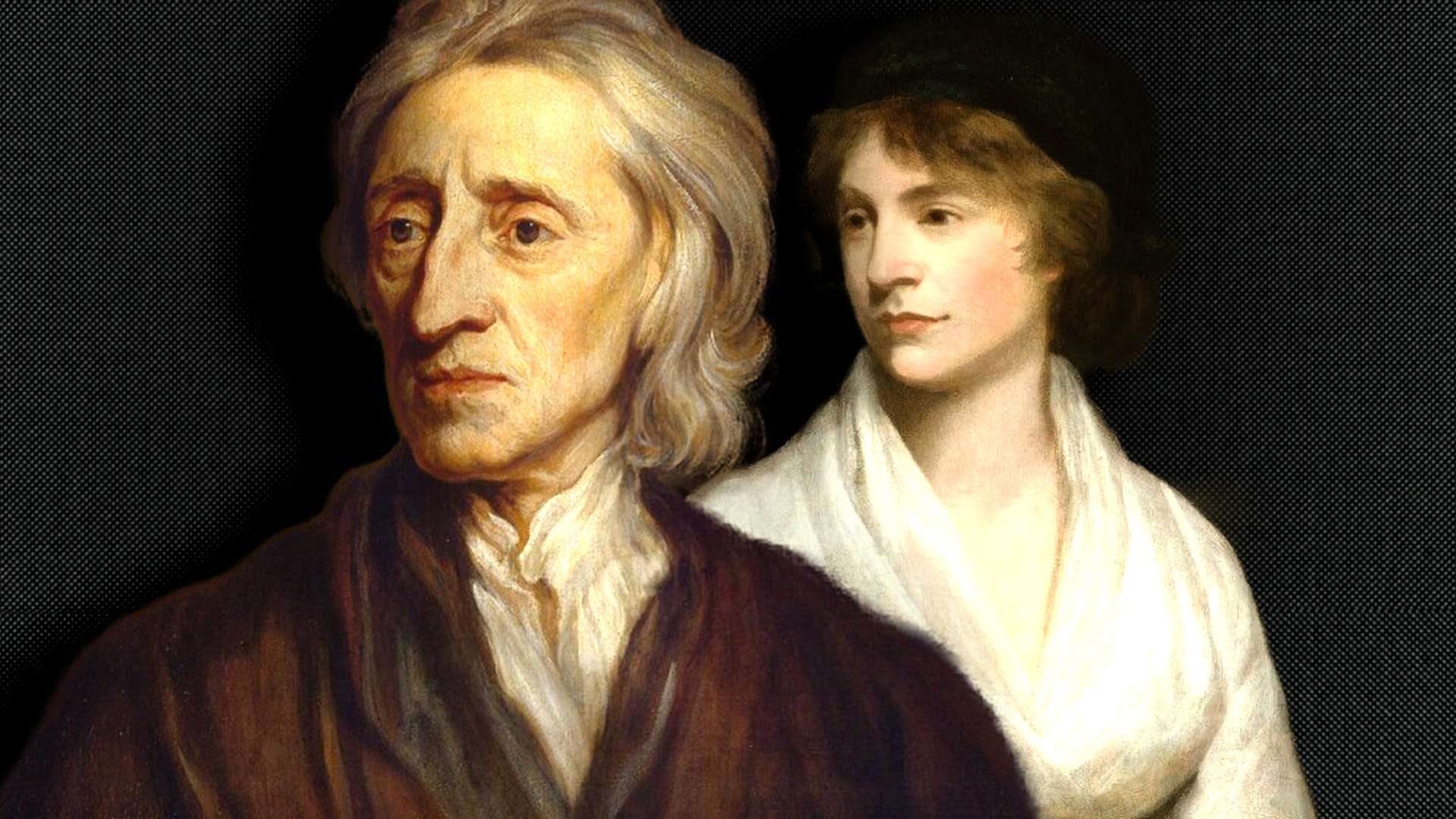
Is it any wonder that Locke's radical case for self-ownership would appeal to a young woman like Wollstonecraft, who longed to break free from the sexist laws and cultural strictures that held her back?
2026-10-29 · assertive framing · When Mary Wollstonecraft Read John Locke
The 5th Circuit also denied that the federal ban on home distilling could be saved by the government's appeal to the Necessary and Proper Clause, which says that Congress has the authority "To make all Laws which shall be necessary and proper for carrying into Execution the foregoing Powers, and all other Powers vested by this Constitution in the Government of the United States, or in any Department or Officer thereof.
So declared a recent attention-grabbing headline at Politico, which probably caused a blood pressure spike among those readers who got the mistaken impression that the retirement under consideration might be imminent.
2026-10-06 · mixed framing · Alito Talks Retirement
But you may be forgiven if you didn't realize the justices had actually gone away on a summer break.
2026-10-01 · assertive framing · 2 Supreme Court Cases to Watch This Month
Last year, President Donald Trump issued an executive order directing federal officials to create new systems that would allow state and local authorities to check the immigration status of both registered voters and would-be voters who were seeking to register.
2026-09-29 · assertive framing · A Limited Supreme Court Win for Trump's Voter Database
Last month, the U.S. Supreme Court ruled 6–3 that the executive branch may begin to implement President Donald Trump's executive order that seeks to restrict the use of mail-in ballots in the fast-approaching midterm elections this November.
Article III, Section 1, of the U.S. Constitution says that "the judicial Power of the United States shall be vested in one supreme Court, and in such inferior courts as the Congress may from time to time ordain and establish."
"The Declaration [of Independence] charged that George III 'has made Judges dependent on his Will alone, for the tenure of their offices, and the amount and payment of their salaries,'" Roberts observed in his 2025 report.
Also by Damon Root
Alito Talks Retirement
2026-10-06 · Reason
Nothing else under this byline is closely related to this article, so these are simply their most recent.
All 10 articles by Damon Root →

Topics

Bivens Court the Fourth Amendment the Supreme Court the U.S. Supreme Court

Subjects

Bivens PERSON · 13× the Supreme Court ORG · 5× Court ORG · 4× Carlson PERSON · 3× Green PERSON · 3× Watanabe PERSON · 3× Damon PERSON · 1× Damon Root PERSON · 1× Reason ORG · 1× the U.S. Supreme Court ORG · 1×

Narrative

In 2021, Judge Don Willett of the U.S. Court of Appeals for the 5th Circuit registered his objections to what he called "today's rights-without-remedies regime," in which the Supreme Court had whittled Bivens down to such nothingness that "redress for a federal officer's unconstitutional acts is either extremely limited or wholly nonexistent, allowing federal officials to operate in something resembling a Constitution-free zone."
framing: mixed · carried by 1 article(s) · first seen 2026-11-11
Yesterday, the justices heard oral arguments in a case that could further insulate federal officials from facing any civil liability for their misdeeds.
2026-11-11 · Reason
A Bad Day at SCOTUS for Government Accountability · mixed framing

Claims (22 extracted, 10 hedged)

Thanks to a series of recent decisions by the U.S. Supreme Court, it has become exceptionally difficult to sue a federal officer in federal court over an alleged constitutional rights violation. asserted
it → become → violation
Yesterday, the justices heard oral arguments in a case that could further insulate federal officials from facing any civil liability for their misdeeds. uncertain
that → hear → misdeeds
You’re reading Injustice System from Damon Root and Reason. asserted
You → read → Root
First, a brief history of how we got here. asserted
we → get → ?
In Bivens v. Six Unknown Named Agents of the Federal Bureau of Narcotics (1971), the Supreme Court allowed a Brooklyn man's lawsuit against a group of federal agents who allegedly violated his constitutional rights to proceed in federal court. uncertain
who → name → court
"That damages may be obtained for injuries consequent upon a violation of the Fourth Amendment by federal officials should hardly seem a surprising proposition," the Court held. uncertain
Court → obtain → officials
"Historically, damages have been regarded as the ordinary remedy for an invasion of personal interests in liberty." asserted
damages → regard → liberty
Lawyers soon began to call it a "Bivens claim" when a federal officer was similarly sued for allegedly violating someone's rights. uncertain
officer → begin → rights
Over the past decade or so, however, the Supreme Court has basically hacked away at Bivens until there is practically nothing left, stopping just short of overruling the precedent entirely. asserted
Court → hack → precedent
In Egbert v. Boule (2022), for example, the Supreme Court refused to allow a Bivens claim to proceed against an FBI agent who was credibly accused of violating the Fourth Amendment, basically the same scenario that first gave rise to Bivens itself. uncertain
that → refuse → Bivens
But because a majority of the current Court now sees Bivens as an example of judicial activism, in which an earlier group of justices overstepped their bounds by recognizing an implied federal cause of action absent a congressional statute, the Bivens precedent now effectively goes unenforced. asserted
precedent → see → statute
Which brings us to yesterday's oral arguments in the case of Nielsen v. Watanabe. asserted
Which → bring → Watanabe
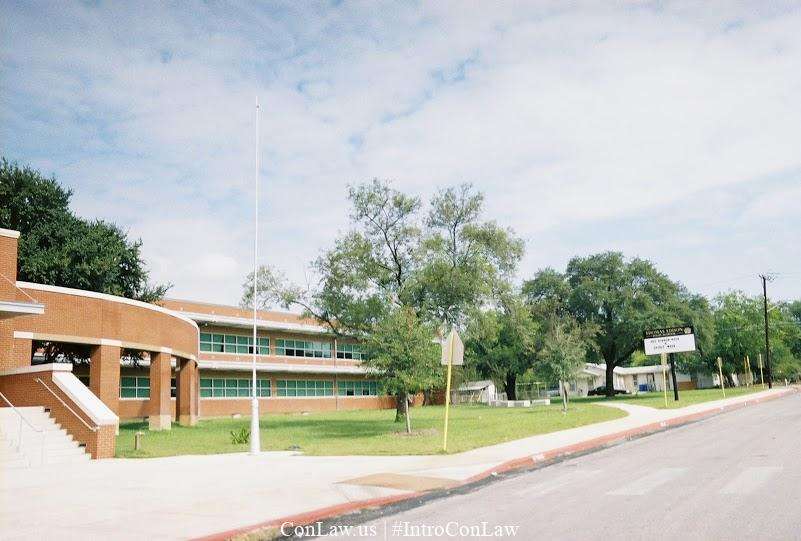
The matter arose after a federal inmate named Kekai Watanabe suffered severe injuries in a prison gang fight. asserted
inmate → arise → fight
He alleges that he never received proper medical treatment from his captors despite repeatedly requesting it. asserted
he → allege → it
He later sued staff nurse Francis Nielsen for violating his right to be free from cruel and unusual punishment under the Eighth Amendment. asserted
He → sue → Amendment
In Carlson v. Green (1980), the Supreme Court allowed a Bivens claim to proceed in a very similar Eighth Amendment context: namely, the Court allowed the estate of a prisoner to sue prison officials for allegedly contributing to the prisoner's death by denying him medical treatment. uncertain
estate → allow → treatment
If the current Supreme Court treated Bivens the same way it treats many other precedents—by actually following the precedent, I mean—then the holding in Carlson v. Green would seem to offer strong support for letting Watanabe's Bivens claim move forward now. uncertain
claim → treat → support
After all, both Carlson v. Green and Nielson v. Watanabe involve the same thing: a Bivens claim about prison officials allegedly violating the Eighth Amendment by failing to provide proper medical care. uncertain
officials → involve → care
But a majority of the current Supreme Court does not seem too keen on allowing any more Bivens claims to proceed in any context, including under the Eighth Amendment. uncertain
claims → seem → Amendment
And while yesterday's arguments seemed to show that the Court will probably again stop short of overruling Bivens outright, a number of justices still seemed to be looking for a reason to deny this latest Bivens claim. uncertain
number → seem → claim
In 2021, Judge Don Willett of the U.S. Court of Appeals for the 5th Circuit registered his objections to what he called "today's rights-without-remedies regime," in which the Supreme Court had whittled Bivens down to such nothingness that "redress for a federal officer's unconstitutional acts is either extremely limited or wholly nonexistent, allowing federal officials to operate in something resembling a Constitution-free zone." asserted
officials → register → zone
Unfortunately, Willett's objections remain as valid and urgent as ever. asserted
objections → remain → ?

Give feedback · no sign-in needed

No sign-in needed for now. Your note is sent without a name, so it cannot be answered.

History Support