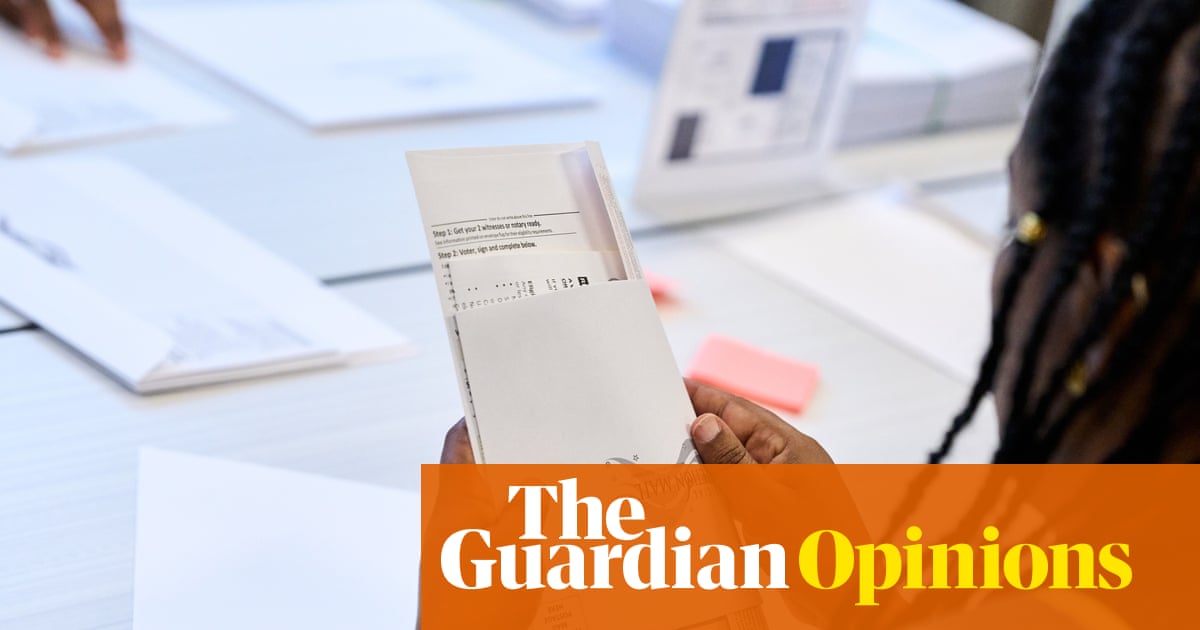
The Supreme Court will let Donald Trump’s administration implement an expansive government database that collects citizenship data, Social Security numbers and other sensitive information for millions of Americans, a powerful tool that federal agencies and state officials could use to hunt for ineligible voters.
uncertain
agencies → let → voters
Voting rights groups fear that the database could be used to wrongfully purge eligible voters without an opportunity to correct mistakes, opening the door for unnecessary confusion and illegal disenfranchisement.
uncertain
database → fear → confusion
The high court’s ruling will likely not have any significant impact on this year’s midterm elections; justices stressed that the administration must comply with the National Voter Registration Act, which bars any major changes to registration rules within 90 days of a federal election.
“Today’s Supreme Court order is a serious blow to voter privacy and civil rights, but it changes nothing about what the law requires before the midterms,” said Tim Harper with the Center for Democracy & Technology.
asserted
Harper → have → Democracy
Still, voting rights advocates and elections experts fear that the conservative majority court has opened the door for the administration to put millions of Americans at risk of being unlawfully targeted by the administration’s unreliable database.
asserted
administration → fear → database
A federal judge had previously blocked use of the Department of Homeland Security’s Systematic Alien Verification for Entitlements program, or SAVE, arguing that it likely violated Americans’ privacy rights and could end up wrongly removing eligible voters from state databases.
uncertain
it → block → databases
Homeland Security has even admitted that the data isn’t perfect, and analysts have uncovered numerous significant errors, including incorrectly flagging recently naturalized citizens as noncitizens who are ineligible to vote.
asserted
who → admit → noncitizens
“While states are prohibited from conducting mass removals during the current statutory 90-day ‘quiet period,’ they should exercise extreme caution with any use of this database,” Verified Voting president Pamela Smith said.
asserted
Smith → prohibit → database
“Now more than ever, voters must check their registration well in advance of Election Day to ensure they are not swept up in a flawed system through no fault of their own,” she said Friday.
asserted
she → check → own
States are not currently required to use the SAVE system, and it’s unclear whether there’s an appetite for an unwieldy and unreliable database within a critical period before national elections with no room for error.
uncertain
it → require → error
"This decision will not have any significant impact on the 2026 election, as systematic voter list maintenance is prohibited within 90 days of a federal election, which the Supreme Court explicitly confirmed,” said David Becker, executive director of the Center for Election Innovation and Research.
asserted
Becker → have → Innovation
“The most important thing for voters to know is that they will continue to experience the same safe, secure, and reliable voting process in 2026 that they have in past elections,” he said.
asserted
he → know → elections
Friday’s emergency ruling was unsigned, but the court’s three liberal justices joined a 12-page dissent that warned that any program that disenfranchises “even a few lawful voters outweighs the nonexistent harm that the government experiences when it is prevented from taking an action that it likely lacks the authority to take.
asserted
it → join → authority
The decision is a victory for Trump after a series of losses at the high court, including in his attempts to overhaul election administration — efforts that dovetail with his government-wide anti-immigration campaign.
asserted
that → include → campaign
The administration has justified the citizenship database as part of an ongoing effort to identify noncitizen voters, fueled by the president’s baseless claims that millions of ineligible voters have cast ballots against him.
uncertain
administration → justify → him
But critics argue that the database puts the burden of protecting the right to vote on voters themselves, forcing new citizens and other people who would be wrongfully removed to prove they belong.
asserted
they → argue → citizens
Jacqueline De León, senior staff attorney with the Native American Rights Fund, argued that the SAVE tool won’t have any “meaningful” impact on removing ineligible voters from rolls but could end up having “a devastating impact on removing voters who are indeed eligible to vote.”
“At the very least, it will sow confusion among voters nationwide, which may be part of its intended purpose,” she said Friday.
uncertain
she → argue → purpose
“SAVE was never designed to verify citizenship: it relies on outdated and inaccurate data that produces false matches, risks disenfranchising eligible voters, and exposes sensitive personal information to misuse and bad actors,” added Harper with the Center for Democracy & Technology.
asserted
Harper → design → Democracy
“To be clear: claims that SAVE has uncovered widespread noncitizen voting or proven fraud in past elections are not supported by the evidence,” he said.
uncertain
he → uncover → evidence
“Noncitizen voting is exceedingly rare, and states already maintain their rolls through more accurate and privacy-protective methods.”
asserted
states → maintain → methods
James Percival, general counsel for Homeland Security, appeared to celebrate the court’s ruling.
asserted
Percival → appear → ruling
“Yes, you read that right.
asserted
you → read → that
We had to file an emergency petition in the Supreme Court just so we could use government data to help states stop noncitizens from illegally voting,” he wrote on X.
uncertain
he → have → X.
 The Aporia