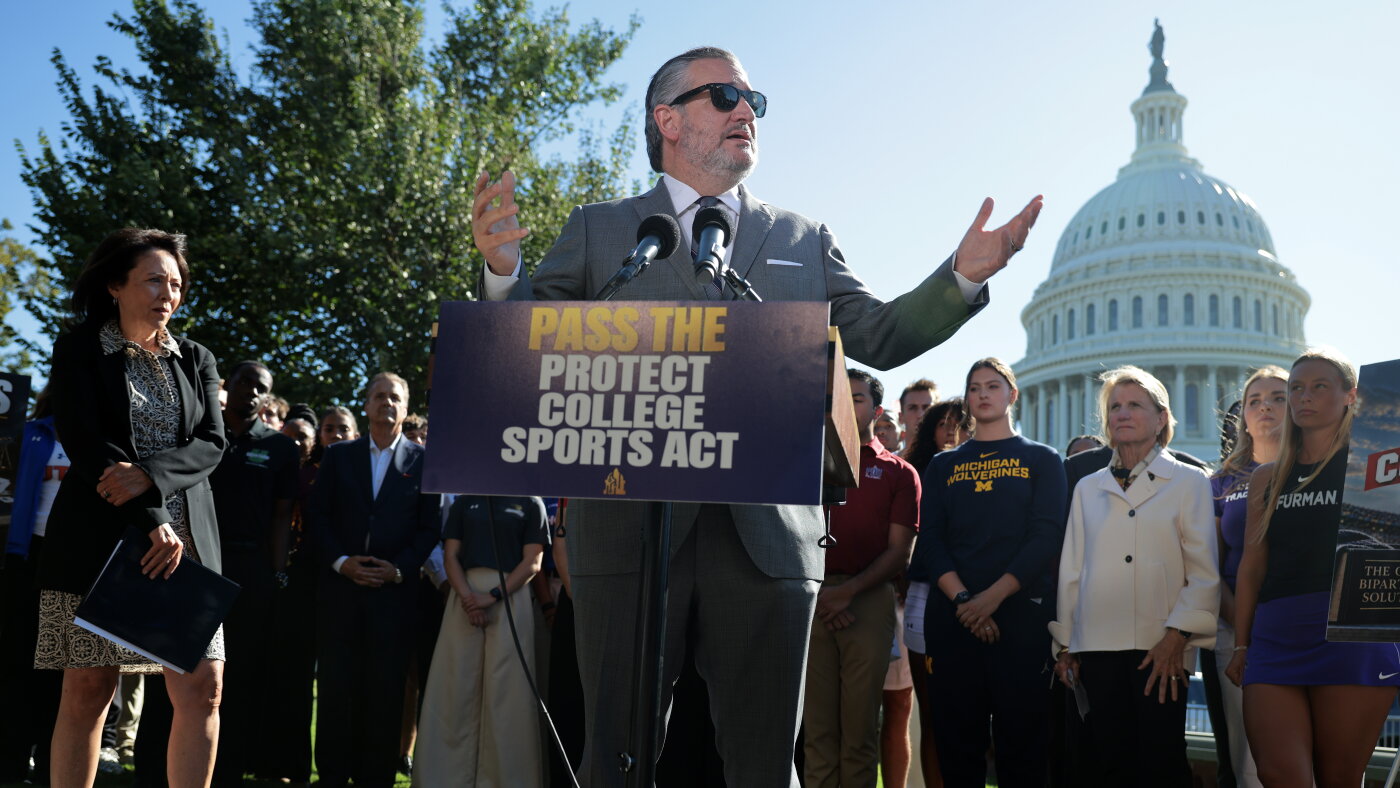
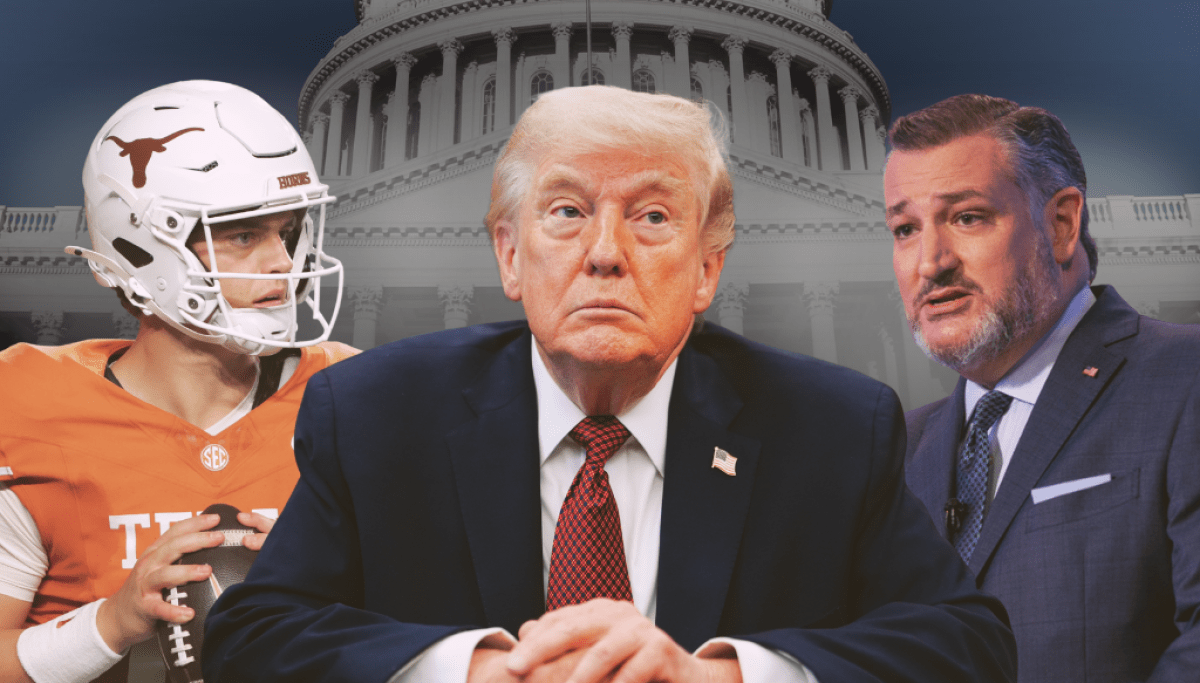
The Senate passed the Protect College Sports Act on Monday with a 77-22 vote, aiming to regulate name, image, and likeness (NIL) deals for college athletes. Championed by Senators Ted Cruz and Maria Cantwell, the bill establishes federal rules around NIL payments, transfer regulations, and compensation limits while offering some antitrust protections for the NCAA. Major college sports conferences like the Southeastern Conference and Big Ten initially opposed but later supported the legislation after negotiations with lawmakers. Critics argue that the bill does not address compensation restrictions for coaches and other stakeholders in college sports.
Written locally by qwen2.5:14b on 2026-09-29,
using this article's own text rather than the other coverage of the
same event (that is the story summary below).
Story summary
The Senate passed the bipartisan Protect College Sports Act by a vote of 77 to 22 on Monday night. Senators Ted Cruz (R-Texas) and Maria Cantwell (D-Wash.), the bill’s lead sponsors, aim for its quick passage in the House before the midterm elections. The act grants the NCAA limited antitrust immunity and establishes national standards for athlete compensation through Name, Image, and Likeness (NIL) deals, while also setting eligibility rules and transfer limits to curb chaos in college sports. Despite support from the NCAA and several high-profile schools, critics like Senator Cory Booker argue it fails to address runaway spending issues and may disadvantage athletes. President Donald Trump has urged Congress to pass the bill before summer recess, saying he would sign it into law if it reaches his desk.
Written for “College Sports Regulation Bill Passing” on 2026-10-05,
grounded in this article and the 9 other(s) covering the same event.
The Senate passed a bill Monday night that aims to regulate college sports after several court cases in recent years dramatically overhauled NCAA rules and allowed student-athletes to earn money from their name, image, and likeness, known as NIL.
asserted
athletes → pass → NIL
The Protect College Sports Act passed 77-22 with broad bipartisan support.
asserted
Act → pass → support
The legislation would establish a federal framework for NIL payments, cap the amount universities can give directly to athletes, create rules for transfers, and establish other regulations governing college sports.
asserted
universities → establish → sports
The bill was championed by Senate Commerce Committee Chairman Ted Cruz (R-TX) and ranking member Maria Cantwell (D-WA).
asserted
bill → champion → Cruz
Cruz recently appeared on ESPN’s College GameDay, a popular college football pregame show, where he advocated the bill.
asserted
he → appear → bill
“It’s [the bill] about protecting the underdog and ensuring that each and every team has the opportunity to develop and compete, and maybe even make it to the Final Four next season, but those stories only happen if those teams still exist,” Cruz said ahead of the vote on the Senate floor.
asserted
Cruz → ’ → floor
The push is the strongest effort yet to establish federal rules for college athletics and regulate athlete compensation after years of negotiations and tumult.
asserted
push → establish → negotiations
Those talks ramped up following a 2025 settlement in the House v. NCAA litigation that allowed colleges to begin directly sharing revenue with athletes.
asserted
colleges → ramp → athletes
The bill would build on that system while establishing additional guardrails.
asserted
bill → build → guardrails
Along with compensation restrictions, the bill creates a framework for transfers, allowing one undergraduate transfer without penalty and another for graduate school.
asserted
bill → create → school
The bill would also give the NCAA limited protection from antitrust lawsuits when implementing the new federal rules.
asserted
bill → give → rules
Supporters argue the provision would provide stability following years of litigation, while opponents argue it could restrict athletes’ ability to challenge limits on compensation and other rights in court.
uncertain
it → argue → court
The Southeastern Conference and the Big Ten, two of the most powerful college sports conferences, initially opposed the bill, but later voiced support after negotiations with lawmakers.
asserted
Conference → oppose → lawmakers
“The Big Ten Conference and Southeastern Conference support the Protect College Sports Act as currently drafted, following detailed and productive negotiations with Senators Cruz, Cantwell and [Sen. Eric Schmitt (R-MO)] and their respective staffs,” the two conferences said in a joint statement.
asserted
conferences → support → statement
“We appreciate the substantial work that has gone into this effort.”
asserted
that → appreciate → effort
Despite broad support in the Senate, opponents of the bill have pointed to the lack of limits on coaches, athletic directors, media companies, and others who profit from college sports.
asserted
who → point → sports
“Last year the buyouts for just three coaches at [Louisiana State University] totaled over $169 million, six times the annual operating deficit of the entire athletics program and so, if you want to know what’s driving the deficit at these big schools, it’s not simply the amount of money they’re paying the students,” Sen. Chris Murphy (D-CT) said on the Senate floor ahead of the vote.
asserted
Murphy → total → vote
“Those numbers are dwarfed by the amount of money that’s going to coaches and to facilities.”
asserted
that → dwarf → facilities
The bill faces an uphill battle to reach President Donald Trump’s desk before the end of the current Congress, with the House not scheduled to return until after November’s midterm elections.
asserted
House → face → elections
 The Aporia