As Congress debates college sports, athletes-turned-senators have a seat at the table
WASHINGTON —
asserted
athletes → debate → table
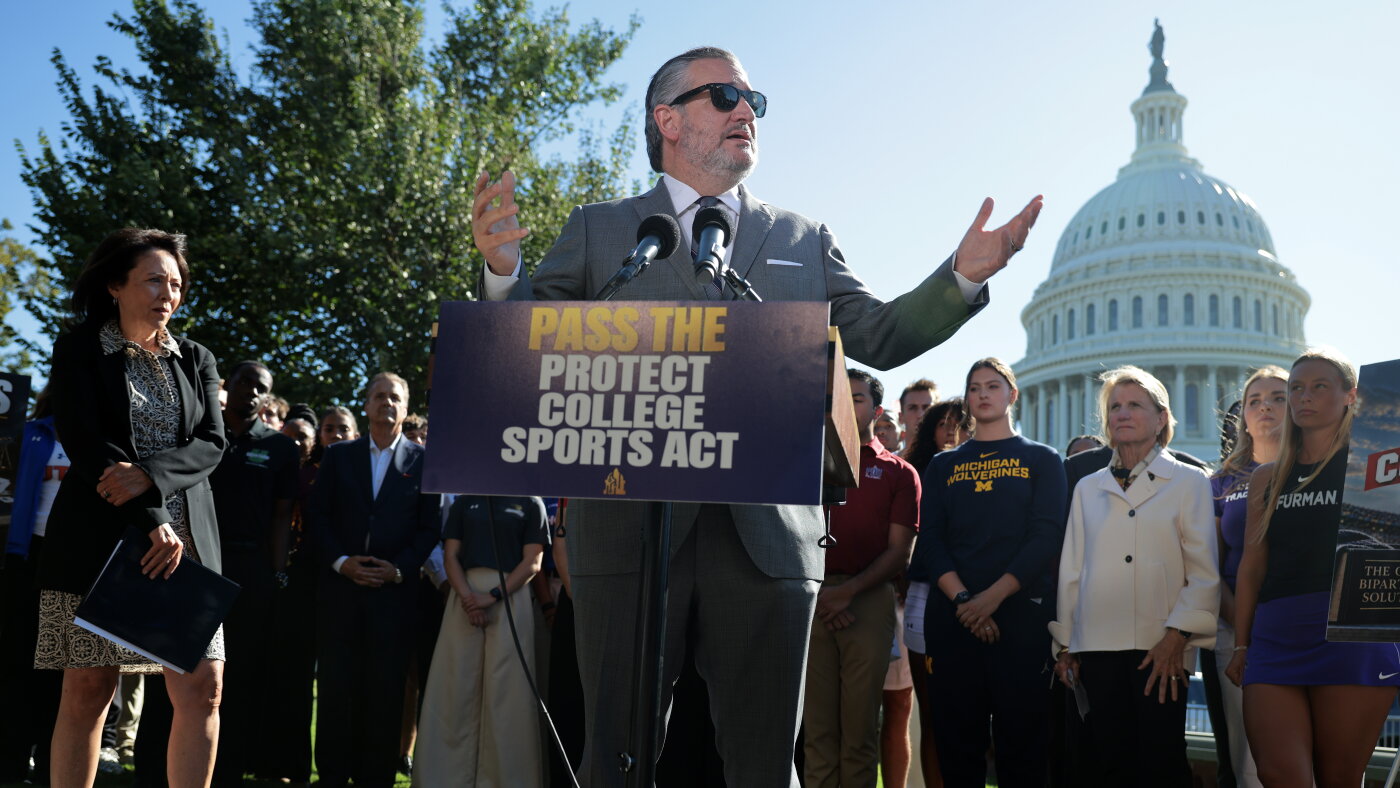
With a major college sports reform bill on the brink of a milestone in Congress, some former athletes have a special place in the debate: the handful of U.S. Senators who played college sports themselves.
asserted
who → have → sports
Supporters of the Protect College Sports Act, which is poised to pass the Senate on Monday, say the bill is needed to fix what they call an era of chaos in Division I athletics, characterized by ballooning pay for athletes, unlimited transfers between schools, constant lawsuits over eligibility rules and runaway athletic department budgets.
asserted
they → poise → rules
At least half a dozen sitting senators were NCAA Division I athletes, and a handful of others played in Division II or in sports governed by other organizations.
asserted
handful → sit → organizations
As the debate over the bill has unfolded over the past year, their experiences have informed their approach to the legislation.
asserted
experiences → unfold → legislation
No one in the Senate spent as many years in college sports as Tommy Tuberville, the football coach turned Alabama senator (who is stepping down after this term as he runs for governor in this fall's election in the state).
asserted
he → spend → state
Tuberville played football at the Division II school Southern State, then went on to be a head coach at Ole Miss, Auburn, Texas Tech and Cincinnati.
asserted
Tuberville → play → Miss
Tuberville retired in 2016, soon after a federal lawsuit filed by former UCLA basketball player Ed O'Bannon over the use of his name and likeness in a video game began to chip away at the NCAA's longstanding tradition of amateurism.
asserted
lawsuit → retire → amateurism
A decade later, name-image-likeness payments, known as NIL, have transformed college sports, as high-level athletes — especially in the revenue-generating sports of football and basketball — now regularly sign deals worth thousands, or even millions, of dollars per season.
asserted
athletes → know → season
Pay for athletes is here to stay, Tuberville, a conservative Republican, said during a speech on the Senate floor in June.
asserted
Tuberville → stay → June
"For years, everyone around college sports made money — schools, conferences, television networks, sponsors, coaches — while the athletes were told they could not make any money," he said.
uncertain
he → make → money
"That needed to change, and it did."
asserted
it → need → ?
But other changes, many of them brought about by the flood of litigation that followed O'Bannon, have been harmful, he argued — especially the erosion of NCAA rules about who is eligible to play college sports and the freedom of athletes to transfer between schools without penalty, as thousands of Division I athletes now do each year.
asserted
thousands → bring → athletes
Tuberville initially opposed the Protect College Sports Act because he saw it as government overreach into college sports.
asserted
he → oppose → sports
But a primary purpose of the Protect College Sports Act is to grant the NCAA a limited antitrust exemption in order to restore the five-year eligibility rule and the one-time free transfer for athletes (subsequent transfers would require an athlete to sit out from competition for a year, with some exceptions).
asserted
transfers → grant → exceptions
So, this month, Tuberville switched his vote to yes.
asserted
Tuberville → switch → vote
"When I was coaching, you used to be able to develop a young person over a four- or five-year period and send them out into the real world as a man or woman with a degree, an education.
asserted
you → coach → degree
And that's what it's about," Tuberville said in June.
asserted
Tuberville → say → June
"Now you're lucky to keep a player one season."
asserted
you → keep → player
Jim Justice of West Virginia played golf at Marshall.
asserted
Justice → play → Marshall
Ron Wyden of Oregon went to U.C. Santa Barbara on a basketball scholarship.
asserted
Wyden → go → scholarship
Dave McCormick of Pennsylvania co-captained the wrestling team at West Point.
asserted
co → co → Point
And several senators played college football — including Cory Booker, the Democrat from New Jersey, who played tight end at Stanford.
asserted
who → play → Stanford
He qualified for the academic powerhouse, he jokes, not because of his 4.0 GPA and 1600 SAT but rather his 1,600 reception yards and 4.0 yards per carry.
asserted
he → qualify → carry
Booker was on the team from 1987 to 1990, when college football's big money era was just getting started.
asserted
era → start → 1990
Still, Booker said, he soon began to wonder how fair the whole arrangement was, especially for teammates who had come from a lower socioeconomic status than his middle-class family.
asserted
who → say → family
"I just saw the economic bargain that they were getting — coming hundreds, if not thousands of miles away from family, not having the resources in any way proportionate to what they were doing for the university and for TV contracts and for well-paid coaches," he said.
asserted
he → see → coaches
After he graduated, Booker said, his discomfort grew as he saw friends at other schools have to pay out of pocket to finish their degrees after their playing careers ended.
asserted
careers → graduate → degrees
Teammates who had been injured playing football were still feeling the effects years later, but paying for their own medical care, as schools had no obligations to cover those costs.
asserted
schools → injure → costs
Meanwhile, college athletic department budgets have ballooned.
asserted
budgets → balloon → ?
Earlier this month, Sen. Maria Cantwell of Washington, the lead Democrat on the bill, released a report that cited enormous increases in spending from 2005 to 2023: a 200% bump in travel costs, 250% in gameday expenses, more than 300% in recruiting, and the whopper — a 370% boom in pay for coaches.
asserted
that → release → coaches
"That's what frustrates me — we have a bill that's going to protect the wealth and the gravy train for a lot of folks but puts burdens on college athletes," said Booker.
asserted
Booker → frustrate → athletes
"It doesn't even put burdens on the coaches."
asserted
It → put → coaches
Booker has consistently voted against the bill in procedural votes so far.
asserted
Booker → vote → votes
And he has proposed a handful of amendments, including one that would limit coaches' annual salaries to $5 million.
asserted
that → propose → million
According to databases maintained by USA Today, nearly 50 college football coaches earn more than that each year, as do more than a dozen basketball coaches.
uncertain
coaches → accord → that
The bill has plenty of other provisions.
asserted
bill → have → provisions
It significantly increases the amount schools are allowed to pay players directly in revenue sharing, from about $21 million this season — an amount established by a landmark legal settlement last year — to $49 million.
asserted
schools → increase → million
It attempts to crack down on above-market-value NIL deals and caps agent pay.
asserted
It → attempt → pay
It gives conferences the option to pool their media rights.
asserted
It → give → rights
…and 17 more, not listed.
 The Aporia