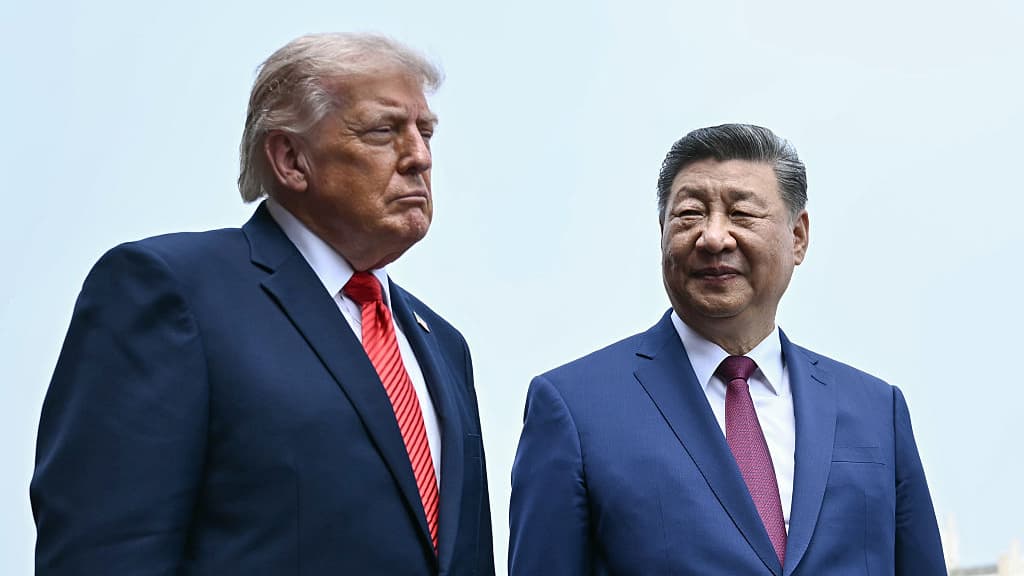
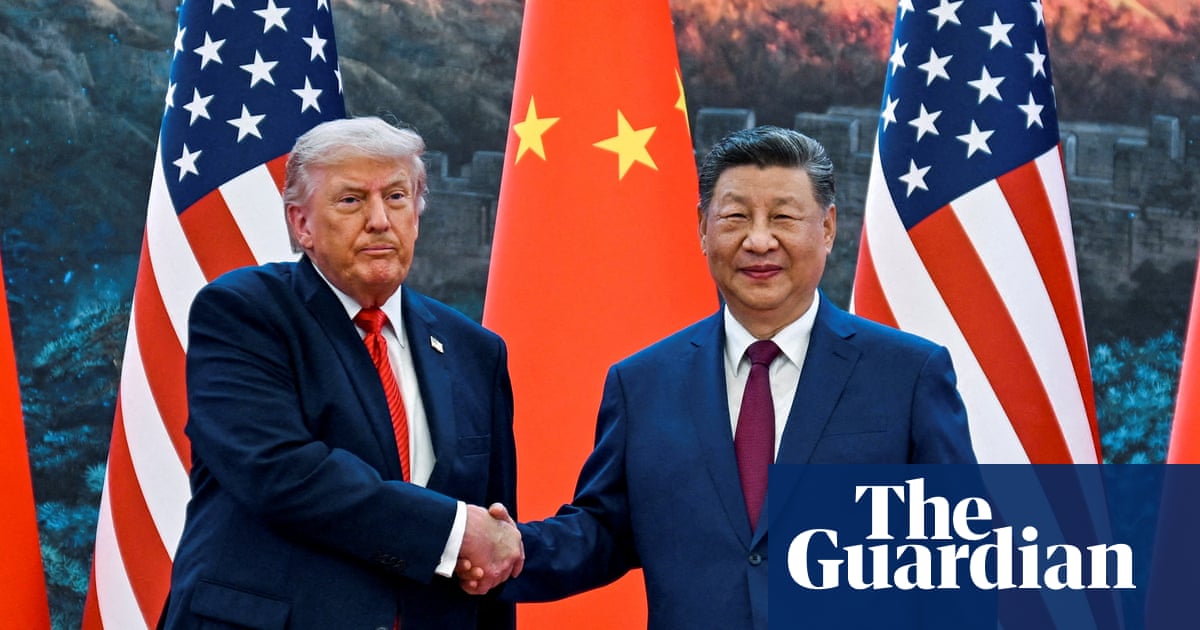
President Donald Trump rejected calls to regulate artificial intelligence, stating the US will not slow its progress even as other leaders express concerns about AI risks. During a meeting with Chinese President Xi Jinping, Trump also declined to cooperate on AI development, prioritizing U.S. leadership over collaboration. The UN Secretary-General had urged for guardrails on AI at the recent United Nations General Assembly, but no breakthrough agreement emerged from the US-China summit regarding AI regulation or cooperation.
Written locally by qwen2.5:14b on 2026-09-26,
using this article's own text rather than the other coverage of the
same event (that is the story summary below).
Story summary
On September 26, 2026, U.S. President Donald Trump declared during a White House press conference that the United States should not collaborate with China on artificial intelligence (AI). Despite having discussions with Chinese President Xi Jinping about AI, Trump insisted that integrating efforts would hinder American dominance in technology. He stated, “When you’re leading, you don’t open it up to each other,” emphasizing U.S. leadership over China in this domain. Additionally, at the launch of a new AI-powered federal government portal called America.gov, Trump reiterated his stance, saying, "Whoever wins superintelligence wins," reinforcing his commitment to maintaining American superiority in AI technology.
Written for “US China AI Policy” on 2026-10-05,
grounded in this article and the 2 other(s) covering the same event.
United States President Donald Trump has said the country will not be heeding growing calls to regulate the development of artificial intelligence.
asserted
country → say → intelligence
On Saturday, as he departed the White House, Trump told reporters the US “is not going to be putting on brakes” for AI, even as US lawmakers and CEOs of some of the nation’s largest tech firms agreed on the need to slow its pace, citing its potential to put humanity at risk.
asserted
lawmakers → depart → risk
Recommended Stories
list of 3 items- list 1 of 3US and China presidents discuss cooperation, trade and AI risks
- list 2 of 3When AI’s moving this fast, who’s protecting us?
- list 3 of 3Trump hails ‘very productive’ talks with China’s Xi Jinping
The president likened those fears to other issues he has previously claimed are “hoaxes”, including climate change and the investigation that examined whether his 2016 campaign colluded with Russian operatives.
“When they wanna put on brakes, it’s just like everybody’s going to be dead.
asserted
everybody → discuss → brakes
You’re all supposed to be dead now, because of global warming.
asserted
You → suppose → warming
It’s like Russia, Russia, Russia hoax.
asserted
It → ’ → hoax
All of these different hoaxes,” Trump said.
asserted
Trump → say → hoaxes
“What they wanna do is stop our progress, because we’re leading China by a lot,” he added.
asserted
he → stop → lot
“And we’re going to keep it that way.”
asserted
we → go → it
Trump, who just concluded a 3-day summit with Chinese President Xi Jinping, said the US should not cooperate with China on the technology.
asserted
US → conclude → technology
“I would rather not integrate, because we’re leading by a lot,” he said.
asserted
he → integrate → lot
“When you’re leading, you don’t open it up to each other.”
asserted
you → lead → other
During his final address before the United Nations General Assembly, UN Secretary-General Antonio Guterres urged leaders on Tuesday to enact guardrails on AI, warning that unchecked development “without accountability” could put the world at risk.
uncertain
development → urge → risk
US lawmakers and experts had hoped Trump and Xi would use their meeting to deliver a breakthrough agreement on AI.
asserted
Trump → hop → AI
But that did not materialise.
asserted
that → materialise → ?
“We didn’t spend that much time talking about it,” Trump said.
asserted
Trump → spend → it
As criticism rippled through Washington — and around the world — over the squandered opportunity, the White House on Friday said the US and China agreed to establish a “bilateral communication channel” for AI incidents.
asserted
US → ripple → incidents
The president, however, indicated that any AI discussions he had with Xi, who is set to meet with Trump two more times this year, largely focused on his preferred name for the technology: “super intelligence”.
asserted
who → indicate → technology
China “respects” Washington’s switch in phrasing from artificial intelligence to “super intelligence”, the Chinese Ministry of Foreign Affairs said on Saturday, after Donald Trump said Xi appeared to like the rewording.
asserted
Xi → respect → rewording
The US president announced on Tuesday that his administration would rename AI as “super intelligence”, or SI, in official communications.
“Artificial intelligence technologies are continuously developing, all parties can strengthen exchanges, discuss in-depth and seek consensus in light of the latest situation,” said a statement from an unidentified Chinese ministry spokesperson.
asserted
statement → announce → spokesperson
When it comes to AI, Xi has taken a more measured tone than Trump and said the technology must develop under human control.
asserted
technology → come → control
 The Aporia