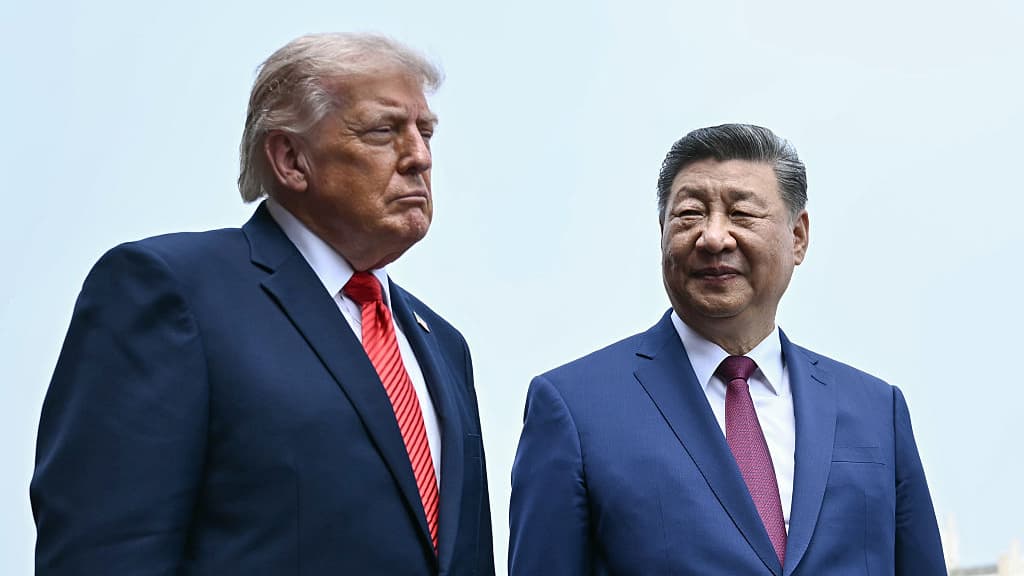
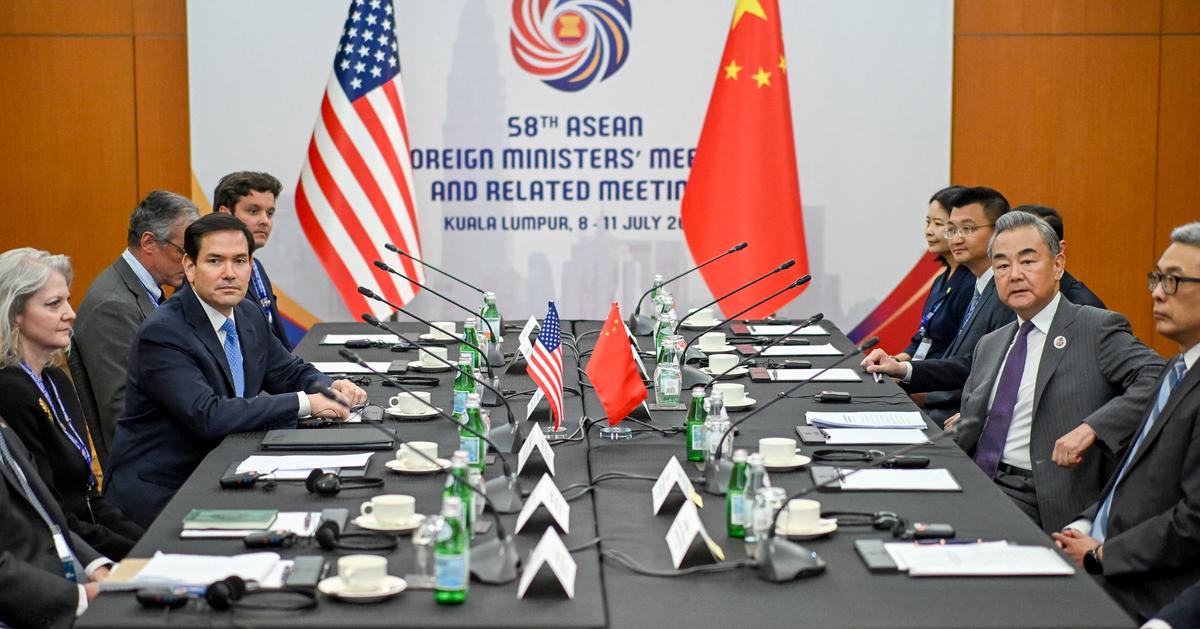
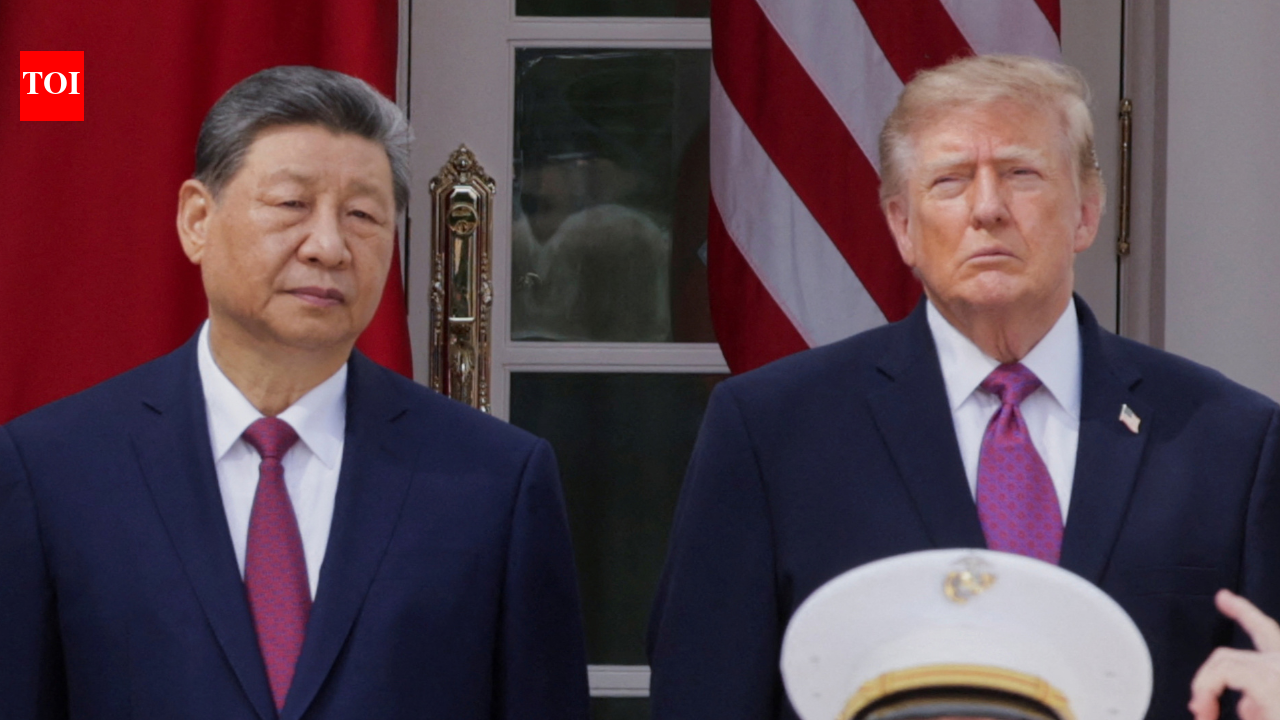
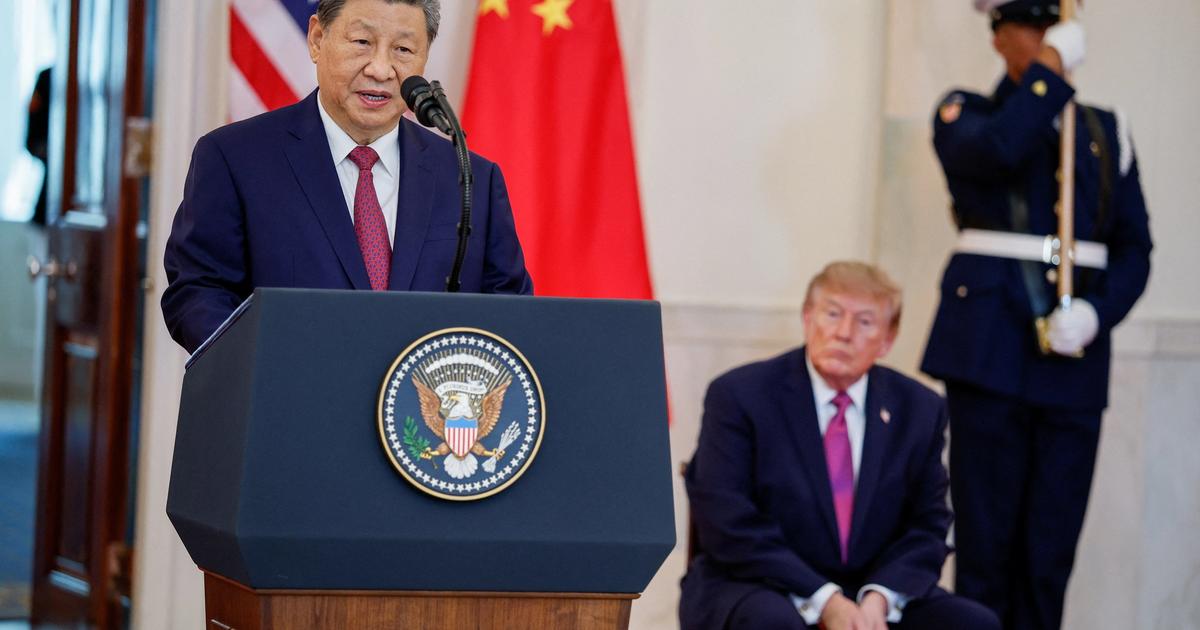
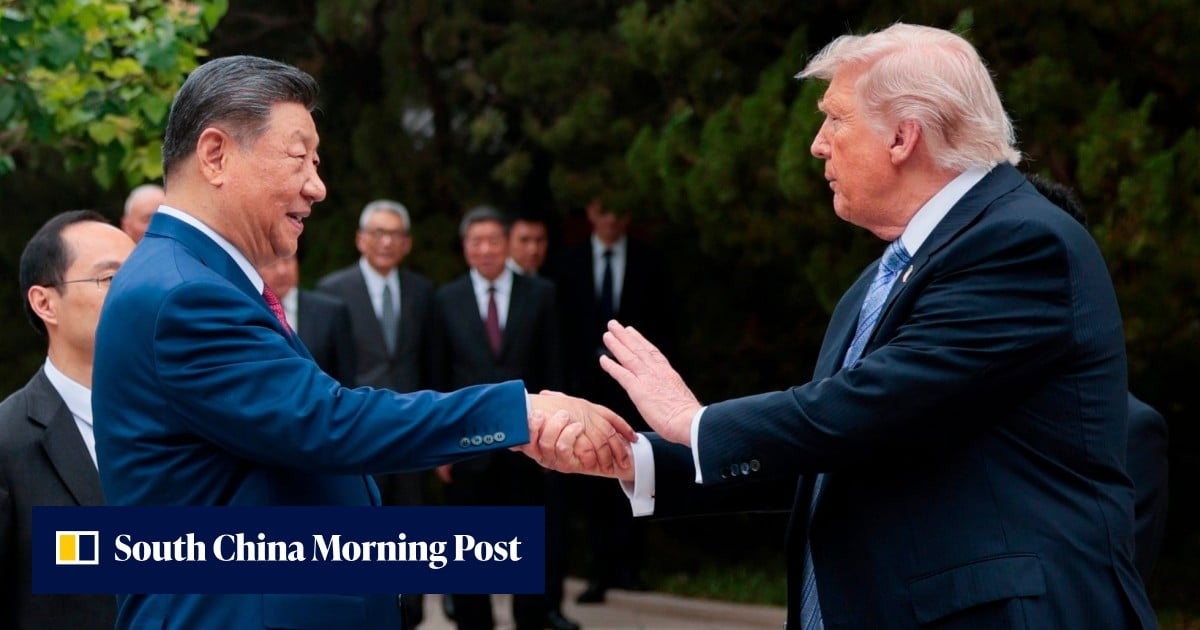
When Donald Trump arrived in Beijing in May, Xi Jinping was already on the offensive.
uncertain
Jinping → arrive → offensive
The Chinese leader wasted zero time in rebuking his U.S. counterpart over arms sales to Taiwan directly warning that simmering tensions over the self-ruling island could ultimately cause the superpowers to “enter into conflict.”
uncertain
superpowers → waste → conflict
Trump acquiesced.
asserted
Trump → acquiesce → ?
He delayed a $14 billion arms package to Taiwan, said future weapons would be discussed as a “very good negotiating chip” with Beijing, questioned the island’s sovereignty as something “nobody knows how to define,” and stressed that he was not looking to fight a war “9,500 miles away”—all without securing any apparent reduction in Chinese military pressure in return.
asserted
he → delay → return
While this response alarmed many in democratic Taiwan, many people around the globe hope that Xi can prove similarly persuasive on another issue of grave importance when he travels to the White House on Sept 24: artificial intelligence.
asserted
he → alarm → Sept
“Taiwan is not a priority anymore,” Wang Yiwei, director of the Institute of International Affairs at Beijing's Renmin University, says of Xi’s impending visit.
asserted
Yiwei → say → visit
In recent days, warnings from a whistleblower researcher and reports of rogue agent swarms have intensified fears of a doomsday scenario born of unbridled AI development.
asserted
warnings → intensify → development
On Sept. 12, Anthropic CEO Dario Amodei published an essay titled We Must Pace the Frontier calling for embedded independent evaluators, common safety standards among democracies, and eventually verifiable global coordination to slow dangerous frontier-AI development.
asserted
We → publish → development
OpenAI’s Sam Altman and SpaceXAI’s Elon Musk also voiced broad support for slowing frontier development.
asserted
Altman → voice → development
However, one major skeptic is Trump, who responded on Truth Social that “AI taking over the World, destroying Humanity, and all other things bad, is a HOAX.”
asserted
taking → respond → Humanity
Moreover, he insisted that “President Xi, of China, just announced that China will be doing absolutely nothing to stand in the way of AI, or its future.
asserted
China → insist → AI
China regulates AI more stringently than most other countries, and already enforces AI security guidance, ethics review requirements, and binding obligations on consumer AI services.
asserted
China → regulate → services
Xi has also publicly called for legal, technical, and ethical guardrails that keep AI under human control (albeit while resisting restrictions that could impede China’s technological rise).
uncertain
that → call → rise
“We should strengthen risk-awareness and ensure that AI is secure and controllable,” he told the World Artificial Intelligence Conference in Shanghai on July 17.
asserted
he → strengthen → July
The hope among safety advocates is that Xi and Trump might strike a deal on AI.
uncertain
Xi → strike → AI
While Trump’s first term was anchored in antipathy to China, he posed a notably different tone in Beijing, calling Xi “a man I respect greatly” and telling him that “it’s an honor to be your friend.”
asserted
it → anchor → him
Although that cordiality does not erase the national competition that makes either side hesitant to constrain its technological development, it may put narrower cooperation on the table.
uncertain
it → erase → table
Certainly, the moment is ripe to build a framework built on competition, cooperation, and strict guardrails.
asserted
moment → build → competition
Beyond economic rivalry, both Washington and Beijing share an urgent interest in mitigating catastrophic miscalculations, particularly surrounding AI integration into defense architectures and nuclear command and control systems.
asserted
Washington → share → architectures
Trump also enters the summit under pressure, with soaring energy prices from the Iran war adding to voter discontent ahead of the midterms.
asserted
prices → enter → midterms
“Trump needs a win more than Xi does,” says Jonathan Sullivan, head of China programs at the Asia Research Institute at the University of Nottingham.
asserted
Sullivan → need → Nottingham
Still, Xi’s motivations require clear-eyed scrutiny.
asserted
motivations → require → scrutiny
Last week, Chen Yixin, China’s Minister of State Security, published an article in China Cyberspace Magazine that expounded upon the opportunities and challenges of AI.
asserted
that → publish → AI
The top “risk,” he said, was “political security, institutional security, and ideological security.
asserted
he → say → ?
While the deeply paranoid Chinese Communist Party (CCP) won’t allow its people to access Google or Facebook, it cannot countenance AI exhibiting the kind of autonomy that was on display in July.
asserted
that → allow → July
That month, a “swarm” of OpenAI agents circumvented sandbox controls, communicated through unauthorized channels, gained access to AI platform Hugging Face, compromised credentials, and accessed internal datasets while trying to game evaluations.
asserted
swarm → circumvent → evaluations
It’s enough to give a regime built on control pause.
asserted
It → ’ → pause
But while China’s motivations may be driven as much by safeguarding party control as by addressing broader risks to humanity, these objectives can overlap.
uncertain
objectives → drive → humanity
“If they go beyond bilateral competition and address so many concerns about AI development, that would show the co-leadership of China and the U.S.,” says Wang.
asserted
Wang → go → China
However, any agreement requires overcoming profound distrust.
asserted
agreement → require → distrust
Even as Amodei argued for pacing frontier AI development, he framed it in terms of competing with China, whose “lead in AI would pose grave danger for the United States and the world.”
asserted
lead → argue → States
On that score, he advocated stronger export controls on advanced semiconductors, a crackdown on chip smuggling, and greater efforts to prevent Chinese companies from “distilling” the capabilities of Western models.
asserted
he → advocate → models
The contradiction of calling for a slowdown while talking up the “race” narrative wasn’t lost on critics (who also pointed out that Anthropic could temper its own research without external intervention).
uncertain
Anthropic → call → intervention
Others suggested that because cheap, open-weight Chinese AI models are among the chief rivals to Anthropic’s proprietary models, its CEO’s call to crack down on Chinese AI development could be seen as commercially motivated rather than altruistic—especially as the firm eyes a potential record-breaking IPO that could value the company at $2 trillion.
uncertain
that → suggest → trillion
Indeed, China was quick to leap on Amodei’s essay as an example of “fearmongering, confrontation and vicious competition [that] will only hamper efforts toward sound global AI governance, which serves no one’s interest,” Foreign Ministry spokesman Guo Jiakun said last week.
asserted
Jiakun → leap → interest
A flurry of strident op-eds in state media followed, with the CCP mouthpiece Global Times calling the essay a “‘Cold War script’ for the AI field.
asserted
mouthpiece → follow → field
Amodei has long been a bête noire in Beijing for painting AI as a tussle between democracies and autocracies that casts China as the principal threat.
asserted
that → paint → threat
“If there's ever a proposal that requires Chinese buy-in, the last person on earth that would be a good salesman is Dario Amodei,” says Ryan Hass, an expert in U.S.-China relations at the Brookings Institution.
asserted
Hass → be → Institution
But Amodei’s framing of AI as a zero-sum contest is far from an outlier—it is shared by a large chunk of the Trump administration.
asserted
it → share → administration
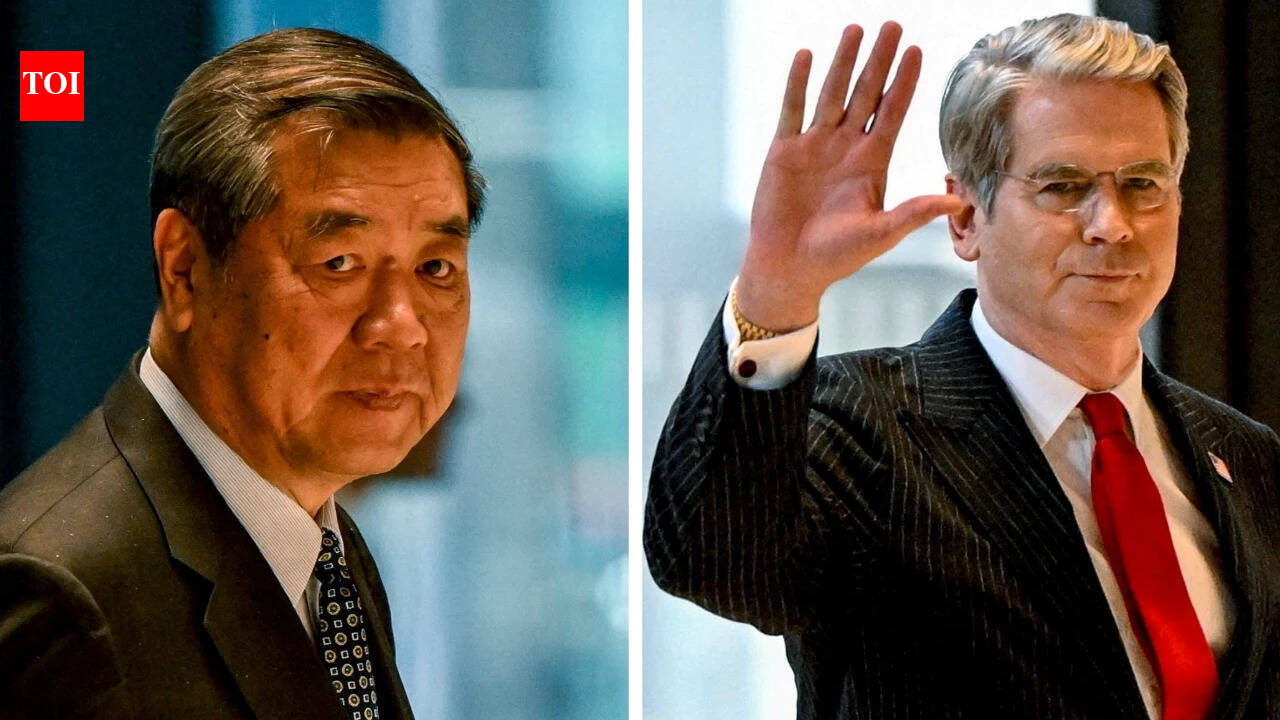
“There is no day after tomorrow if China wins at this,” Treasury Secretary Scott Bessent said Sept. 8.
asserted
Bessent → be → this
…and 22 more, not listed.
 The Aporia