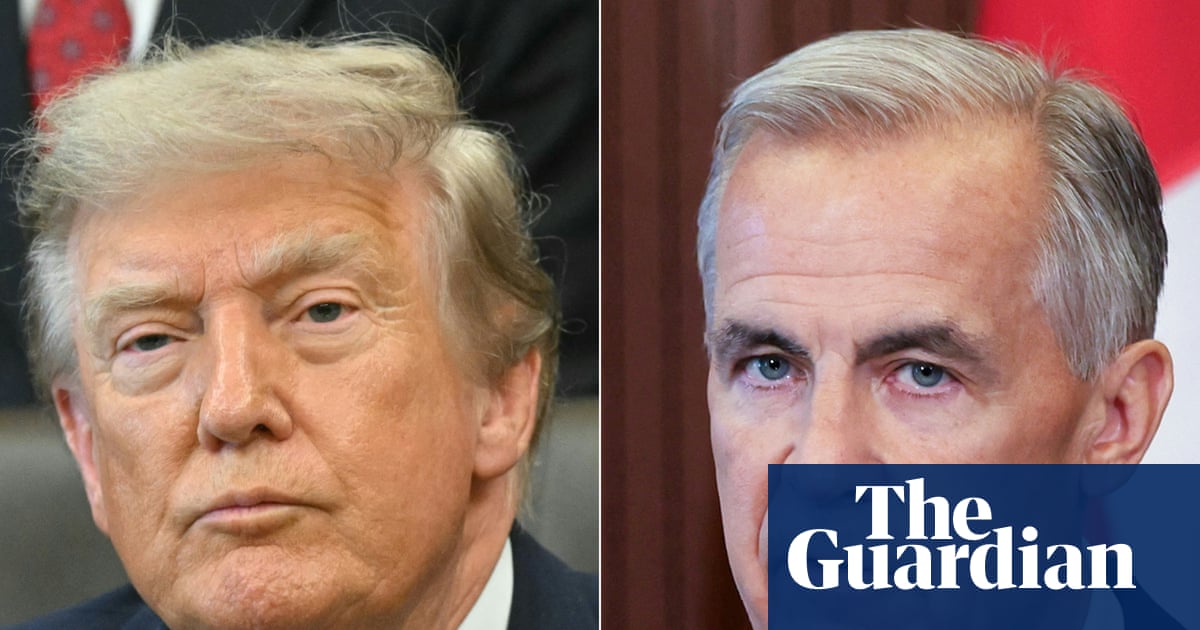
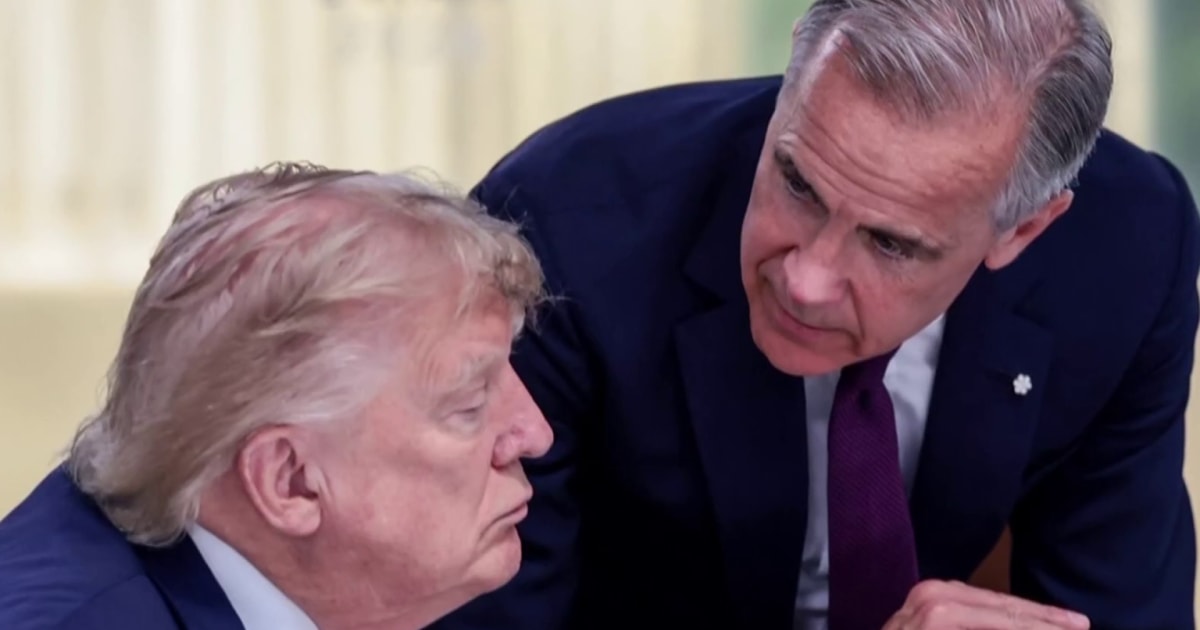
Prime Minister Mark Carney insists Canada is “at war” with the U.S. after trade talks between the two countries fell apart over the weekend.
asserted
talks → insist → weekend
But the exchange of talking points instead of bullets is foolish and destructive enough, and evidence of the futility of managing trade rather than simply getting governments out of the way of people freely exchanging goods and services.
asserted
people → manage → goods
For his part, U.S. President Donald Trump responded that “Canada wants the benefits of being a State, without being one.”
asserted
Canada → respond → benefits
He complained that Canadians have “charged our great farmers, for many years, massive amounts of Tariffs.
asserted
Canadians → complain → Tariffs
Amidst recriminations as to who caused the breakdown — Politico reports the talks “ultimately buckled under a combination of last-minute demands and political constraints on both sides” — the two national leaders are threatening new trade barriers in addition to preexisting tariffs.
asserted
leaders → cause → tariffs
Pundits and policy experts are digging through such details as have leaked to figure out just where the deal went off the rails.
asserted
deal → dig → rails
Strictly speaking, Carney is the more credible figure in the dispute since he’s right that “America has changed” and the U.S. government is trying to “put a series of tariffs on its closest allies and use economic integration as a weapon.”
asserted
government → speak → weapon
Trump has been notably belligerent in the process of reshaping trade — as he is in all things — making Carney’s “war” talk somewhat believable.
asserted
talk → reshape → things
But the parsing of trade demands and personalities misses a larger point.
asserted
parsing → miss → point
While Donald Trump can be a bully and Carney retains his calm while sniffily complaining about insults to the sovereignty of his country, both of them, and their flunkies, have engaged in the presumptuous business of trying to negotiate the rules of exchange between millions of buyers and sellers in two countries.
asserted
both → retain → countries
We’d all be far better off if even just one of them stepped aside and let matters work themselves out.
asserted
matters → step → themselves
Decades ago, economist Milton Friedman noted that protectionists constantly hand-wave away arguments in favour of free trade as “fine in theory” while insisting that trade must be “reciprocal” — precisely the argument the Trump administration makes as it reworks already rule-burdened trade deals.
asserted
it → note → deals
At a time when Japan was the feared economic behemoth that was supposedly going to eat the world, Friedman warned that tariffs “raise prices to customers and waste our resources.”
asserted
tariffs → fear → resources
He argued that when the governments of other countries shield their markets from competition, instead of benefiting their economies they hurt their people and businesses.
asserted
they → argue → people
“The wise course for us is precisely the opposite — to move unilaterally toward free trade.
asserted
course → move → trade
If they still choose to impose restrictions, that is too bad but at least we have not added insult to injury.”
asserted
we → choose → injury
Evidence for Friedman’s position is found in a recent New York Times article about the vulnerability of electricity grids, largely because of their dependence on expensive, hand-crafted power transformers that are difficult to replace.
asserted
that → find → transformers
While U.S. companies are building manufacturing facilities and developing alternative transformer technologies, they’re hampered by tariffs on copper and aluminum.
asserted
they → build → copper
“Costs are up almost 20 percent,” an industry executive told the Times.
asserted
executive → tell → Times
“We need relief on all of the metals.”
asserted
We → need → metals
The next massive blackout may happen because trade barriers raised the cost of preventing it beyond the industry’s ability to afford resilience.
uncertain
barriers → happen → resilience
Just because Trump is an economic ignoramus who thinks economic activity can be successfully managed by government, despite a long history of evidence to the contrary, doesn’t mean that Carney should follow his example and contribute to the conflict.
asserted
Carney → think → conflict
Quebec-born Vincent Geloso, an economics professor at Virginia’s George Mason University, argues that “Canada’s response to American tariffs should be incredibly simple: slash our own tariffs and trade barriers.
asserted
response → bear → tariffs
He makes the same argument offered by Friedman, that tariffs hurt consumers and businesses in the countries that impose them.
asserted
that → make → them
“How exactly does making Canadians poorer punish Donald Trump?
asserted
Canadians → make → Trump
If the Trump admin wants to shoot itself in the foot, the Carney government is under no obligation to shoot Canadians in the face with a twelve gauge shotgun for the sake of ‘reciprocity.’”
asserted
government → want → reciprocity
Or, as the late British economist Joan Robinson wrote, “The popular view that free trade is all very well so long as all nations are free-traders, but that when other nations erect tariffs we must erect tariffs too, is countered by the argument that it would be just as sensible to drop rocks into our harbours because other nations have rocky coasts.”
asserted
nations → write → coasts
In a 2025 paper, Geloso pointed out that Britain benefited from repealing “Corn Law” tariffs on imported grain.
asserted
Britain → point → grain
“The Corn Laws had the effect of keeping food prices in the UK 9% higher relative to world markets.
asserted
Laws → have → markets
He added that most 19th century trade liberalization was unilateral, with no expectation that other nations would necessarily reciprocate.
asserted
nations → add → expectation
Liberalizing nations quickly prospered.
asserted
Liberalizing → liberalize → nations
Yes, it’s better when all governments get out of the way and let people and businesses exercise their right to engage in voluntary exchange without regard to borders.
asserted
people → ’ → borders
But holding trade hostage to the intelligence, decency, and economic wisdom of political leaders in multiple countries is a sucker’s bet.
asserted
holding → hold → countries
Inevitably, populists with neo-mercantilist ideas arise and burden their own people with tariffs while claiming to help them.
asserted
populists → arise → them
In the days to come, people will spend much time digging for and through the details of the failed U.S.-Canada trade talks.
asserted
people → come → talks
But that’s a waste of time.
asserted
that → ’ → time
The only definition of “fair” that matters is what people voluntarily agree to in their own dealings.
asserted
people → matter → dealings
If, under current management, the U.S. won’t embrace free trade policies that make everybody wealthier, Canada should do so on its own.
asserted
Canada → embrace → own
Canadians would be freer and more prosperous by avoiding the American mistake of burdening commerce with tariffs and conditions.
asserted
Canadians → avoid → tariffs
 The Aporia