California, other states sue again to block new Postal Service rules for mail ballots
asserted
California → sue → ballots
- California and other Democratic-led states are challenging rules for mail ballots that the U.S. Postal Service issued in response to an executive order from President Trump in March.
-
asserted
Service → lead → March
The rules require states to submit voter lists to the Postal Service, and for the USPS to reject ballots that don’t match those lists.
asserted
that → require → lists
California and other Democratic-led states sued again Wednesday to block the U.S. Postal Service from implementing new nationwide rules for mail ballots, arguing they usurp state authority over elections at President Trump’s behest, expose voter information unnecessarily and threaten chaos in the rapidly approaching November election.
asserted
they → lead → election
The Postal Service formally issued a 95-page “final rule” on Friday asserting that it was amending its mailing standards for mail ballots in federal elections to comply with Trump’s March executive order.
asserted
it → issue → order
Trump demanded the rule changes as part of a broader plan to combat what he alleges — without evidence — is widespread voter fraud in the U.S., including by noncitizens voting through the mail.
asserted
he → demand → mail
Election experts say there is zero evidence of such problems existing in significant numbers.
asserted
problems → say → numbers
“This mail-in voting rule is an unlawful overreach that shows just how far President Trump will go to control elections, but as I’ve said before, this fight is far from over and we are confident that the facts and the law are on our side,” California Atty. Gen. Rob Bonta said.
asserted
Bonta → mail → side
“Donald Trump does not run elections.
asserted
Trump → run → elections
States do.
asserted
States → do → ?
And his latest attack on democracy is proof of how weak he has become,” Gov. Gavin Newsom said.
asserted
Newsom → become → democracy
“California will continue to lead the way in defending democracy — using every tool at our disposal and every minute in our day.
asserted
California → continue → day
This perilous moment in history demands no less from us.”
asserted
moment → demand → us
The states’ lawsuit, filed in U.S. District Court in Massachusetts by 24 state attorneys general and the governor of Pennsylvania, asks for immediate court intervention to halt the Postal Service changes from being implemented while the litigation continues.
asserted
litigation → file → changes
California officials stressed that the court’s ruling does not allow final implementation of the new rules requested by Trump.
asserted
ruling → stress → Trump
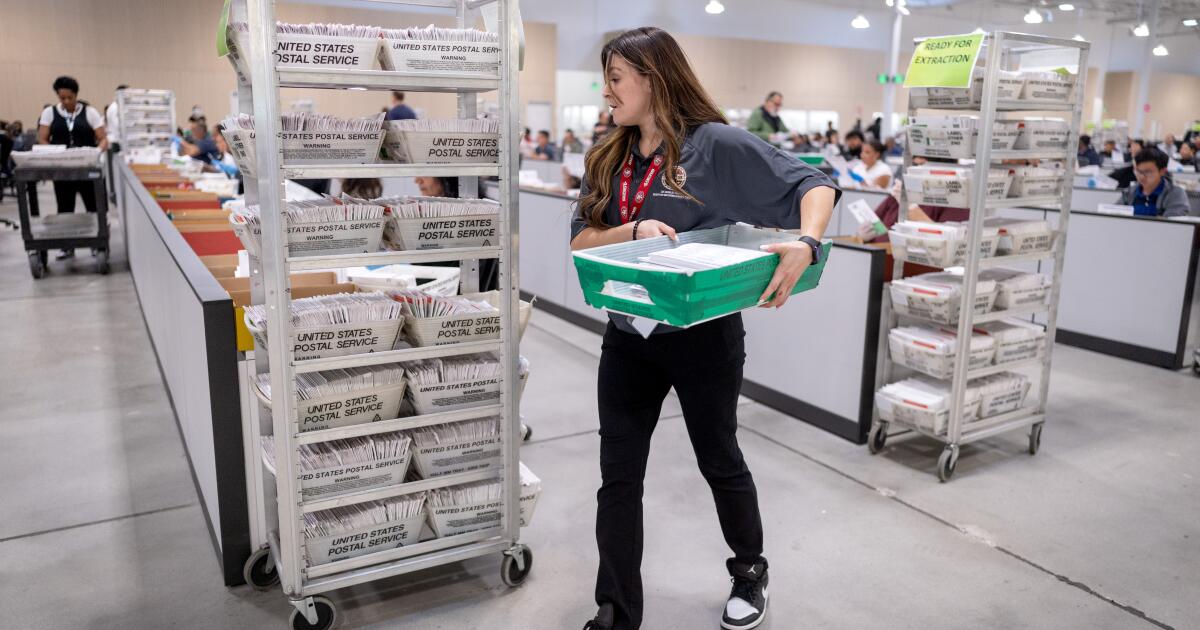
The new postal rules require states to submit lists of eligible voters — including their names and addresses — to the Postal Service, and to use new ballot envelopes with digital bar codes that would allow the Postal Service to identify and reject ballots that don’t match those lists.
asserted
that → require → lists
The rules do not give the Postal Service authority to dictate which voters may appear on state lists.
uncertain
voters → give → lists
However, the rules acknowledge that the lists would provide state voter data to federal law enforcement for the first time, and would put those authorities in “a better position to identify any potential issues regarding compliance with federal law that may merit further investigation.”
uncertain
that → acknowledge → investigation
Trump’s March executive order also required the Department of Homeland Security to use available federal data to compile its own state lists of eligible citizen voters, ostensibly to compare them with the mail voter lists provided by the states to the Postal Service, and identify and pursue any ineligible voters.
asserted
order → require → voters
Trump administration officials have said they are pursuing fraudulent voters and have warned state election officials that they could face legal consequences personally if they don’t do everything in their power to prevent voter fraud, including by noncitizens.
uncertain
they → say → noncitizens
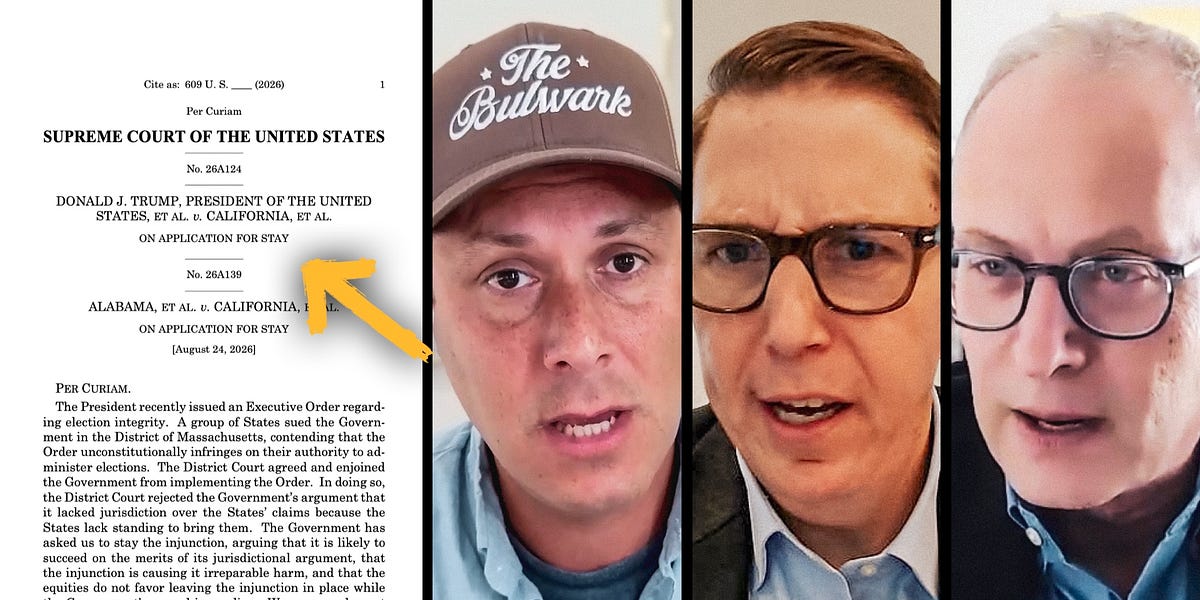
Wednesday’s lawsuit follows a decision Monday by the U.S. Supreme Court that found an earlier challenge from the states was premature, in part because it sought court relief to a rule-making process that required nothing of the states and before the Postal Service had moved to implement any changes.
asserted
Service → follow → changes
The high court’s ruling allowed the Postal Service to move forward with its work to comply with Trump’s order — lifting multiple lower court rulings blocking the process, including one early Wednesday — but explicitly noted that it had reached no conclusions as to the legality of the pending rules.
asserted
it → allow → rules
Bonta said Wednesday’s lawsuit calls on the courts to address that legality head on, as do other challenges filed since Monday by independent voting rights groups, Democratic Party organizations and leading Democrats in Congress.
asserted
challenges → say → Congress
And he said he is confident the lower courts — and ultimately the Supreme Court if necessary — will agree that the finalized rules constitute federal overreach.
asserted
rules → say → overreach
“President Trump doesn’t get to rewrite our voting system on a whim, and the United States Postal Service cannot sidestep the laws that govern the Postal Service just to carry out the president’s agenda,” Bonta said.
asserted
Bonta → get → agenda
“We’ll fight this every step of the way.”
asserted
We → fight → way
In response, Lauren Bis, a White House spokesperson, said Wednesday that the Supreme Court’s ruling “was a major win for the security of American elections” and defended the Postal Service process as being in line with Trump’s campaign promises.
asserted
ruling → say → promises
“Radical Democrats continue to oppose commonsense measures that protect the security of mail-in ballots and ensure only Americans are electing American leaders,” Bis said.
asserted
Bis → continue → leaders
“The Trump administration will continue to lawfully enact the agenda President Trump was elected on — which includes the safety and security of our elections.
asserted
which → continue → elections
Critics contend Trump’s executive order was devised as an end run around laws and a slew of recent court rulings blocking the administration’s outright demands for state voter rolls — which states, including California, have refused to provide.
asserted
states → contend → California
States have argued the administration’s demands are in bad faith, intended to bolster Trump’s baseless claims that U.S. elections are compromised rather than enhance election security.
uncertain
elections → argue → security
In issuing its new rules, the Postal Service rejected a slate of concerns from critics who submitted comments on the proposed rules, including that the changes are being proposed far too close to the November election and compliance will cost states and localities a huge amount of money.
asserted
compliance → issue → money
It also rejected concerns that creating a single nationwide voter database — which has never existed before — will provide a massive new target for foreign adversaries and other bad actors interested in disrupting U.S. elections.
asserted
which → reject → elections
The Postal Service concluded that the cost to the states is outweighed by the benefits of the changes.
asserted
cost → conclude → changes
It said it has sufficient staffing to implement the changes and is ready to safeguard the database it builds using “multi-layered security controls.”
asserted
it → say → controls
Bonta said he shares many of those concerns but is confident the changes will be ruled unlawful and halted before such problems are realized.
asserted
problems → say → concerns
“This is once more the president, and also this time the U.S. Postal Service, exerting authority they do not have, overreaching, interfering with our elections, undermining our elections integrity, trying to suppress the right to vote and disenfranchise voters,” Bonta said.
asserted
Bonta → exert → voters
More importantly, it’s unlawful.”
asserted
it → ’ → ?
 The Aporia