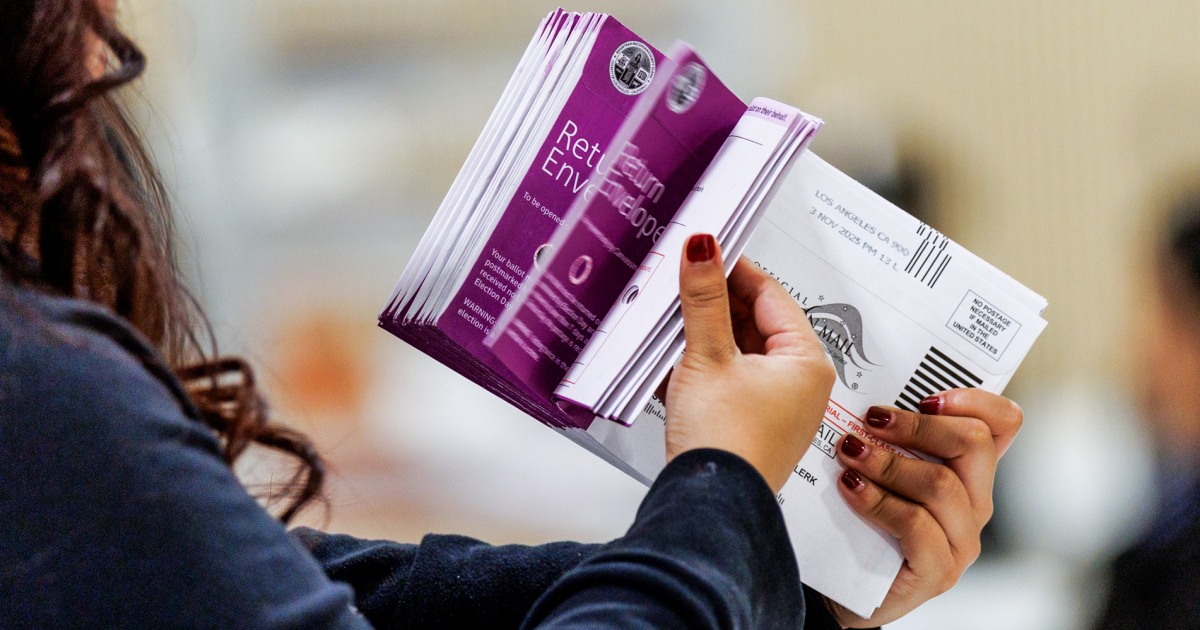
Federal Judge Indira Talwani has blocked a US Postal Service regulation that would have added bureaucracy to mail-in ballot process, citing it as likely unlawful and potentially disenfranchising voters. The measure was part of President Donald Trump's executive order on mail-in ballots, which aimed to track ballots and reject those submitted by people not on a federal list of eligible voters. Talwani's decision means the regulation remains blocked for at least 14 days, with time running out ahead of the November election. The judge noted that the administration had not provided evidence of widespread mail-in voting fraud, despite Trump's claims to the contrary.
Written by the local model on 2026-08-28,
using this article's own text rather than the other coverage of the
same event (that is the story summary below).
Story summary
Here's a summary of the real-world news story:
What happened: The Supreme Court allowed the Trump administration to move forward with its plan to restrict mail-in voting, despite opposition from Democratic-led states and election officials. This decision allows the administration to implement new rules for mail ballot delivery, which would require states to use specific formatting for mail ballot envelopes and an electronic system to track ballots.
Why it matters: The ruling has sparked concerns about potential chaos in the upcoming midterm elections, as many voters rely on mail-in voting. California and other Democratic-led states have vowed to sue again to block the Trump administration's plan, which they argue is an attempt to restrict voting rights.
Key players
- President Donald Trump
- Supreme Court justices (who allowed the administration's plan to move forward)
- Gavin Newsom, Governor of California (who plans to sue again to block the Trump administration's plan)
- Election officials and experts who warn about potential chaos in the elections
Timeline: The Supreme Court made its decision on Monday, allowing the Trump administration's plan to move forward. Democratic-led states have since filed a fresh lawsuit to block the US Postal Service from carrying out the plan.
Written for “Trump's Mail-In Ballot Restrictions” on 2026-08-31,
grounded in this article and the 14 other(s) covering the same event.
Why this leaning score
The article's own words the score was based on. Each is quoted
verbatim and was checked against the article text before being
stored, so you can find it in the original.
Leaning score -0.60 for article 2954 (high confidence, 1 verified quote) · logged 2026-08-28
A federal judge Thursday blocked a Postal Service regulation that would exert control over mail-in ballots ahead of the midterm elections in the latest setback on the issue for President Donald Trump.
asserted
that → block → Trump
The recently finalized measure would implement a key provision of Trump’s executive order on mail-in ballots that would add a new level of bureaucracy to the elections process, which is typically administered by states.
asserted
which → finalize → states
The executive order directed the U.S. Postal Service to, among other things, track mail-in ballots and potentially reject those submitted by people not on a federal list of eligible voters.
asserted
Service → direct → voters
The decision by Boston-based U.S. District Judge Indira Talwani in one case brought by the League of Women Voters and other groups and another brought by a coalition of states means part of the executive order remains blocked for at least 14 days, with time running out to implement it ahead of the November election.
asserted
time → base → election
“This rule is a clear attempt by the federal government to interfere in elections it has no power to control,” New York Attorney General Letitia James said in a statement.
asserted
James → interfere → statement
“Today, a federal court halted it before this administration could wreak havoc on our elections.”
uncertain
administration → halt → elections
Talwani wrote that the regulation is most likely unlawful because the president cannot insert the federal government into elections without the express authorization of Congress.
asserted
president → write → Congress
“The court finds plaintiffs likely to succeed on the merits of their claims,” she said.
uncertain
she → find → claims
The Trump administration could seek to quickly overturn her decision by rushing to the Supreme Court.
uncertain
administration → seek → Court
Trump often criticizes mail-in ballots, claiming without evidence that there is rampant fraud even though they are widely used by Republicans and Democrats all across the country.
asserted
they → criticize → country
Talwani noted in her ruling that the administration had not offered “any evidence regarding fraudulent absentee or mail-in voting.”
The government’s interest in “correcting an unsubstantiated problem through likely unconstitutional means is dwarfed by the overwhelming risk of pervasive disenfranchisement,” she added.
asserted
she → note → disenfranchisement
Directly addressing the short time frame ahead of the election, Talwani said states “have neither time nor funds” to meet the necessary requirements, including updating election management systems and training staff members.
asserted
states → address → members
Based on the evidence before her, states’ compliance with what the Trump administration is asking of them before the 2026 midterms would be “practically impossible,” Talwani wrote.
asserted
Talwani → base → midterms
In a separate decision Wednesday, Talwani lifted an earlier injunction she had imposed that blocked vital elements of Trump’s executive order in the case.
asserted
that → lift → case
It is a different injunction from the one the Supreme Court lifted Monday in a similar case brought by California and 22 other states.
asserted
Court → lift → California
Talwani is overseeing both cases.
asserted
Talwani → oversee → cases
The Supreme Court found that Talwani had acted too hastily in ruling on the executive order but did not weigh in on whether the underlying proposal or the Postal Service regulation is lawful.
asserted
proposal → find → order
While the Postal Service regulation is now blocked, a provision of the executive order requiring the Department of Homeland Security to compile lists of eligible voters and send them to states remains in effect.
asserted
provision → block → effect