Meta Doesn’t Want to Be a Social Media Company Anymore

Mother Jones · collected 2026-08-27 · by Anna Merlan
Read the original at Mother Jones ↗

Summary

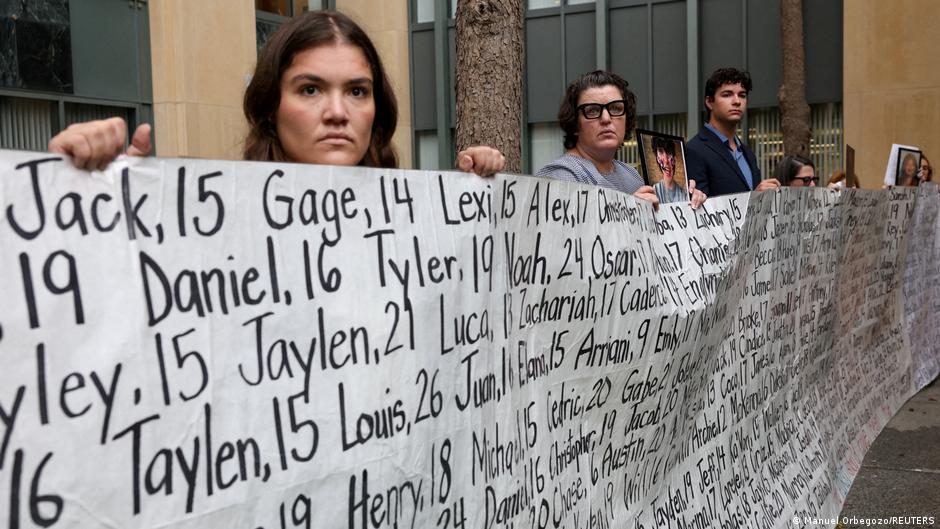
Meta has reached a settlement with 52 attorneys general to pay around $18 billion over 10 years and make its apps safer for teenagers. The company's changes include a default two-hour limit on teenage users' screen time and "night" and "school" modes to block notifications during certain times. This comes as Meta faces losses in court, including a recent trial in New Mexico where the jury found that the company misled consumers about the safety of its platforms. Despite these losses, Meta's revenue remains strong at $200.97 billion last year and the company is shifting focus towards becoming primarily an AI company, with investments in technical talent and data centers.
Written by the local model on 2026-08-27, using this article's own text rather than the other coverage of the same event (that is the story summary below).

Signals How these are calculated →

Claims extracted
28
claim-shaped sentences
Uncertain
11%
3 of 28 hedged
Leaning
Leans right
of the writing, not the subject
Publisher trust
95.1
red-flag proxy, not a credibility rating
Outlets on this story
9
Technology
Narrative spread
1
articles carrying this framing
Analyzed 2026-08-27 · how these are computed

AI analysis (generated at analysis time, not now)

Story summary

Meta, the parent company of Facebook and Instagram, has agreed to pay up to $18 billion as part of a settlement with 47 US states and territories over allegations that its platforms were designed to be addictive and harmed teenage users. The agreement, which still requires court approval, includes new child-safety rules such as daily time caps, school-hour notification bans, stronger age checks, and expanded parental controls aimed at limiting access to harmful content.

As part of the settlement, Meta will also make changes to its platforms, including imposing a default two-hour limit for teenage users, setting up "night" and "school" modes to block or reduce notifications during certain times, and removing features that encourage addictive behavior. The company has also agreed to pay $16.7 billion in damages.

The settlement comes after years of lawsuits and public pressure on Meta to address concerns about the impact of its platforms on children's mental health. Some critics have argued that the agreement does not go far enough, with one commentator suggesting that Meta is trying to "buy its way out" of accountability.

In related news, the UK government has expressed hopes that Meta's new protections for teenagers in the US will also apply in the UK. However, some experts have noted that age verification remains a challenge due to the ease with which teenagers can bypass network-level blocks using virtual private networks (VPNs).

Written for “Meta Teen Addiction Settlements” on 2026-08-31, grounded in this article and the 8 other(s) covering the same event.
Why this leaning score
The article's own words the score was based on. Each is quoted verbatim and was checked against the article text before being stored, so you can find it in the original.
Score +0.35 Confidence high 1 quote(s) discarded as not found in the article
Leaning score +0.35 for article 2673 (high confidence, 1 verified quote) · logged 2026-08-27

Story

📰 Meta Teen Addiction Settlements
Technology · 9 article(s) covering the same event.

How this is being covered How these are calculated →

Article leaning vs. publisher reliability
Source leaning vs. consistency

Compared with similar articles

This article reads leans right and hedges 11% of its claims. Each row says how that neighbour differs.
Platformer
⚖️ leaning not scored 🔴 8% hedged 6 of 71 📰 publisher trust 96
“Both articles report on the same nationwide social media addiction trial settlement between Meta and 52 attorneys general, including details about the proposed changes to make apps safer for teenagers.”
World | Deutsche Welle
⚖️ Leans left further left than this 🔴 3% hedged 1 of 32 📰 publisher trust 95
“Both articles report on the same settlement agreement between Meta and 47/52 US states, dated August 27th, 2026”
The Free Press
⚖️ Leans strongly left further left than this 🔴 8% hedged 1 of 12 📰 publisher trust 96
“Both articles report on the same social media settlement announced by Meta on the same day (August 27, 2026), with similar details about the settlement terms and changes to be implemented.”
World & Nation
⚖️ Leans left further left than this 🔴 19% hedged 9 of 47 📰 publisher trust 95
“Both articles report on the same settlement between Meta and 47/52 attorneys general, with similar details about the settlement's terms.”
NBC News Top Stories
⚖️ leaning not scored 🔴 67% hedged 2 of 3 📰 publisher trust 96
“Both articles report on a nationwide social media addiction trial against Meta, its settlement with 52 attorneys general for $18 billion, and changes to be made by Meta in response.”
The Standard
⚖️ Leans right 🔴 0% hedged 0 of 16 📰 publisher trust 96
“Both articles report on the same settlement agreement between Meta and 52 attorneys general, including its terms and Meta's promised changes to make their apps safer for teenagers.”
CBC | Top Stories News
⚖️ leaning not scored 🔴 13% hedged 5 of 39 📰 publisher trust 95
“Both articles describe the same Meta settlement with 52 attorneys general, the $18 billion payment, and changes to Instagram and Facebook for teenage users.”

Publisher

Mother Jones · 30 article(s) · 0 correction(s) detected
SignalValueWeight
Correction rate 0.000 0.4
Uncertainty density 0.097 0.25
Assertive mismatch rate 0.000 0.35
No corrections detected for this publisher. That may mean careful reporting, or simply that nothing has been checked.

Who wrote this

Anna Merlan
1 article(s) here · 1 carrying a prediction
🔮 (Though it was somewhat buried in the announcement, Meta also stipulated that it would only commit to enforcing its time limits and “night” modes for five years, but said it would extend that commitment to ten years “if industry peers sign on to the agreement.”)
The only article under this byline in the corpus.

Topics

Facebook Instagram Meta TikTok YouTube

Subjects

Meta ORG · 13× Zuckerberg PERSON · 2× Facebook ORG · 1× Immigration and Customs Enforcement ORG · 1× Instagram ORG · 1× Mark Zuckerberg PERSON · 1× New Mexico GPE · 1× TikTok ORG · 1× Wyoming GPE · 1× YouTube ORG · 1×

Narrative

As part of the proposed settlement, the company promised to pay around $18 billion to participating states over a ten-year period and enact a set of changes to make their apps, like Facebook and Instagram, supposedly safer for teenagers, including by enacting a default two-hour limit for teenage users and setting up “night” and “school” modes to block the apps or reduce notifications during certain times.
framing: assertive · carried by 1 article(s) · first seen 2026-08-27
🔮 (Though it was somewhat buried in the announcement, Meta also stipulated that it would only commit to enforcing its time limits and “night” modes for five years, but said it would extend that commitment to ten years “if industry peers sign on to the agreement.”)
2026-08-27 · Mother Jones
Meta Doesn’t Want to Be a Social Media Company Anymore · assertive framing

Claims (28 extracted, 3 hedged)

A nationwide social media addiction trial against Meta came to an abrupt end on Wednesday, with the company announcing a sweeping settlement with 52 attorneys general. asserted
company → come → attorneys
As part of the proposed settlement, the company promised to pay around $18 billion to participating states over a ten-year period and enact a set of changes to make their apps, like Facebook and Instagram, supposedly safer for teenagers, including by enacting a default two-hour limit for teenage users and setting up “night” and “school” modes to block the apps or reduce notifications during certain times. asserted
apps → propose → times
In their press release, the company also pointedly urged rival companies like YouTube and TikTok to do the same. asserted
company → urge → same
“While this is an important step, the fact is that teens move fluidly between dozens of apps a day,” the announcement read. asserted
announcement → move → apps
“All platforms should empower parents and support teens by putting the same measures in place, because we know that when teens are restricted on one app, they simply move to another.” asserted
they → empower → another
(Though it was somewhat buried in the announcement, Meta also stipulated that it would only commit to enforcing its time limits and “night” modes for five years, but said it would extend that commitment to ten years “if industry peers sign on to the agreement.”) asserted
peers → bury → agreement
All of this, of course, builds on a series of recent losses for Meta: the company also lost two phases of a similar trial in New Mexico, with the jury finding that the company misled consumers about the safety of its platforms and intentionally built its products to addict minors. asserted
company → build → minors
The state also claimed that “Meta’s design features enabled pedophiles and predators to engage in child sexual exploitation on Meta’s platforms,” a claim the jury also agreed with. uncertain
jury → claim → claim
These judgments won’t much affect Meta’s bottom line; the company made $200.97 billion in revenue last year. asserted
company → affect → revenue
And they also will have virtually no effect on Meta’s emerging focus: becoming, primarily, an AI company. asserted
they → have → focus
Meta told investors in January that its biggest expense was “employee compensation, driven by investments in technical talent. asserted
expense → tell → talent
This includes 2026 hires to support our priority areas, particularly AI.” asserted
This → include → areas
And co-founder and CEO Mark Zuckerberg released an addled 6,500 word essay-shaped object on August 10 titled “The Future is For Everyone,” outlining what he called his “positive AI” future. asserted
he → release → what
The essay amounted to an argument that AI is good and thus that Meta should be able to keep building data centers wherever it wants, with Zuckerberg claiming that the centers will be “water efficient” and create jobs. asserted
centers → amount → jobs
(A Meta contractor flushed bacteria-contaminated wastewater into public water systems while building a data center in Wyoming, a controversy Zuckerberg didn’t address. asserted
Zuckerberg → flush → Wyoming
Meta has also aggressively promoted its AI agents for businesses, touting them in a press release as a way for businesses to “show up for every customer as if they had an infinite team behind them.” asserted
they → promote → them
(Grandiose claims like these have gotten more complicated as Meta, like several other tech companies, have had to disclose that besides working as helpful little robot employees, their AI agents also supposedly hacked into another company’s internal systems during testing. uncertain
agents → get → testing
The company’s other big AI-related product rollout is Meta Glasses; the company describes the glasses’ AI capabilities as “a helpful voice in your ear,” which is probably meant to be less chilling than it sounds. asserted
it → relate → ear
But the glasses, too, have been met with intense controversy over privacy and nonconsensual filming using the glasses. asserted
glasses → meet → glasses
They are unpopular in a rich variety of settings: UK cinemas are considering banning them entirely, while Immigration and Customs Enforcement has banned employees from wearing them at work. asserted
Enforcement → consider → work
HateAid, a German digital advocacy group, has lodged a criminal complaint seeking to stop them from being sold in that country at all. asserted
HateAid → lodge → country
Reuters’ Katie Paul reported on Wednesday that Zuckerberg had explored a plan to replace up to 60 percent of Meta staff with AI. asserted
Zuckerberg → report → AI
Meta’s human staff responded with anger and alarm in internal chatrooms, Paul reported: “One person trolled Zuckerberg, sarcastically likening his internal announcement of an AI initiative for small businesses to Prometheus, the figure from Greek mythology, giving fire to humanity.” asserted
person → respond → humanity
Meta staff also had to spend a remarkable amount of time cleaning up messes made by AI, Paul reported: asserted
Paul → have → AI
“Major technical and security incidents, such as service disruptions and possible data leaks, spiked 40 percent from the previous year, with the time staffers had to spend “firefighting” them up 70 percent, according to the internal posts. uncertain
staffers → spike → posts
Like virtually every other tech company, then, Meta executives have turned from social media as their core product, to a gauzy, pie-eyed future of AI as the future of work, business and everything else. asserted
executives → turn → work
Laws, legislation and jury settlements are often backwards-looking when it comes to tech companies. asserted
it → come → companies
This particular settlement attempts to mitigate the harm of their current products, while companies like Meta are already focused, for better or much more likely worse, on what’s next. asserted
what → attempt → Meta

💬 Give feedback
🕘 History 🎫 Support