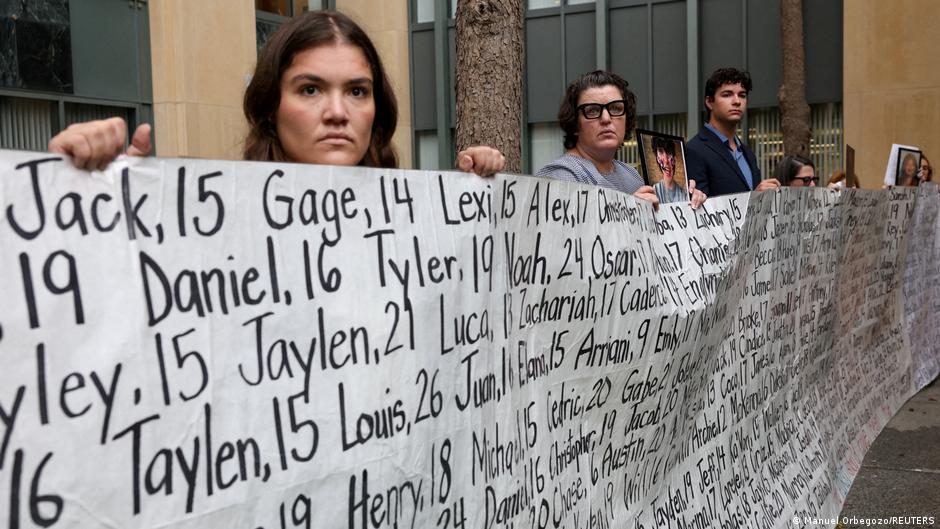
How teen accounts on Instagram and Facebook are changing after Meta's $18B US settlement

Read the original at CBC News ↗
Cite

Wong, J. (2026, August 28). How teen accounts on Instagram and Facebook are changing after Meta's $18B US settlement. CBC News. https://www.cbc.ca/news/world/meta-settlement-explainer-9.7322782?cmp=rss

Dated when The Aporia collected the article, usually within hours of publication. Check the original for its exact date and byline.

CBC News · collected 2026-08-28 · by Jessica Wong

Quick Summary

Meta has agreed to pay up to $18 billion over 10 years to resolve claims that its platforms Instagram and Facebook harmed youth. Changes are coming for teen users under 18, including daily time limits, blackout periods, more control over feeds, limits on social comparison features, and stronger age verification. Canadian tech analyst Carmi Levy says this is a significant turning point for the industry and expects similar changes to spread globally, potentially affecting Canadian teens as well. The settlement, described as the largest state consumer protection deal outside of Big Tobacco, aims to mitigate online harms to youth.
Written locally by qwen2.5:14b on 2026-08-28, using this article's own text rather than the other coverage of the same event (that is the story summary below).

AI analysis runs on qwen2.5:14b, locally

Story summary

Meta, the parent company of Facebook and Instagram, has agreed to pay up to $18 billion as part of a settlement with 47 US states over allegations that its social media platforms have contributed to teen addiction. The deal, which still needs court approval, would be the largest legal action against the tech giant and marks a significant shift in Meta's approach to child safety on its platforms.

As part of the agreement, Meta has promised to make changes to its apps, including imposing two-hour time limits for teens, stopping notifications during school hours, removing "like" counts and cosmetic filters, and limiting teen usage between midnight and 6 a.m. The company will also expand parental controls aimed at harmful content.

The settlement comes as part of a growing trend in which governments are taking action to address concerns about social media's impact on children's mental health. California Attorney General Rob Bonta has praised the agreement, saying it "will put an end to these dangerous practices and deliver meaningful relief that will protect children from online harm."

In related news, Brazil has implemented strict regulations on social media companies to protect children's data and prevent the sale of their information without parental consent. This regulatory solution is being cited as a potential model for other countries, including the US.

The settlement with Meta is seen as a significant step forward in addressing concerns about teen addiction and child safety online. However, critics argue that more needs to be done to hold social media companies accountable for their role in promoting addictive features and collecting data on children without parental consent.

Written for “Meta Teen Safety Settlements” on 2026-10-16, grounded in this article and the 8 other(s) covering the same event.

Story

📰 Meta Teen Safety Settlements
Technology · 9 article(s) covering the same event. Compare every outlet's account →

Compared with similar articles

This article reads unscored and hedges 13% of its claims. Each row says how that neighbour differs.
Platformer
⚖️ leaning not scored 🔴 8% hedged 6 of 71 📰 publisher trust 96
“Both articles report on the same $18B US settlement between Meta and the states over online harms to youth, and mention the changes being made for teen users on Instagram and Facebook.”
Mother Jones
⚖️ Leans right 🔴 11% hedged 3 of 28 📰 publisher trust 95
“Both articles describe the same Meta settlement with 52 attorneys general, the $18 billion payment, and changes to Instagram and Facebook for teenage users.”
Deutsche Welle
⚖️ Leans left 🔴 3% hedged 1 of 32 📰 publisher trust 95
“Both articles describe the same settlement agreement between Meta and US states, with similar details about the financial damages and platform design changes”
The Free Press
⚖️ Leans strongly left 🔴 8% hedged 1 of 12 📰 publisher trust 96
“Both articles describe Meta's $18 billion settlement with US states and territories, announced this week, which includes changes to social media platforms for teen users.”
Los Angeles Times
⚖️ Leans left 🔴 19% hedged 9 of 47 📰 publisher trust 95
“Both articles report on the same Meta $18B US settlement with 47 states, including changes to Facebook and Instagram for teen users.”
Evening Standard
⚖️ Leans right 🔴 0% hedged 0 of 16 📰 publisher trust 67
“Both articles describe the same Meta settlement, its financial terms ($18B), and its impact on teen accounts on Instagram and Facebook.”
How this article was measured signals, leaning charts, publisher record, byline, topics and claims

Signals How these are calculated →

Claims extracted
39
sentences that state something as happening or true
Uncertain
13%
5 of 39 hedged ("reportedly", "may", "according to")
Leaning
withheld
no quote in the article backed the model's score
Publisher signals
77/100
CBC News's corrections and hedging, across everything collected from it. Not a measure of accuracy.
Outlets on this story
9
Technology
Same framing elsewhere
1
articles that frame the event the way this one does
Analyzed 2026-08-28 · how these are computed

How this is being covered How these are calculated →

Article leaning vs. publisher reliability
Source leaning vs. consistency

Publisher

CBC News · 1290 article(s) · 4 correction(s) detected
Running correction rate · 4 correction(s)

Who wrote this

Jessica Wong
8 article(s) here · 1 carrying a prediction
🔮 Previous figures honoured with specialty dolls include Miley Cyrus, Whitney Houston, Marilyn Monroe, Venus and Serena Williams, and Dr. Jane Goodall.
🔮 "Activities like this … which are more interactive and involve more creativity would definitely be more engaging for students.
🔮 What worries Canadian mathematician John Mighton are the changes happening over time, specifically the growth in students who are slipping to lower levels — where some can only handle basic math or are considered below functional numeracy — and the wider impact of that trend. "
🔮 During the autopsy, "no signs of trauma were discovered that would have contributed to the death," the statement added.
🔮 Amid wide, ongoing calls for more consistency and clarity teaching students when, how and if AI should be used, some are calling for more deliberation and pushing back against the technology in classrooms right now, especially for younger learners. New Brunswick's approach The curriculum update in New Brunswick basically fleshes out its digital literacy curriculum to incorporate AI in a structured way, according to André Côté, executive director of public policy think tank The Dais at Toronto Metropolitan University. It's an important first step he hopes other provincial and territorial peers will soon follow, given that our education systems generally haven't moved urgently enough to address the "tsunami of AI use that has washed into schools," he said.
🔮 "The steepness of these declines post-pandemic is ... what some would call shocking.
🔮 Herrick said she couldn't log into the account and school officials said she couldn't opt-out or have it deleted, saying it was necessary for access to educational apps and "a requirement" for learning.
🔮 Meta says it will continue existing work blocking strangers from contacting teen accounts and improve reporting tools and parental controls. It also vowed to toughen some of its new measures — for instance, further reducing the daily time limit to one hour — if rival social platforms Snapchat, TikTok and YouTube also adopted comparable ones.
Also by Jessica Wong
Nothing else under this byline is closely related to this article, so these are simply their most recent.
All 8 articles by Jessica Wong →

Topics

Canadian Facebook Instagram Meta U.S.

Subjects

Meta ORG · 6× Facebook ORG · 3× Instagram ORG · 3× U.S. GPE · 3× Canadian NORP · 2× Levy PERSON · 2× Big Tobacco ORG · 1× Carmi Levy PERSON · 1× Snapchat ORG · 1× TikTok ORG · 1×

Narrative

New measures are coming for the Instagram and Facebook accounts of users under 18, including: - Time limits and pauses: a default time limit of two hours daily across both platforms in total, plus prompts and pauses after 15, 60 and 90 minutes of continuous use to disrupt "endless scrolling." - Blackout periods: blocks on most usage between midnight and 6 a.m. and notifications muted between the general school hours of 8 a.m. and 3 p.m. (excluding security or safety alerts).
framing: assertive · carried by 1 article(s) · first seen 2026-08-28
🔮 Meta says it will continue existing work blocking strangers from contacting teen accounts and improve reporting tools and parental controls. It also vowed to toughen some of its new measures — for instance, further reducing the daily time limit to one hour — if rival social platforms Snapchat, TikTok and YouTube also adopted comparable ones.

Claims (39 extracted, 5 hedged)

How teen accounts on Instagram and Facebook are changing after Meta's $18B US settlement asserted
accounts → change → settlement
'Writing is on the wall for the social media industry,' says analyst Changes are coming for teen users of social media platforms Instagram and Facebook. Parent company Meta agreed this week to make platform design changes for young users and pay up to $18 billion US over the next decade to resolve claims of online harms to youth stemming from nearly every U.S. state and territory. A coalition of U.S. attorneys general have described it as the largest state consumer protection settlement in history outside of the Big Tobacco settlements of the 1990s. uncertain
coalition → say → 1990s
This is their tobacco moment," said Canadian tech analyst Carmi Levy. asserted
Levy → say → ?
"Things change for Meta and other companies like it from this point forward. asserted
Things → change → point
" What's changing for teens? asserted
What → change → teens
New measures are coming for the Instagram and Facebook accounts of users under 18, including: - Time limits and pauses: a default time limit of two hours daily across both platforms in total, plus prompts and pauses after 15, 60 and 90 minutes of continuous use to disrupt "endless scrolling." - Blackout periods: blocks on most usage between midnight and 6 a.m. and notifications muted between the general school hours of 8 a.m. and 3 p.m. (excluding security or safety alerts). asserted
measures → come → alerts
Meta says it will continue existing work blocking strangers from contacting teen accounts and improve reporting tools and parental controls. It also vowed to toughen some of its new measures — for instance, further reducing the daily time limit to one hour — if rival social platforms Snapchat, TikTok and YouTube also adopted comparable ones. asserted
It → say → ones
Does this affect Canadian teens too? asserted
this → affect → teens
Technically the settlement applies to the U.S. market — and American teens should expect to see these changes in the next few months, Levy says — but teens everywhere should get ready. asserted
teens → apply → months
Levy says these tweaks will likely spread wider given the concern in so many countries about negative social media impacts on youth. asserted
tweaks → say → youth
"Historically, whenever technology companies like Meta introduce significant changes to their infrastructure in a certain region, eventually they do go global," he said from London, Ont. asserted
he → introduce → London
"I would expect over time Canada will see these changes as well. asserted
Canada → expect → changes
It's a lot easier for these companies to maintain a common set of tools and features around the world than to have unique features for each country where they do business. asserted
they → maintain → business
" Does this make social media safer? asserted
media → make → ?
The settlement is a step in the right direction, says Jenny Perez, mom of a middle-schooler and founder of the parental advocacy group Unplugged Canada. asserted
Perez → say → group
Yet she sees a much longer list of safety concerns for social media companies to tackle. asserted
companies → see → concerns
Adding a few measures to address what kids experience "is somewhat helpful, but doesn't fix the fact that these products are addictive," she said from Vancouver. asserted
she → add → Vancouver
Digital media expert Richard Lachman lauds the interruption to infinite scrolling — a time-suck that's not unlike what researchers of gambling addiction explore, he noted. asserted
he → laud → addiction
Yet the computer scientist and digital media professor at Toronto Metropolitan University says he'd rather not solely rely on what a company says it's doing to make itself safer. asserted
itself → say → what
"Right now we have Meta's designers saying 'These are the steps we're going to take. asserted
we → say → ?
Trust us,'" Lachman said. asserted
Lachman → trust → us
Luke Stark, an associate professor of information and media studies at Western University, says the announced measures will help stem some compulsive social media use by teens. asserted
measures → say → teens
Yet he pointed out the measures are limited, noting for instance that older users are also drawn in by addictive platform design. asserted
users → point → design
"These systems affect everybody," he said from London, Ont. asserted
he → affect → London
Though Stark calls the settlement "a big example — of which there are not very many — of Meta changing its design under threat of legal action," he thinks it could have gone further. uncertain
it → call → action
"The general business model of Facebook hasn't really been touched by this. asserted
model → touch → this
" What does this mean for proposed regulations in Canada? asserted
this → propose → Canada
Thousands of U.S. state and federal lawsuits still face Meta, Snap (parent of the platform Snapchat), Alphabet (YouTube) and ByteDance (TikTok), but American cases must be considered very differently from those in Canada or internationally, said Toronto tech analyst Ritesh Kotak. asserted
Kotak → face → Canada
Still, he thinks this week could be a hint of what's to come. uncertain
what → think → ?
"Meta may consider settling and just ending some of these lawsuits once and for all. uncertain
Meta → consider → all
" B.C. lawsuit accuses Meta of harming the mental health of kids Ontario school boards clear hurdle in lawsuits against Meta, Snapchat, TikTok asserted
boards → accuse → Meta
The decision to settle "indicates to me that Meta understands that it's got a problem and that it has to kind of get ahead of any kind of regulatory effort," said David Fewer, a law professor at the University of Ottawa. asserted
Fewer → settle → Ottawa
Fewer suggests Meta's moves could pave the way to fulfilling requirements for Canada's proposed online safety legislation, though there's still "a lot more regulatory clay" to work with, he said, like Canadian calls to tackle addictive algorithm design. uncertain
he → suggest → design
"We shouldn't mistake what Meta can live with, with what Canadians deserve." asserted
Canadians → mistake → what
Back in Toronto, Lachman thinks Meta is eager to resolve its social media woes so as to shift its attention to artificial intelligence. asserted
Meta → think → intelligence
"They want this to go away so they can focus on AI," he said. asserted
he → want → AI
Meta will now tell parents if their teens talk about suicide with the company's AI chatbot Meta launches new AI model as Zuckerberg lays out vision for open-weight AI " asserted
Zuckerberg → tell → AI
They don't want to be mired in this. asserted
They → want → this
And even though $10, 15, 20 billion US sounds like a lot of money to us, in the size of the potential market for its AI ambitions, with the reach they have into regular daily use by billions of people around the world, this is where [CEO Mark Zuckerberg] wants to play." asserted
Zuckerberg → sound → [

💬Give feedback
🕘History 🎫Support