The Far Right Can’t Stand Being Called “Far Right”

Mother Jones · collected 2026-09-11 · by Anna Merlan
Read the original at Mother Jones ↗

Summary

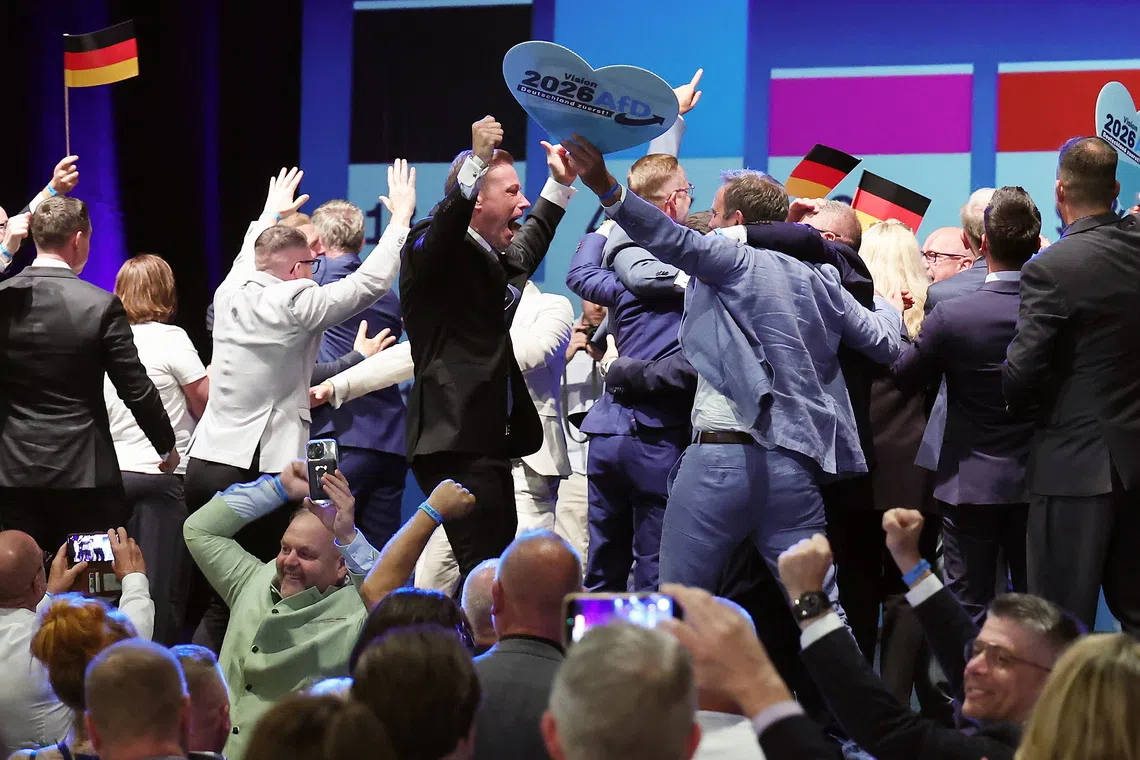
The article reports that the German far-right party Alternative für Deutschland (AfD) won a significant victory in the state of Saxony-Anhalt, but its supporters are more outraged by being called "far right" than the election itself. Key figures such as Elon Musk, Alice Weidel, and Donald Trump Jr. have tweeted to delegitimize the term, claiming it is a "propaganda term" or a "codeword for ordinary decent citizens." The article notes that policies once considered far-right, such as xenophobia and ultranationalism, are becoming increasingly mainstream in some countries. Germany's Chancellor Friedrich Merz has warned that AfD's immigration policies would constitute "ethnic cleansing" if implemented in Germany.
Written by the local model on 2026-09-11, using this article's own text rather than the other coverage of the same event (that is the story summary below).

Signals How these are calculated →

Claims extracted
50
claim-shaped sentences
Uncertain
4%
2 of 50 hedged
Leaning
withheld
no quote in the article backed the model's score
Publisher trust
95.4
red-flag proxy, not a credibility rating
Outlets on this story
61
Politics
Narrative spread
1
articles carrying this framing
Analyzed 2026-09-11 · how these are computed

AI analysis (generated at analysis time, not now)

Story summary

A far-right party called the Alternative for Germany (AfD) is poised to gain power in a state election in Saxony-Anhalt, which would be the first time a far-right party has held state-level power in Germany since World War II. The AfD's candidate, Ulrich Siegmund, has been campaigning on a platform that includes restricting immigration, quitting the Euro, and restoring ties with Russia. According to exit polls, the AfD is leading with around 44% of the vote, more than double its showing five years ago in the region.

This election could have significant implications for German politics and potentially signal a shift towards a harder-right path for the EU's biggest economy. The AfD has been gaining popularity in recent years, buoyed by popular disillusion with successive governments in Berlin and drawing support from formerly communist states in the east. A win for the AfD would also mean that they could overcome the "firewall" of mainstream parties' refusal to work with them.

The election is seen as a potentially historic shift in German politics, and the outcome will be closely watched by observers around the world. If the AfD does gain power, it would likely lead to significant changes in areas such as education, immigration policy, and foreign relations.

Written for “Germany's AfD Rise to Power” on 2026-09-12, grounded in this article and the 60 other(s) covering the same event.
Why this leaning score
The model judged this article politically coded and scored it +0.85, but 2 quote(s) could not be found in the article and the other 1 are attributed speech rather than the article's own narration, so the score is not published.
Written under an earlier scoring contract, which gave a paragraph rather than checkable quotes. Re-analysing this article replaces it.
Leaning score withheld for article 7816: no verified evidence · logged 2026-09-11

Story

📰 Germany's AfD Rise to Power
Politics · 61 article(s) covering the same event.

How this is being covered How these are calculated →

Article leaning vs. publisher reliability
Source leaning vs. consistency

Compared with similar articles

This article reads unscored and hedges 4% of its claims. Each row says how that neighbour differs.
The Free Press · 0.92 cosine similarity
⚖️ Leans left 🔴 11% hedged 1 of 9 📰 publisher trust 96
“Both articles describe the Alternative for Germany (AfD) party's victory in the Saxony-Anhalt election on the same day, September 11, 2026.”
Semafor · 0.89 cosine similarity
⚖️ Leans right 🔴 25% hedged 1 of 4 📰 publisher trust 96
“Both articles report on the AfD's victory in Saxony-Anhalt on the same Sunday”
The Independent
⚖️ leaning not scored 🔴 23% hedged 7 of 31 📰 publisher trust 59
“Both articles report on the same election result of the AfD party winning in Saxony-Anhalt on Sunday”
CBS News
⚖️ Leans right 🔴 13% hedged 8 of 63 📰 publisher trust 60
“Both articles report on the Alternative for Germany party's victory in the Saxony-Anhalt state election held on Sunday.”
The Straits Times
⚖️ leaning not scored 🔴 30% hedged 3 of 10 📰 publisher trust 94
“Both articles report on the same state election results in Saxony-Anhalt on September 6, where AfD won 44.5% of the vote.”
Times of India
⚖️ Leans right 🔴 35% hedged 9 of 26 📰 publisher trust 94
“Both articles report on the state election of Saxony-Anhalt where the AfD won a victory”
Fox News
⚖️ Leans right 🔴 13% hedged 7 of 52 📰 publisher trust 95
“Both articles describe the Alternative for Germany (AfD) party winning a state election in Saxony-Anhalt on Sunday, with identical day of the week and location mentioned”
CBC News
⚖️ Leans right 🔴 14% hedged 5 of 35 📰 publisher trust 95
“Both articles report on the exact same regional election result of the AfD party in Saxony-Anhalt, with both mentioning their resounding victory and falling short of a majority.”
BBC News
⚖️ Leans right 🔴 4% hedged 2 of 47 📰 publisher trust 96
“Both articles describe the election results of the AfD party in Saxony-Anhalt on the same day (September 6th), with Article B providing a follow-up commentary and analysis.”
The Straits Times
⚖️ leaning not scored 🔴 25% hedged 5 of 20 📰 publisher trust 94
“Both articles report on the same regional election of Saxony-Anhalt on Sept 6, 2026, won by AfD with a landslide victory”

Publisher

Mother Jones · 80 article(s) · 0 correction(s) detected
No corrections detected for this publisher. That may mean careful reporting, or simply that nothing has been checked.

Who wrote this

Anna Merlan
4 article(s) here · 1 carrying a prediction
🔮 If other states follow suit, the result could be a brewing crisis for German democracy, and a further signal that authoritarian, xenophobic politics are ascendant in Europe.
🔮 A May 2025 story in New York magazine reported on what staffers said was an alarming series of personality changes over time.
🔮 And that’s presumably why many GOP lawmakers and candidates would rather not hold a big party celebrating the success of the administration and tying themselves to it just before voters head to the polls.
🔮 (Though it was somewhat buried in the announcement, Meta also stipulated that it would only commit to enforcing its time limits and “night” modes for five years, but said it would extend that commitment to ten years “if industry peers sign on to the agreement.”)
Also by Anna Merlan
Nothing else under this byline is closely related to this article, so these are simply their most recent.

Topics

AfD Alternative fur Deutschland German Germany Saxony-Anhalt

Subjects

AfD ORG · 13× German NORP · 4× Germany GPE · 3× Saxony-Anhalt GPE · 2× Alice Weidel PERSON · 1× Alternative fur Deutschland ORG · 1× CBS ORG · 1× CBS News ORG · 1× Elon Musk PERSON · 1× The Wall Street Journal ORG · 1×

Narrative

AfD politician Björn Höcke has been fined twice for using a banned Nazi phrase, “Alles fur Deutschland” (everything for Germany), and has criticized Berlin’s Holocaust memorial, declaring in 2017 that Germans are “the only people in the world who planted a memorial of shame in the heart of their capital.”
framing: assertive · carried by 1 article(s) · first seen 2026-09-11
🔮 If other states follow suit, the result could be a brewing crisis for German democracy, and a further signal that authoritarian, xenophobic politics are ascendant in Europe.
2026-09-11 · Mother Jones
The Far Right Can’t Stand Being Called “Far Right” · assertive framing

Claims (50 extracted, 2 hedged)

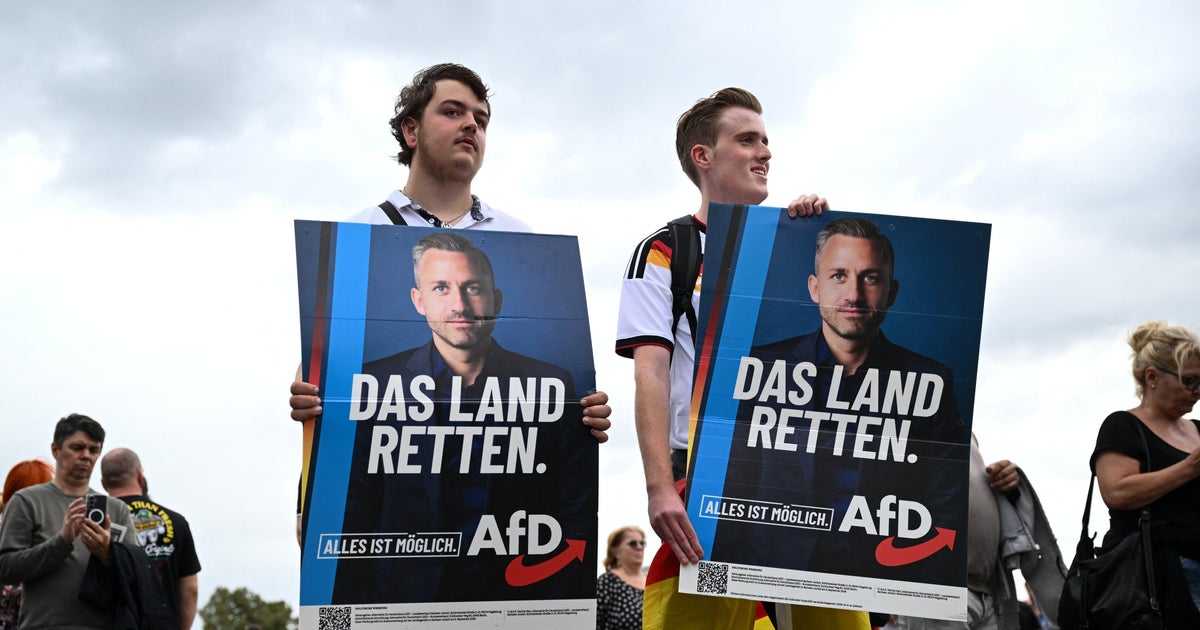
On Sunday, the German far-right party Alternative fur Deutschland (AfD) won a resounding—and disturbing—victory in the state of Saxony-Anhalt. asserted
party → win → Anhalt
While falling short of the majority it needed to control the government without other parties’ cooperation, the result is the latest sign that AfD’s ultranationalist politics are surging in parts of the country. asserted
politics → fall → country
If other states follow suit, the result could be a brewing crisis for German democracy, and a further signal that authoritarian, xenophobic politics are ascendant in Europe. uncertain
politics → follow → Europe
But AfD’s defenders in Germany and abroad, meanwhile, have spent the days since the election responding to a different threat: people using the term “far right” to accurately describe AfD’s policies and positions. asserted
defenders → spend → policies
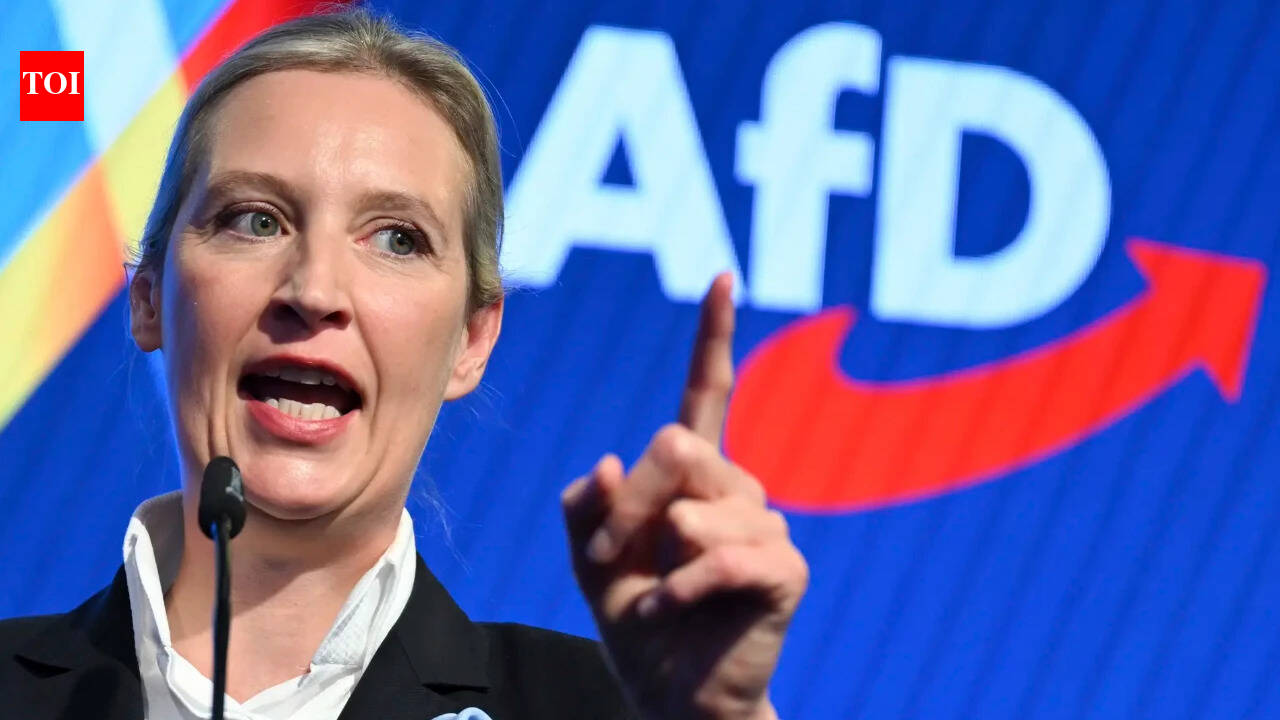
“AfD is not far-right,” the party’s co-chairwoman and parliamentary leader, Alice Weidel, tweeted on Tuesday, responding to a CBS News headline that used the term. asserted
that → tweet → term
AfD enthusiast Elon Musk agreed, embarking on a tweeting spree this week attempting to delegitimize the phrase, calling The Wall Street Journal “knuckleheads” for using it in reference to AfD, and opining that “legacy media” views “normalcy” as far right because they are “far left.” asserted
they → agree → normalcy
“‘Far right’ is a propaganda term that became especially popular in recent years,” he tweeted on Monday night. asserted
he → become → night
On Tuesday morning, he accused CBS of “lying” by using the phrase. asserted
he → accuse → phrase
He also reposted and agreed with a tweet that claimed that “far right is just whatever was considered being normal in the early 2000s.” asserted
whatever → reposte → 2000s
Other people associated with the far right were quick to attack use of the term. asserted
people → associate → term
Tommy Robinson, the British anti-Islam activist, quote-tweeted Weidel, adding, “Far right is codeword for ordinary decent citizens.” asserted
right → tweet → citizens
People in the MAGAverse also joined in: Sen. Mike Lee (R-Utah) tweeted “Leftists identify themselves in many ways, including a pattern of referring to any conservative movement, policy, or politician as ‘far right.’” asserted
Leftists → join → movement
And Donald Trump Jr. opined that the “far right” is now simply mainstream: asserted
right → opine → ?
“When a party wins 45% of a vote and the second place guys win 17,” he tweeted, “is the 45 really far right or are they just right?” asserted
they → win → 17
Here, somewhat despite himself, Trump Jr. was making a salient point. asserted
Jr. → make → point
“Far right” is an umbrella concept used to refer to several ideas once outside the political mainstream: xenophobia, ultranationalist policies, virulently anti-immigrant sentiment, and a sympathy and support for authoritarianism. asserted
right → use → authoritarianism
In some places, though—including the United States—policies that would once have been clearly and accurately branded as “far right” are now ascendant in mainstream politics. asserted
that → include → politics
This isn’t a trend other countries are eager to repeat: German Chancellor Friedrich Merz warned that AfD’s support for “remigration,” a phrase and concept now championed by the U.S. government, would, if carried out in Germany, constitute a form of “ethnic cleansing.” asserted
support → repeat → cleansing
Aside from their politics on immigration, several AfD politicians also have ties with previous authoritarian movements. asserted
politicians → have → movements
Frank Ronald-Bischoff, for instance, who will now serve as an AfD parliamentarian in Saxony-Anhalt, was, according to reporting by German news outlets, a secret officer in the Stasi, East Germany’s brutally repressive security service. uncertain
who → serve → Stasi
AfD politician Björn Höcke has been fined twice for using a banned Nazi phrase, “Alles fur Deutschland” (everything for Germany), and has criticized Berlin’s Holocaust memorial, declaring in 2017 that Germans are “the only people in the world who planted a memorial of shame in the heart of their capital.” asserted
who → fin → capital
Dario Seifert, another AfD parliamentarian, is a former member of the youth wing of the neo-Nazi National Democratic Party of Germany, now known as Die Heimat (the Homeland). asserted
Seifert → know → Heimat
An array of AfD politicians have also made comments minimizing the crimes of the Nazis; two AfD politicians were even briefly sidelined for comments they made related to Nazism before being welcomed back into the party. asserted
they → make → party
Cas Mudde, a Dutch-born political scientist, extremism expert, and research professor at the University of Georgia, told me via email that the far right objecting to the label “far right” is a long-standing tactic. asserted
right → bear → label
“The far right has always challenged the terminology,” he wrote. asserted
he → challenge → terminology
In the 1980s, for instance, “several far-right parties and politicians, like Jean-Marie Le Pen and the National Front (FN), claimed to be ‘neither left, nor right.’ asserted
parties → claim → Pen
They have also long claimed that they are not ‘far’ right, but just ‘the voice of the people’ presenting ‘common sense’ solutions.” asserted
they → claim → solutions
In the last decades, Mudde wrote, “they have added that there is nothing ‘far’ or ‘extreme’ or ‘radical’ about their positions. asserted
they → write → positions
Scholars, however, “don’t use the term ‘far right’ in a purely relative way,” Mudde added. asserted
Mudde → use → way
“Rather, the far right stands for a core ideology of nativism and authoritarianism. asserted
right → stand → nativism
Nativism is a xenophobic form of nationalism and authoritarianism emphasis the crucial importance for the state to enforce discipline and order (simply stated). asserted
state → enforce → discipline
In this sense, the term is accurate for the parties and politicians mentioned here.” asserted
term → mention → parties
Sam Jackson, an associate professor at the University at Albany and an expert on right-wing extremism in the U.S., says right-wing objections to the term are animated by an element of branding and publicity management. asserted
objections → say → branding
There is, he told me, “a strategic view that if something is portrayed as the far right then most people wouldn’t agree with or would reject it.” asserted
people → be → it
Therefore, he added, rejecting the label “far right” is a tactic used by people who are saying, in essence, “‘I want to make it sound like my ideas are common and widespread. asserted
ideas → add → essence
If I accept the framing of ‘far right’ that inherently positions me as being more marginal.'” asserted
that → accept → me
The label carries a special stigma in Germany, where, he pointed out, “to be far right is to be associated with the Nazi regime, which is still problematic for many reasons—even if that’s starting to change.” asserted
that → carry → reasons
Jackson has seen other American political projects reject the far-right label, including “constitutional sheriffs,” who believe they hold unique authority to interpret state and federal law, and to arrest federal authorities they believe violate it. asserted
they → see → it
In that movement, Jackson told me, figures like Richard Mack say that they’re neither left nor right, but, as Jackson put it, “someone who loves freedom or liberty.” asserted
who → tell → freedom
“It’s an argument they make over and over again,” he added. asserted
he → ’ → ?
…and 10 more, not listed.

💬 Give feedback
🕘 History 🎫 Support