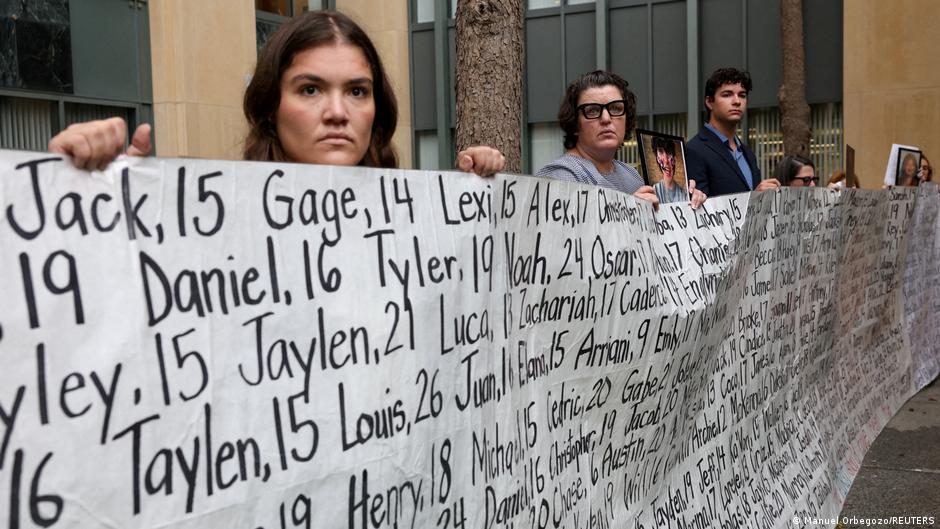
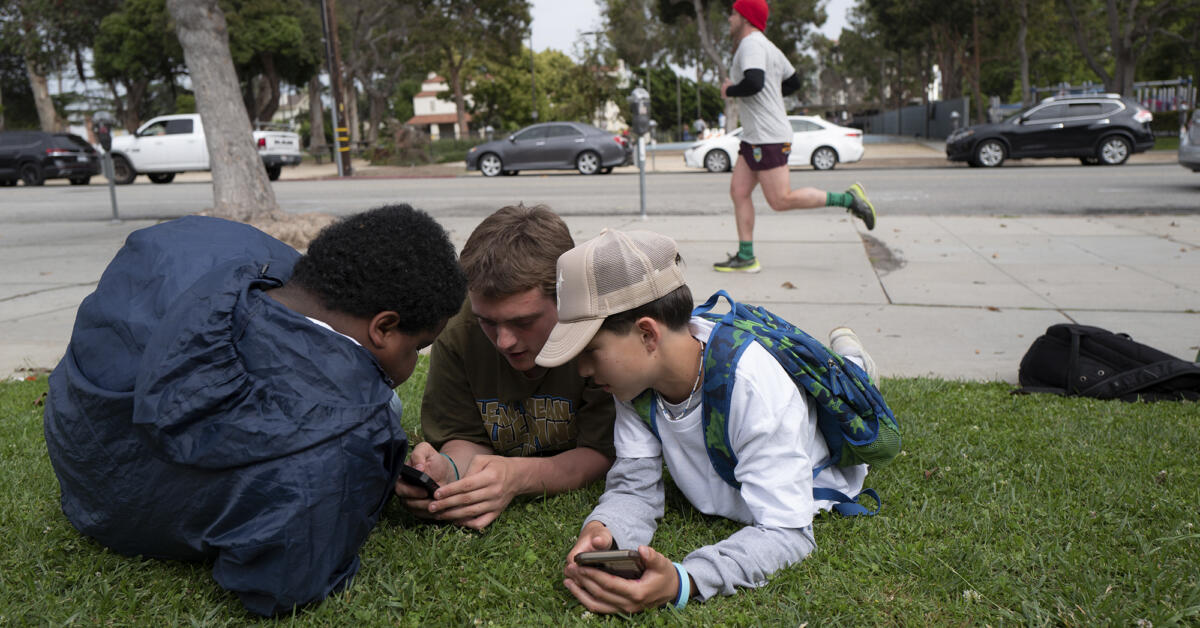
For just under a year from 2022 to 2023, George Volichenko had what I have come to think of as the median experience of working in trust and safety at Meta.
asserted
I → have → Meta
Hired to work on Instagram’s “teen mental well-being team,” the data scientist soon found that Meta made it difficult to ship features that meaningfully addressed the problem.
asserted
that → hire → problem
“I was not happy with the limited freedom that the team was given to actually devise and test and launch features that were actually moving the needle and helping teens,” Volichenko testified in federal court Monday, as part of the states’ blockbuster lawsuit against Meta alleging violations of consumer protection and privacy laws.
asserted
Volichenko → give → laws
For example, he observed that after Instagram introduced an opt-in feature that prompted teens to take a 10-minute break after extended scrolling, just 0.165% of them enabled it.
asserted
% → observe → it
When he brought up the low adoption of safety features with his manager, Bloomberg reported, “he was told that he shouldn’t worry about the adoption figures being low for the tools ‘because the team exists partially to protect the company against the upcoming lawsuits.’
asserted
team → bring → lawsuits
On Wednesday, whatever legal cover Meta’s Potemkin well-being teams were meant to provide fell to a settlement of up to $17.1 billion with 47 US states, the District of Columbia, and US territories.
asserted
meant → mean → Columbia
In a dramatic capitulation, the owner of Facebook and Instagram agreed to the financial penalties for violating federal child privacy and states’ consumer protection laws, the states announced.
asserted
states → agree → privacy
Meta also agreed to limit how long teenagers can spend on its platforms and to bans on features that stoke mental health issues, striking at the heart of the company’s business of engagement for advertising.
asserted
that → agree → advertising
The settlement effectively ends a bellwether federal trial in the US Northern District of California in Oakland, where California, Colorado, Kentucky and New Jersey were seeking roughly $200 billion over accusations that Meta harmed children.
asserted
Meta → end → children
The states filed their agreement with Meta on Wednesday morning in that court, where Judge Yvonne Gonzalez Rogers is expected to approve it.
asserted
Rogers → file → it
Separately, Meta said on Wednesday that it settled with Texas for about $1 billion over similar allegations.
asserted
it → say → allegations
The company still faces numerous other lawsuits from school districts and individuals, some of which are scheduled for trial in the coming months.
asserted
some → face → months
For the most part, the agreement requires Meta to honor terms that you may be surprised are not yet required by US law: limiting teens to a cumulative two hours across Facebook and Instagram per day, blocking access to most app features between midnight and 6 a.m., and muting push notifications — except for direct messages and account-security or safety alerts — from 8 a.m. to 3 p.m. on school days.
uncertain
you → require → days
(Also, the take-a-break prompts that saw such minimal adoption are now enabled by default, triggering after every 15 minutes.)
In another reversal, Meta will also now hide like counts for teens by default.
asserted
Meta → take → default
The move revives as a default an experiment known as “Project Daisy” that the company ran in January 2020 after research suggested that getting fewer likes on their posts was associated with worse mental health for some teen users, particularly girls.
uncertain
getting → revive → users
The company has long maintained the results from the study were inconclusive.
asserted
results → maintain → study
Nevertheless, evidence presented by the attorneys general alleged that Meta estimated hiding like counts would reduce its advertising revenue by 1 percent and then declined to make the setting the default.
asserted
setting → present → percent
More interesting is an agreement to establish an “independent social media research foundation,” which Meta will share data with (from users who consent) with researchers to better understand how social media use affects well-being.
asserted
use → establish → being
Meta dramatically curtailed internal research and data sharing in the wake of the Frances Haugen revelations in 2021.
asserted
Meta → curtail → 2021
Any effort to enable truly independent research in this space would be a welcome one, though it remains to be seen how much freedom researchers here are actually afforded.
asserted
researchers → enable → freedom
But Meta’s legally mandated goodwill will only go so far.
asserted
goodwill → mandate → ?
Frustrated that its rivals are not being punished on equal terms, the company has also threatened to undo some of its safety features sooner if YouTube and TikTok do not follow suit.
asserted
YouTube → punish → suit
The two-hour time limit and block on push notifications in the middle of the night will remain in place for only five years unless YouTube and TikTok adopt the same restrictions, in which case the duration will be extended to 10 years.
asserted
duration → remain → years
Meta also says it will change its screen time restriction to one hour per app and expand “Night Mode” from six hours per night to nine.
asserted
it → say → nine
And it will pay the full $17.1 billion only if YouTube, TikTok and Snap also settle their cases and agree to product changes.
asserted
YouTube → pay → changes
Whether American teenagers should be harassed after 10 p.m. by engagement-baiting push notifications ought to be a matter for Congress, not the social media cartel.
asserted
harassed → harass → Congress
But with characteristic gall, Meta is seeking to position its game of prisoner’s dilemma with YouTube and TikTok as moral leadership.
asserted
Meta → seek → leadership
In “An Open Letter to TikTok and YouTube to Join Us in Supporting Teens,” Meta describes the settlement it signed under extreme pressure as “building on our longstanding efforts to empower parents and support teens.”
asserted
it → join → teens
“We want to ensure teens benefit from this new industry standard, but we cannot do it alone,” the unsigned letter reads.
asserted
letter → want → it
“These protections will only be truly effective if we work with our peers — TikTok and YouTube — to put the same measures in place.”
asserted
we → work → place
It’s true that Meta’s rivals do largely employ the same cocktail of video formats, recommendation algorithms, and push notifications to continuously derail their users’ attention.
asserted
rivals → ’ → attention
Meta shouldn’t be the only company that has to make these changes.
asserted
that → have → changes
At the same time, the company’s plans to publish this letter as a full-page ad in national newspapers made me roll my eyes into the back of my head.
asserted
me → publish → head
After all, when this case was first filed in 2023, a Meta spokesman told me the company was “disappointed that instead of working productively with companies across the industry to create clear, age-appropriate standards for the many apps teens use, the attorneys general have chosen this path.”
asserted
attorneys → file → path
Now, having been forced to make a series of changes to avoid damages that Meta warned could reach 1.4 trillion, and while still refusing to admit any wrongdoing, the company seeks to position itself as the industry leader in child safety.
uncertain
company → force → safety
“As a parent, I’m proud of both the work Meta has done to protect kids historically, and of this new groundbreaking agreement,” Meta chief legal officer C.J. Mahoney said in a blog post.
asserted
Mahoney → ’m → post
“But its success depends on all other social media platforms following Meta’s lead.”
asserted
platforms → depend → lead
About those “historical” protections for kids: I was initially skeptical of the AGs’ lawsuit, which seemed likely to get thrown out on First Amendment or Section 230 grounds.
asserted
which → seem → grounds
But first, judges and juries have begun to accept the argument that platform design is not covered by either of those, and companies can be punished for harmful features.
asserted
companies → begin → features
And second, I hadn’t yet read the unredacted version of the complaint.
asserted
I → read → complaint
…and 31 more, not listed.
 The Aporia