The Guardian
· collected 2026-09-21 · by Patrick Commins Economics editor
Story summary
Treasurer Jim Chalmers is set to release Australia's seventh Intergenerational Report (IGR) on Monday, forecasting that by 2066, Australia’s population will reach nearly 40 million people with longer life expectancies but lower fertility rates. The IGR outlines significant economic challenges due to an aging population and declining birthrates, emphasizing the critical role of migration in maintaining workforce growth.
Chalmers has hinted at potential further tax cuts for workers as part of his plan to address these long-term issues, suggesting that recent budget improvements have created room for additional relief. However, critics argue that while borrowing less than previously expected is positive, it does not equate to having surplus funds available for such measures without sustainable funding from spending restraint or alternative revenue sources.
The report also highlights the need for policy decisions today to prepare future generations for technological advancements like AI and to address geopolitical uncertainties in a more fragmented world. Prime Minister Anthony Albanese has been pushing for global cooperation on AI regulation during his visit to the United States, where he announced Siobhan McKenna as Australia's next Consul-General in New York, despite concerns about her past ties with News Corp. The announcements come amid efforts by the Australian government to secure a two-year term on the UN Security Council.
Written for “Australia's Economic Future Challenges” on 2026-10-05,
grounded in this article and the 18 other(s) covering the same event.
There will be more Australians dying than being born in 40 years’ time, according to the government’s latest intergenerational report, which lays bare the fundamental challenges of managing an ageing population at a time of rapid change and lower economic growth.
uncertain
which → die → change
The country’s seventh IGR also outlines how Australia is at the cusp of a new and uncertain age of artificial intelligence that will shape the economy and society over the coming four decades.
asserted
that → outline → decades
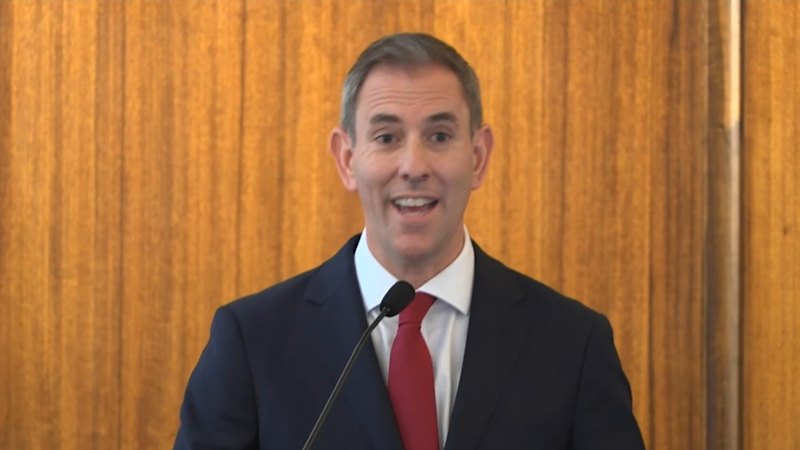
Jim Chalmers, in a speech at the Australian National University to coincide with the release of the analysis, said “this intergenerational report illuminates the road ahead”.
asserted
report → coincide → road
“No previous IGR has contended with global challenges this great, with politics this fraught, or a future less certain.
asserted
politics → contend → challenges
The global and generational risks are serious, but Australia’s opportunities are endless,” the treasurer said.
asserted
treasurer → say → ?
The latest 40-year projections show the population will keep getting older as people have fewer children, to the point where falling fertility rates mean deaths are for the first time projected to outnumber births by the 2060s.
asserted
deaths → show → 2060s
“This is a milestone that many advanced economies have already surpassed, including Japan, Germany, Italy and the Republic of Korea, with most of the rest expected to do so over coming decades,” the report says.
asserted
report → surpass → decades
With the population set to grow by 0.9% for the foreseeable future, versus 1.4% historically, alongside a shrinking share of working Australians to support activity and the budget, the IGR predicts the economy has entered into a new normal of lower growth.
asserted
economy → set → growth
Living standards will still improve, but not as quickly as in the past, the IGR shows.
asserted
IGR → improve → past
Real GDP on a per person basis will expand by about 1.2% over the next 40 years, down from 1.5% in the previous four decades, the IGR shows.
asserted
IGR → expand → decades
Even that relatively dour outlook depends on productivity picking back up from virtually zero in recent years to the historical average of 1.2% – an assumption that leans heavily on AI, or what Chalmers described as “the biggest economic transformation of our lifetime”.
asserted
Chalmers → depend → lifetime
“The rise and adoption of AI is likely to support the achievement of Treasury’s long-term labour productivity growth assumption over time,” the report says, while the treasurer described its role as “pivotal”.
asserted
treasurer → support → role
“As a medium-sized economy, Australia’s productivity performance will depend on adopting innovation, supporting investment, developing skills and delivering regulatory reforms that improve the efficient operation of the economy,” the report says.
asserted
report → depend → economy
The forecasts underline the tightrope the government must walk between protecting Australians from the worst aspects of the new technology, and not stifling a technology that could almost single-handedly drive future prosperity.
uncertain
that → underline → prosperity
The IGR is a five-yearly exercise, although it was most recently published in 2023 after Covid interrupted its scheduling.
asserted
Covid → publish → scheduling
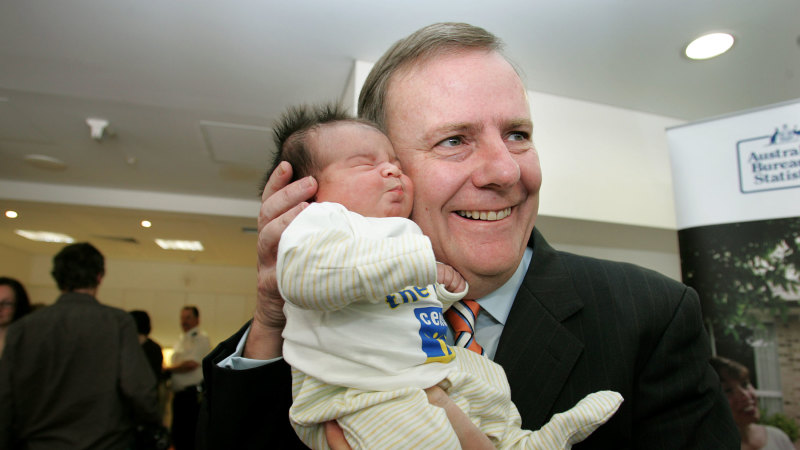
Peter Costello, a former Liberal treasurer, first conceived of the IGR and formally enshrined it in the Charter of Budget Honesty Act of 1998 as a way to explain how demographic shifts affect the budget over the very long term.
asserted
shifts → conceive → term
First released in 2002, each report has highlighted similar challenges associated with an ageing population: pressures on delivering services to older Australians and how to pay for them – not least dealing with the growing tax burden on a shrinking share of workers.
asserted
report → release → workers
The IGR projects an ongoing, structural budget deficit over coming decades, as it shrinks over the next 10 years before expanding again over the following 40.
asserted
it → project → 40
Government payments as a share of GDP are anticipated to rise by 1.1 percentage points to 27.4% by the mid-2060s.
asserted
payments → anticipate → mid-2060s
“As the scale and interaction of these structural trends intensify, maintaining a sustainable budget position will require policies and ongoing reforms that manage growing spending and revenue challenges,” the report says.
asserted
report → intensify → challenges
This year’s report also included a section of six “major transitions” for the next 40 years, topped by the AI “revolution” and geopolitical fragmentation.
asserted
report → include → revolution
“The world is becoming more dangerous, more unpredictable, more unequal, and more divided.
asserted
world → become → ?
These are not just individual threads but part of a bigger fraying of that intergenerational promise, of better times,” Chalmers said.
asserted
Chalmers → say → times
The treasurer said responding successfully to these major challenges would be the key to defeating populist insurgencies that sought to weaponise public discontent for political ends.
asserted
that → say → ends
The IGRs provide a robust argument in favour of the compulsory super regime, which has largely offset the huge budgetary impact experienced in other countries associated with funding retirement incomes.
asserted
which → provide → incomes
 The Aporia