Australia faces a demographic shift where deaths are projected to outnumber births by the 2060s due to falling fertility rates and an aging population. Treasurer Jim Chalmers stated that migration will become crucial as Australia's younger population shrinks and its elderly population grows, noting that new migrants have a median age of 26 compared to residents' median age of 38. The country’s population is still expected to grow but at a slower rate, reaching 39.3 million by 2065–66; however, the aging populace will put increasing pressure on public finances and healthcare systems.
Written locally by qwen2.5:14b on 2026-09-21,
using this article's own text rather than the other coverage of the
same event (that is the story summary below).
Story summary
Treasurer Jim Chalmers is set to release Australia's seventh Intergenerational Report (IGR) on Monday, forecasting that by 2066, Australia’s population will reach nearly 40 million people with longer life expectancies but lower fertility rates. The IGR outlines significant economic challenges due to an aging population and declining birthrates, emphasizing the critical role of migration in maintaining workforce growth.
Chalmers has hinted at potential further tax cuts for workers as part of his plan to address these long-term issues, suggesting that recent budget improvements have created room for additional relief. However, critics argue that while borrowing less than previously expected is positive, it does not equate to having surplus funds available for such measures without sustainable funding from spending restraint or alternative revenue sources.
The report also highlights the need for policy decisions today to prepare future generations for technological advancements like AI and to address geopolitical uncertainties in a more fragmented world. Prime Minister Anthony Albanese has been pushing for global cooperation on AI regulation during his visit to the United States, where he announced Siobhan McKenna as Australia's next Consul-General in New York, despite concerns about her past ties with News Corp. The announcements come amid efforts by the Australian government to secure a two-year term on the UN Security Council.
Written for “Australia's Economic Future Challenges” on 2026-10-05,
grounded in this article and the 18 other(s) covering the same event.
Australia is heading towards a dramatic demographic shift, with deaths projected to outnumber births by the 2060s as fertility rates continue to fall and the population ages, meaning net migration would become the country's only source of population growth.
asserted
migration → head → growth
Treasurer Jim Chalmers said migration would remain important as Australia confronts a shrinking share of younger people and a rapidly ageing population.
asserted
Australia → say → people
'Despite these pressures, we're better placed than many others.
asserted
we → place → others
Migration will play a role here too, an important source of skills that complements our domestic workforce.'
asserted
that → play → workforce
The report said new migrants arrive with a median age of 26, compared with 38 for Australia's resident population.
asserted
migrants → say → population
Australia's population is still projected to grow, but at a much slower rate, reaching 39.3 million by 2065–66.
asserted
population → project → 2065–66
'Deaths are projected to outnumber births by the 2060s – the first time this has been forecast in an IGR – at which point natural increase will no longer be a driver of population growth,' the report states.
asserted
report → project → growth
While many advanced economies, including Japan, South Korea and Germany, have already reached that milestone, it would mark a significant turning point for Australia.
asserted
it → include → Australia
The fertility rate is projected to fall from its current level of 1.48 babies per woman to 1.34 by 2065–66.
asserted
rate → project → 2065–66
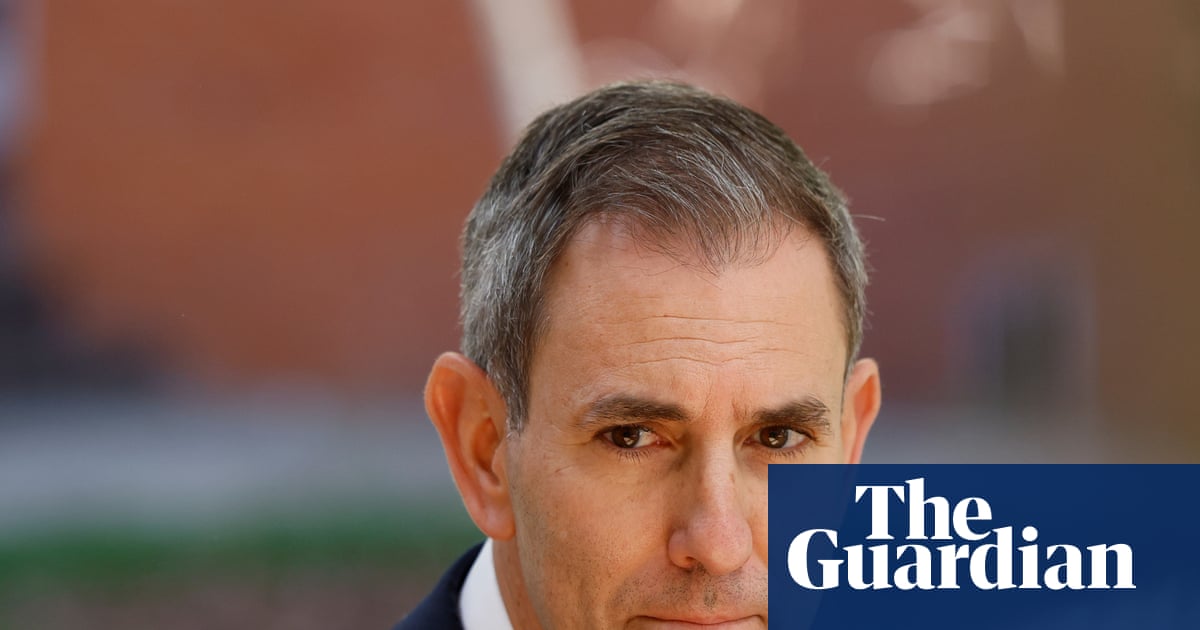
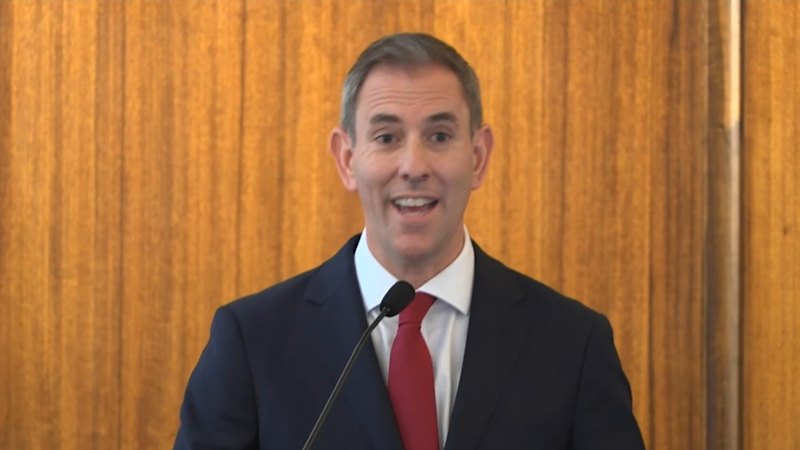
Jim Chalmers (pictured) said that Australia was in a better place compared to other nations
Australians aged under 20 are now projected to increase by just 10.4 per cent by the early 2060s, compared with the almost 28 per cent increase forecast in the 2023 report.
asserted
Australians → picture → report
At the same time, the number of Australians aged 85 and older is expected to triple over the next 40 years.
asserted
number → age → years
Chalmers said Australians living longer was overwhelmingly positive despite the additional pressure it would place on the federal budget.
asserted
it → say → budget
'Australians living longer and healthier lives is obviously overwhelmingly a good thing,' he said.
asserted
he → live → lives
'It's welcome recognition of the quality of our universal healthcare and the contribution that older people make, and it's worth every dollar of extra pressure that it puts on our budgets.'
asserted
it → make → budgets
The ageing population is expected to place increasing pressure on public finances as demand for hospitals, aged care, disability support and other health services rises.
asserted
demand → age → hospitals
Federal government payments are forecast to climb to 27.7 per cent of GDP over the next four decades, with population ageing identified as one of the key drivers of higher spending.
asserted
ageing → forecast → spending
Chalmers said one-third of all additional health spending over the next four decades would be driven by ageing alone.
asserted
third → say → ageing
Treasury now expects population growth to average 0.9 per cent a year over the next 40 years, down from the 1.1 per cent projected in the 2023 Intergenerational Report and below the 1.4 per cent average recorded over the past four decades.
asserted
growth → expect → decades
One-third of all new health spending over the next 40 years will be driven by ageing alone
Chalmers took a veiled swipe at Pauline Hanson as he spoke about the report.
'Of course the findings and forecasts in this Report will challenge us and some of them in confronting ways,' he said.
asserted
he → drive → ways
'And of course much of it will be weaponised by those who always see things through a more pessimistic and often more political lens.
asserted
who → weaponise → lens
'If people are unmoored economically, generationally, they feel disconnected from and disregarded in our politics.
asserted
they → feel → politics
At worst, that's what we're seeing now.
asserted
we → see → what
'Accelerating change is putting more pressure on people.
asserted
Accelerating → accelerate → people
It's eroding trust in the institutions of democracy.
asserted
It → erode → democracy
It's exacerbating the strain felt by younger Australians and younger generations in particular.
asserted
It → exacerbate → Australians
And so the division in politics now is not between those who accept all of this and those who don't.
asserted
who → accept → this
It's between those who prey on it, and pick at it, and politicise it, and catastrophise it, and those who seek to alleviate it.
asserted
who → prey → it
He also suggested extending political terms could help governments focus more on long-term challenges.
uncertain
governments → suggest → challenges
'So much of the incentive in our political system encourages people to think in shorter and shorter term ways, in shorter and shorter term cycles,' he said.
asserted
he → encourage → cycles
The Treasurer said Australia's future prosperity would increasingly depend on emerging industries as the economy adapts to an older population and changing global demand.
asserted
economy → say → population
He added that renewable energy, critical minerals and AI-powered industries would become increasingly important sources of growth.
asserted
energy → add → growth
 The Aporia