Younger Australians face a harder path to wealth, report shows

Read the original at ABC News (AU) ↗
ABC News (AU) · collected 2026-09-21 · by Clare Armstrong

Quick Summary

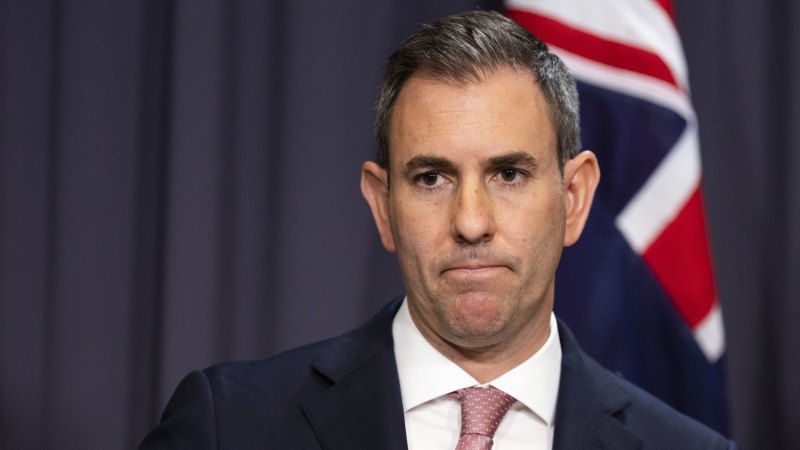
Australia's latest Intergenerational Report reveals that younger generations are facing longer working years and greater difficulties in accumulating wealth and purchasing homes compared to previous generations. Released on Monday by Treasurer Jim Chalmers, the report projects a declining fertility rate to just 1.34 children per woman by 2065, contributing to an aging population and increasing pressure on government spending over the next four decades. Treasurer Chalmers emphasized that while these challenges are significant, Australia is well-positioned to address them through various measures aimed at boosting workforce productivity and skills.
Written locally by qwen2.5:14b on 2026-09-21, using this article's own text rather than the other coverage of the same event (that is the story summary below).

AI analysis runs on qwen2.5:14b, locally

Story summary

Treasurer Jim Chalmers is set to release Australia's seventh Intergenerational Report (IGR) on Monday, forecasting that by 2066, Australia’s population will reach nearly 40 million people with longer life expectancies but lower fertility rates. The IGR outlines significant economic challenges due to an aging population and declining birthrates, emphasizing the critical role of migration in maintaining workforce growth.

Chalmers has hinted at potential further tax cuts for workers as part of his plan to address these long-term issues, suggesting that recent budget improvements have created room for additional relief. However, critics argue that while borrowing less than previously expected is positive, it does not equate to having surplus funds available for such measures without sustainable funding from spending restraint or alternative revenue sources.

The report also highlights the need for policy decisions today to prepare future generations for technological advancements like AI and to address geopolitical uncertainties in a more fragmented world. Prime Minister Anthony Albanese has been pushing for global cooperation on AI regulation during his visit to the United States, where he announced Siobhan McKenna as Australia's next Consul-General in New York, despite concerns about her past ties with News Corp. The announcements come amid efforts by the Australian government to secure a two-year term on the UN Security Council.

Written for “Australia's Economic Future Challenges” on 2026-10-05, grounded in this article and the 18 other(s) covering the same event.

Signals How these are calculated →

Claims extracted
44
claim-shaped sentences
Uncertain
2%
1 of 44 hedged
Leaning
withheld
no quote in the article backed the model's score
Correction & hedging signals
60.8
corrections and hedging in what we collected; not a measure of accuracy
Outlets on this story
19
Economy/Business
Narrative spread
1
articles carrying this framing
Analyzed 2026-09-21 · how these are computed

Story

📰 Australia's Economic Future Challenges
Economy/Business · 19 article(s) covering the same event. See how they differ ↓

How this is being covered How these are calculated →

Article leaning vs. publisher reliability
Source leaning vs. consistency

Compared with similar articles

This article reads unscored and hedges 2% of its claims. Each row says how that neighbour differs.
The Sydney Morning Herald
⚖️ leaning not scored 🔴 0% hedged 0 of 7 📰 publisher trust 61
“Both articles discuss the release of Australia's seventh Intergenerational Report on September 20, 2026, focusing on the economic challenges facing younger generations.”
The Sydney Morning Herald
⚖️ Leans left 🔴 3% hedged 1 of 35 📰 publisher trust 61
“Both articles discuss the release of the latest Intergenerational Report by Australia's federal government on September 21, 2026.”
The Guardian
⚖️ leaning not scored 🔴 8% hedged 2 of 25 📰 publisher trust 68
“Both articles discuss the release of Australia's latest Intergenerational Report on September 21, 2026, covering similar themes and mentioning Treasurer Jim Chalmers' speech.”
The Sydney Morning Herald
⚖️ leaning not scored 🔴 0% hedged 0 of 2 📰 publisher trust 61
“Both articles describe the release and implications of the same Intergenerational Report on Australia's economic future for younger generations.”
The Sydney Morning Herald
⚖️ leaning not scored 🔴 0% hedged 0 of 28 📰 publisher trust 61
“The articles discuss different aspects of the same report (Intergenerational Report) but do not describe the exact same incident or outcome.”
ABC News (AU)
⚖️ Centre 🔴 11% hedged 5 of 46 📰 publisher trust 61
“Both articles discuss the same Intergenerational Report released on 2026-09-21, addressing similar themes about younger Australians' economic challenges and government responses.”
The Sydney Morning Herald
⚖️ Leans right 🔴 4% hedged 1 of 26 📰 publisher trust 61
“The articles discuss different aspects of housing issues in Australia and do not describe the same specific incident or occurrence.”
The Sydney Morning Herald
⚖️ leaning not scored 🔴 0% hedged 0 of 22 📰 publisher trust 61
“The articles discuss different aspects of economic challenges in Australia but describe separate events and contexts.”
The Sydney Morning Herald
⚖️ leaning not scored 🔴 4% hedged 1 of 26 📰 publisher trust 61
“While both articles discuss Jim Chalmers' economic outlook, they cover different aspects: Article A focuses on tax cuts and fresh news in the upcoming intergenerational report, while Article B specifically addresses the findings of the report for younger Australians.”
Times of India
⚖️ leaning not scored 🔴 21% hedged 3 of 14 📰 publisher trust 59
“While both articles discuss the same Intergenerational Report, they focus on different aspects: Article A emphasizes economic and wealth challenges for younger Australians, while Article B focuses on population growth and migration trends.”

Publisher

ABC News (AU) · 2051 article(s) · 2 correction(s) detected
Running correction rate · 2 correction(s)
2026-09-15
Canberra man posed as teenage girl to obtain child abuse material
2026-09-07
'Her career's finished': Fugitive Sydney developer's daughter avoids jail

Who wrote this

Clare Armstrong
16 article(s) here · 1 carrying a prediction
🔮 Legal cigarette sales jump 55 per cent in Queensland after black market crackdown In short: Legal tobacco sales rose 55 per cent in Queensland after the state legislated stronger powers to shut illegal shops. Calls to Quitline more than doubled in the days after major enforcement operations, suggesting the crackdown may encourage some smokers to quit.
🔮 In short: Labor will target lawyers and migration agents who profit from visa applications and protection claims with little or no prospect of success.
🔮 After winning the Greens leadership on Wednesday, Senator Shoebridge was asked if he would "mend the bridges" between his party and the local Jewish community.
🔮 Cyber experts warn reporting incidents will not be enough without stronger systems to detect and defend against them.
🔮 Oh, and according to Treasury's new long term forecasts, young Australians are on track to work longer and still struggle to accumulate wealth.
🔮 OpenAI is conducting a months-long review of incidents and will continue to notify affected organisations on a rolling basis.
🔮 Researchers have argued the scale of the problem showed women could not be expected to manage the risks alone, with dating platforms better placed to prevent harm before it occurred.
🔮 Falling fertility and an aging population are also expected to reshape the economy and put greater pressure on government spending in the next 40 years.
🔮 A Treasury forecast for net overseas migration (NOM) to fall to 225,000 had already become a political benchmark to judge the federal government against. Home Affairs Minister Tony Burke has now gone further by formally accepting the figure as a target and effectively turning it into a guarantee. Most Labor MPs will be glad to see the end of constant speculation about Labor's temporary migration policy, sparked by the six-week delay in unveiling the plan.
2026-09-18 · assertive framing · Labor's migration target comes with a political catch
🔮 Anthony Albanese travels to the US on Friday, where he will hold talks with tech companies and world leaders.
2026-09-17 · assertive framing · Smart glasses ban looms as Labor sets out new AI rules
Also by Clare Armstrong
Nothing else under this byline is closely related to this article, so these are simply their most recent.
All 16 articles by Clare Armstrong →

Topics

Australia Australians Finance Nationals Treasury

Subjects

Australians NORP · 8× Australia GPE · 7× Jim Chalmers PERSON · 2× Treasury ORG · 2× Chalmers PERSON · 1× Finance ORG · 1× Katy Gallagher PERSON · 1× Matt Canavan PERSON · 1× Nationals ORG · 1×

Narrative

Nationals leader Matt Canavan has called for greater support for families but said he did not think a revival of the "baby bonus" was the right way to encourage more Australians to have children. "I think anything that we should do should be more … designed around the idea that if you … work for yourself, if you're helping yourself, we'll help you some more," he said.
framing: assertive · carried by 1 article(s) · first seen 2026-09-21
🔮 Falling fertility and an aging population are also expected to reshape the economy and put greater pressure on government spending in the next 40 years.
2026-09-21 · ABC News (AU)
Younger Australians face a harder path to wealth, report shows · assertive framing

Claims (44 extracted, 1 hedged)

In short: Australia's latest Intergenerational Report shows younger generations are working longer and finding it harder to build wealth and buy a home than those before them. asserted
it → show → them
Falling fertility and an aging population are also expected to reshape the economy and put greater pressure on government spending in the next 40 years. asserted
fertility → fall → years
Treasurer Jim Chalmers says the government is tackling these challenges through housing tax changes and measures to boost Australia's workforce, skills and productivity. asserted
government → say → workforce
Younger Australians face a future of working longer and struggling more to buy a home without the same early gains in income and wealth experienced by the generations before them. asserted
Australians → face → them
The latest Intergenerational Report released on Monday by Treasurer Jim Chalmers has laid out how an aging population and falling birth rate would reshape Australia's economy in the next 40 years. asserted
population → release → years
Fertility is expected to fall to just 1.34 children per woman by 2065, which has sparked debate about what, if anything, could be done to persuade younger Australians to have more children. uncertain
what → expect → children
The report, which is produced by Treasury every three years, found Australians born in the 1990s and after are better educated and likely to live and work longer, but the traditional path of accumulating wealth through home ownership has become harder. asserted
path → produce → ownership
The economy is expected to more than double in size in the next 40 years, with living standards continuing to rise, and the long-term budget outlook has had "significant" improvements since 2023. asserted
outlook → expect → 2023
But an older growing population, weaker productivity growth and rising costs in areas such as defence and health will put increasing pressure on government finances. asserted
population → grow → finances
Handing down the report, Mr Chalmers said the global and generational risks faced by Australia were "serious" but argued the country was well-placed to deal with them. " asserted
country → hand → them
Australia's opportunities are endless," he said. asserted
he → say → ?
Birth rates spark baby bonus debate Australia's declining fertility rate has prompted discussion about the return of financial incentives to encourage more people to have children. asserted
rate → spark → children
Finance Minister Katy Gallagher said the government would not go into "promoting choices for individual families" but recognised Australians who did have children should be supported. asserted
who → say → families
"That can be through our investments in early education and care, our three-day guarantee, our extending (paid parental leave) … ensuring that dads or second parents can take it, putting super on that so that people don't have that economic hit when they have children," she said. asserted
she → extend → children
Nationals leader Matt Canavan has called for greater support for families but said he did not think a revival of the "baby bonus" was the right way to encourage more Australians to have children. "I think anything that we should do should be more … designed around the idea that if you … work for yourself, if you're helping yourself, we'll help you some more," he said. asserted
he → call → you
"The baby bonus, it was just 'Here's some cash', without you having to put in the effort as well." asserted
you → have → effort
Young Australians not achieving early wealth gains The new report found fertility had fallen in Australia due to "complex economic, social and cultural factors" including more time in education, and career establishment, living with parents longer, as well as delayed partnership and childbearing. asserted
fertility → achieve → parents
Those demographic shifts have occurred as the economic fortunes of younger Australians have started to diverge from the generations before them. asserted
fortunes → occur → them
Treasury said younger millennials were reaching their 30s without experiencing the early-career real disposable income increases compared with those born in the 1980s. asserted
millennials → say → 1980s
The average real household net worth rose from $0.5 million in 1993-94 to more than $1.3 million in 2019-20, but much of this wealth growth was concentrated among older households. asserted
much → rise → households
It is a trend that has been emerging for decades, with only about two-thirds of Australians born in the 1960s onwards doing better than their parents, compared with 80 per cent of people born in the 1950s. asserted
thirds → emerge → 1950s
There would be about 250,000 more home owners aged between 25 and 34 if ownership rates had held up at 1981 levels. asserted
rates → age → levels
House prices have risen about 400 per cent since 1999, which was more than twice as fast as the average income. asserted
which → rise → income
Australia is also building homes at roughly half the productivity of 30 years ago. asserted
Australia → build → productivity
Treasury said population growth and smaller households have increased demand for housing, while weak construction and productivity has constrained the supply response. asserted
construction → say → response
The report also specifically identified investor tax concessions, like negative gearing and the 50 per cent capital gains tax (CGT) discount as contributing to the problem. asserted
report → identify → problem
"These tax advantages have increased the share of housing owned by investors, at the expense of Australians looking to buy a home," it said. asserted
it → increase → home
Mr Chalmers said the government was changing arrangements for capital gains and negative gearing "to deal with plummeting home ownership rates among young people". asserted
government → say → people
"To address one of the biggest drivers of intergenerational wealth inequality, we're reforming the tax system to reduce distortions in the housing market,"he said. asserted
we → address → market,"he
Treasury noted between 80 to 90 per cent of investor housing lending since 2019 had gone towards the purchase of existing housing stock rather than new dwellings. asserted
cent → note → dwellings
Australians to work for longer Australia has more people participating in the workforce than Treasury expected thanks in large part to women working at increasing rates. asserted
women → work → rates
Female workforce participation is expected to continue rising until the mid-2040s, with the gap between men and women shrinking from 7.7 points now to a projected 5.4 points by 2065-66. asserted
gap → expect → 2065
Older Australians are also working substantially more than previous generations, with participation among people aged over 65 rising 9.5 per cent since the 2002 Intergenerational Report. asserted
participation → work → Report
Since 2023, an extra 1 per cent of Australians have continued to work beyond the age of 65, which the report has linked to the physical aspects of modern jobs and changes to retirement settings. asserted
report → continue → settings
In his speech, Mr Chalmers said an aging population means a proportionately smaller workforce, and broader demand for health and aged care. asserted
population → say → health
He said the number of Australians over 85 will triple by 2066, and a third of new healthcare spending over the next 40 years will be because of aging. But he said Australia's workforce participation would continue growing while most OECD countries would see a decline. asserted
countries → say → decline
Migration is also helping Australia maintain a workforce, with Treasury expecting the actual working-age population to continue growing due to overseas arrivals. asserted
population → help → arrivals
AI has potential to help economy grow Despite worse demographics, Treasury now thinks Australia will spend less, run smaller deficits and carry substantially less debt than was forecast in 2023. asserted
Australia → have → 2023
Looking at the budget long term, officials have projected Australia would run a surplus from 2029-30 for twenty years before aging and other pressures would push it back into deficit. asserted
aging → look → deficit
Health would remain a significant spending pressure, rising from 4 per cent to 6.2 per cent of GDP. Public hospital funding is expected to account for more than 60 per cent of additional Commonwealth health spending. asserted
funding → remain → spending
…and 4 more, not listed.

💬Give feedback
🕘History 🎫Support