Photo via The Sydney Morning Herald

No more handouts: stark warning as soaring interest bill revealed

Read the original at The Sydney Morning Herald ↗
Cite

Sakkal, P. (2026, September 23). No more handouts: stark warning as soaring interest bill revealed. The Sydney Morning Herald. https://www.smh.com.au/politics/federal/no-more-handouts-stark-warning-as-soaring-interest-bill-revealed-20260923-p60zug.html?ref=rss&utm_medium=rss&utm_source=rss_feed

Dated when The Aporia collected the article, usually within hours of publication. Check the original for its exact date and byline.

The Sydney Morning Herald · collected 2026-09-23 · by Paul Sakkal

Quick Summary

Treasurer Jim Chalmers warns that rising global interest rates will cost Australia’s strained federal budget billions more in interest payments, as government debt has surpassed $1 trillion. Chris Richardson, an economist, notes the end of cheap money funding for populist handouts globally, citing increased US debt and a growing trust deficit leading to higher investment premiums. The 10-year bond yield in Australia has risen sharply to 5.3%, impacting mortgage rates and broader economic growth.
Written by AI on 2026-09-23, from this article's own text only (the story summary below draws on all the coverage).

AI analysis

Story summary

Treasurer Jim Chalmers warned that rising global interest rates will cost Australia's federal budget billions more in additional interest payments, exacerbating an already strained financial situation. The turmoil in global bond markets has caused Australia’s interest bill to become the fastest-growing component of Commonwealth spending, with federal debt surpassing $1 trillion. Chalmers stated that higher borrowing costs would add significantly to the country's expenses, echoing concerns raised by a leading economist who believes cheap funding for populist handouts is ending worldwide. The recent Intergenerational Report forecasted higher taxes and greater national debt if Australia’s productivity issues persist. According to Chalmers, despite these challenges, Australia’s debt levels remain lower than most countries, putting the nation in a relatively strong position to manage this financial pressure.

Written for “UK Government Spending” on 2026-11-18, grounded in this article and the 0 other(s) covering the same event.

Compared with similar articles

This article reads unscored and hedges 0% of its claims. Each row says how that neighbour differs.
ABC News (AU)
Hedges 1 of 44 claims Outlet record 67/100
“The articles discuss different aspects of economic challenges in Australia but describe separate events and contexts.”
Daily Mail
Hedges 2 of 42 claims Outlet record 70/100
“The articles discuss different aspects related to economic conditions in Australia but do not describe the same specific incident or occurrence.”
The Bulwark
Hedges 0 of 4 claims
“The articles discuss different aspects of economic issues, with Article A focusing on Australia's rising interest bill due to global bond market turmoil, while Article B covers broader economic warning signs including surging Treasury yields and mortgage rates.”
ABC News (AU)
Hedges 0 of 43 claims Outlet record 67/100
“The articles discuss different aspects of financial markets and do not describe the same specific incident.”
The Sydney Morning Herald
Hedges 0 of 2 claims Outlet record 61/100
“The articles discuss different aspects of economic challenges in Australia, with Article A focusing on a long-term outlook and Article B detailing an immediate financial warning about interest payments.”
ABC News (AU)
Hedges 6 of 25 claims Outlet record 67/100
“The articles discuss different aspects of the economic situation and timeframe - Article A focuses on soaring interest bills due to global bond market turmoil, while Article B discusses the treasurer's defense of inflation record ahead of an anticipated rate hike.”
ABC News (AU)
Hedges 1 of 29 claims Outlet record 67/100
“The articles discuss similar issues related to government spending and rising interest rates but do not describe the same specific incident or occurrence.”
The Sydney Morning Herald
Leans left Hedges 1 of 19 claims Outlet record 61/100
“The articles discuss different aspects of the financial situation and budget announcements, not the same specific incident or time.”

Story

UK Government Spending
Economy/Business · 1 article(s) covering the same event.
How this article was measured signals, leaning charts, publisher record, byline, topics and claims

Signals How these are calculated →

Claims extracted
22
sentences that state something as happening or true
Uncertain
0%
0 of 22 hedged ("reportedly", "may", "according to")
Leaning
withheld
no quote in the article backed the model's score
Publisher signals
61/100
The Sydney Morning Herald's corrections and hedging, across everything collected from it. Not a measure of accuracy.
Outlets on this story
1
Economy/Business
Same framing elsewhere
1
articles that frame the event the way this one does
Analyzed 2026-09-23 · how these are computed

How this is being covered How these are calculated →

Article leaning vs. publisher reliability
Source leaning vs. consistency

Publisher

The Sydney Morning Herald · 7597 article(s) · 15 correction(s) detected
Running correction rate · 15 correction(s)

Who wrote this

Paul Sakkal
42 article(s) here · 1 carrying a prediction
One Nation leader Pauline Hanson has wrongly claimed Donald Trump’s war in Iran has not contributed to inflation, while confirming her crackdown on parent visas could force more than 10,000 parents and grandparents out of the country.
2026-11-18 · assertive framing · Hanson stands doubles down on plan to deport grannies
Migrants would be barred from bringing parents to Australia and the refugee intake slashed by 90 per cent under One Nation’s latest hardline immigration plan, as Home Affairs Minister Tony Burke retreats from backpacker rules that regional businesses warned would trigger labour shortages.
Regional employers crying out for backpackers to fill pubs and cafes are set to win a reprieve on Tuesday, when Home Affairs Minister Tony Burke is expected to wind back a proposed crackdown on working holidaymakers.
Australia’s lucrative illicit tobacco market may finally be shrinking after years of rampant criminality including homicides and more than 300 firebombings that turned cigarette taxes into a frontline political issue.
But the RBA downgraded its outlook last month and predicted dwelling investment to fall about 2.5 per cent from late next year until 2029, casting doubt on Labor’s target of 1.2 million homes.
The Australian Federal Police is calling on parents and teachers to monitor teens for signs they could be on the brink of violence after the force foiled several mass-casualty terror plots, as its counter-terror commander issues an urgent warning about the surge in youth radicalisation.
Elevated spending on the bureaucracy was revealed hours before a Productivity Commission report was published, blaming more than a decade of excessive government regulation for dulling the economy’s “animal spirits”. Days after Reserve Bank governor Michele Bullock warned of a “new normal” of subpar growth, Wood said that even small improvements in productivity over the next decade would improve a workers’ income by $14,000.
High-level government sources said that in the run-up to the May budget and years past, Chalmers had often advocated for the lowest-cost option when proposals came to the cabinet’s expenditure review subcommittee.
Hawke argued that Canavan had no right to dictate the Liberal position and said voters could see the economic damage caused by the Trump administration’s stance on tariffs and trade. “If we don’t have our own identity on key economic issues, then the Nationals will dominate us and that will be at our expense electorally,” Hawke told his colleagues, according to sources in the room.
Politicians will receive a security boost after the attack on independent MP Helen Haines, which the prime minister has described as a turning point.
Also by Paul Sakkal
Hanson stands doubles down on plan to deport grannies
2026-11-18 · The Sydney Morning Herald
Nothing else under this byline is closely related to this article, so these are simply their most recent.
All 42 articles by Paul Sakkal →

Topics

Albanese Australia Commonwealth Reserve Bank The Conversation

Subjects

Australia GPE · 5× Richardson PERSON · 3× Chalmers PERSON · 2× Albanese PERSON · 1× Chris Richardson PERSON · 1× Commonwealth ORG · 1× Jim Chalmers PERSON · 1× Reserve Bank ORG · 1× The Conversation ORG · 1× Tim Wilson PERSON · 1×

Narrative

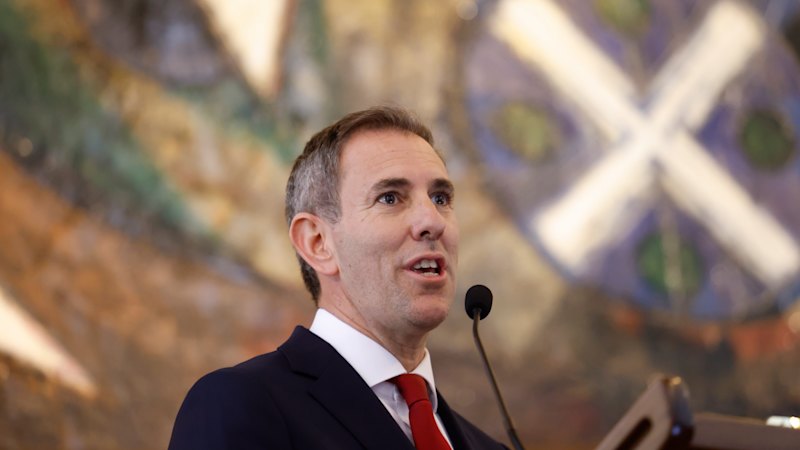
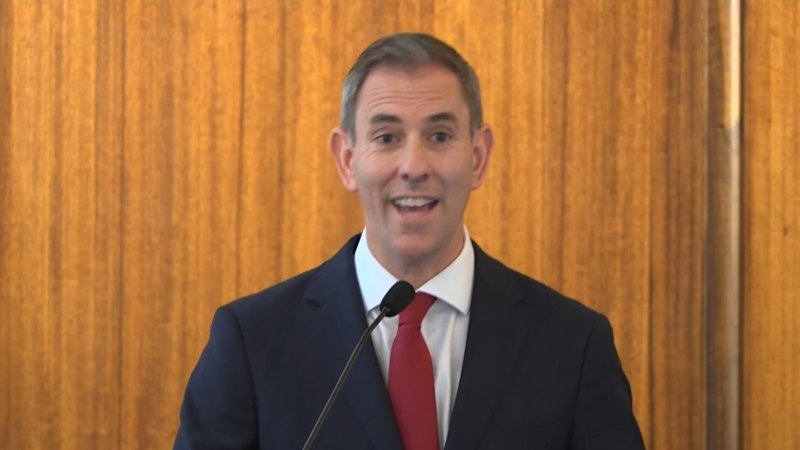
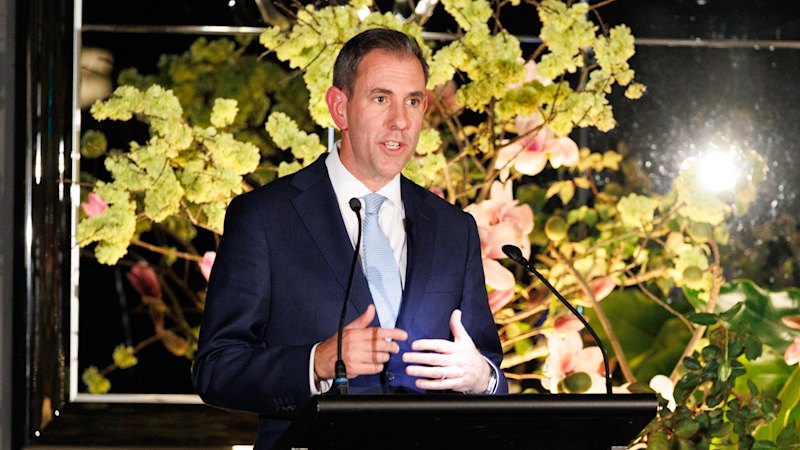
Turmoil in global bond markets is set to cost the already-strained federal budget billions in additional interest payments, Treasurer Jim Chalmers has warned, prompting a leading economist to say the party is over when it comes to cheap money funding populist handouts across the world.
framing: assertive · carried by 1 article(s) · first seen 2026-09-23
Turmoil in global bond markets is set to cost the already-strained federal budget billions in additional interest payments, Treasurer Jim Chalmers has warned, prompting a leading economist to say the party is over when it comes to cheap money funding populist handouts across the world.
2026-09-23 · The Sydney Morning Herald
No more handouts: stark warning as soaring interest bill revealed · assertive framing

Claims (22 extracted, 0 hedged)

Turmoil in global bond markets is set to cost the already-strained federal budget billions in additional interest payments, Treasurer Jim Chalmers has warned, prompting a leading economist to say the party is over when it comes to cheap money funding populist handouts across the world. asserted
it → set → world
Federal debt has surged past $1 trillion and rising global interest rates have thrown out forecasts for Australia’s interest bill, which was already the fastest growing component of Commonwealth spending. asserted
which → surge → spending
Chalmers said the December budget update’s “problematic influence” would probably be “billions of dollars extra to service our borrowing costs”, two days after this term’s Intergenerational Report forecast higher taxes and debt if Australia’s productivity malaise festered. asserted
malaise → say → taxes
“If you read the international economic commentary, the biggest thing that’s going on right now is the way that bond yields – which are essentially a reflection of borrowing costs – are going up around the world and quite substantially. asserted
which → read → world
Here in Australia as well,” the treasurer told The Conversation. asserted
treasurer → tell → Conversation
Chalmers said Australia’s debt was lower than most countries and the country was well-placed to withstand the unexpected surge in the price of money, but the opposition seized on the treasurer’s comments ahead of up to two Reserve Bank rate hikes. asserted
opposition → say → hikes
“It’s welcome our taxaholic treasurer has finally woken up to the cost of his debt. asserted
treasurer → ’ → debt
But until he kicks his spending addiction he is adding more debt to the bottom line and making the problem worse,” shadow treasurer Tim Wilson said. asserted
Wilson → kick → line
“The Albanese economic model is dependent on debt to fund spending.” asserted
model → fund → spending
Yields for government bonds, effectively IOUs issued by governments to raised money, have climbed sharply in recent weeks across the US, Asia and Europe. asserted
Yields → issue → US
Australia’s 10-year bond yield jumped by about half a percentage point to 5.3 per cent. asserted
yield → jump → cent
The yield on a bond rises when bonds become less attractive and their price falls. asserted
price → rise → bond
Long-term yields act as a benchmark for mortgage rates, so increases in yields pose a broader risk to growth around the world. asserted
increases → act → world
Economist and fiscal commentator Chris Richardson said global rates were unusually low for about two decades due to cheap Chinese production creating deflationary pressure, shocks such as the GFC and COVID making economies weaker. asserted
economies → say → GFC
But Richardson said “the party was over” when it came to governments in the populist era using cheap debt to fund handouts for increasingly grumpy voters. asserted
governments → say → voters
Core to the change, he said, was growing concern about US debt, worsened by the Trump administration’s profligate spending and pledge to hand US$5000 to every voter. asserted
concern → say → voter
Richardson added that a global trust deficit was leading savers to seek a premium when they invested their money. asserted
they → add → money
AI firms funding the data centre boom were also adding to the challenge. asserted
firms → fund → challenge
Richardson said the new era of interest rates meant that even when the Reserve Bank started to a rate-cutting cycle, mortgage rates would not go as low as they had earlier this century. asserted
they → say → cycle
“We’re seeing a shift to the new normal in the cost of money. asserted
We → see → money
But the thing about the new normal is that it’s the old normal. asserted
it → ’ → normal
Get a note directly from our foreign correspondents on what’s making headlines around the world. asserted
what → get → world

Give feedback · no sign-in needed

No sign-in needed for now. Your note is sent without a name, so it cannot be answered.

History Support