August 24, 2026

Letters from an American · collected 2026-08-25 · by Heather Cox Richardson commentary
Read the original at Letters from an American ↗

Summary

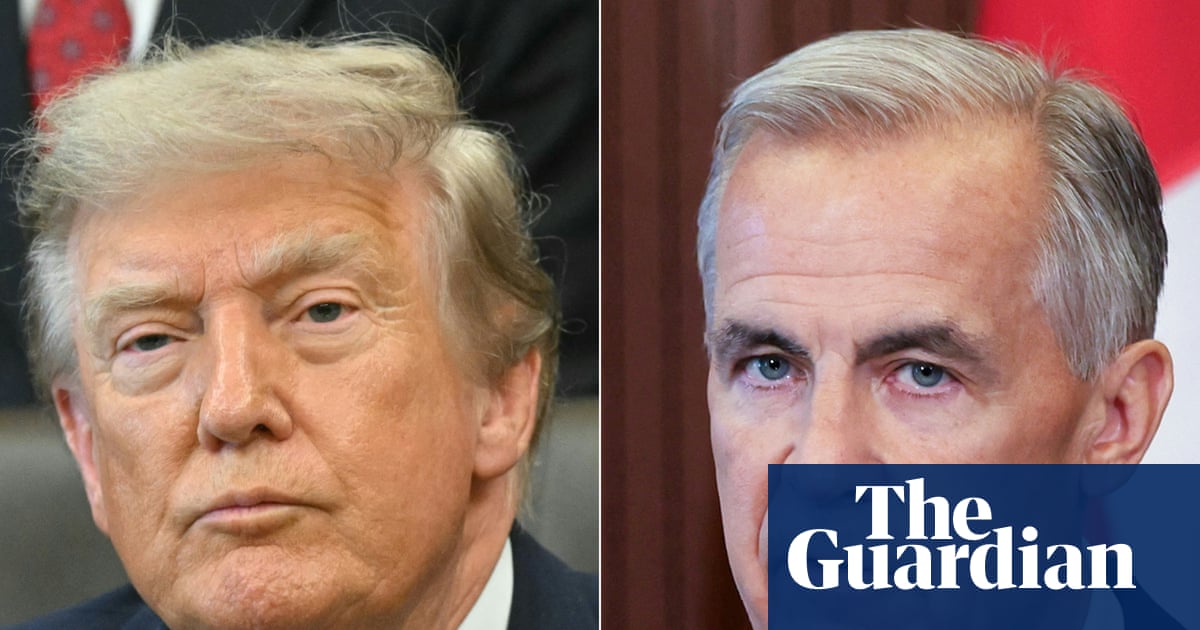
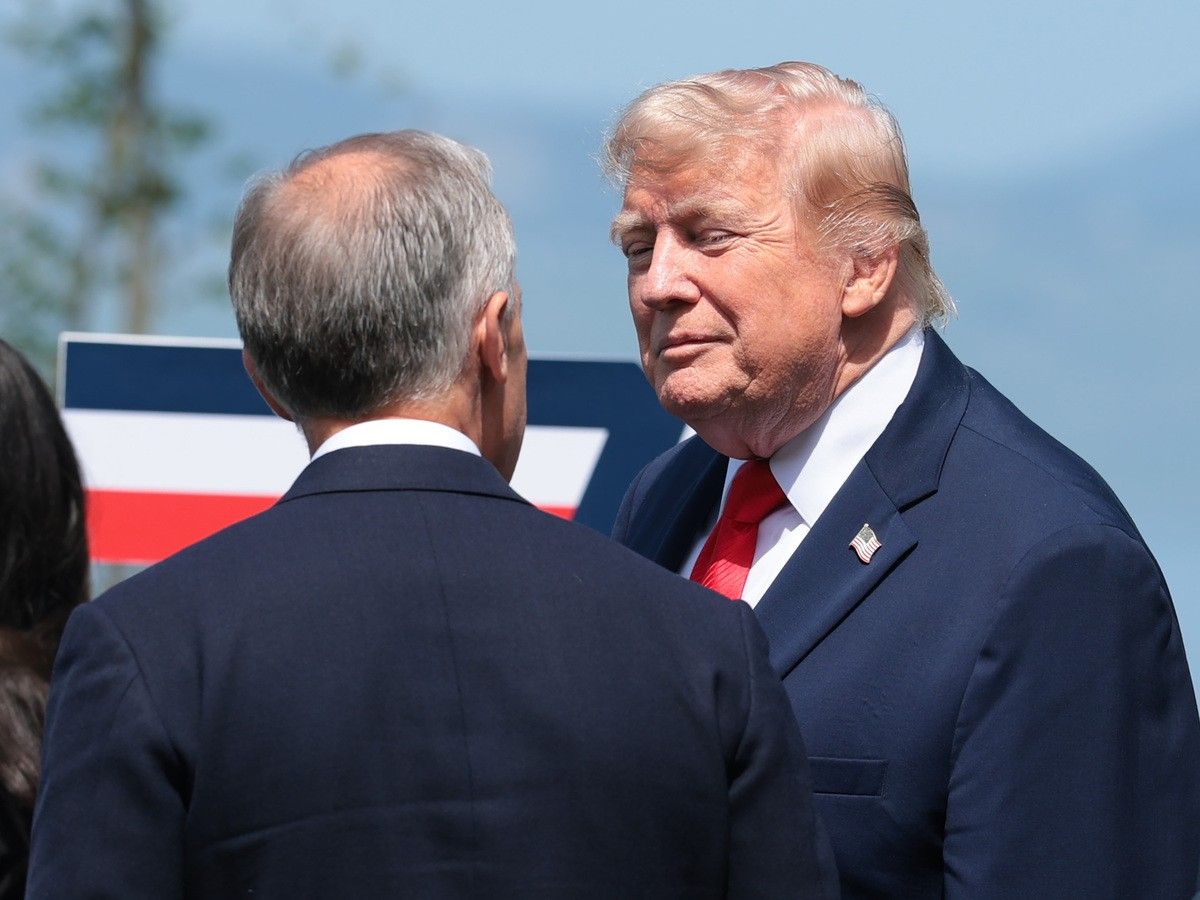
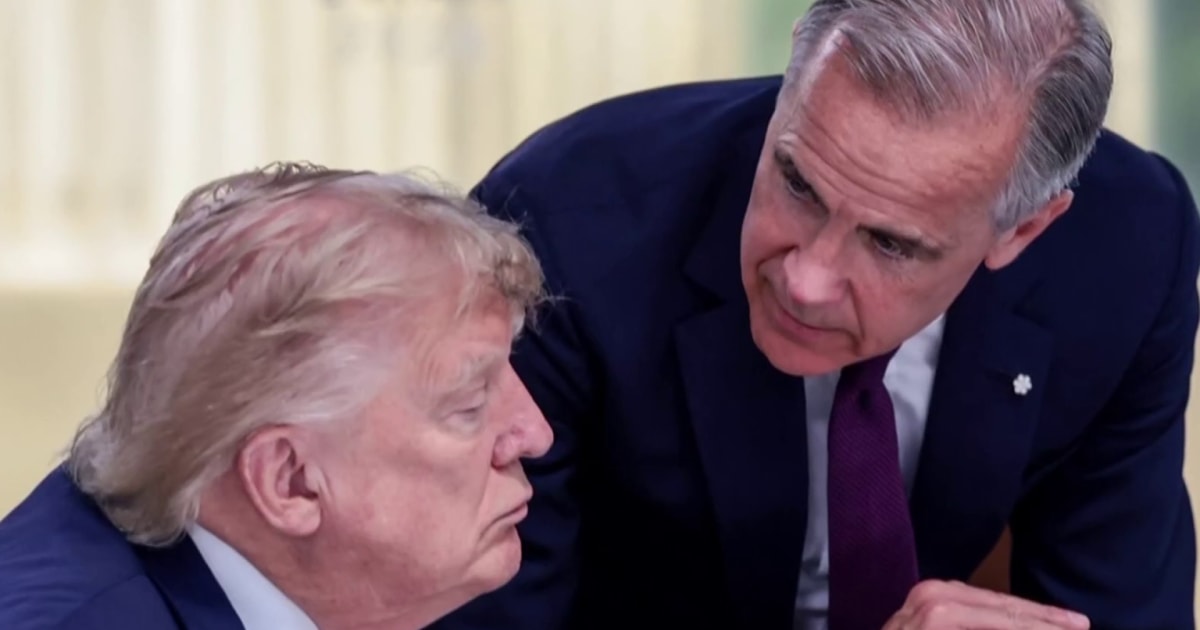
Canadian Prime Minister Mark Carney has instructed negotiators to walk away from talks with US officials over new 50% tariffs on $28 billion of Canadian products imposed by the Trump administration. The tariffs were announced in July, and Trump cited Section 338 of the Tariff Act of 1930 as justification, which had never been invoked before by a president. This move has led to criticism from Carney, who called the US proposal "unfair, uneconomic, and called into question the reliability of any deal." The US has threatened that tariffs will be "devastating" for Canada if it does not comply.
Written by the local model on 2026-08-25, using this article's own text rather than the other coverage of the same event (that is the story summary below).

Signals How these are calculated →

Claims extracted
73
claim-shaped sentences
Uncertain
5%
4 of 73 hedged
Leaning
Leans left
expected in commentary, which argues a position
Publisher trust
not scored
Commentary is not rated for newsroom trust
Outlets on this story
193
Politics
Narrative spread
1
articles carrying this framing
Analyzed 2026-08-25 · how these are computed

AI analysis (generated at analysis time, not now)

Story summary

Here are the articles grouped by topic:

Iran War

Trade Tariffs

Other

Note that some of the article summaries are quite similar, and it may be worth combining or rephrasing them to reduce duplication.

Written for “US-Iran Trade Dispute Escalation” on 2026-08-31, grounded in this article and the 192 other(s) covering the same event.
Why this leaning score
The article's own words the score was based on. Each is quoted verbatim and was checked against the article text before being stored, so you can find it in the original.
Score -0.35 Confidence high 1 quote(s) discarded as not found in the article
Leaning score -0.35 for article 2184 (high confidence, 1 verified quote) · logged 2026-08-27

Story

📰 US-Iran Trade Dispute Escalation
Politics · 193 article(s) covering the same event.

How this is being covered How these are calculated →

Article leaning vs. publisher reliability
Source leaning vs. consistency

Compared with similar articles

This article reads leans left and hedges 5% of its claims. Each row says how that neighbour differs.
CBC | World News
⚖️ leaning not scored 🔴 10% hedged 4 of 39 📰 publisher trust 95
“Article A mentions Trump's comment on a potential revival of Keystone XL, while Article B discusses a different incident involving new tariffs and talks between Canada and the US”
National Post
⚖️ leaning not scored 🔴 0% hedged 0 of 12 📰 publisher trust 96
“Article A describes a trade deal with a deadline of Friday, while Article B mentions events occurring on Friday night and after the fact”
CBC | Top Stories News
⚖️ leaning not scored 🔴 25% hedged 1 of 4 📰 publisher trust 95
“Both articles describe the same trade deal talks falling apart on August 24, 2026, with Prime Minister Mark Carney's statement and reasons matching exactly”
Reason.com
⚖️ Leans strongly left further left than this 🔴 0% hedged 0 of 19 📰 publisher trust 94
“Both articles describe the same trade negotiation breakdown and tariff imposition by Donald Trump on August 24, 2026”
The Globe and Mail
⚖️ Leans strongly right further right than this 🔴 0% hedged 0 of 23 📰 publisher trust 21
“The events described in the two articles are related but distinct: Article A reports on Poilievre's request for Carney to reconvene Parliament, while Article B describes Carney's decision to walk away from trade talks due to new tariffs imposed by Trump.”
National Post
⚖️ leaning not scored 🔴 2% hedged 1 of 48 📰 publisher trust 96
“Both articles describe the collapse of trade talks between Canada and the US on August 24, 2026, due to disputed deal terms.”
National Post
⚖️ Leans right further right than this 🔴 4% hedged 1 of 24 📰 publisher trust 96
“Both articles report on Canadian officials walking away from trade negotiations with the U.S. due to 'last-minute changes in the U.S. proposed terms' on August 24, 2026.”
World news | The Guardian
⚖️ Leans strongly right further right than this 🔴 11% hedged 3 of 28 📰 publisher trust 95
“Both articles report on the breakdown of trade negotiations between the US and Canada, including the imposition of 50% tariffs by the US”
National Post
⚖️ Leans right further right than this 🔴 8% hedged 2 of 24 📰 publisher trust 96
“Article A mentions a press conference in Lévis on Monday, while Article B refers to negotiations with the U.S. over tariffs that took place 'on Friday night' (presumably Thursday or Friday of last week), indicating two different events”
National Post
⚖️ Leans strongly right further right than this 🔴 3% hedged 1 of 39 📰 publisher trust 96
“Both articles report on the exact same incident: trade talks between Canada and the US falling apart due to disagreements over tariffs, which happened on Friday night (August 24, 2026)”

Publisher

Letters from an American · 14 article(s) · 0 correction(s) detected

Commentary. The three signals behind a trust score all measure a newsroom's record with its own reporting, so they are not computed for this source. How trust is scored.

No corrections detected for this publisher. That may mean careful reporting, or simply that nothing has been checked.

Who wrote this

Heather Cox Richardson
14 article(s) here · 1 carrying a prediction
🔮 “The nonviolent revolution is saying, ‘We will not wait for the courts to act, for we have been waiting for hundreds of years.
2026-08-31 · assertive framing · August 28, 2026
🔮 The push has come in the wake of the rise of New York City mayor Zohran Mamdani and other naturalized U.S. citizens whose policy positions those like South Carolina representative Nancy Mace consider un-American.
2026-08-31 · assertive framing · August 29, 2026
🔮 She is one of the youngest mayors in the city’s history and is the first woman and the first Asian American to be elected to the office.
2026-08-31 · assertive framing · Week Fourteen in 250 to 250
🔮 The book was written not to reflect the facts of Washington’s life—biographies would not focus on facts for almost a century—but to show virtues the nation’s youth should imitate and to establish a set of attributes against which future voters could judge those vying to lead the nation.
2026-08-31 · assertive framing · August 30, 2026
🔮 Still, Smith points out, the apparent proof that Kennedy lied to Congress is a clear opening for hearings into Kennedy’s testimony, history, and conduct in office—including changing the vaccine schedule after promising not to—that would illuminate what has been happening to the U.S. government, information that would likely prove embarrassing to the Trump administration.
2026-08-28 · assertive framing · August 27, 2026
🔮 The antennas of Chicago’s Willis Tower—formerly the Sears Tower—lit up pink, too.
2026-08-27 · assertive framing · August 26, 2026
🔮 In contrast to MAGA’s performative nonsense, Canadian officials announced today that on September 8 they will begin to impose tariffs of up to 50% on about 700 products worth about $20 billion in retaliation for Trump’s tariffs on Canada.
2026-08-26 · assertive framing · August 25, 2026
🔮 Canada and the U.S. have shared military and defense capabilities, with the North American Aerospace Defense Command (NORAD) operating since 1957 to detect aircraft or missiles, especially those coming over the North Pole, that could prove a threat to the United States (NORAD’s Santa Tracker originally was a way to make Americans aware of what NORAD did).
2026-08-25 · assertive framing · August 24, 2026
🔮 McMaster said Trump “thought it was a great idea” for her to replace her brother, and she has indicated her loyalty to Trump and her willingness to pass the SAVE America Act he so badly wants in order to rig the 2026 midterm elections.
2026-08-24 · assertive framing · August 22, 2026
🔮 Mayo Clinic, Narrated by Dr. Stephen Ray Mitchell Dr. Stephen Ray Mitchell is an award-winning medical expert who currently serves as the Joseph Butenas Professor of Medicine and Pediatrics and Dean Emeritus for Medical Education at Georgetown University School of Medicine.
2026-08-24 · assertive framing · Week Thirteen in 250 to 250
More on this subject from Heather Cox Richardson
August 25, 2026
2026-08-26 · Letters from an American · 74% similar
All 14 articles by Heather Cox Richardson →

Topics

Canada Canadian NORAD U.S. the United States

Subjects

Trump PERSON · 15× Canada GPE · 11× U.S. GPE · 9× Canadian NORP · 3× NORAD ORG · 3× Carney PERSON · 2× the United States GPE · 2× Mark Carney PERSON · 1× Mexico GPE · 1× USMCA ORG · 1×

Narrative

Cattle ranchers and farmers, who have in the past strongly supported Trump, cried foul, saying the imports would drive down prices while making it impossible to distinguish between U.S. and foreign meat just after nearly 30,000 pounds of Argentine beef were recalled after missing a required inspection in the U.S. Trump has refused to identify from which country or countries he plans to get the ground beef, a reluctance dovetailing unfortunately with a report from Dave Philipps with visuals by Erin Schaff in the New York Times on August 20 that the Bureau of Land Management under Trump has been selling wild horses for slaughter as meat for as little as $25 a head.
framing: assertive · carried by 1 article(s) · first seen 2026-08-25
🔮 Canada and the U.S. have shared military and defense capabilities, with the North American Aerospace Defense Command (NORAD) operating since 1957 to detect aircraft or missiles, especially those coming over the North Pole, that could prove a threat to the United States (NORAD’s Santa Tracker originally was a way to make Americans aware of what NORAD did).
2026-08-25 · Letters from an American
August 24, 2026 · assertive framing

Claims (73 extracted, 4 hedged)

On Friday night, Prime Minister Mark Carney instructed Canadian negotiators to walk away from talks with officials from the Trump administration over new tariffs of 50% Trump had imposed on $28 billion of Canadian products. asserted
Trump → instruct → products
Carney explained in a statement that “last-minute changes in the U.S. proposed terms were unfair, uneconomic, and called into question the reliability of any deal.” asserted
changes → explain → deal
He has a point. asserted
He → have → point
From July 1, 2020, until Trump’s second term, the U.S., Canada, and Mexico traded under the United States–Mexico–Canada Agreement (USMCA). asserted
U.S. → trade → Agreement
Negotiated under the first Trump administration, USMCA replaced the 1994 North American Free Trade Agreement (NAFTA), and was similar to it, creating one of the world’s largest free trade zones. asserted
USMCA → negotiate → zones
The trade zone reinforced the close alliance between Canada and the U.S., enabling people in both countries to enjoy the longest demilitarized border in the world stretching more than 5,000 miles (more than 8,000 kilometers) across the entire North American continent. asserted
zone → reinforce → continent
Canada and the U.S. have shared military and defense capabilities, with the North American Aerospace Defense Command (NORAD) operating since 1957 to detect aircraft or missiles, especially those coming over the North Pole, that could prove a threat to the United States (NORAD’s Santa Tracker originally was a way to make Americans aware of what NORAD did). uncertain
NORAD → share → what
But as soon as he won reelection in 2024, Trump began to emphasize that he intended to use “economic force,” specifically tariffs, to pressure Canada into joining the U.S. as its 51st state. asserted
he → win → state
He began to exercise that threat the day he took office for the second time, saying he would put 25% tariffs on Canada. asserted
he → begin → Canada
This violation of his own trade agreement reflected the administration’s abandonment of the principles of free trade and defensive alliances put in place after World War II, replacing that system with one favored by autocrats like Russia’s president Vladimir Putin, in which strong countries imposed spheres of influence in their regions of the world. asserted
countries → reflect → world
Since then, Trump has sought to use the extraordinary economic power of the United States to force Canada and other countries into subordinate relationships. asserted
Trump → seek → relationships
The recent threat against Canada came after Trump’s previous tariffs either were struck down or expired. asserted
tariffs → come → Canada
On July 20, Trump said he would use Section 338 of the Tariff Act of 1930, more commonly known as the Smoot-Hawley Tariff Act, to impose a 50% tariff on certain Canadian products. asserted
he → say → products
No president had ever before invoked Section 338, which allows a president to impose tariffs when a country discriminates against U.S. products relative to its comparative treatment of other countries’ goods. asserted
country → invoke → goods
On Sunday, Transportation Secretary Sean Duffy said Carney would have to back down because tariffs will be “devastating for his country.” asserted
tariffs → say → country
Also on Sunday, the Wall Street Journal editorial board noted that Trump “has contrived an array of pretexts—from fentanyl trafficking to trade deficits—to bludgeon Canada with tariffs.” asserted
Trump → note → tariffs
And the editorial board, known for its right-wing slant, called Trump’s tariff war on Canada “the dumbest trade war in history” and said it “makes no economic or political sense.” asserted
it → know → sense
Canada is the second largest trading partner of the U.S., and the editors noted that Trump’s “latest round of border taxes will hit an array of consumer goods, construction materials and manufacturing components,” driving prices still higher at a time when consumers are already squeezed. asserted
consumers → trade → time
Trump’s new attack on Canada might not make economic or political sense for the U.S., but it seems to make sense for a decaying president. uncertain
it → make → president
Trump is flailing in Iran, and so—as national security scholar Tom Nichols pointed out in The Atlantic after Trump nonsensically attacked South Korea, another longstanding and loyal ally—he is looking to reassert his dominance. asserted
he → flail → dominance
Trump doesn’t dare to cross the leaders who actually threaten the U.S., those like Putin, China’s Xi Jinping, and North Korea’s Kim Jong Un. asserted
who → dare → Putin
Instead, Nichols writes, he is trying to make himself feel better by “kicking America’s allies, the nations he can punish without fear that they will kick him back.” asserted
they → write → him
“At a better moment in American history, an enraged Congress would step in and demand answers about such dangerous idiocy,” Nichols wrote. asserted
Nichols → step → idiocy
“They would rush to the White House, talk to the press, hold hearings, and in general act like responsible stewards of American power.” asserted
They → rush → power
But Republicans in charge of Congress appear to be unwilling to cross Trump. asserted
Republicans → appear → Trump
Our allies, though, Nichols notes, “have power and agency of their own, and even now are likely planning for a world in which the Americans are no longer men and women of principle who stand by their word and by their friends.” asserted
who → note → friends
That moment appears to have arrived. asserted
moment → appear → ?
In Davos, Switzerland, in January 2026, Carney warned the World Economic Forum that the world is “in the midst of a rupture.” asserted
world → warn → rupture
He warned that the post–World War II rules-based international order is no longer automatically a route to prosperity and security as the world’s most powerful nations are using the economic integration that system championed as a way to coerce other countries. asserted
system → warn → countries
He urged “middle countries” to create “coalitions for different issues based on common values and interests” as an alternative to a “world of fortresses” made up of major powers with spheres of influence. asserted
He → urge → influence
On Friday night, after recalling Canada’s negotiators, Carney released a statement saying: “We have recognised from the beginning that America has changed, and that we will not return to our old relationship. asserted
we → recall → relationship
Our government understood, before many, that America is altering all its trade relationships. asserted
America → understand → relationships
Although negotiators had tried to work with the U.S., he wrote, Canada’s core economic strategy has been on building Canada’s economy and diversifying economic partnerships. asserted
strategy → try → partnerships
He noted that Canada is creating jobs at four times the rate of the United States. asserted
Canada → note → States
“Canada has what the world wants,” he wrote, “And we will not allow any nation to determine our future.” asserted
nation → have → future
In an address to Canadians on Saturday, Carney said: “Last spring, I warned that America is trying to break us so that they can own us. asserted
they → say → us
And I promised: ‘That will never, ever happen.’ asserted
That → promise → ?
We are keeping that promise.” asserted
We → keep → promise
“Canada is becoming stronger and less dependent on America. asserted
Canada → become → America
We are already giving ourselves more than they can take away. asserted
they → give → more
…and 33 more, not listed.

💬 Give feedback
🕘 History 🎫 Support