The Fed just ended Washington’s cheap-money era

Read the original at Washington Examiner ↗
Washington Examiner · collected 2026-09-19 · by Washington Examiner

Quick Summary

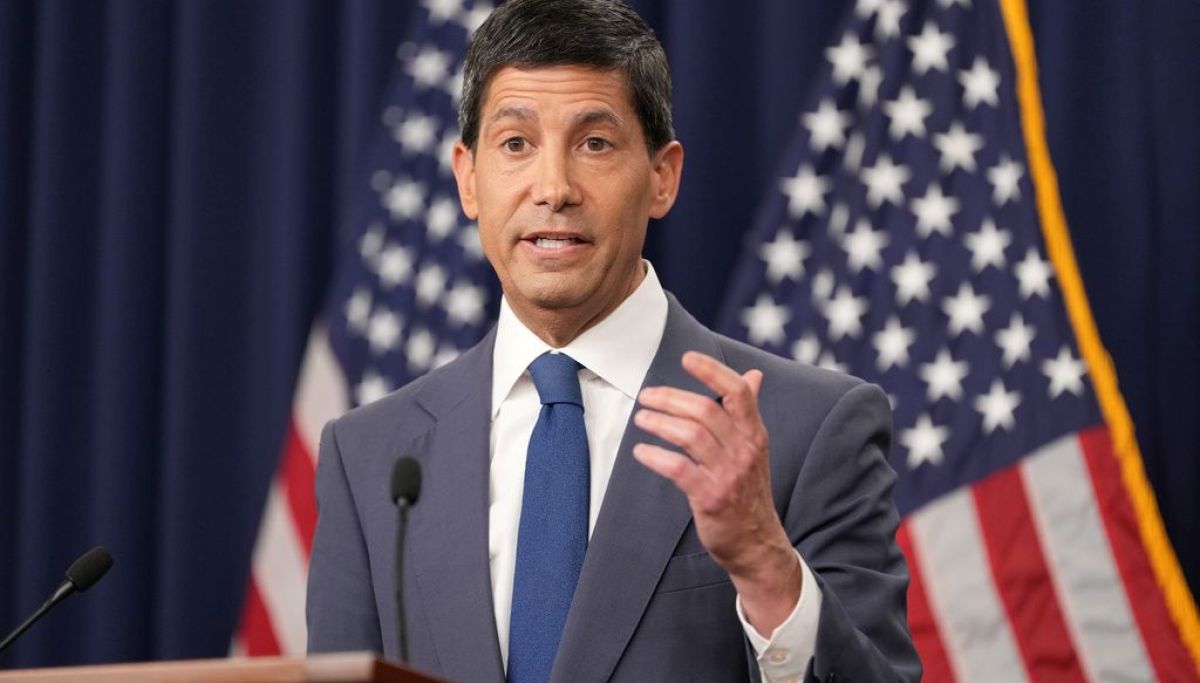
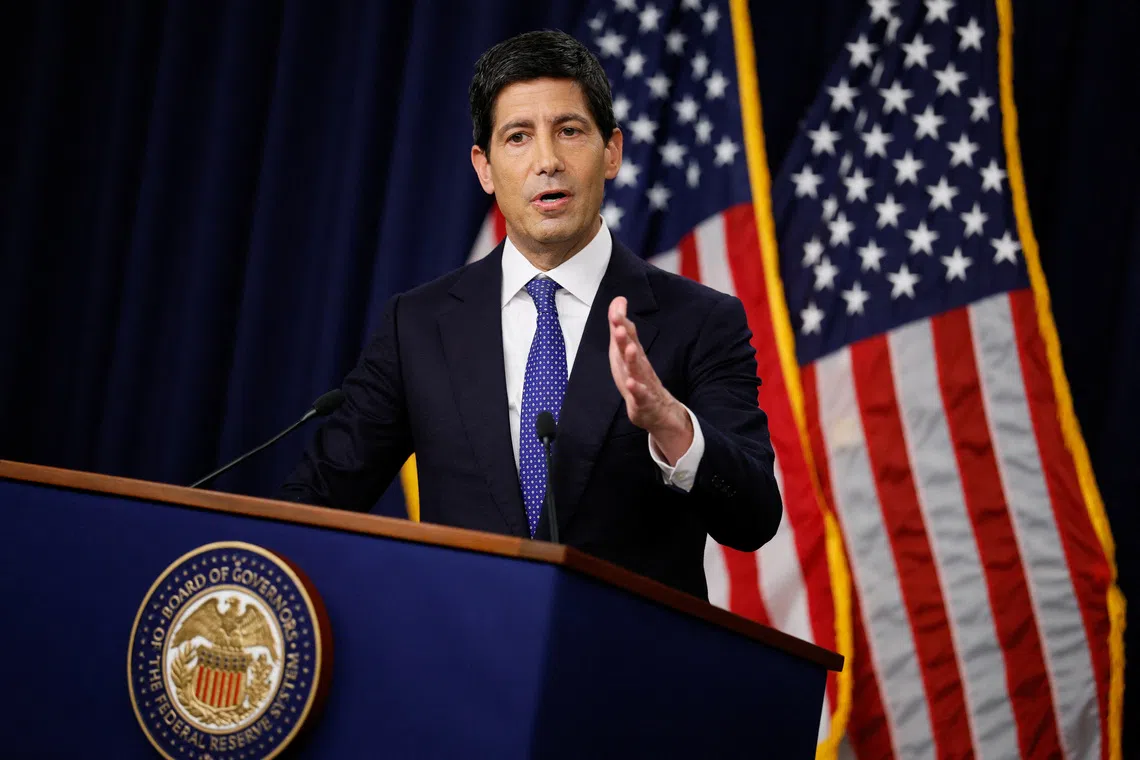
The Federal Reserve raised its benchmark interest rate by a quarter percentage point to 4%, aligning with expectations given current inflation and economic conditions. Fed Chairman Kevin Warsh emphasized that the central bank’s oversized balance sheet, bloated by post-2008 quantitative easing measures, is no longer sustainable, indicating an end to artificially low borrowing costs for the government. This shift means rising interest payments on federal debt, projected to surpass $1 trillion in 2026 and nearly double to over $2.1 trillion by 2036, significantly altering fiscal policy considerations in Congress.
Written locally by qwen2.5:14b on 2026-09-19, using this article's own text rather than the other coverage of the same event (that is the story summary below).

AI analysis runs on qwen2.5:14b, locally

Story summary

On September 16, 2023, the Federal Reserve is expected to raise its benchmark interest rate by 25 basis points to a range between 3.75% and 4.00%, according to predictions from financial analysts like CME Group's FedWatch tool. This move reflects growing concerns over inflation, which has risen above the central bank’s target of 2%, despite previous attempts at stabilization. The decision comes amid pressure from President Donald Trump for lower rates and economic turbulence due to rising oil prices following conflicts in the Middle East, pushing crude costs past $100 per barrel. Despite political tensions, financial markets overwhelmingly anticipate a rate hike to combat inflation, with some economists predicting additional increases before year-end to achieve a “timelier return” to the 2% target.

Written for “Fed Interest Rate Hike” on 2026-10-05, grounded in this article and the 55 other(s) covering the same event.

Signals How these are calculated →

Claims extracted
35
claim-shaped sentences
Uncertain
6%
2 of 35 hedged
Leaning
Leans right
of the writing, not the subject · beta estimate
Correction & hedging signals
72.3
corrections and hedging in what we collected; not a measure of accuracy
Outlets on this story
56
Economy/Business
Narrative spread
1
articles carrying this framing
Analyzed 2026-09-19 · how these are computed

Story

📰 Fed Interest Rate Hike
Economy/Business · 56 article(s) covering the same event. See how they differ ↓

How this is being covered How these are calculated →

Article leaning vs. publisher reliability
Source leaning vs. consistency

Compared with similar articles

This article reads leans right and hedges 6% of its claims. Each row says how that neighbour differs.
The Guardian
⚖️ leaning not scored 🔴 4% hedged 1 of 24 📰 publisher trust 60
“Both articles describe the Federal Reserve's decision to raise interest rates, specifically mentioning Kevin Warsh as the new chair and the unanimous vote for a rate hike.”
ABC News (US)
⚖️ leaning not scored 🔴 15% hedged 3 of 20 📰 publisher trust 59
“Both articles describe the Federal Reserve's decision to raise interest rates by a quarter percentage point, occurring on the same day and under similar economic conditions.”
ABC News (AU)
⚖️ Leans left further left than this 🔴 7% hedged 2 of 27 📰 publisher trust 61
“Both articles report on the identical Federal Reserve decision to raise interest rates by a quarter percentage point, citing similar reasons and timing.”
ABC News (AU)
⚖️ Leans left further left than this 🔴 8% hedged 2 of 26 📰 publisher trust 61
“Both articles report on the same Federal Reserve decision to raise interest rates by 25 basis points on the same day.”
New York Post
⚖️ Leans left further left than this 🔴 24% hedged 8 of 34 📰 publisher trust 64
“Both articles describe the Federal Reserve's decision to raise interest rates by a quarter percentage point, which occurred on the same day and is characterized as an expected but definitive action.”
BBC News
⚖️ leaning not scored 🔴 22% hedged 6 of 27 📰 publisher trust 78
“Both articles describe the Federal Reserve's decision to raise interest rates by a quarter percentage point on the same day, with the same outcome and context.”
ABC News (AU)
⚖️ leaning not scored 🔴 3% hedged 1 of 29 📰 publisher trust 61
“Both articles describe the Federal Reserve raising interest rates by a quarter percentage point on the same day, indicating they are reporting on the same specific Fed decision.”
The Straits Times
⚖️ Leans right 🔴 27% hedged 4 of 15 📰 publisher trust 59
“Both articles describe the Federal Reserve raising interest rates to address inflation concerns on September 16, 2026.”
Al Jazeera
⚖️ leaning not scored 🔴 14% hedged 5 of 36 📰 publisher trust 60
“Both articles describe the Federal Reserve's unanimous decision to raise interest rates by a quarter percentage point, which occurred on the same day.”
CBS News
⚖️ leaning not scored 🔴 0% hedged 0 of 4 📰 publisher trust 66
“Both articles describe the Federal Reserve raising interest rates on the same day for the same reason of concern over high inflation.”

Publisher

Washington Examiner · 1912 article(s) · 3 correction(s) detected
Running correction rate · 3 correction(s)
2026-10-03
Tennessee’s prison chief resigns after failed Christa Pike execution, Bill Lee says
2026-10-03
Alito says there’s no perfect time to retire while confirming he will reconsider next year
2026-10-01
Christa Pike was set to be the first woman to be executed in Tennessee in 200 years before botched attempts: What to know

Who wrote this

Washington Examiner
16 article(s) here · 1 carrying a prediction
🔮 It is unfortunate for Republicans that it won’t pass until after the November elections, but the bipartisan permitting reform deal announced hours before the Senate adjourned this week could be the most historic and consequential legislative accomplishment of Donald Trump’s presidency.
2026-10-04 · mixed framing · A bipartisan deal to get America building again
🔮 On Sept. 28, the National Highway Traffic Safety Administration lowered the projected 2031 fleet requirement from approximately 50 miles per gallon to 35.
2026-10-03 · assertive framing · Trump just made cars more affordable
🔮 We may never know exactly what happened on a October 2024 night in a Cornell University fraternity house, but we should be thankful that the factual disputes and criminal liability will be sorted out in criminal court.
2026-10-02 · assertive framing · Preserving due process on college campuses
🔮 Again, the city stressed that the caucuses “are completely voluntary and no one will be turned away,” but then added that employees are encouraged to join “the caucus that aligns with how they identify racially.”
2026-10-01 · assertive framing · Yes, DEI can violate civil rights law
🔮 New York City Mayor Zohran Mamdani spent weeks threatening to arrest Netanyahu as a “war criminal” responsible for “genocide,” only to acknowledge later that he lacks the authority to put the Israeli premier in cuffs.
2026-09-28 · assertive framing · Netanyahu’s warning to a declining West
🔮 Rep. Delia Ramirez (D-IL), who has declared herself a “proud anchor baby,” is not the first Democrat to introduce legislation that would abolish the Immigration and Customs Enforcement agency.
2026-09-27 · assertive framing · This is what Democrats’ immigration policy would be
🔮 In a normal capital city, those words would approximate how a police dispatcher would respond after a child was struck by a hit-and-run driver.
🔮 A manufacturer using 1 million kilowatt-hours a year would pay roughly $116,000 more for electricity at California’s average industrial price.
2026-09-25 · assertive framing · Newsom’s pathetic energy rebate
🔮 The president called the territory “vital” for U.S. missile defense and NATO and warned that “if we don’t get it, Russia or China will.”
2026-09-24 · assertive framing · Trump gets his Greenland deal, but at a cost
🔮 Convinced that segregation caused educational inequality, Hannah-Jones believed that families such as hers could improve a school by enrolling their children in it.
Also by Washington Examiner
A bipartisan deal to get America building again
2026-10-04 · Washington Examiner
Trump just made cars more affordable
2026-10-03 · Washington Examiner
Preserving due process on college campuses
2026-10-02 · Washington Examiner
Yes, DEI can violate civil rights law
2026-10-01 · Washington Examiner
Nothing else under this byline is closely related to this article, so these are simply their most recent.
All 16 articles by Washington Examiner →

Topics

Congress Fed Medicare The Federal Reserve’s Treasury

Subjects

Fed ORG · 9× Congress ORG · 7× Treasury ORG · 5× Social Security ORG · 4× Medicare ORG · 2× Kevin Warsh PERSON · 1× The Congressional Budget Office ORG · 1× The Federal Reserve’s ORG · 1× Warsh PERSON · 1× the White House ORG · 1×

Narrative

Before taking the chair, he called the balance sheet, which is weighed down by $7 trillion of government IOUs, “trillions larger than it needs to be” and advocated a big withdrawal of the Fed’s presence in financial markets.
framing: assertive · carried by 1 article(s) · first seen 2026-09-19
🔮 For years, lawmakers could run enormous deficits while interest rates were kept artificially low.
2026-09-19 · Washington Examiner
The Fed just ended Washington’s cheap-money era · assertive framing

Claims (35 extracted, 2 hedged)

The Federal Reserve’s decision Wednesday to raise its benchmark interest rate by a quarter percentage point to 4% surprised almost no one. asserted
decision → raise → one
Economic activity is expanding at a solid pace. asserted
activity → expand → pace
Capital investment is robust, job gains have kept pace with the workforce, and unemployment has changed little. asserted
unemployment → keep → workforce
But the White House and Congress should pay attention to another message the Fed is sending: the government cannot count on cheap borrowing anymore. asserted
government → pay → borrowing
Fed Chairman Kevin Warsh has spent years arguing that the central bank’s balance sheet became too big after the 2008 financial crisis. asserted
sheet → spend → crisis
Before taking the chair, he called the balance sheet, which is weighed down by $7 trillion of government IOUs, “trillions larger than it needs to be” and advocated a big withdrawal of the Fed’s presence in financial markets. asserted
it → take → markets
That matters to Congress because the Fed’s post-2008 purchase of Treasury paper pushed down long-term interest rates. asserted
purchase → matter → rates
The central bank bought trillions of dollars in Treasury securities and mortgage-backed securities to achieve what is called quantitative easing, deliberately removing long-term bonds from private markets. asserted
what → buy → markets
The Fed’s own research found that those purchases substantially reduced long-term Treasury yields. asserted
purchases → find → yields
Lower Treasury yields meant cheaper borrowing not just for homeowners and businesses, but also for the federal government. asserted
yields → mean → government
Congress took advantage of this to ramp up spending. asserted
Congress → take → spending
At the end of fiscal 2008, gross federal debt stood at roughly $10 trillion. asserted
debt → stand → trillion
Last month, it crossed $40 trillion. asserted
it → cross → trillion
Debt held by the public is now roughly equal to the nation’s annual economic output. asserted
Debt → hold → output
For years, lawmakers could run enormous deficits while interest rates were kept artificially low. uncertain
rates → run → deficits
This masked some of the cost of borrowing; the principal accumulated, but servicing it remained relatively manageable. asserted
servicing → mask → it
Through August, the federal government had already spent $1 trillion on interest this fiscal year, compared with about $833 billion on defense and $979 billion on Medicare. asserted
government → spend → Medicare
Debt servicing has therefore passed defense and Medicare and is now second only to Social Security among major categories of federal spending. asserted
servicing → pass → spending
The Congressional Budget Office projects that net interest costs will exceed $1 trillion for 2026 and more than double to $2.1 trillion by 2036. asserted
costs → project → 2036
By then, interest alone would consume 4.6% of GDP. asserted
interest → consume → GDP
The Fed does not dictate fiscal policy, and Warsh has been careful not to seem to do so. asserted
Warsh → dictate → policy
Treasury must refinance maturing debt, and when old debt issued at low rates is replaced with new debt at higher rates, the government’s interest bill rises. asserted
bill → refinance → rates
That changes the arithmetic facing Congress. asserted
That → change → Congress
Washington does not have a revenue problem but a spending problem. asserted
Washington → have → problem
Federal revenue this year is expected to be slightly above its historical average as a share of the economy. asserted
revenue → expect → economy
Spending, however, is running well above its historical average. asserted
Spending → run → average
In a high-interest-rate world, deficits become more expensive. asserted
deficits → become → world
More spending means more borrowing, more borrowing means higher interest costs, and higher interest costs mean still more borrowing. asserted
costs → mean → borrowing
Congress cannot count on cheap debt to hide the cost of overspending any longer. asserted
Congress → count → overspending
Social Security trustees forecast that the trust fund will exhaust its reserves in 2032. asserted
fund → forecast → 2032
That is not bankruptcy — payroll taxes would continue coming in — but without legislative changes, incoming revenue would cover only 78% of scheduled Social Security benefits. asserted
revenue → continue → benefits
Congress will have to address Social Security sooner or later. asserted
Congress → have → Security
Waiting until 2032 would mean fewer options and sharper changes. asserted
Waiting → wait → options
Acting earlier would allow reforms to be phased in more gradually and give workers more time to plan. asserted
reforms → act → time
But for Congress, it underscores a broader fiscal reality: the era in which Washington could borrow trillions of dollars at unusually low cost should be assumed to be over, perhaps never to return. uncertain
Washington → underscore → cost

💬Give feedback
🕘History 🎫Support