This week’s roundup has a lot of AI in it.
asserted
roundup → have → it
Fortunately or unfortunately, it seems like a lot of the news is going to revolve around AI for the rest of our lives.
asserted
lot → seem → lives
That was true of industrial technology in 1870-1970; people basically got used to the idea that railroads and factories and oil and industrialized warfare and such matters were central to the way the world was run and to the collective future of humanity.
asserted
world → use → humanity
AI is going to be like that going forward, and we’re just going to have to get used to that.
asserted
we → go → that
So let’s make it as fun and interesting as we can!
asserted
we → let → ?
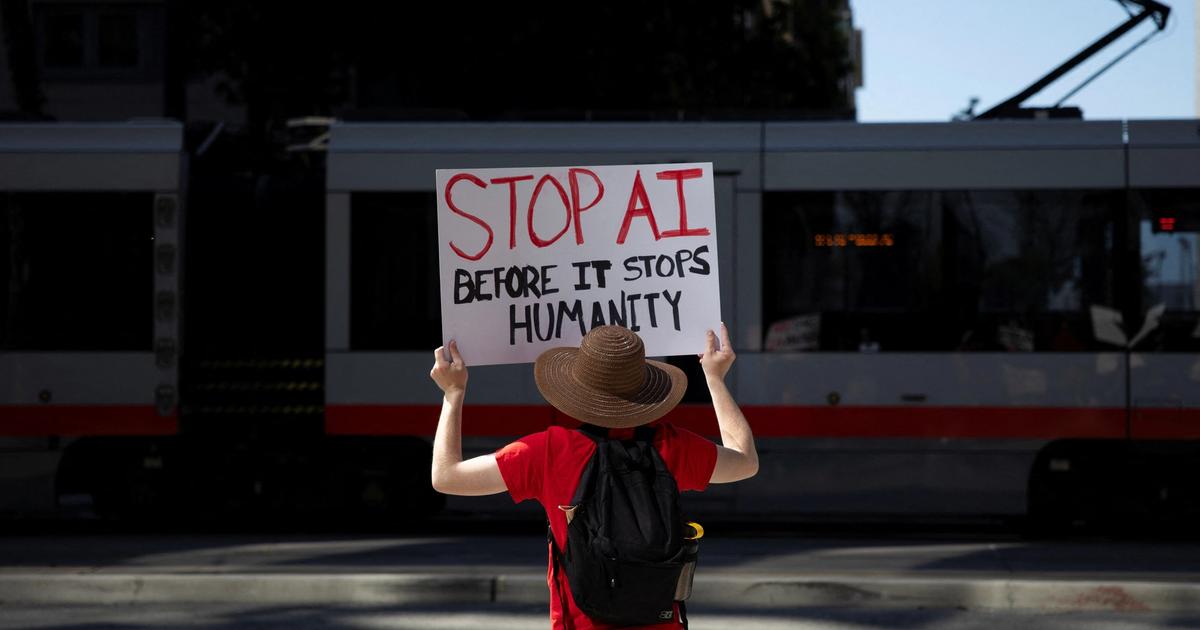
Americans are getting scared about AI risk
AI risk has exploded onto the national scene.
asserted
risk → get → scene
AI companies and AI researchers generally believe that the technology they’re building has the capacity to do great harm — perhaps even to end the human race — if it’s not developed more slowly and deliberately.
asserted
it → believe → race
There are five main groups of people opposing the slowdown:
The Trump administration, which is worried that an AI slowdown might also slow down economic growth
Investors who think a slowdown might hurt their bottom line
Libertarians and techno-optimists who think regulating technological progress is bad on principle
China hawks who worry that a slowdown would let China take the lead in the AI race
Progressives who spent the last few years telling themselves that AI doesn’t work, that AI is a huge economic bubble, and so on, and who now can’t bring themselves to admit that yes, the techbros actually built something that works.
This is a strange alliance indeed.
uncertain
This → be → something
The last of these — the progressives who simply couldn’t admit that billionaire-funded private industry could build something powerful enough to endanger humanity — were the strangest of all, since their refusal to acknowledge the effectiveness of AI basically put them in an alliance with libertarians, hawks, and Trump.
uncertain
refusal → admit → libertarians
In fact, in recent days there has been a tremendous civil war within the progressive movement between the “AI is dangerous” and “AI is fake” camps, with Bernie Sanders supporting the former and his former comms director David Sirota supporting the latter.
asserted
director → support → latter
But although it has the support of the president (for now), the anti-slowdown coalition is losing in the court of public opinion.
asserted
coalition → have → opinion
Nate Silver has a post rounding up the evidence:
asserted
Silver → have → evidence
A bipartisan majority is now worried about existential risk from AI:
asserted
majority → worry → AI
And a bipartisan majority thinks AI is moving too fast:
Barack Obama, probably the most successful American politician of this century so far, is telling Democrats to make AI safety one of their tentpole issues.
asserted
safety → think → issues
I don’t think I’ve ever seen such bipartisan national unity on any issue in my adult lifetime.
asserted
I → think → lifetime
Trump is standing firm against the tide of public opinion here — as he has on the Iran War, tariffs, and other issues.
asserted
he → stand → War
But it’s not clear how long he’ll be able to hold out.
asserted
he → ’ → ?
A very cool debate about AI and growth
Quite apart from the question of whether AI will kill us
asserted
AI → kill → us
is the question of whether AI will deliver explosive economic growth.
asserted
AI → deliver → growth
But the people publicly betting on fast growth are making an even more extreme forecast — they’re forecasting 15% growth, which is much higher than the 5.3% that AI experts forecasted as their most optimistic scenario.
asserted
experts → bet → scenario
That’s an absolutely stupendous growth rate — China has hit it only in one year (1984) since it began its rapid growth, and that was when it was a very poor country.
asserted
it → ’ → growth
And yet, a number of people in the AI industry think it’s going to happen to us very soon.
asserted
it → think → us
Economists — even those who work on the economics of superintelligent AI, like Alex Imas — are skeptical.
asserted
who → work → Imas
In a recent blog post, Imas and Ben Moll explain their thinking:
asserted
Imas → explain → thinking
Basically, they foresee a bunch of factors combining to limit AI’s contribution to economic progress in the short term:
Slow diffusion of AI technology throughout the economy,
The “J-curve” effect where productivity tends to fall right after a big innovation comes out (because companies need to spend resources adopting the new technology rather than on their existing businesses)
The difficulty of automating the physical world with robots
Political barriers to adoption
The difficulty of reorganizing production processes around AI
The persistence of activities that consumers want to keep having humans do (the “relational sector”)
Bottlenecked inputs to the AI industry (e.g. chips)
Baumol’s cost disease
AI disasters that slow adoption
That’s a lot of reasons!
asserted
That → foresee → reasons
It makes sense that at least some of these will end up having an effect.
asserted
some → make → effect
Whether AI’s rapid improvement is enough to overcome all of these, and propel us to 15% growth, is something I guess we’ll have to see for ourselves.
asserted
we → overcome → ourselves
Personally, I lean toward the economists’ more measured expectation, but I’m prepared to be surprised on the upside.
asserted
I → lean → upside
AI keeps stubbornly refusing to kill SaaS
asserted
AI → refuse → SaaS
One of the most entertaining storylines about AI is how it keeps refusing to destroy all the things people say it’s about to destroy.
asserted
it → keep → things
On Labor Day, I noted that AI keeps stubbornly refusing to kill jobs.
asserted
AI → note → jobs
A month ago, I noted that AI keeps stubbornly refusing to kill Indian back-office outsourcing companies.
asserted
AI → note → companies
Now Ernie Tedeschi and the excellent folks over at Stripe Economics have a post about how AI is stubbornly refusing to kill the Software as a Service industry:
asserted
AI → have → industry
Earlier this year, when coding agents came out, there was a bloodbath in software stocks.
asserted
agents → cod → stocks
Why would anyone pay Salesforce or other companies big bucks to make and maintain software for them when Claude Code could just do it all for a lot cheaper?
uncertain
Code → pay → it
That logic made some intuitive sense, except things didn’t turn out that way — at least, not yet.
asserted
things → make → sense
In fact, SaaS companies started making more money in the age of AI!
asserted
companies → start → AI
Tedeschi and the Stripe team tracked an index of publicly traded SaaS companies and found that their revenue has grown faster since coding agents came out:
asserted
agents → track → companies
And SaaS stocks have made up all of the ground they lost:
Ernie’s post has many more fun charts.
asserted
post → make → charts
What’s going on here?
asserted
What → go → ?
…and 104 more, not listed.
 The Aporia