That is 0 articles you have read today.
The Aporia is free and carries no advertising, so readers are the only
thing paying for it. If you are getting this much out of it, a small
donation is what keeps it independent.
Daily limit reached
You have read 0 articles today.
That is more than the 15 a day The Aporia gives away,
and well past what it can carry on nothing. Your allowance resets at
midnight.
There is no advertising here and nothing about you is sold, so readers
are the only thing paying for it. If the site is worth this much of
your day, it is worth a few dollars.
Everything else stays open: the
maps, the
directory and
search do
not count against this, and neither does re-opening something you have
already read today.
The Royal Air Force plans to deploy weapons into space as part of a £7.8 billion initiative aimed at establishing UK's presence in the militarization of outer space by 2035. This move comes amid growing international competition, with the United States already deploying similar technologies against rivals Russia and China. The UK’s Space Strategy identifies satellites and other space-based services as critical to national security and economic stability, estimating that space supports up to 18% of Britain's GDP.
Written by the local model on 2026-09-17,
using this article's own text rather than the other coverage of the
same event (that is the story summary below).
Claims extracted
15
claim-shaped sentences
Uncertain
0%
0 of 15 hedged
Leaning
Leans right
of the writing, not the subject
Correction & hedging signals
58.6
corrections and hedging in what we collected;
not a measure of accuracy
Outlets on this story
1
Technology
Narrative spread
1
articles carrying this framing
Story summary
The Royal Air Force (RAF) plans to deploy weapons into space by 2035, marking a significant step in the global race for military control of outer space. The initiative, part of a £7.8 billion investment in UK defense, aims to integrate civil and defense strategies for space. Technologies under development include jamming devices and lasers tailored for space's unique conditions. This move is driven by concerns over threats from Russia and China, as the US has already deployed some weapons outside Earth’s atmosphere. Control of space is crucial due to its role in civilian satellite infrastructure, which supports about 18% of the UK's GDP and a global space economy worth nearly £500 billion.
Written for “UK Space Weapons Race” on 2026-09-17,
grounded in this article and the 0 other(s) covering the same event.
Why this leaning score
The article's own words the score was based on. Each is quoted
verbatim and was checked against the article text before being
stored, so you can find it in the original.
Leaning score +0.35 for article 15034 (high confidence, 2 verified quotes) · logged 2026-09-17
- See more Daily Mail on Google - save us as a Preferred Source
The Royal Air Force is to deploy to the final frontier as the race for military control of space intensifies.
RAF chiefs expect to send weapons into the galaxy for the first time as part of a £7.8billion giant leap for UK defence.
They have set a target of 2035 for Britain to join the battle for space, merging defence and civil strategies for the first time.
The technologies include jamming devices and lasers designed specifically for the gravity-free atmosphere.
asserted
technologies → see → atmosphere
It comes as the United States has admitted that it has already deployed weapons outside the Earth's atmosphere to combat Russia and China.
asserted
it → come → Russia
Which of the world's superpowers controls space is likely to determine the outcome of future global conflicts – due to the importance of the civilian satellite infrastructure there.
asserted
controls → control → infrastructure
In the case of the UK, global space and satellite services support 18 per cent of this country's GDP, including the City of London.
asserted
services → support → London
Worldwide, the space economy is estimated to be worth approaching £500billion.
asserted
economy → estimate → 500billion
The UK's Space Strategy describes space as increasingly a 'domain of competition' where Britain's adversaries are seeking to 'disrupt, degrade and deny' use of those satellites and other space-based services.
asserted
adversaries → describe → satellites
The Ministry of Defence is determined to develop space weapons and to transform this country into a 'competitive space power'.
asserted
Ministry → develop → power
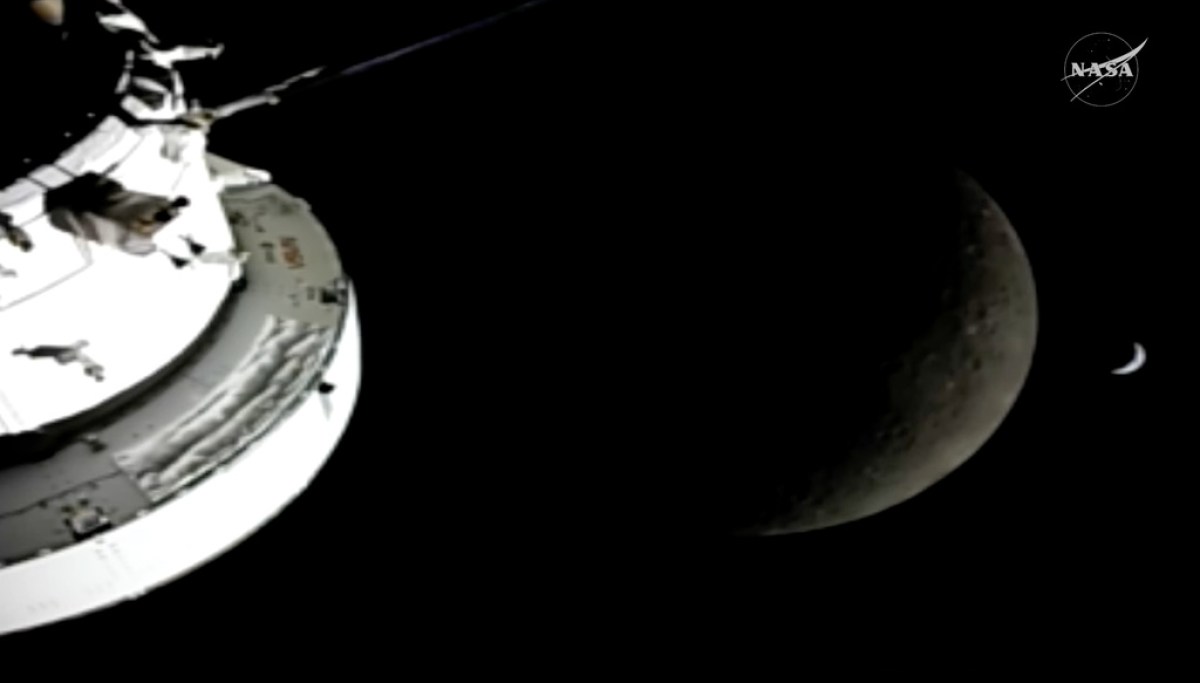
The Royal Air Force is to deploy to the final frontier as the race for military control of space intensifies (stock image)
asserted
race → deploy → space
'From communications to retail to banking, space is vital to our security and prosperity,' said the MoD.
asserted
MoD. → say → security
'We're working with allies to counter growing threats in an increasingly important environment.
asserted
We → work → environment
The UK is following the US, which has space-based jammers and methods of electronic warfare for conflict in the galaxy.
asserted
which → follow → galaxy
In a veiled warning to Russia and China, the US said it is positioning military hardware there to guard against 'hostile adversary action'.
asserted
it → say → action
It also emerged yesterday how Russia has used its spy satellites to help Iran in its conflict with the United States.
asserted
Russia → emerge → States
US analysis found 14 Russian spacecraft passed over the Prince Sultan Air Base in Saudi Arabia before the facility was targeted by Iran, resulting in 12 US casualties.
asserted
facility → find → casualties
Sequencing gave Iran access to locations of US military hardware and troops.
asserted
Sequencing → give → hardware
 The Aporia