The good guys, from Captain Kirk and his crew in Star Trek, to Luke Skywalker’s rebel alliance in Star Wars, battle intergalactic villains with an array of colorful lasers and particle-beam cannons, then the bad guys get dispatched in a spectacular, explosive finale.
asserted
guys → battle → finale
The messaging coming out of the White House on the subject, by contrast, could not be more vague.
uncertain
messaging → come → contrast
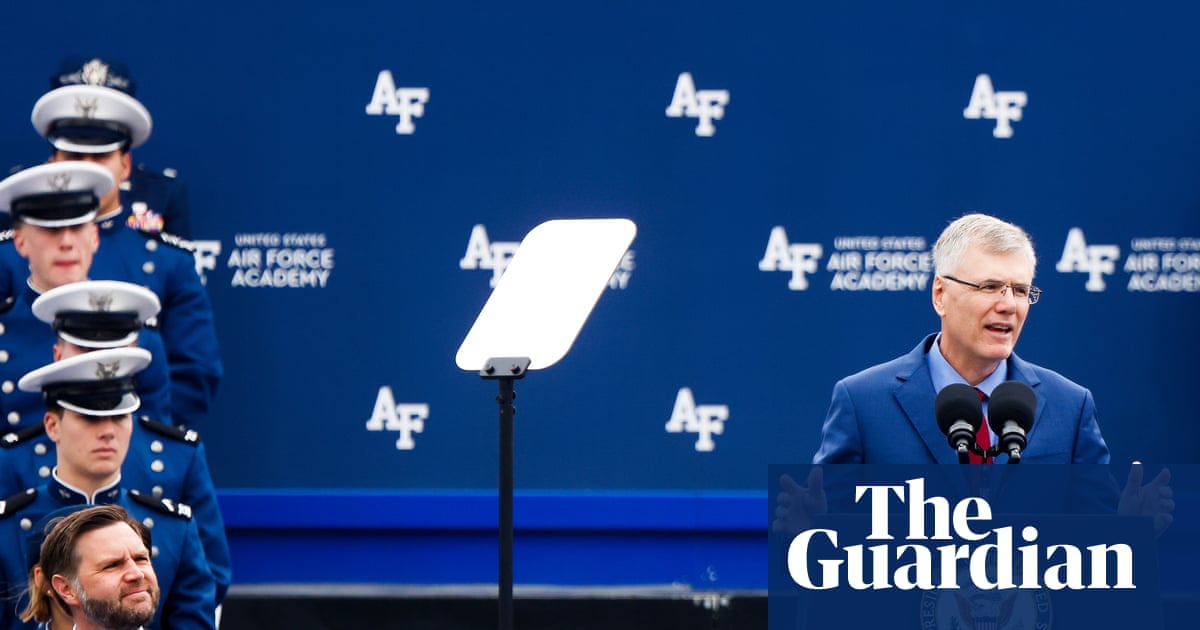
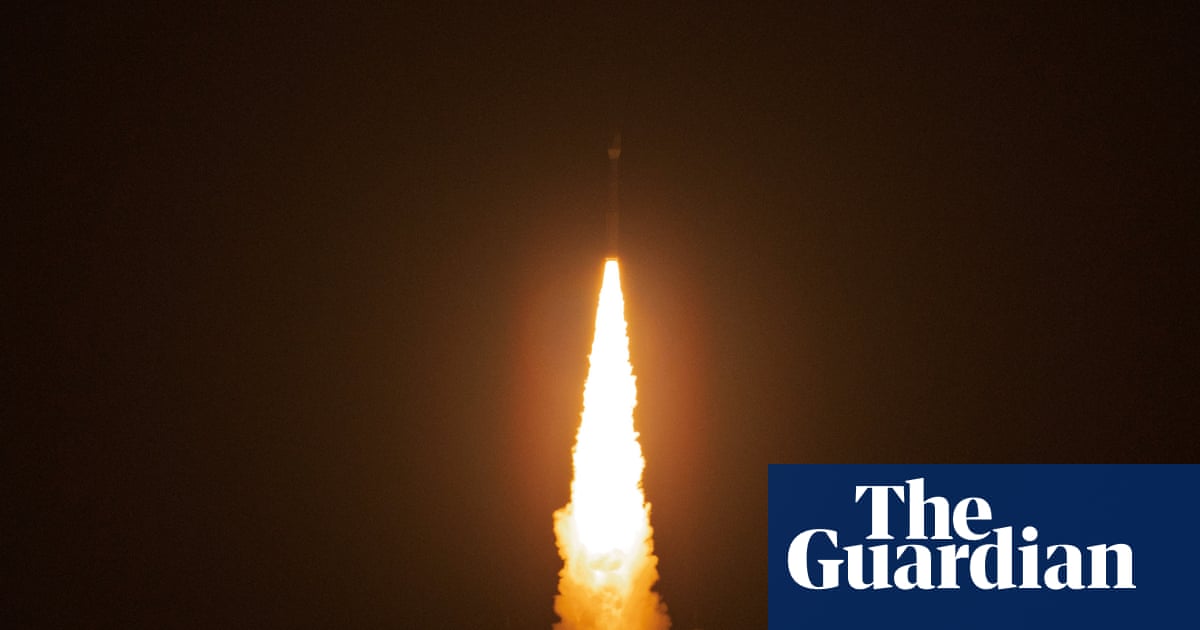
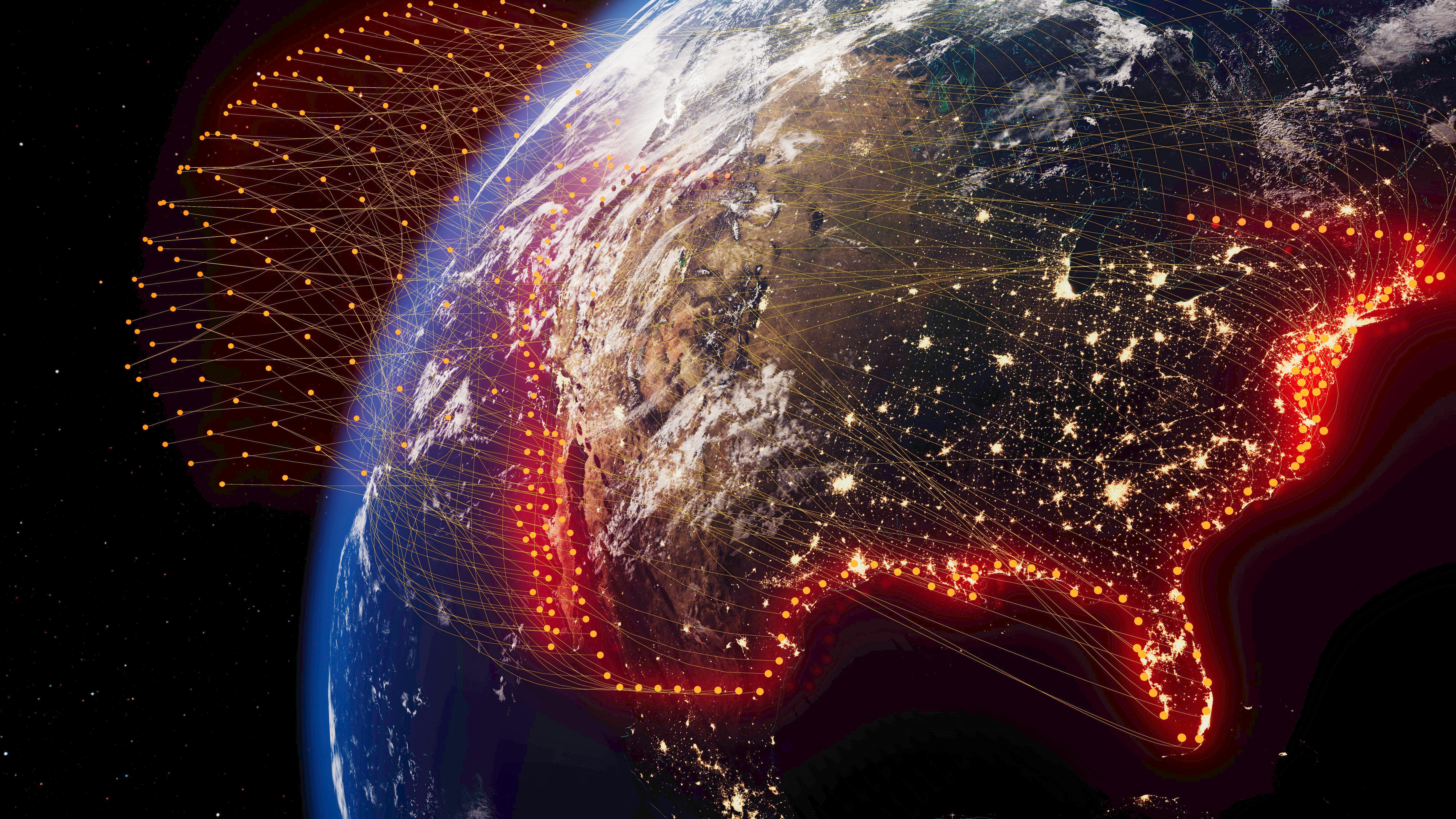
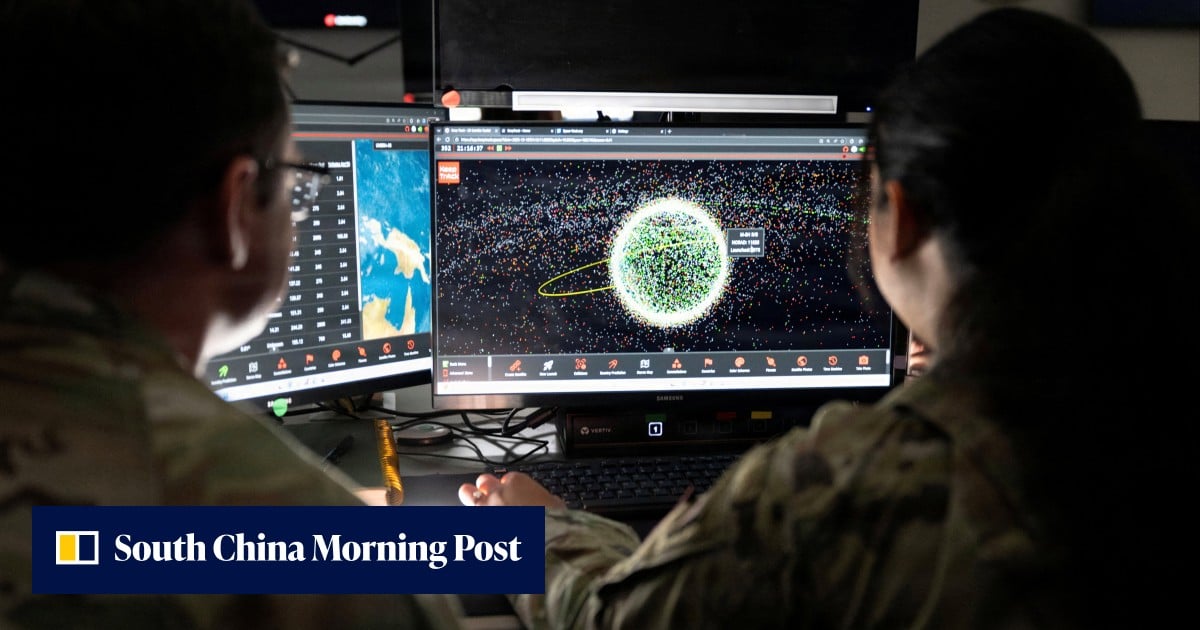
This week’s attention-grabbing revelation by air force secretary Troy Meink – that the US has deployed some kind of weapons in space – carried nothing in the way of context or detail, and left experts scratching their heads at exactly what Donald Trump has in his cosmic arsenal. And, equally importantly, what he intends to do with it.
“
asserted
he → grab → it
You can count the words, and the disclosure, on one hand, so there’s not much there to work with, and we really don’t know what kind of weapons he was talking about,” Clayton Swope, deputy director of the aerospace security project and a senior fellow in the defense and security department at the Center for Strategic and International Studies (CSIS), said of Meink’s announcement.
asserted
Swope → count → announcement
“The US is looking for another tool to deter what it sees as concerning Russian and Chinese behaviors in space, so my guess is that revealing it has on-orbit weapons would be your way to do that.
asserted
it → look → that
“[But] that level of detail needed to make this disclosure effective as a deterrent isn’t there.
asserted
disclosure → need → deterrent
It could just be a building block, and the US is going to lay out more later with that.
uncertain
US → go → that
To me that would make logical sense, if that was the plan.”
What the plan actually is has never been made clear, and Meink, in his announcement, stressed it was unlikely ever to be.
asserted
it → make → announcement
“Me talking about the details of what we’re doing would actually not benefit deterrence, so we’re not going to talk about the specifics of what we’re doing, whether we’ve tested it, not tested it, or anything else,” he said.
asserted
he → talk → it
But as Russia and China, both US adversaries, have advanced their own aggressive outer space ambitions and agendas, Trump has responded by placing an ever-increasing focus on militarizing the heavens.
asserted
Trump → advance → heavens
During his first term of office, he created Space Force, the first new, separate branch of the US military in more than seven decades.
asserted
he → create → decades
Last month, he signed an executive order designating the first US Space Academy, a proposed joint civilian-military institution modeled on the army and navy training academies at West Point and Annapolis, to be sited at an as-yet unnamed location.
asserted
he → sign → location
This week, Military Times reported plans to recruit and train 10,000 new guardians, as Space Force service members are known, to join uniformed ranks within the next five years.
asserted
members → report → years
Gen Dan Caine, who as chair of the joint chiefs of staff is the country’s most senior military leader, told the Air, Space and Cyber Conference in Maryland this week, that the armed forces including Space Force must be “prepared to fight, endure and win … from the seabed to cislunar space”.
asserted
forces → tell → space
Added to a number of other maneuvers and bold pronouncements Trump has made concerning space in recent weeks and months, it is hard not to see the space weapons reveal by Meink – who holds a civilian position reporting to the US defense secretary, Pete Hegseth – as a further blending of the traditionally separate military and non-military roles of US space policy.
asserted
who → add → policy
In August, the White House unveiled a national space transportation policy that gives Hegseth, as head of the defense department, new responsibility and authority to determine with the chief of Nasa, Jared Isaacman, who manages all US space launches, and sets an ambitious, expansive federal target of more than 1,000 launch and reentry operations by 2030.
asserted
who → unveil → 2030
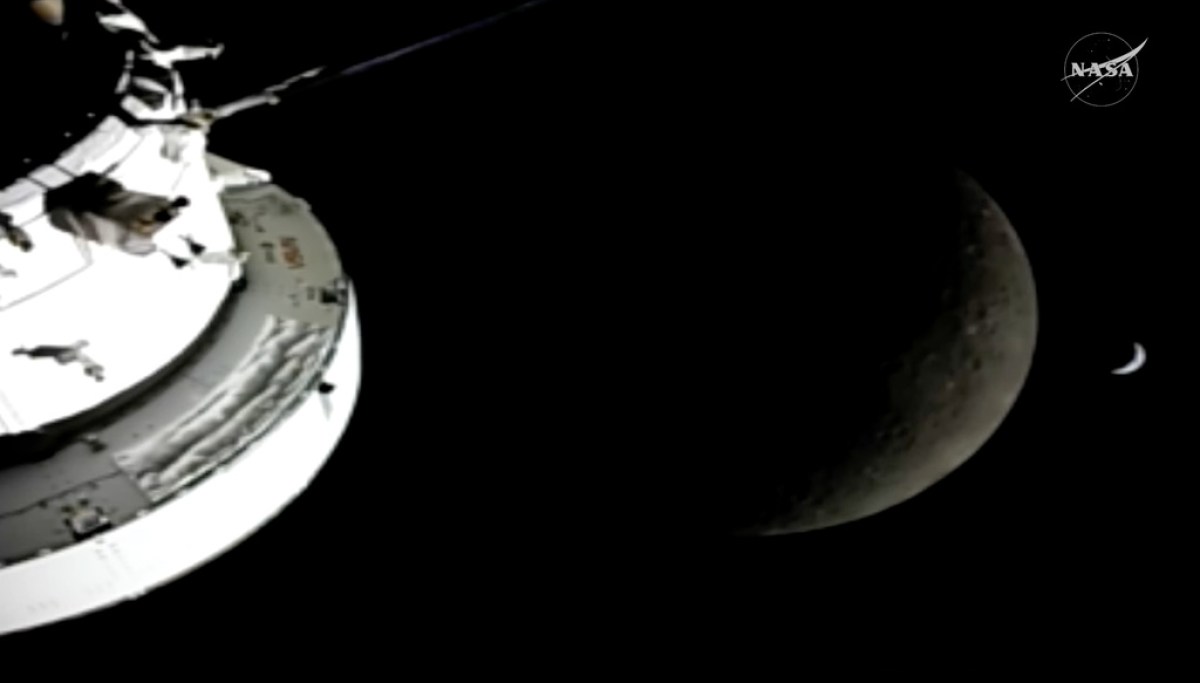
The president, meanwhile, has made no secret of his desire for US astronauts to beat China and land on the moon before he leaves office in January 2029; and in March laid out plans, arguably rooted more in optimism than expectation, to invest $20bn (£15bn) on a moonbase to secure for the US the first permanent foothold on the lunar surface.
asserted
he → make → surface
Some analysts see an almost sea change in the way the Trump administration has approached space in pursuit of its geopolitical goals, compared to previous presidents who upheld decades of separation between the government’s civilian and military needs.
asserted
who → see → needs
“The way that the US has structured it since Nasa was established in the late 1950s was we have a civil space organization focused on civil exploration, on science, and then we have the Pentagon,” Swope said.
asserted
Swope → structure → Pentagon
He continued: “There seems to be a tendency to pull them together more than we’ve seen in the past [and] the creation of the Space Academy is just another data point that suggests that at least within the eyes of this administration, the missions are very not just complementary, but very, very similar.
uncertain
missions → continue → administration
“The civilian space agency and Pentagon, [it’s] not just that they complement each other, but that they’re essentially doing the same mission.”
asserted
they → ’ → mission
Certainly, Trump has become more visible in space circles since inviting Isaacman, at the second time of asking, to lead Nasa.
asserted
Trump → become → Nasa
Seen as an ally of Elon Musk, the billionaire SpaceX chief and former political acolyte of the president, Isaacman has proven a staunch Trump loyalist in social media posts and in public appearances.
asserted
Isaacman → see → appearances
It was the “experience of a lifetime”, Isaacman gushed on X, to accompany Trump on Air Force One to the Johnson Space Center in Houston last month, where the academy announcement was staged before rows of Nasa’s civilian astronaut corps bedecked in their blue flight suits.
asserted
announcement → gush → suits
In a separate, lengthier post, Isaacman defended the need for a space academy with military theming, arguing that US ambitions necessitated “a bright new generation educated and prepared for this environment”.
asserted
ambitions → defend → environment
He wrote: “If you understand the increasingly important and contested environment above us, then [the academy] is as timely and necessary today as the Space Force has already proven to be.”
asserted
Force → write → us
The argument that the academy blurs the line between peaceful applications in space and the military, he said, “may be the weakest argument I have seen”, before chronicling a succession of previous Nasa missions and operations that were classified and defense department-based, and noting the agency’s early rockets were modified and evolved from military ballistic missiles.
uncertain
rockets → blur → missiles
“Nasa’s mission is as peaceful as it is patriotic,” he said.
asserted
he → say → ?
“We explore for the benefit of all humankind, but we go there under our flag.
asserted
we → explore → flag
That mission would be impossible without the Guardians standing watch over the domain as we venture outward.”
asserted
we → stand → domain
Lori Garver, a former deputy administrator of Nasa during the Biden administration, said that while she saw the academy as potentially helpful to the US space program and its future workforce, she was concerned it conflated the agency’s mission for peaceful, civil space exploration with Space Force’s military goals.
asserted
it → say → goals
“Nasa’s charter and legal foundation calls for a civilian agency separate from the military,” she told the science publication Ars Technica.
asserted
she → call → publication
“Structuring a feeder college along the lines of a military academy strikes me as ill-conceived.”
asserted
Structuring → structure → me
Others say it is difficult, or impossible, for the US to remain committed to the 1967 Outer Space treaty that mandated, among other regulations, that all nations use space for peaceful, non-militarized ends when some countries are blatantly defying it.
asserted
countries → say → it
US intelligence agencies said in 2024 they were monitoring the development of a new Russian space weapon with the capability of shooting down satellites in Earth’s orbit.
asserted
they → say → orbit
Lt Gen Gregory Gagnon, head of the Space Force combat forces command, told reporters at the Maryland conference that China was “actively pursuing activities in the system, in parts of space”, which the country has denied.
asserted
country → tell → which
A Space Force “threat fact sheet” details how Russia and China are both “testing and fielding sophisticated counterspace capabilities with the intent to disrupt and degrade US space-enabled capabilities”.
asserted
Russia → detail → capabilities
So, to Swope, the CSIS analyst who worked for the Central Intelligence Agency’s directorate of science and technology for more than a decade, the US’s declaration that it had deployed space weapons of its own was more significant than the absence of detail.
asserted
it → work → detail
“It’s this idea of space superiority, ‘I want to use space, I don’t want my adversary to’,” he said.
asserted
he → ’ → space
“That’s just where we are today.
asserted
we → ’ → ?
…and 7 more, not listed.
 The Aporia