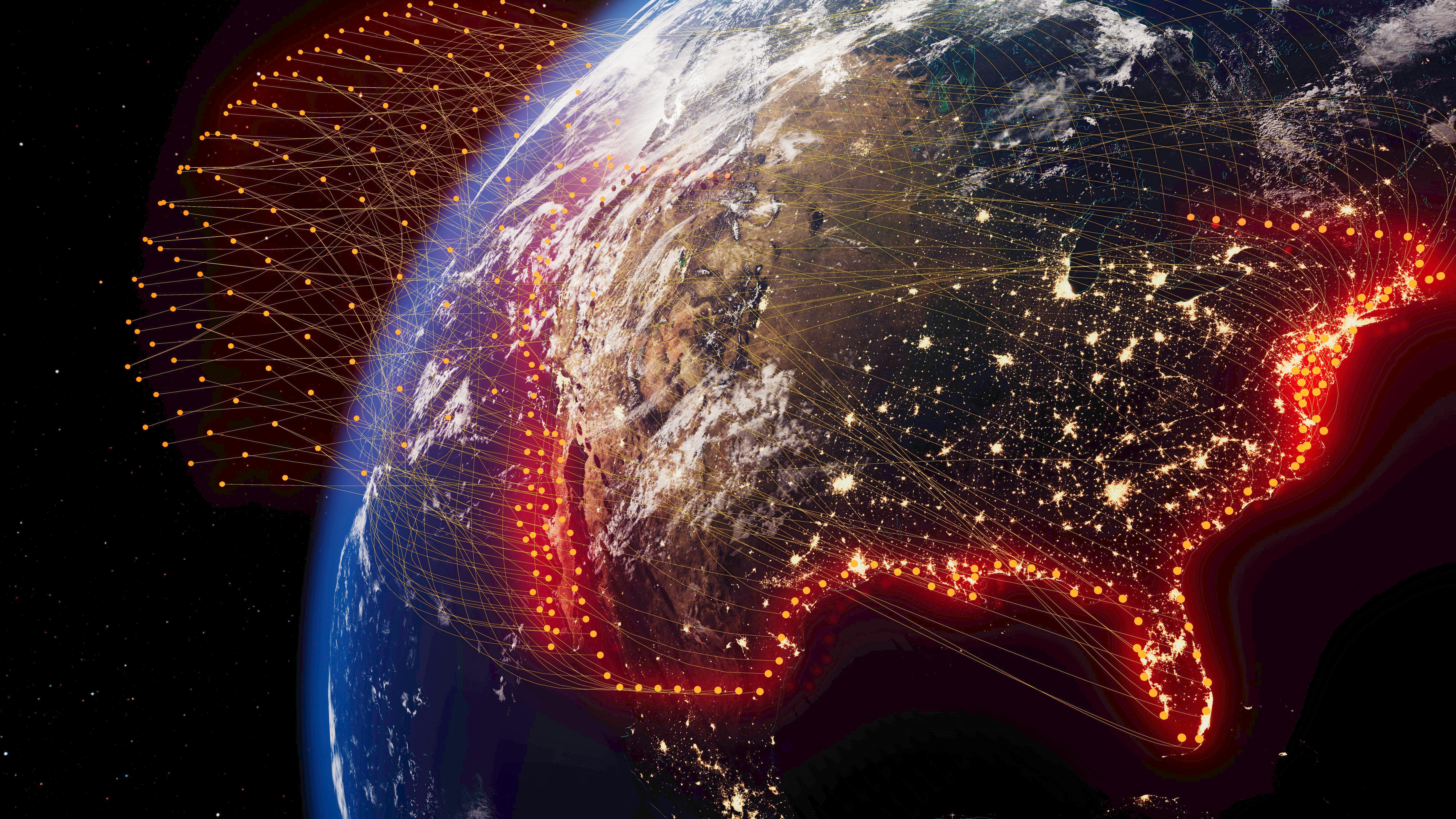
On September 14, U.S. Air Force Secretary Troy Meink confirmed that the U.S. Space Force has “space control weapons” in orbit.
asserted
Force → confirm → orbit
The statement did not disclose what the weapons are, how many have been deployed, when they were placed in orbit or the circumstances in which they will be used.
asserted
they → disclose → which
Also read | U.S. ‘weapons in orbit’: what we should expect modern space war to look like
The U.S. and other major space powers have long developed counter-space capabilities.
asserted
U.S. → read → capabilities
Some are designed to protect satellites.
asserted
Some → design → satellites
Others can disrupt, degrade or destroy an adversary’s space systems.
asserted
Others → disrupt → systems
But why has this sparked a debate now?
asserted
this → spark → debate
‘Space control’ represents the ability to protect one’s own freedom of action while limiting an adversary’s ability to operate in space, and thus implies a strategic objective.
asserted
control → represent → objective
As the U.S. economist Thomas Schelling noted in his 1966 book Arms and Influence, bargaining power is the power to hurt, and to exploit it is diplomacy — vicious diplomacy, sure, but diplomacy nonetheless.
asserted
exploit → note → it
And in orbit, a state simply possessing operational space-control capabilities can create an expectation of the use of latent threat to coerce adversaries and to shape terrestrial behavior long before an actual conflict even begins.
asserted
conflict → possess → behavior
That objective can be pursued through various means.
asserted
objective → pursue → means
Electronic warfare, cybersecurity operations, proximity operations, satellite manoeuvrability, and space-domain awareness can all contribute to space control.
asserted
warfare → contribute → control
Some are also dual-use: a single capability can support legitimate servicing or inspection activities or it can be used to interfere with another spacecraft.
asserted
it → support → spacecraft
If states are expanding from protecting their space assets to acquiring the ability to control the space environment around them, questions automatically arise about what the law actually permits.
asserted
law → expand → what
What does international space law say?
asserted
law → say → What
The first legal question is simple: are weapons allowed in outer space?
asserted
weapons → allow → space
The Outer Space Treaty of 1967 prohibits states from placing nuclear weapons or other weapons of mass destruction in orbit around the earth.
asserted
Treaty → prohibit → earth
However, when the Treaty was annexed to United Nations General Assembly Resolution 2222 (XXI), the published English text omitted the second ‘such’ in the final part of Article IV, which referred to “station weapons in outer space”.
asserted
which → annex → space
The authentic Treaty text reads “station such weapons in outer space”.
asserted
text → read → space
Without the second ‘such’, the provision could be read as prohibiting weapons in outer space generally.
uncertain
provision → read → space
But with it, the prohibition is restricted to nuclear weapons and the other weapons of mass destruction identified earlier in the sentence.
asserted
prohibition → restrict → sentence
And the Treaty text that entered into force adopted the narrower formulation.
asserted
that → enter → formulation
That said, Article III of the Treaty requires space activities to comply with international law, including the United Nations Charter.
asserted
Article → say → Charter
Article IX also requires states to conduct activities with due regard to the corresponding interests of other states and addresses harmful interference with the activities of other states parties.
asserted
IX → require → parties
For these reasons, the legal question encompasses both the assets placed in orbit and their respective states’ intentions with them.
asserted
question → encompass → them
That is, a spacecraft that can approach another satellite may be used to service or to disable it.
uncertain
that → approach → it
The circumstances and the consequences also matter.
asserted
circumstances → matter → ?
India’s dependence on space is growing.
asserted
dependence → grow → space
The space domain now supports defence communications, navigation, intelligence and surveillance, as well as weather services, disaster management and civilian connectivity.
asserted
domain → support → communications
India’s expanding commercial space sector adds another layer to this dependence.
asserted
sector → expand → dependence
A contested orbital environment could therefore affect much more than military satellites alone.
uncertain
environment → affect → satellites
That said, India also has an opportunity to shape the rules around an increasingly contested orbital environment.
asserted
India → say → environment
That is where the emerging BRICS Space Council is relevant.
asserted
Council → emerge → ?
The recent ‘New Delhi Declaration’ records progress on its terms of reference while also reaffirming the support of the BRICS bloc for the peaceful use and long-term sustainability of outer space and to prevent an arms race in outer space.
asserted
Declaration → record → space
In When Right Makes Might (2018), the political scientist Stacie Goddard wrote, “legitimation creates a rhetorical frame … giving its actions meaning and allowing a great power to interpret material facts—military buildups, invasions, economic competition as either threatening or benign”.
uncertain
power → make → facts
That is, by proactively shaping norms around harmful interference and proximity operations through forums like BRICS, India can ensure that defensive counter-space measures are recognised internationally as legitimate acts of self-defense rather than as a form of destabilising escalation.
asserted
measures → shape → escalation
India’s focus must thus be on helping determine who defines the limits of space control.
asserted
who → help → control
The proposed BRICS Space Council could become one avenue through which India and other Global South space actors begin to do so.
uncertain
India → propose → which
 The Aporia