When will Australia see the benefits of the AI and datacentre boom?
asserted
Australia → see → boom
So far, all we’ve seen is the possibility of changes to copyright which would hurt Australian creatives, special rules about power and water use, and the threat of mass displacement or replacement of workers, with the trade-off being a mere 10% chance of human extinction.
asserted
off → see → extinction
Now add the Reserve Bank’s assessment this week that datacentres were part of growing “inflationary pressures” when lifting interest rates to an 18-year high.
asserted
datacentres → add → high
Warnings about looming negatives have been coming for months, but even the RBA has no idea when to expect the positives.
asserted
RBA → loom → positives
And, as the results of the US midterms show us, datacentres are becoming political kryptonite for voters not sold on the AI boom, meaning the Albanese government should tread carefully.
asserted
government → show → boom
As Labor mulls its long-awaited plan to attract AI investment, this week’s RBA decision demands politicians better explain what the benefits of this rollout will be, and why it is worth the (hopefully short-term) pain.
asserted
it → mull → rollout
It also requires the government to consider other inflation responses, beyond the RBA.
asserted
It → require → RBA
The governor, Michele Bullock, warned “some pain now will prevent even worse pain” in the future.
asserted
pain → warn → future
But why should ordinary workers endure pain that is not of their own making?
asserted
that → endure → making
Some of the richest companies in the world are helping heat the economy to such an extent that Bullock flagged it in her opening remarks, just moments after pointing to global oil prices, low productivity and expectations of prolonged inflation.
asserted
Bullock → help → inflation
“Parts of demand have also been stronger than expected.
asserted
Parts → expect → demand
In particular, investment has been much stronger than expected, including due to datacentre-related investment.
asserted
investment → expect → investment
This has added to inflationary pressures by adding to demand at a time when the domestic economy is already capacity constrained,” Bullock said.
asserted
Bullock → add → time
The RBA’s statement of monetary policy highlighted that “AI-related investment is driving rapid growth in prices for technology-related goods” in its second paragraph.
asserted
investment → highlight → paragraph
But asked when AI would start having a “positive impact on inflation”, Bullock shrugged “your guess is as good as mine”.
asserted
guess → ask → mine
She said “if productivity improves dramatically because of AI” – “if”, not “when” – then we would see faster growth, but also warned it could increase the “neutral interest rate”.
“So if people think that productivity improvements will help to lower inflation and keep interest rates low, that’s not necessarily the case,” Bullock said.
uncertain
Bullock → say → rates
Even the nation’s chief economic wonk is hazy on when the benefits start flowing.
asserted
benefits → start → ?
These aren’t nimby arguments against datacentres or luddite concerns about technological growth; there are serious economic questions to be considered here, and social ones already being examined worldwide.
asserted
These → be → growth
Deloitte Access Economics on Thursday reported Australia’s $1.39tn investment pipeline included 37 datacentres worth $141bn – a 36% increase in a year.
asserted
pipeline → report → year
Deloitte director, Sheraan Underwood, said the datacentre boom was “competing directly with housing and infrastructure for workers and materials”, and that Australia had “less room to absorb” the investment surge thanks to high inflation.
asserted
Australia → say → inflation
Deloitte reported “the economic dividend may take time”, predicting “substantial” construction gains but that the “direct economic payoff” wouldn’t be as big.
uncertain
payoff → report → gains
The technology fit-out is largely imported goods and few workers are needed to actually staff the facilities.
asserted
workers → import → facilities
Of course the datacentre boom will support AI takeup, greater automation and productivity, but Deloitte warned: “Construction demand and inflation pressures are arriving now, while the productivity dividend may come much later.”
uncertain
dividend → support → takeup
In the wake of RBA warnings about demand, much media focus has naturally turned to government spending.
asserted
focus → turn → spending
Press gallery pundits have zeroed in, particularly, on green subsidies and home batteries; the shadow energy minister, Dan Tehan, blasted a “blowout” from a budgeted $2.3bn to $8.5bn.
asserted
minister → zero → 8.5bn
That’s $6.2bn more than budgeted.
asserted
That → ’ → ?
If everything is on the table for savings, as Labor has said, shouldn’t we consider the benefits of untrammelled investment in AI factories before we start slashing social programs achieving good?
asserted
we → say → good
Politico recently reported polling showing half of Americans oppose datacentres near their homes; NBC exit polls found 56% of voters said AI and datacentres were “crucial” or “major” factors in the midterms.
asserted
AI → report → midterms
Datacentres were also literally on the ballot in dozens of towns, with public votes overwhelmingly won by proposals to restrict construction, according to vote trackers.
uncertain
votes → win → trackers
The Australian backlash is much smaller, but growing.
asserted
backlash → grow → ?
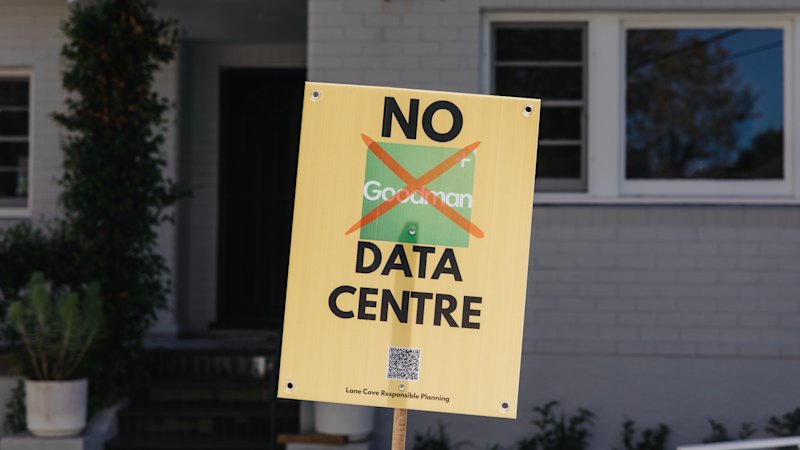
Community groups are organising and protesting.
asserted
groups → organise → ?
Labor should not overlook bubbling voter unease.
asserted
Labor → overlook → unease
Beyond leaving it to the “blunt instrument” of monetary policy for the RBA to smash the economy, there are other options Labor could consider.
uncertain
Labor → leave → economy
They are novel, but the times demand novel solutions.
asserted
times → demand → solutions
Senator David Pocock has proposed a Senate committee to investigate “alternatives” to monetary policy, suggesting options including “temporary, progressive” changes to income tax or superannuation.
asserted
Pocock → propose → tax
Independent economist Saul Eslake has said a small rise in superannuation rates, from even 12 to 13%, would take some money out of workers’ pockets and help curb spending.
asserted
rise → say → spending
Pocock, again, suggested taxes on windfall profits and gas exports to take more cash out of the economy.
uncertain
Pocock → suggest → economy
Of course we need new AI and datacentre investment, particularly as the government looks for a magic bullet to end stagnant productivity.
asserted
government → need → productivity
But the government has so far struggled to make the case for how this new technology will benefit ordinary Australians, who are left with a feeling of uncertainty and a hole in their back pocket.
asserted
who → struggle → pocket
 The Aporia