President Donald Trump at the start of the Iran war predicted it would last four-to-five weeks, but the conflict is now in its seventh month, with no clear timeline for when the fighting will end.
asserted
fighting → predict → timeline
Active hostilities between Washington and Tehran resumed earlier this month, with oil tankers in and around the Strait of Hormuz coming under fire.
asserted
tankers → resume → fire
Iran is vying to maintain a chokehold over the vital trade route amid the U.S. blockade against its ports.
asserted
Iran → vie → ports
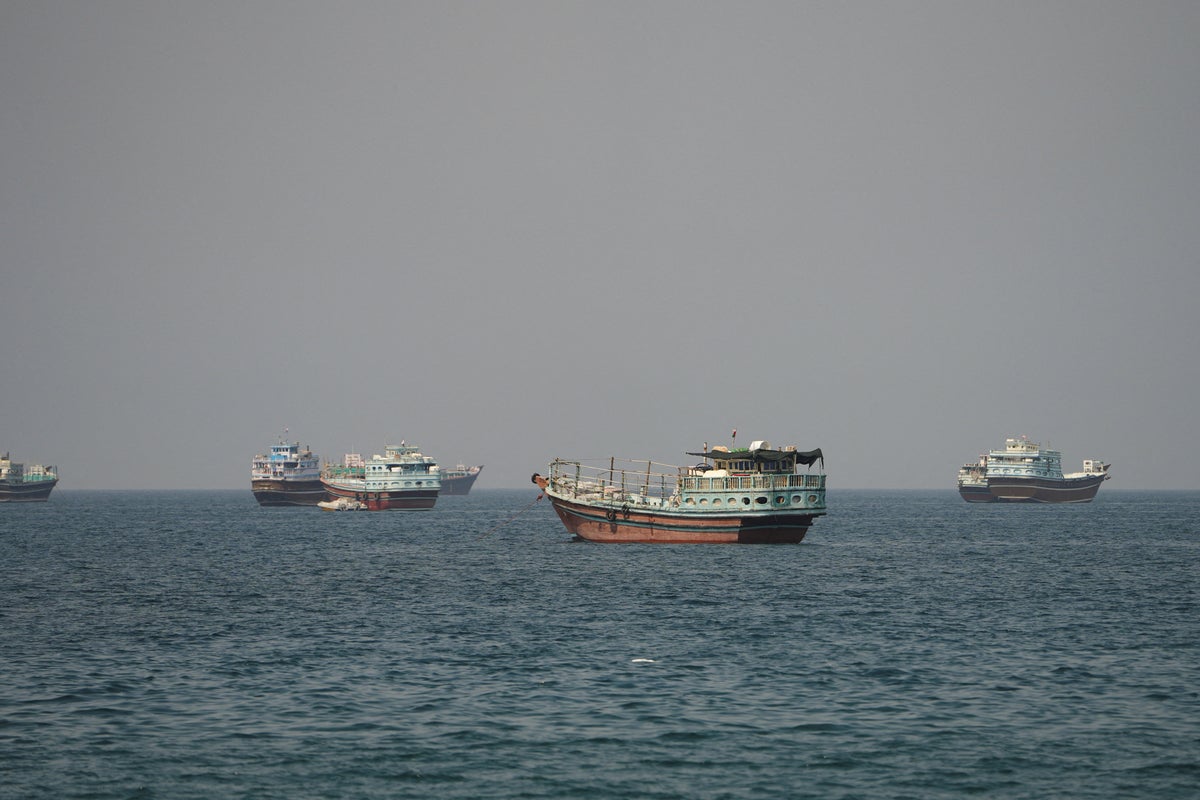
The Strait effectively remains in a military stalemate, bringing renewed regional instability and gravely impacting transit via the waterway, through which around a fifth of global oil production flowed before the war began on Feb. 28.
asserted
war → remain → Feb.
Oil prices last week soared to over $100 a barrel for the first time since July, as the disruption sends energy markets spiraling once more.
asserted
markets → soar → July
The balance of power in the Gulf has come under further strain as Yemen’s Iran-backed Houthi rebels have made significant advances following weeks of fighting with the Saudi-backed government of Yemen, shattering a four-year informal cease-fire in the country's civil war.
asserted
rebels → come → war
The Houthis last week captured the strategic Perim Island, which sits in the Bab el-Mandeb Strait, another vital trade route situated between Yemen and Djibouti and Eritrea in the Horn of Africa, that links Asia and Europe via the Red Sea and Suez Canal.
asserted
that → capture → Sea
This came as they traveled along the Red Sea coastline, aiming to tighten their grip on the critical maritime chokepoint.
asserted
they → come → chokepoint
The disruption has placed further pressure on the global oil market.
asserted
disruption → place → market
The Houthis’ expanding presence in the Red Sea and the potential it has to severely disrupt trade via the Bab el-Mandeb arguably gives Iran leverage in its war with the U.S., experts say.
asserted
experts → expand → U.S.
“This has the effect of turning up the pressure on the U.S. and its allies who have been relying on alternate routes,” Daniel Benaim, a former U.S. Deputy Assistant Secretary of State for the Arabian Peninsula, tells TIME.
asserted
Benaim → have → TIME
Diplomatic efforts in the Middle East have faltered.
asserted
efforts → falter → East
The Gulf states, many of which house U.S. bases that have been targeted by Iranian strikes, on Monday postponed a critical meeting with Tehran on the reopening of the Strait of Hormuz.
asserted
that → house → Hormuz
Despite pressure mounting for a clear way out of the war, meaningful negotiations between the U.S. and Iran also remain stalled.
asserted
negotiations → mount → Iran
Here’s what each side has said regarding the status of peace talks, and how experts predict Iranian officials could use the Houthis’ disruption in the Red Sea to their benefit.
uncertain
officials → ’ → benefit
Trump says U.S. is 'open' to restarting negotiations
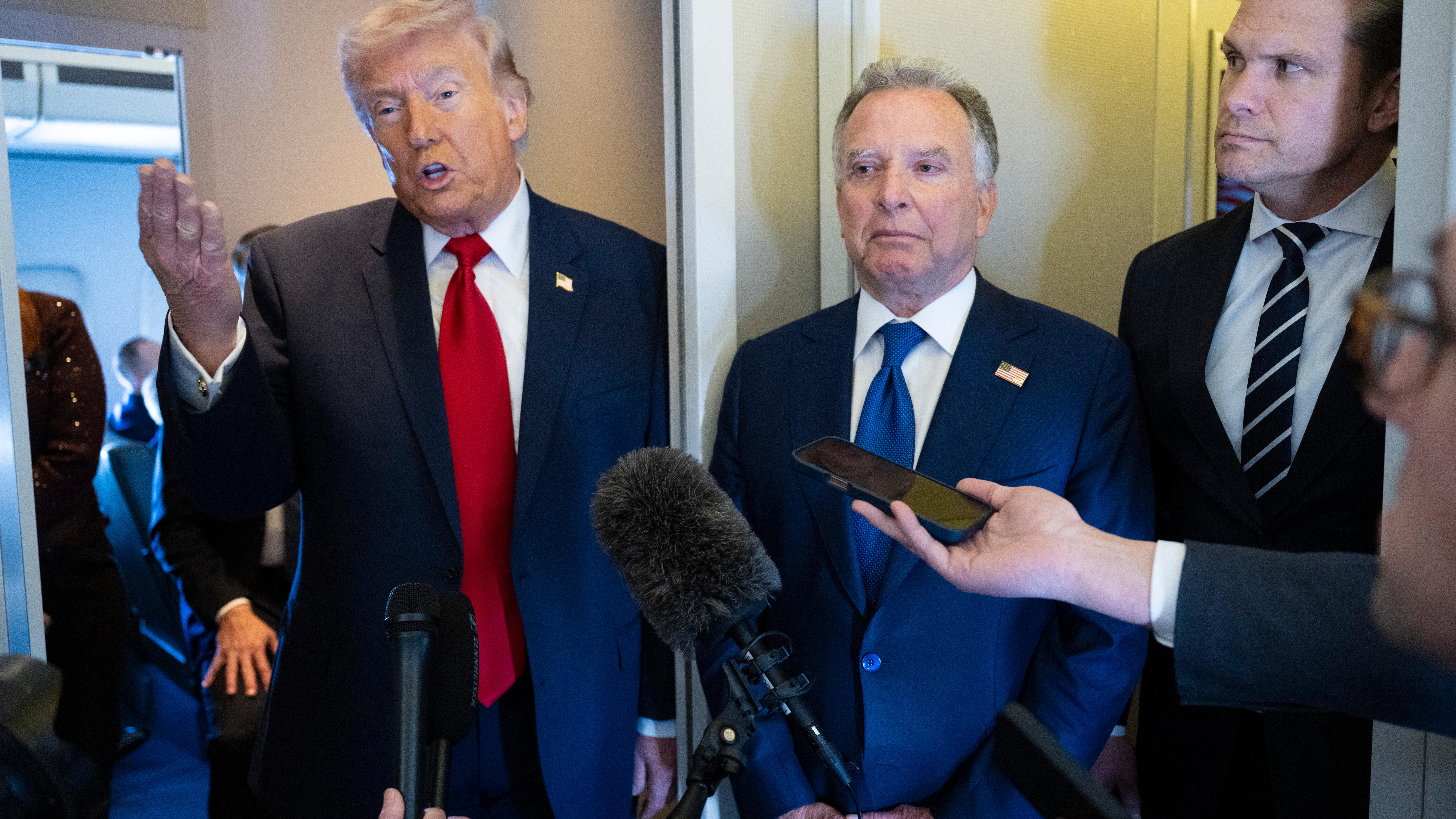
Trump on Monday said the U.S. is “open” to the concept of restarting negotiations between Washington and Tehran.
asserted
U.S. → say → Washington
High-level officials from both sides last convened for official peace talks in Switzerland in June.
asserted
officials → convene → June
Trump’s remarks stood in stark contrast to the position he laid out on Sept. 2, when he said he was “not trying to force” Iran to the bargaining table.
asserted
he → stand → table
“I couldn’t care less if they sign a worthless, to them, agreement.
asserted
they → care → agreement
I like our position now much better, with almost total control of the Hormuz Strait, and their economy totally collapsing.
asserted
economy → like → Strait
They are just playing out the inevitable,” he insisted.
asserted
he → play → inevitable
On Sept. 9, Trump assured the American public that the war will likely end “immediately after” the November midterms and said Iran’s government is holding out in hopes of hurting Republican political prospects.
asserted
government → assure → prospects
Trump has expressed full confidence in the U.S.’ two-pronged military and economic campaign against Iran, with the latter aiming to choke Tehran off from the global economy through various sanctions.
asserted
latter → express → sanctions
Ali Vaez, deputy program director for the Middle East and North Africa at the International Crisis Group, tells TIME that Trump’s diplomatic approach will dictate how successful future negotiations may be.
uncertain
negotiations → tell → TIME
“President Trump might be interested in getting a deal with Iran, but that's not necessarily a guarantee that he will get a deal.
uncertain
he → get → deal
It all depends on what approach he would adopt to diplomacy.
asserted
he → depend → diplomacy
If it's maximalist, then it doesn't stand a chance of succeeding,” he says, adding that dealing with Iran requires “a multi-dimensional diplomacy” in order to achieve a “sustainable de-escalation between Iran and the United States.”
asserted
dealing → stand → Iran
Trump has repeatedly insisted that the U.S. has near total control of the vital waterway and that “oil is flowing,” but traffic via the Strait remains disrupted.
Kpler, a commodities data and analytics firm, shared data with TIME that shows that only 10 ships crossed the Strait of Hormuz on Monday—a significantly lower count than the 138 vessels that typically passed through the waterway during a 24-hour period before the war.
asserted
that → insist → war
“The United States has shown over time that it has capabilities to move significant amounts of shipping through the Strait, but Iran has innovated,” says Benaim.
asserted
Benaim → show → Strait
“Iran and its allies are innovating in their ability to disrupt.
asserted
Iran → innovate → ability
So it's a bit of a foot race between U.S. attempts to bypass Iran's restraints and Iran's attempts to enforce its own de facto blockade.
asserted
it → bypass → blockade
The Iran war, and its economic impact, has been deeply unpopular with Americans who are facing increasingly high energy costs.
asserted
who → face → costs
Diesel prices last week reached a record $6 per gallon.
asserted
prices → reach → gallon
The war with Iran has cost the U.S. government around $38 billion and contributed to growing inflation, according to newly-published analysis by the Congressional Budget Office.
uncertain
war → cost → Office
A national UMass Amherst/YouGov poll, conducted from Aug. 21 to 26, found that 68% of Americans view Trump’s handling of the war negatively.
asserted
% → conduct → war
Iran says 'no talks until conditions met'
Iran has responded to Trump’s openness to negotiations by doubling down on its demands.
“Don’t get distracted by the U.S. President’s mixed signals—from ‘no negotiations’ to ‘we’re ready to talk,’" said Mohsen Rezaei, Iran's recently-installed secretary of the Supreme National Security Council, on Monday.
asserted
Rezaei → say → Monday
“No talks until Iran’s conditions are met.
asserted
conditions → meet → ?
While Rezaei did not directly name any conditions, Iran previously put forward a list of six demands for the U.S. to meet before the Strait of Hormuz would be fully reopened.
asserted
Strait → name → Hormuz
Rezaei also seemingly pointed to the recent developments in the wider region, arguing that the “stakes around oil and the straits have changed” and warning that “damage control won’t stop what’s coming.”
asserted
what → point → oil
The remarks from the hard-line national security adviser took an elevated position from that of Iranian President Masoud Pezeshkian, who in early September said Tehran was prepared to “reciprocate,” if the U.S. returned to the cease-fire conditions both countries negotiated in June.
asserted
countries → take → June
…and 26 more, not listed.
 The Aporia