This is a critical time for Israel: Hamas has vowed to launch another October 7-style attack, the U.S. is said to be considering renewed strikes on Iran, Hezbollah is reportedly preparing for another round of conflict, the IDF is stretched to its limits and violence, perpetrated by both Palestinian and Israeli extremists, is roiling the West Bank.
uncertain
violence → vow → Bank
Prime Minister Benjamin Netanyahu has not exactly been a decisive leader over the past three years, having refused to come up with an exit plan for Gaza, get serious about the Haredi draft, curb settler violence or take steps to mend Israel’s worsening image abroad.
asserted
Netanyahu → refuse → image
An extended stay in the role of “caretaker prime minister” will only serve to exacerbate the issues facing the Jewish state at a time when decisive leadership and fresh ideas are sorely needed.
asserted
leadership → serve → time
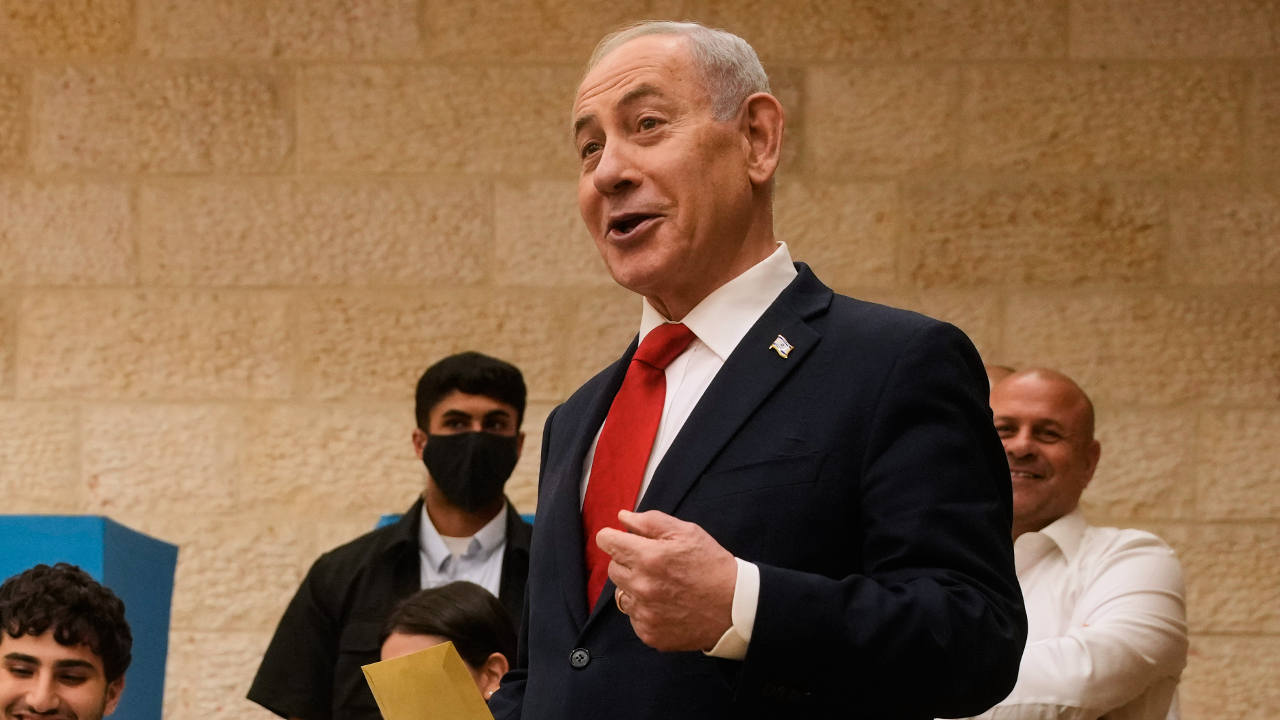
Israelis were fully aware of the stakes of this election, the first to take place since Hamas’s October 7 massacre: turnout was the highest it’s been in a quarter century, with 77.7 per cent of eligible voters casting a ballot, and the airport was full of expats returning home to have a say in their country’s future.
asserted
airport → take → future
Yet the unofficial tally continues to highlight Israel’s deep divides.
asserted
tally → continue → divides
Preliminary results have Netanyahu’s Likud party in the lead, with a projected 27 seats, compared to 21 for the opposition Yashar party.
asserted
results → have → party
The pro-Netanyahu bloc appears to have eked out the anti-Netanyahu faction by a margin of 53-48, with the two Arab parties, Joint List and Ra’am, commanding a historic 19 seats in the 120-seat Knesset.
asserted
parties → appear → Knesset
Neither side is close to the 61-seat threshold needed for a majority, which could lead to weeks, or even months, of political instability, and possibly another election in the new year.
uncertain
which → need → year
This is a scenario that would not be in Israel’s interests, which is why President Isaac Herzog, whose role is functionally equivalent to our governor general, is calling on party leaders to do everything they can “to avoid another round of elections.”
asserted
they → call → elections
Next week, after the results are certified, Herzog will meet with party leaders and decide which one has the best chance of forming a stable coalition.
asserted
one → certify → coalition
The candidate will then have 28 days to attempt to forge an alliance that can command the confidence of the legislature, with an optional 14-day extension.
asserted
that → have → extension
If that fails, the president will have the option of repeating the process with someone else.
asserted
president → fail → someone
If the current numbers stand, however, the Arab parties will hold the balance of power, and the more moderate Ra’am party will not have enough seats to give the anti-Netanyahu bloc a majority.
asserted
party → stand → majority
Moreover, most of the Zionist party leaders expressly ruled out forming a coalition with the Arabs during the election, which sets the stage for weeks of political horsetrading and the potential of broken promises that rile up the electorate.
asserted
that → rule → electorate
Although both Netanyahu and Yashar Leader Gadi Eisenkot promised not to form a coalition with an Arab party, Ra’am Leader Mansour Abbas has suggested that he’s already been approached by representatives from both factions.
uncertain
he → promise → factions
The chosen candidate will also have the ability to try to woo politicians from the opposing side, or try to form a unity government.
asserted
candidate → choose → government
None of these options should be ruled out for Netanyahu, who has a history of doing whatever it takes to remain in power.
asserted
it → rule → power
According to the Israel Democracy Institute, past coalition-building exercises have taken between 20 and 100 days, with none producing a stable government in less than 50 days over the past two decades.
uncertain
none → accord → decades
Netanyahu’s caretaker government will retain broad powers — including the ability to go to war, if need be — and the new Knesset will have the ability to pass legislation once it’s sworn in and forms new committees.
asserted
it → retain → committees
But caretaker governments have more limited discretion in terms of how they can act and the Knesset’s ability to enact new laws will be severely curtailed.
asserted
ability → have → laws
Moreover, if a coalition government cannot be formed, Israelis could end up heading back at the ballot box within the next three months.
uncertain
Israelis → form → months
This is a situation the country has found itself in before: during a period of deep political instability between 2019 and 2022, Israelis went to the polls five times.
asserted
Israelis → find → polls
But that was before Hamas terrorists slaughtered 1,200 people in southern Israel, sparking a multi-front war that now includes Hezbollah, the Houthis and Iran, and putting immense strain on Israel’s military, economy and alliances.
asserted
that → slaughter → military
Given this reality, Herzog is absolutely right that it’s imperative for party leaders to keep “an open mind” and do whatever it takes to avoid new elections.
asserted
it → give → elections
But given that the Israeli public could not agree on a new path forward, it’s hard to imagine that their elected representatives will have any more success.
uncertain
representatives → give → success
 The Aporia