Photo via South China Morning Post

China bets on chips and AI in new 5-year road map to challenge US tech dominance

Read the original at South China Morning Post ↗
Cite

Chen, F. (2026, September 15). China bets on chips and AI in new 5-year road map to challenge US tech dominance. South China Morning Post. https://www.scmp.com/economy/global-economy/article/3367622/china-bets-chips-and-ai-new-5-year-road-map-challenge-us-tech-dominance?utm_source=rss_feed

Dated when The Aporia collected the article, usually within hours of publication. Check the original for its exact date and byline.

South China Morning Post · collected 2026-09-15 · by Frank Chen

Quick Summary

China’s new five-year plan aims to challenge US tech dominance by focusing on semiconductors and artificial intelligence, setting a goal for operating revenue in related sectors to exceed 30 trillion yuan by 2030. The plan also emphasizes technological self-reliance, prioritizing the indigenous BeiDou satellite navigation system and next-generation battery and solar technologies like perovskite tandem solar cells.
Written by AI on 2026-09-16, from this article's own text only (the story summary below draws on all the coverage).

AI analysis

Story summary

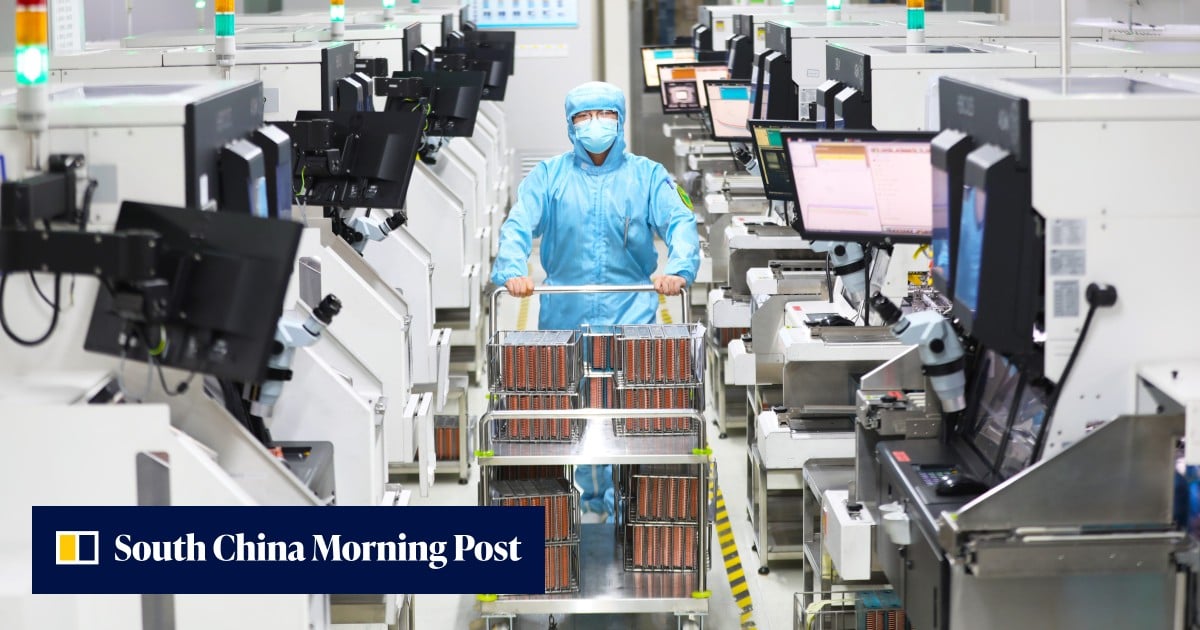
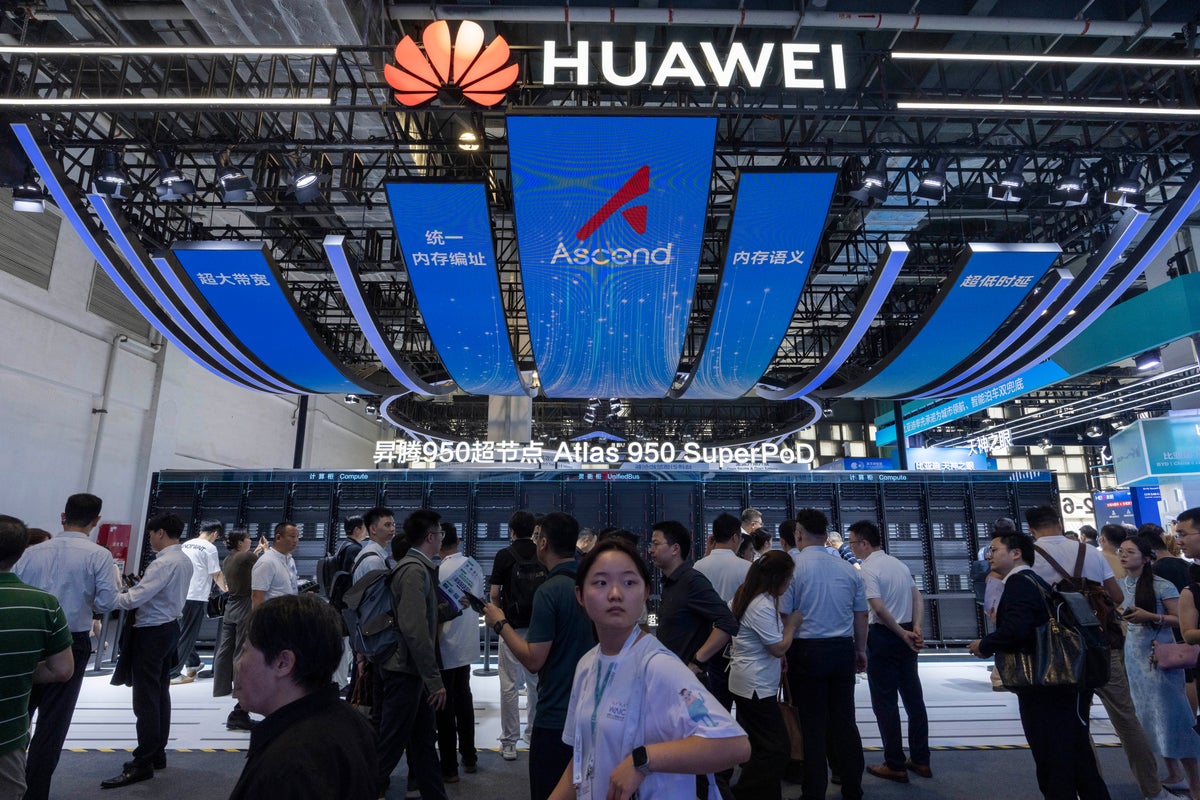
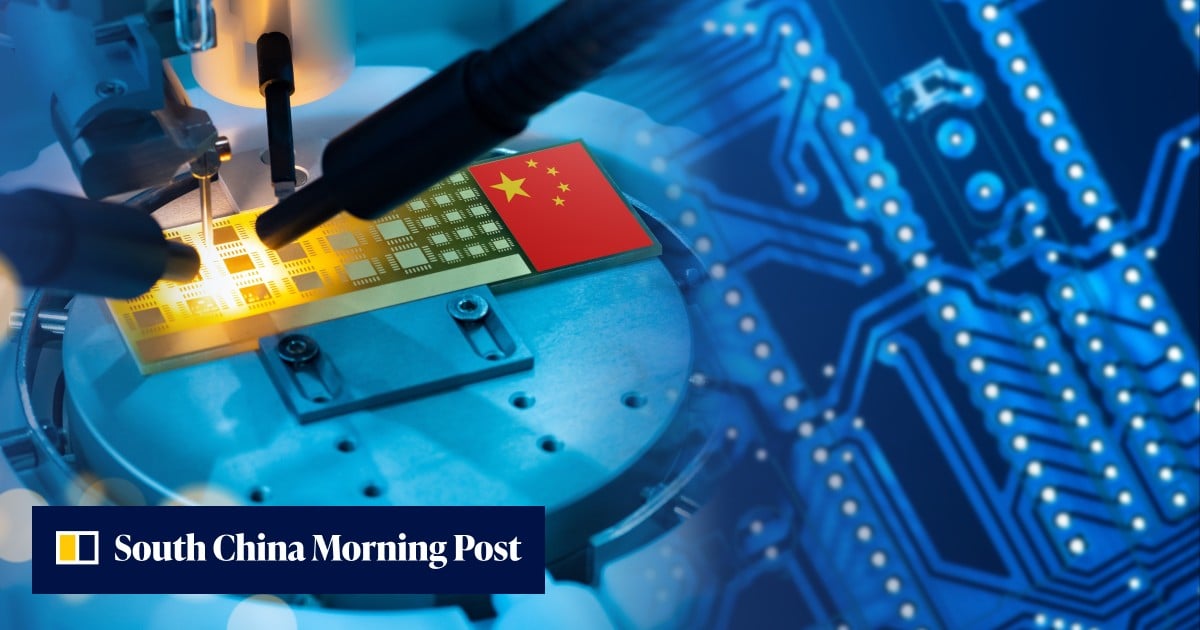
On Tuesday, China's Ministry of Industry and Information Technology and the National Development and Reform Commission, its top economic planning agency, announced priorities for the electronics and information technology industry in their latest five-year plan. The plan aims to challenge US tech dominance by focusing on breakthroughs in sectors such as artificial intelligence and integrated circuits. By 2030, China forecasts that operating revenue of enterprises and manufacturers in related fields will surpass 30 trillion yuan. This move comes amid an intensifying tech race with the United States and Beijing’s push for technological self-reliance. Additionally, the plan emphasizes the expansion of China's indigenous BeiDou satellite navigation system to compete more effectively against the US-led Global Positioning System (GPS).

Written for “China Tech Challenge US Dominance” on 2026-11-01, grounded in this article and the 0 other(s) covering the same event.

Story

📰 China Tech Challenge US Dominance
Technology · 1 article(s) covering the same event.

Compared with similar articles

This article reads unscored and hedges 0% of its claims. Each row says how that neighbour differs.
BBC News
Hedges 2 of 29 claims Outlet record 68/100
“The articles discuss different aspects of China's stance on AI and tech competition with the US, but do not describe the same specific incident or occurrence.”
NPR
Hedges 6 of 26 claims Outlet record 60/100
“The articles discuss related topics but cover different events: one is a response to an Anthropic CEO's call, while the other is about China's new five-year plan for tech dominance.”
Al Jazeera
⚖️ Leans left Hedges 8 of 55 claims Outlet record 60/100
“The articles discuss different aspects of the US-China tech rivalry, but describe distinct events: one about a call to slow AI development and China's response, and another about China's long-term strategy in its technology sector.”
Semafor
⚖️ Leans left Hedges 2 of 3 claims Outlet record 60/100
“The articles discuss different aspects: one focuses on Malaysia's potential use of Huawei chips, while the other is about China's broader tech strategy over five years.”
South China Morning Post
Hedges 0 of 4 claims Outlet record 64/100
“The articles discuss different aspects of China's tech strategy, with Article A covering a national plan for the next five years to challenge US dominance in tech sectors, while Article B reports on a specific pilot scheme for cross-border data access for certain firms in Northern Metropolis.”
ABC News (AU)
Hedges 1 of 26 claims Outlet record 68/100
“The articles discuss different aspects of the tech and AI race between China and the US, but do not describe the same specific incident.”
The Independent
⚖️ Leans left Hedges 0 of 13 claims Outlet record 59/100
“The articles describe related developments in China's tech strategy but focus on different events: one is about a five-year plan, while the other covers Huawei unveiling new chip technologies at an annual conference.”
South China Morning Post
⚖️ Leans left Hedges 1 of 6 claims Outlet record 64/100
“The articles discuss different aspects of China's technology development and do not describe the same specific incident or occurrence.”
South China Morning Post
Hedges 1 of 4 claims Outlet record 64/100
“The articles discuss different strategic moves by China and the United States in the tech sector but describe distinct events occurring at separate times.”
How this article was measured signals, leaning charts, publisher record, byline, topics and claims

Signals How these are calculated →

Claims extracted
2
sentences that state something as happening or true
Uncertain
0%
0 of 2 hedged ("reportedly", "may", "according to")
Leaning
not political
takes no side on a contested political question
Publisher signals
64/100
South China Morning Post's corrections and hedging, across everything collected from it. Not a measure of accuracy.
Outlets on this story
1
Technology
Same framing elsewhere
1
articles that frame the event the way this one does
Analyzed 2026-09-16 · how these are computed

How this is being covered How these are calculated →

Article leaning vs. publisher reliability
Source leaning vs. consistency

Publisher

South China Morning Post · 3492 article(s) · 6 correction(s) detected
Running correction rate · 6 correction(s)

Who wrote this

Frank Chen
10 article(s) here · 1 carrying a prediction
🔮 We never expected to become targets of the campaign ourselves.
🔮 Shanghai Electric, a power generation and electrical equipment maker, will supply gas turbines to the Samalaju Combined Cycle Power Plant in the Malaysian state of Sarawak – a major infrastructure project developed by state utility Sarawak Energy Berhad to support rising regional demand.
🔮 New AI dialogue becomes latest formal channel to manage competition while coming leader-level meetings grant further room to stabilise ties, analysts say The Xi-Trump summit may prove more significant for stabilising relations and opening space for further negotiations between the world’s two largest economies than for its immediate trade outcomes, analysts said, pointing to the significance of a new dialogue on artificial intelligence.
🔮 What a 2-month trade-truce extension between China and the US reveals as rifts persist Analysts say that the relatively short window, while a positive sign, could also raise pressure on both Beijing and Washington An extension of the US-China trade truce, agreed upon at an unscheduled meeting between the two countries’ top economic officials, underscores a willingness to contain trade tensions, according to analysts who deemed it a positive signal for this week’s presidential summit.
🔮 The move comes after Zhejiang officials deemed that bilateral economic and trade ties would remain “settled” and in turn create a “favourable climate” for expanding exports to the US, the province’s largest overseas market.
🔮 Boeing’s 200-jet China deal could hinge on Trump-Xi talks: industry insiders Beijing agreed to buy 200 Boeing jets during Trump’s visit to China in May.
🔮 The 134.2km waterway promises shorter routes to the sea and lower transport costs, potentially reshaping the fortunes of landlocked regions The opening of China’s first new river-to-sea canal since 1949 – which will boost trade links with Southeast Asia – could transform the economy of the country’s landlocked southwestern interior in ways comparable to the Yangtze’s role in Shanghai’s rise, according to its operator.
🔮 China bets on chips and AI in new 5-year road map to challenge US tech dominance Plan forecasts that operating revenue of enterprises and manufacturers in related sectors will exceed 30 trillion yuan by 2030 An intensifying tech race with the United States, along with Beijing’s drive for technological self-reliance, has led China’s leaders to place greater significance and urgency on breakthroughs in sectors ranging from artificial intelligence to integrated circuits and chips in its latest five-year plan for electronics and information technology. The Ministry of Industry and Information Technology and the National Development and Reform Commission, China’s top economic planning agency, on Tuesday outlined priorities for the electronics and IT industry over the next half-decade. The plan also calls for a greater role for the indigenous BeiDou satellite navigation system as it competes with the US-led Global Positioning System.
🔮 Aramco will then provide feedback, before a decision on mass procurement is made by the end of the year, according to Micbot.
Also by Frank Chen
Nothing else under this byline is closely related to this article, so these are simply their most recent.
All 10 articles by Frank Chen →

Topics

Beijing China The Ministry of Industry and Information Technology the National Development and Reform Commission the United States

Subjects

China GPE · 4× Beijing GPE · 1× The Ministry of Industry and Information Technology ORG · 1× the National Development and Reform Commission ORG · 1× the United States GPE · 1×

Narrative

China bets on chips and AI in new 5-year road map to challenge US tech dominance Plan forecasts that operating revenue of enterprises and manufacturers in related sectors will exceed 30 trillion yuan by 2030 An intensifying tech race with the United States, along with Beijing’s drive for technological self-reliance, has led China’s leaders to place greater significance and urgency on breakthroughs in sectors ranging from artificial intelligence to integrated circuits and chips in its latest five-year plan for electronics and information technology. The Ministry of Industry and Information Technology and the National Development and Reform Commission, China’s top economic planning agency, on Tuesday outlined priorities for the electronics and IT industry over the next half-decade. The plan also calls for a greater role for the indigenous BeiDou satellite navigation system as it competes with the US-led Global Positioning System.
framing: assertive · carried by 1 article(s) · first seen 2026-09-16
🔮 China bets on chips and AI in new 5-year road map to challenge US tech dominance Plan forecasts that operating revenue of enterprises and manufacturers in related sectors will exceed 30 trillion yuan by 2030 An intensifying tech race with the United States, along with Beijing’s drive for technological self-reliance, has led China’s leaders to place greater significance and urgency on breakthroughs in sectors ranging from artificial intelligence to integrated circuits and chips in its latest five-year plan for electronics and information technology. The Ministry of Industry and Information Technology and the National Development and Reform Commission, China’s top economic planning agency, on Tuesday outlined priorities for the electronics and IT industry over the next half-decade. The plan also calls for a greater role for the indigenous BeiDou satellite navigation system as it competes with the US-led Global Positioning System.
2026-09-16 · South China Morning Post
China bets on chips and AI in new 5-year road map to challenge US tech dominance · assertive framing

Claims (2 extracted, 0 hedged)

China bets on chips and AI in new 5-year road map to challenge US tech dominance Plan forecasts that operating revenue of enterprises and manufacturers in related sectors will exceed 30 trillion yuan by 2030 An intensifying tech race with the United States, along with Beijing’s drive for technological self-reliance, has led China’s leaders to place greater significance and urgency on breakthroughs in sectors ranging from artificial intelligence to integrated circuits and chips in its latest five-year plan for electronics and information technology. The Ministry of Industry and Information Technology and the National Development and Reform Commission, China’s top economic planning agency, on Tuesday outlined priorities for the electronics and IT industry over the next half-decade. The plan also calls for a greater role for the indigenous BeiDou satellite navigation system as it competes with the US-led Global Positioning System. asserted
it → bet → System
And China is prioritising next-generation battery and solar technologies, including perovskite tandem solar cells, which pair a perovskite layer with a conventional silicon cell to capture more sunlight and improve power-conversion efficiency. asserted
which → prioritise → efficiency
💬Give feedback
🕘History 🎫Support