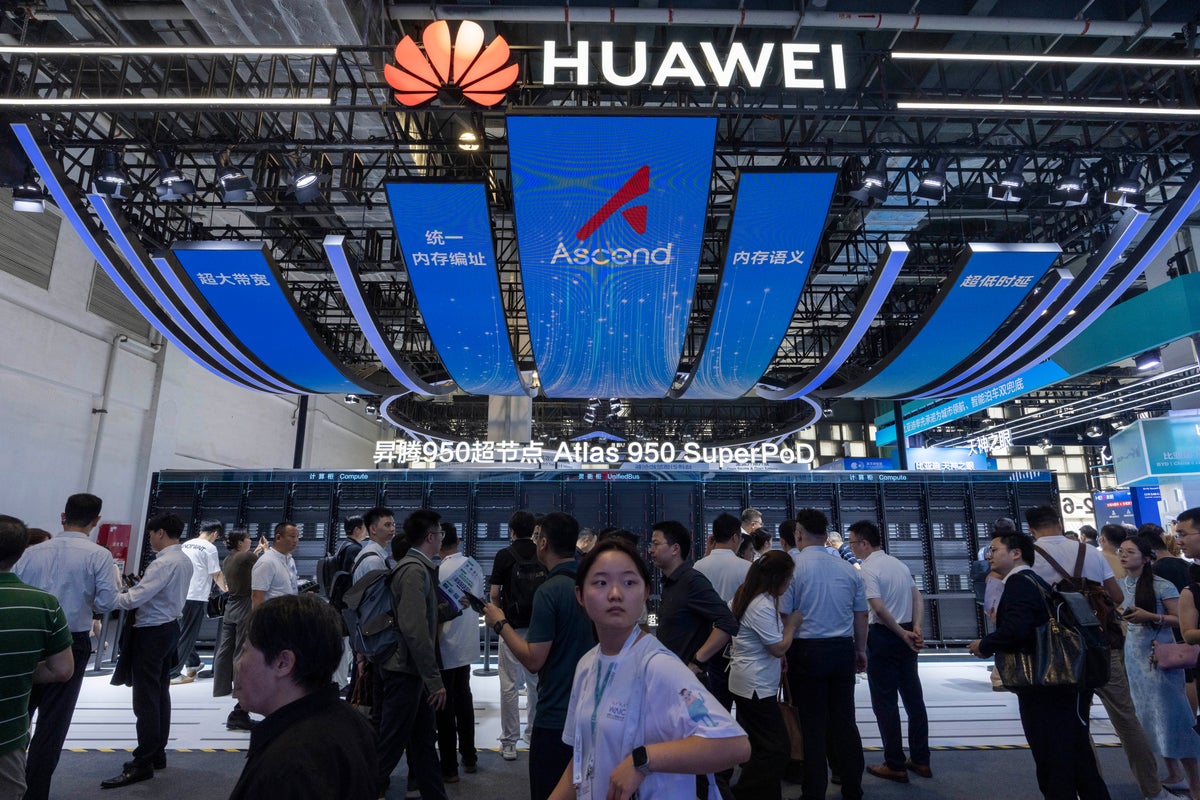
Photo via Semafor

Malaysia eyes Huawei chips despite US warnings

Read the original at Semafor ↗
Cite

Ruberry, B. (2026, September 15). Malaysia eyes Huawei chips despite US warnings. Semafor. https://www.semafor.com/article/09/07/2026/malaysia-eyes-huawei-chips-despite-us-warnings

Dated when The Aporia collected the article, usually within hours of publication. Check the original for its exact date and byline.

Semafor · collected 2026-09-15 · by Brendan Ruberry

Quick Summary

Malaysia is contemplating using Huawei chips for its artificial intelligence projects despite warnings from the United States about potential export restrictions. The country faces high costs due to a global memory shortage expected to last until 2030, making Huawei's discounted prices attractive. This decision could mark the first instance of a foreign government opting for Chinese over American technology in this context. Beijing’s move into Malaysia strengthens its position as an AI supplier while it faces stricter chip access from Western countries; recent incidents include the arrest of a Chinese citizen in Belgium for suspected theft of chip technology and a blacklisted Chinese firm circumventing rules to ship Nvidia chips to China.
Written by AI on 2026-09-16, from this article's own text only (the story summary below draws on all the coverage).

AI analysis

Story summary

Malaysia is considering using Huawei chips for its sovereign artificial intelligence (AI) efforts, according to Bloomberg. This would be the first known case of a foreign government choosing Chinese technology over American options amid warnings from Washington about potential export restrictions violations. Despite these concerns, Huawei's deep discounts make their products more cost-effective, especially given the current global memory shortage expected to last until 2030.

China’s increased presence in Malaysia could challenge Western dominance in AI tech supplies as countries like the US restrict China’s access to advanced chips. For instance, in May, Belgium arrested a Chinese citizen accused of stealing chip technology, and another incident involved a blacklisted Chinese firm allegedly exploiting loopholes to ship Nvidia chips to Chinese AI companies.
Written for “Malaysia Huawei Chips” on 2026-10-31, grounded in this article and the 0 other(s) covering the same event.

Story

📰 Malaysia Huawei Chips
Technology · 1 article(s) covering the same event.

Compared with similar articles

This article reads leans left and hedges 67% of its claims. Each row says how that neighbour differs.
Toronto Star
⚖️ Leans left Hedges 6 of 37 claims Outlet record 64/100
“The articles discuss different aspects of AI and chip technology developments between China and Western countries but describe distinct events occurring in separate regions.”
South China Morning Post
Hedges 0 of 2 claims Outlet record 64/100
“The articles discuss different aspects: one focuses on Malaysia's potential use of Huawei chips, while the other is about China's broader tech strategy over five years.”
The Independent
⚖️ Leans left Hedges 0 of 13 claims Outlet record 59/100
“Article A discusses Malaysia's consideration of using Huawei chips, while Article B reports on Huawei unveiling new chip technologies at a conference in Shanghai.”
New York Post
⚖️ Leans right further right than this Hedges 2 of 23 claims Outlet record 66/100
“The articles discuss different topics: one about Malaysia considering Huawei chips despite US warnings, and the other about a Huawei executive urging Chinese AI companies to accelerate development.”
Semafor
Hedges 1 of 3 claims Outlet record 60/100
“The articles describe different events: one about Malaysia considering Huawei chips, the other about tech leaders debating AI regulation.”
How this article was measured signals, leaning charts, publisher record, byline, topics and claims

Signals How these are calculated →

Claims extracted
3
sentences that state something as happening or true
Uncertain
67%
2 of 3 hedged ("reportedly", "may", "according to")
Leaning
Leans left
of the writing, not the subject · beta estimate
Publisher signals
60/100
Semafor's corrections and hedging, across everything collected from it. Not a measure of accuracy.
Outlets on this story
1
Technology
Same framing elsewhere
1
articles that frame the event the way this one does
Analyzed 2026-09-16 · how these are computed

How this is being covered How these are calculated →

Article leaning vs. publisher reliability
Source leaning vs. consistency

Publisher

Semafor · 1393 article(s) · 1 correction(s) detected
Running correction rate · 1 correction(s)

Who wrote this

Brendan Ruberry
141 article(s) here · 1 carrying a prediction
🔮 Though oil prices retreated this week as Washington and Tehran pursued tentative diplomacy, refining capacity remains limited, and the White House has signaled it could resume strikes on Iran after midterms.
2026-10-29 · mixed framing · US economy grows faster than expected
🔮 Both Kyiv and Moscow praised US first lady Melania Trump for helping secure the truce in Oleshky, which some warned Russia would use for military resupply and propaganda efforts, as the conflict’s death toll mounts elsewhere.
🔮 Benjamin Netanyahu is now oddsmakers’ favorite to stay on as Israel’s prime minister in its next government, which could take weeks or months to form, as the broader region braced for a period of prolonged uncertainty.
🔮 “If it happens again around the US elections, the havoc would reach a whole new level.”
🔮 The projected results delivered a rebuke to Prime Minister Benjamin Netanyahu, whose coalition finished behind that of challenger Gadi Eisenkot, who has offered himself as a hawkish alternative to the scandal-dogged Netanyahu.
🔮 US gas prices are 40% higher than one year ago, driven by energy pressures resulting from the Iran war, which has spiked shipping costs and the price of many household items; the Federal Reserve is expected to hit pause on interest rates this week, but not for long, investors predicted.
2026-10-27 · assertive framing · US consumer confidence ticks up in October
🔮 Coming days before the Communist Party’s Fifth Plenum, the intervention may have helped “prop up the market,” a Chinese financial commentator said, but “it couldn’t prop up investors’ confidence.”
🔮 Bolsonaro’s loss comes as the Trump administration’s “Donroe Doctrine” to reassert hegemony over Latin America is being tested elsewhere: The US is charting a path toward Venezuelan elections, but the return of the country’s popular opposition leader could complicate that process, analysts noted, risking hardliner backlash.
🔮 France’s far-right presidential favorite Marine Le Pen said new Ukraine funding before April elections would be a “democratic scandal,” as Ukraine hunkers down for winter: Kyiv has attempted to harden its grid as Moscow intensifies strikes on energy infrastructure, but delayed regulatory reforms have put it on the back foot.
2026-10-27 · assertive framing · EU lobbies G7 nations to increase Ukraine funding
🔮 Waiving tariffs on some Canadian agricultural products could presage similar efforts in Michigan and New Hampshire, where Republican candidates facing uphill election fights have spoken out against tariffs on Canada.
Also by Brendan Ruberry
Nothing else under this byline is closely related to this article, so these are simply their most recent.
All 141 articles by Brendan Ruberry →

Topics

Bloomberg China Chinese Huawei Malaysia

Subjects

Chinese NORP · 4× China GPE · 2× Huawei ORG · 2× Malaysia GPE · 2× American NORP · 1× Beijing GPE · 1× Belgium GPE · 1× Bloomberg ORG · 1× Nvidia ORG · 1× Washington GPE · 1×

Narrative

Malaysia is considering using Huawei chips to power its sovereign AI efforts, Bloomberg reported, in what would be the first known instance of a foreign government choosing Chinese accelerators over American ones.
framing: speculative · carried by 1 article(s) · first seen 2026-09-16
🔮 Malaysia is considering using Huawei chips to power its sovereign AI efforts, Bloomberg reported, in what would be the first known instance of a foreign government choosing Chinese accelerators over American ones.
2026-09-16 · Semafor
Malaysia eyes Huawei chips despite US warnings · speculative framing

Claims (3 extracted, 2 hedged)

Malaysia is considering using Huawei chips to power its sovereign AI efforts, Bloomberg reported, in what would be the first known instance of a foreign government choosing Chinese accelerators over American ones. asserted
government → consider → ones
Though Washington has warned that using Chinese chips could violate export restrictions, Huawei’s steep discounts offer cheaper compute amid a global memory shortage that could persist through 2030. uncertain
that → warn → 2030
Beijing’s inroads into Malaysia, which already hosts US data centers, boost its efforts to become a global AI supplier of choice, as the West tightens China’s access to advanced chips: In May, Belgium arrested a Chinese citizen suspected of stealing chip technology, while a Chinese tech firm, blacklisted by the US, reportedly exploited loopholes to ship Nvidia chips to China’s AI companies. uncertain
firm → host → companies
💬Give feedback
🕘History 🎫Support