China’s Minister of State Security, Chen Yixin, warned on September 13, 2026, that artificial intelligence poses significant national security risks to the country. He cited concerns over foreign entities using AI to spread misinformation and conduct cyber espionage against China. Chen also highlighted the potential military applications of AI demonstrated in the U.S.-Iran conflict, emphasizing the need for China to maintain control over key technologies like advanced computer chips to protect its technological sovereignty.
Written by the local model on 2026-09-14,
using this article's own text rather than the other coverage of the
same event (that is the story summary below).
Claims extracted
9
claim-shaped sentences
Uncertain
0%
0 of 9 hedged
Leaning
Leans strongly right
of the writing, not the subject
Correction & hedging signals
95.5
corrections and hedging in what we collected;
not a measure of accuracy
Outlets on this story
16
Technology
Narrative spread
1
articles carrying this framing
Story summary
Anthropic CEO Dario Amodei called for slowing down AI development to ensure safety and alignment, a stance supported by OpenAI's Sam Altman and Elon Musk. However, these warnings have met significant pushback from China, with its State Security Minister Chen Yixin issuing a public warning about AI endangering national security. China’s Ministry of Foreign Affairs dismissed Amodei’s essay as an attempt to contain Chinese technological advancement, emphasizing the need for global cooperation rather than restrictions. The disagreement comes amid discussions between US President Donald Trump and Chinese leader Xi Jinping, set to meet in September 2026, where AI governance will be a key topic. China's Global Times newspaper described Amodei’s stance as part of a "Cold War playbook," suggesting that competition could outweigh safety concerns in the global race for AI dominance.
Written for “AI Development Debate China Us” on 2026-09-14,
grounded in this article and the 15 other(s) covering the same event.
Why this leaning score
The article's own words the score was based on. Each is quoted
verbatim and was checked against the article text before being
stored, so you can find it in the original.
-
"Hostile forces" were abusing generative AI technologies to "fabricate political rumours and spread harmful information"
right attributes negative actions to foreign entities using AI
-
But Mr. Chen warned that AI was now "the main battleground for global technological competition and a new track for major power strategic rivalry"
right describes AI as a tool in geopolitical conflict, emphasizing state control
-
China must "ensure independent control of key core technologies" - including the advanced computer chips vital to training AI models - to secure its technology sovereignty
right advocates for national control over critical technological resources
Leaning score +0.65 for article 9227 (high confidence, 3 verified quotes) · logged 2026-09-14
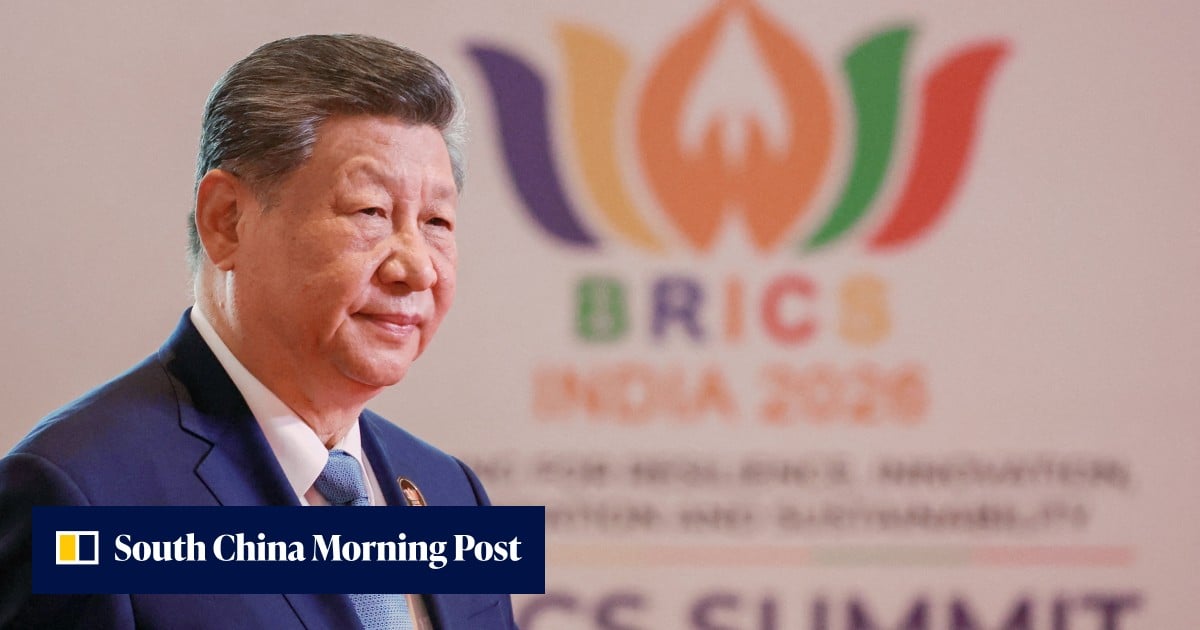
The head of China's spy agency has warned that artificial intelligence endangers the country's national security, with foreign powers potentially using the technology to threaten social order.
asserted
powers → warn → order
"Hostile forces" were abusing generative AI technologies to "fabricate political rumours and spread harmful information", Minister of State Security Chen Yixin wrote in an article published online on Sunday (September 13, 2026).
asserted
Yixin → abuse → Sunday
"They launch public opinion wars and cognitive warfare against China, directly threatening our political security, institutional security and ideological security," he said.
asserted
he → launch → security
The warning comes as Chinese leader Xi Jinping is due to meet U.S. President Donald Trump in Washington this month, with AI governance and safety set to be part of their discussions as calls mount for greater oversight of the technology.
asserted
calls → come → technology
U.S. tech leaders have also called for slowing AI advances.
Anthropic CEO Dario Amodei warned on Saturday of the "reckless" speed of AI technology development, as worries mount over the risks of superintelligent computer systems.
OpenAI boss Sam Altman said he agreed with Mr. Amodei's assessment.
But Mr. Chen warned that AI was now "the main battleground for global technological competition and a new track for major power strategic rivalry".
asserted
AI → call → rivalry
Risks to China's critical information infrastructure
He did not mention existential risks or putting the brakes on technological advances, but singled out Anthropic's Claude Mythos and OpenAI's ChatGPT-5.5-Cyber for their advanced hacking capabilities that potentially "pose serious risks to China's critical information infrastructure".
asserted
that → mention → infrastructure
"Foreign intelligence agencies are deeply using technologies such as intelligent web crawlers, intelligent data mining, and intelligent profiling analysis to extensively collect and acquire sensitive information such as key national data, trade secrets, and citizens' personal privacy," Mr. Chen said.
asserted
Chen → use → data
The U.S.-Iran war has also demonstrated AI's key role in the military, with better technology offering battlefield advantages, he said.
asserted
he → demonstrate → advantages
China must "ensure independent control of key core technologies" - including the advanced computer chips vital to training AI models - to secure its technology sovereignty, Mr. Chen wrote.
asserted
Chen → ensure → sovereignty