The Aporia
The Aporia
The Aporia
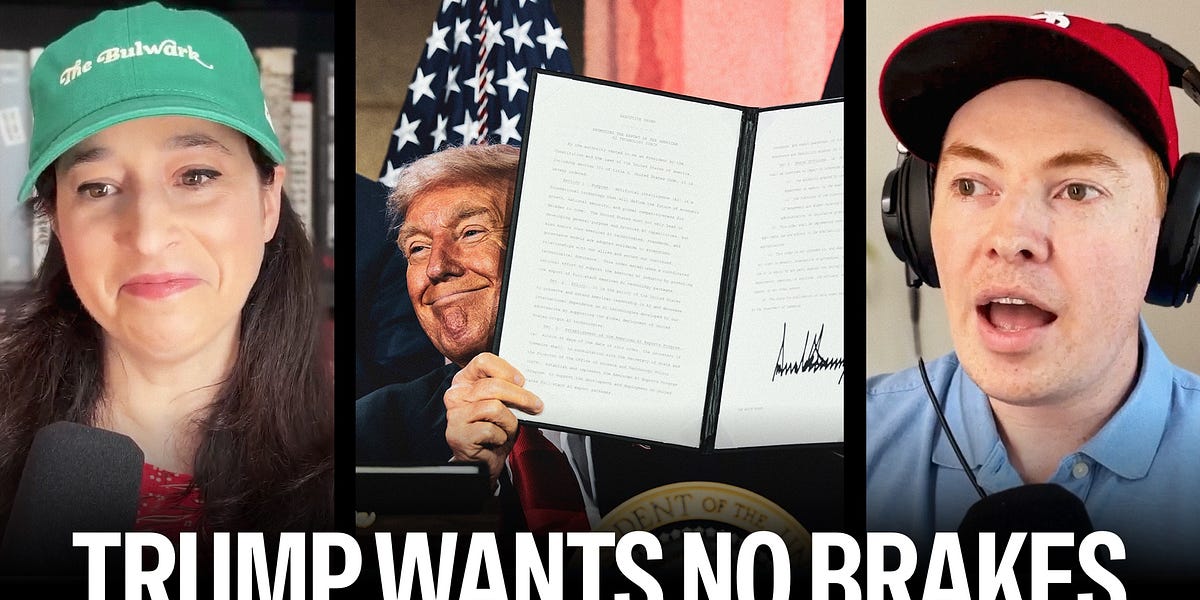
Rampell, C. (2026, September 11). Trump Wants to Take the Guardrails Off AI. What Could Go Wrong? The Bulwark. https://www.thebulwark.com/p/trump-wants-to-take-the-guardrails
Rampell, Catherine. “Trump Wants to Take the Guardrails Off AI. What Could Go Wrong?” The Bulwark, 11 Sept. 2026, https://www.thebulwark.com/p/trump-wants-to-take-the-guardrails.
Rampell, Catherine. “Trump Wants to Take the Guardrails Off AI. What Could Go Wrong?” The Bulwark, September 11, 2026. https://www.thebulwark.com/p/trump-wants-to-take-the-guardrails.
Dated when The Aporia collected the article, usually within hours of publication. Check the original for its exact date and byline.
Catherine Rampell and Andrew Egger discuss the growing concerns over superintelligent AI, citing an Anthropic researcher's departure due to fears that advanced technology could threaten humanity. This comes amid revelations that Anthropic, a leading AI firm, has identified several attempts to misuse its models for developing biological weapons. The company reported disrupting efforts involving its chatbot Claude in May when a scientist sought help with mutating the chikungunya virus for harmful purposes.
Meanwhile, The Intercept obtained Pentagon contracts through FOIA requests, revealing close ties between the military and AI firms like Anthropic, OpenAI, Google, and xAI. These companies have been developing prototypes worth up to $200 million each to enhance U.S. military capabilities. This partnership has raised ethical concerns, especially since Anthropic recently ended its collaboration with the Pentagon over disagreements about technology use.
In response to these developments, policymakers are debating how to regulate AI without hampering technological advancement in the race against China for AI supremacy. However, there is little consensus on effective regulation measures. Calls for immediate action have been made by some politicians like Bernie Sanders, who demands a halt to advanced AI development and bans on artificial superintelligence, while Donald Trump remains skeptical of such fears, arguing that falling behind in AI could put the U.S. at a disadvantage globally.