Can land corridors offset the impact of the maritime blockade on Iran?
asserted
corridors → offset → Iran
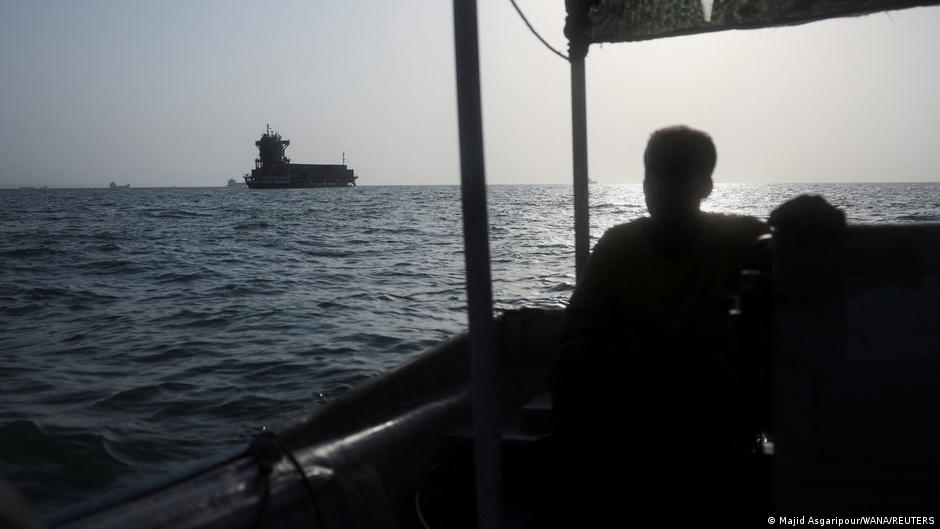
The US-led maritime blockade targeting Iranian ports has severely disrupted trade through its southern ports, but it is also accelerating a strategy Tehran had discussed for years: moving more commerce through northern ports, railways and land corridors.
asserted
Tehran → lead → ports
Economy Minister Ali Madanizadeh, visiting Moscow for talks with Russian officials, said Iran should activate its northern borders and shift a significant share of imports and exports away from the country's southern maritime routes.
asserted
Iran → visit → routes
Iran has seven land neighbors, access to the Caspian Sea and several routes linking it to Russia, Central Asia, Turkey, Iraq, Pakistan and the Caucasus.
asserted
Iran → have → Russia
In theory, that gives Tehran more options than a country dependent on a single maritime gateway.
asserted
that → give → gateway
The question is whether those routes have enough capacity to replace what is being lost at sea.
asserted
what → have → sea
Northern routes offer room to expand
Alireza Salavati, a London-based political economy commentator, told DW that Iran does have unused capacity.
"Iran has more room to maneuver than its dependence on southern ports might suggest,” he said.
uncertain
he → offer → ports
Iranian authorities said in late 2025 that the country's northern ports had more than 30 million tons of nominal annual capacity, with less than one-third in use.
asserted
ports → say → use
That suggests room for more grain, food and general cargo through the Caspian Sea.
uncertain
That → suggest → Sea
Turkey provides another route toward Europe.
asserted
Turkey → provide → Europe
Rail freight between Iran and Turkey depends partly on train ferries across Lake Van, which carried about 477,000 tons in 2024.
asserted
which → depend → 2024
To the northeast, Sarakhs and Incheh Borun connect Iran through Turkmenistan toward Central Asia, Russia and potentially China.
asserted
Sarakhs → connect → Asia
To the northwest, Astara is part of the International North-South Transport Corridor linking Iran to Azerbaijan and Russia, he said.
asserted
he → link → Azerbaijan
The Astara freight terminal is designed for 3.5 to 4 million tons a year, but handled only about 345,000 tons in the first five months of 2026.
asserted
terminal → design → 2026
The unfinished Rasht-Astara rail link remains an important bottleneck.
asserted
link → remain → ?
For specific goods, these routes matter.
asserted
routes → matter → goods
Grain from Russia and Kazakhstan, medicines, industrial inputs and regional trade can be redirected more easily than crude oil.
asserted
Grain → redirect → oil
Volume is the main obstacle
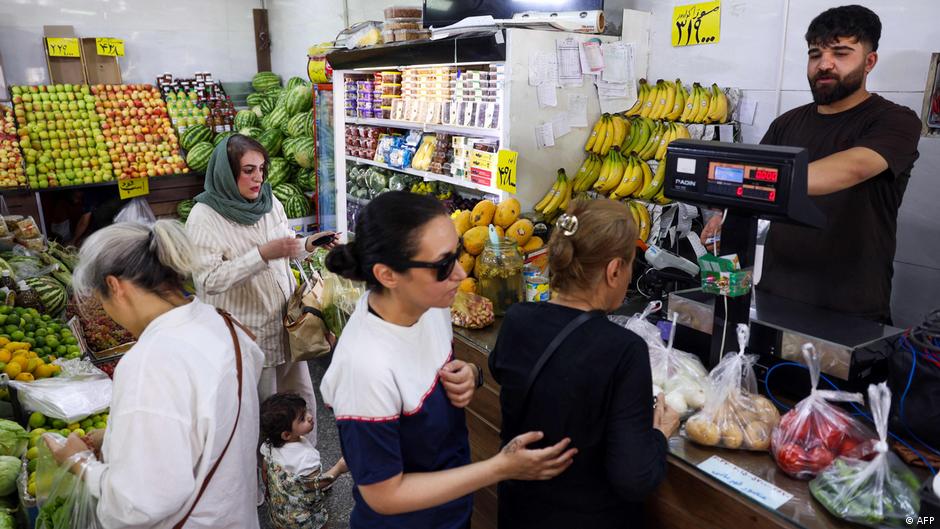
Jafar Ghaderi, a member of Iranian parliament's Economic Commission, recently said that 83% of what he described as Iran's 210 million tons of imports had traditionally moved through southern maritime borders, a tremendous volume of goods.
asserted
he → say → goods
"Whenever we are under a maritime blockade, we face problems," hhe said.
asserted
hhe → face → problems
"How much capacity do our eastern, western and northern corridors actually have?
asserted
corridors → have → capacity
Majidreza Hariri, head of the Iran-China Chamber of Commerce, said shipping one container from China to Iran through southern ports costs about $3,000 (€2,580), and that moving the same container overland costs roughly $12,000.
asserted
moving → say → 12,000
With around 2 million containers entering through the south annually, Hariri estimated that a prolonged shift to land routes could add about $18 billion to Iran's trading costs.
uncertain
shift → enter → costs
Salavati said the physical arithmetic helps explain why.
asserted
arithmetic → say → ?
A 50,000-ton shipload would require around 2,000 truck journeys if each lorry carried 25 tons.
asserted
lorry → require → tons
Those trucks would then be unavailable for domestic distribution, while longer journeys increase fuel, insurance, warehousing and border costs.
asserted
journeys → increase → costs
Low-value goods are particularly vulnerable because transport expenses account for a larger share of their final price.
asserted
expenses → account → price
Energy is much harder to reroute
Umud Shokri, an energy strategist and senior visiting fellow at George Mason University, said Iranian officials are often discussing two different kinds of alternatives.
asserted
officials → reroute → alternatives
One involves alternative navigation lanes around Hormuz.
asserted
One → involve → Hormuz
The other involves shifting trade toward Pakistan, Iraq, Turkey, the Caspian region, Jask and Chabahar.
asserted
other → involve → Pakistan
Neither provides a full substitute for southern energy exports.
asserted
Neither → provide → exports
A large crude tanker can carry roughly 1.5 to 2 million barrels.
asserted
tanker → carry → barrels
Replicating that volume by road would require thousands of tanker trucks.
asserted
Replicating → replicate → trucks
Rail is more efficient, but still cannot match the cost, speed or scale of maritime transport.
asserted
Rail → match → transport
Pakistan can help move imports through Karachi, Port Qasim and Gwadar.
asserted
Pakistan → help → Karachi
Iraq can support regional trade and limited fuel flows.
asserted
Iraq → support → trade
Caspian routes can connect Iran to Russia, Kazakhstan and Azerbaijan.
asserted
routes → connect → Russia
But none can replace large-scale crude shipments to Asian buyers.
asserted
none → replace → buyers
"So the plan is realistic as a resilience strategy, but not as a replacement strategy,” Shokri told DW.
asserted
Shokri → tell → DW
Jask pipeline shows both potential and limits
The Goreh-Jask pipeline was built specifically to reduce Iran's dependence on the Strait of Hormuz by moving crude to the Gulf of Oman.
asserted
pipeline → show → Oman
That gives Jask greater strategic importance than most overland corridors.
asserted
That → give → corridors
…and 13 more, not listed.