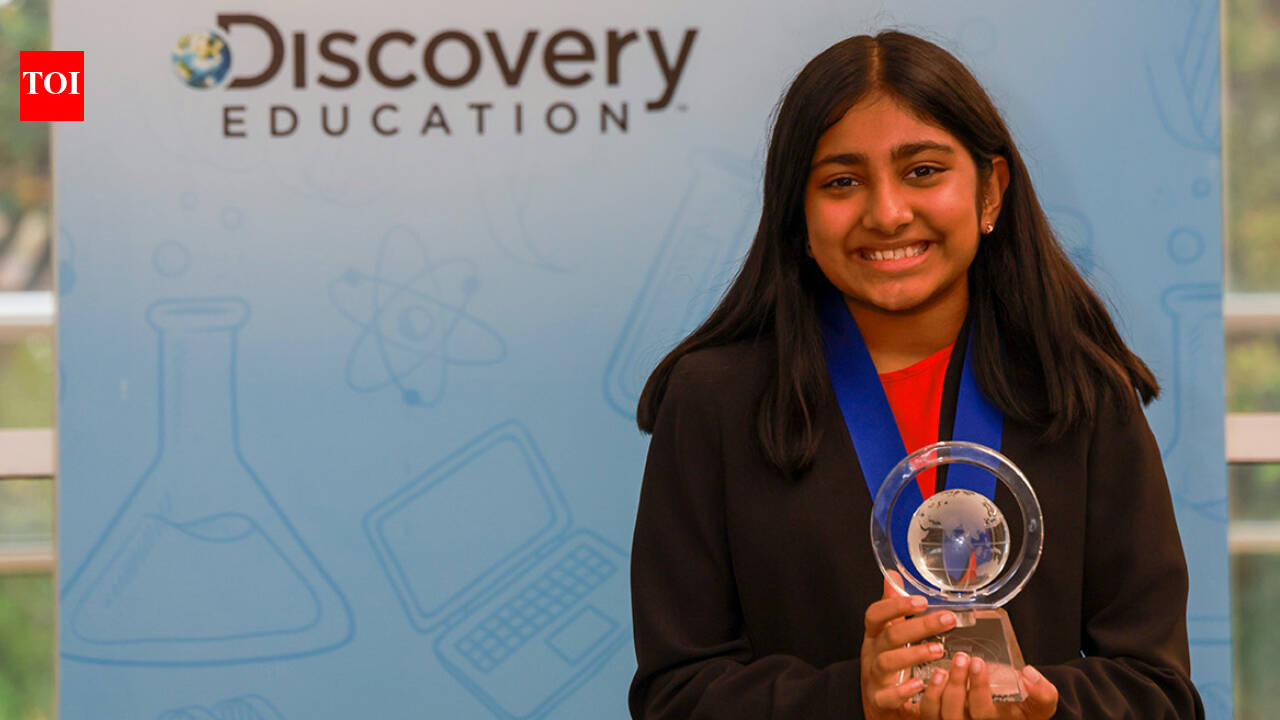
13-year-old Indian-American wins $25,000 for ocean acidification solution

Read the original at Times of India ↗
Cite

TOI Science Desk. (2026, October 15). 13-year-old Indian-American wins $25,000 for ocean acidification solution. Times of India. https://timesofindia.indiatimes.com/science/discovery/a-13-year-old-indian-american-student-invented-a-system-to-fight-ocean-acidification-she-won-americas-top-young-scientist-title-and-a-25000-prize-while-two-other-indian-origin-girls-took-the-remaining-top-honours/articleshow/134965263.cms

Dated from the outlet's own feed. Check the original for its byline.

Times of India · collected 2026-10-15 · by TOI Science Desk

Quick Summary

Raji Doshi, a 13-year-old student from Farmington, Connecticut, won the 2026 3M Young Scientist Challenge for her project on ocean acidification. She developed ALKACORE, which uses algae and aragonite to increase seawater alkalinity and remove carbon dioxide, earning her the top prize of $25,000. Doshi competed against nine other finalists aged between 11 and 14, with two more Indian-origin students placing second and third.
Written locally by qwen2.5:14b on 2026-10-15, using this article's own text rather than the other coverage of the same event (that is the story summary below).

AI analysis runs on qwen2.5:14b, locally

Story summary

Raji Doshi, a 13-year-old student from Farmington, Connecticut, won the $25,000 top prize at the 3M Young Scientist Challenge for developing a potential method to combat ocean acidification. Using algae and a naturally occurring mineral, Doshi's solution earned her recognition as America’s Top Young Scientist in 2026. Out of ten finalists aged between 11 and 14, she was selected after presenting her project at 3M’s global headquarters in St. Paul, Minnesota, from October 12 to 13. The competition aims to identify real-world problems and devise scientific solutions among middle school students.
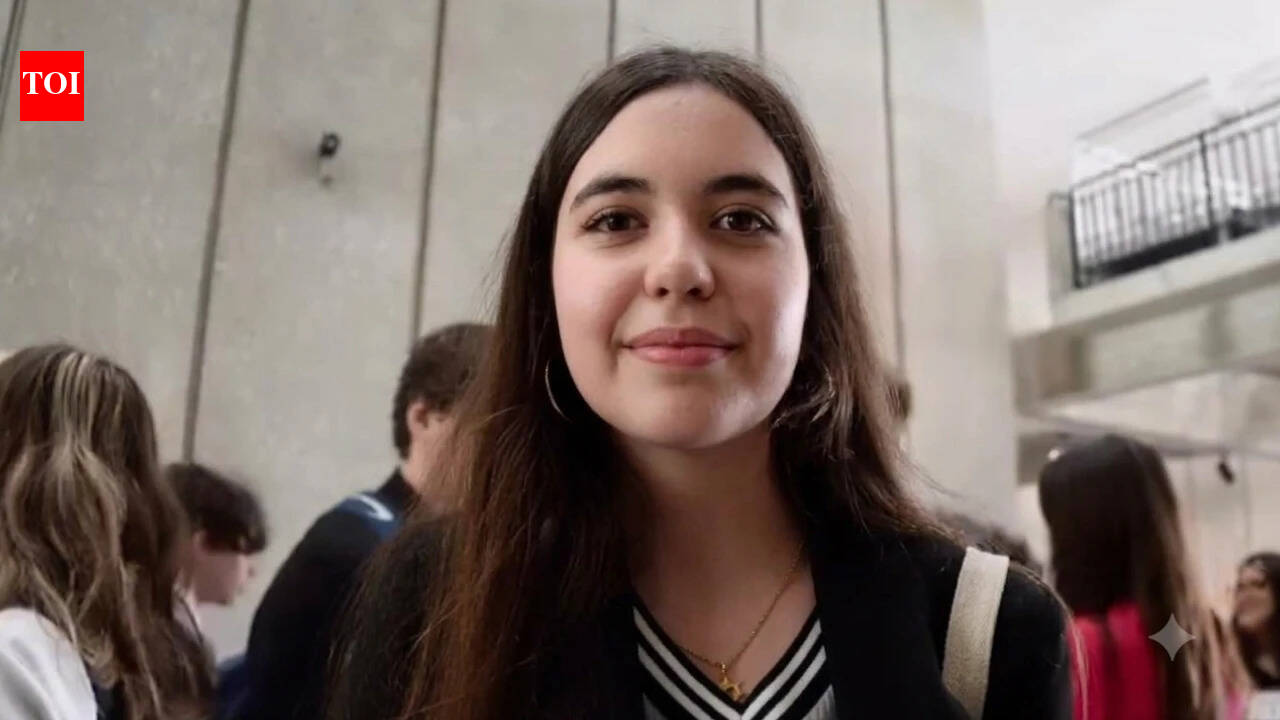

Written for “Teen Wins Science Competition Prize” on 2026-10-15, grounded in this article and the 0 other(s) covering the same event.
Why this leaning score
This article does not take a side on a contested political question, so it has no leaning score. That is an answer rather than a gap: a match report or a rescue can be warmly or critically written without being left or right, and scoring it anyway is how approval of a subject gets recorded as a political position.
No political leaning scored for article 82395 · logged 2026-10-15

Story

📰 Teen Wins Science Competition Prize
Science · 1 article(s) covering the same event.

Compared with similar articles

Nothing to compare against. No article is close enough to this one for the pipeline to have linked or judged the pair.
How this article was measured signals, leaning charts, publisher record, byline, topics and claims

Signals How these are calculated →

Claims extracted
20
sentences that state something as happening or true
Uncertain
10%
2 of 20 hedged ("reportedly", "may", "according to")
Leaning
not political
takes no side on a contested political question
Publisher signals
59/100
Times of India's corrections and hedging, across everything collected from it. Not a measure of accuracy.
Outlets on this story
1
Science
Same framing elsewhere
1
articles that frame the event the way this one does
Analyzed 2026-10-15 · how these are computed

How this is being covered How these are calculated →

Article leaning vs. publisher reliability
Source leaning vs. consistency

Publisher

Times of India · 2588 article(s) · 2 correction(s) detected
Running correction rate · 2 correction(s)

Who wrote this

TOI Science Desk
257 article(s) here · 1 carrying a prediction
🔮 She also developed a Michaelis-Menten computational model to identify an optimal aragonite dose, an important step towards exploring how such a system could eventually be adapted for practical use, the report adds.
🔮 A sandwich Gabriella Rothberg was making for her father when she was 15 led to an unusual question- Could a tomato be made to taste like meat?
🔮 According to Archaeology magazine, researchers believe the token may have been deliberately buried at the site by protesters.
🔮 Among all the animals and birds that have gone extinct, the dodo remains unforgettable, not due to some special characteristic, but because, before its human-driven extinction, many thought that nature was inexhaustible and none of god's creations would ever disappear.
🔮 The experiment, reported by The Guardian on October 13, 2026, suggests that technology could eventually support wildlife conservation by helping birds relearn vocal traditions lost as populations decline.
🔮 Now researchers have shown that clues to where it would strike may have been sitting in ground-motion measurements collected years earlier.
🔮 Now, researchers at Northwestern University may have discovered a key vulnerability in that process, a single molecular hotspot that could offer a new target for future treatments.
🔮 His stated ambition is to establish a sustainable lunar base, creating infrastructure that could support continued scientific work and further exploration.
🔮 Lightning signals may be weak or absent for phreatic or low-intensity eruptions, and the authors say real-time lightning data should be combined with observations such as satellite imagery and meteorological radar.
🔮 Polyethylene, one of the most widely produced plastics in the world, may have implications for liver health, according to new research from Texas A&M University.
Wire or desk byline, not an individual reporter.
Also by TOI Science Desk
Nothing else under this byline is closely related to this article, so these are simply their most recent.
All 257 articles by TOI Science Desk →

Topics

3BL America Connecticut Indian the 3M Young Scientist Challenge

Subjects

Doshi PERSON · 5× 3BL ORG · 3× Indian NORP · 3× America GPE · 2× Connecticut GPE · 2× Discovery Education ORG · 1× Farmington GPE · 1× Minnesota GPE · 1× Raji Doshi PERSON · 1× St. Paul GPE · 1×

Narrative

The Connecticut student has developed a potential way to tackle ocean acidification using algae and a naturally occurring mineral, earning her the top prize at one of America’s leading science competitions for middle school students, states an online report by 3BL media.
framing: assertive · carried by 1 article(s) · first seen 2026-10-15
🔮 She also developed a Michaelis-Menten computational model to identify an optimal aragonite dose, an important step towards exploring how such a system could eventually be adapted for practical use, the report adds.
2026-10-15 · Times of India
13-year-old Indian-American wins $25,000 for ocean acidification solution · assertive framing

Claims (20 extracted, 2 hedged)

At 13, Raji Doshi is already thinking about a problem that scientists around the world are racing to solve: what happens when the oceans absorb too much carbon dioxide? asserted
oceans → think → dioxide
The Connecticut student has developed a potential way to tackle ocean acidification using algae and a naturally occurring mineral, earning her the top prize at one of America’s leading science competitions for middle school students, states an online report by 3BL media. asserted
report → develop → media
A young scientist takes the top spot asserted
scientist → take → spot
According to 3BL media, an eighth grader from Farmington, Connecticut, Doshi was named the 2026 winner of the 3M Young Scientist Challenge, a national competition organised by 3M and Discovery Education. uncertain
Doshi → accord → 3
The title came with a $25,000 prize and the distinction of being named America’s Top Young Scientist, the report adds. asserted
report → come → prize
Doshi emerged from a field of 10 finalists aged between 11 and 14, each tasked with identifying a real-world problem and developing a scientific solution. asserted
Doshi → emerge → solution
The finalists spent the summer refining their projects with the guidance of 3M scientists before presenting their work at 3M’s global headquarters in St. Paul, Minnesota, on October 12 and 13. asserted
finalists → spend → October
Turning algae into a climate solution Doshi’s project focuses on ocean acidification, a consequence of rising carbon dioxide levels that can threaten marine ecosystems and organisms that depend on calcium carbonate to build shells and structures, the report informs. asserted
report → turn → shells
Her system, called ALKACORE, combines macroalgae cultivation with aragonite, a natural form of calcium carbonate. asserted
system → call → carbonate
The idea is to increase the alkalinity of seawater while helping remove carbon dioxide, potentially creating a durable and relatively low-cost approach to reducing coastal acidification. asserted
idea → increase → acidification
Her research went beyond lab work. asserted
research → go → work
Doshi investigated how aragonite affects algal growth and carbon dioxide using carbonate chemistry. asserted
aragonite → investigate → chemistry
She also developed a Michaelis-Menten computational model to identify an optimal aragonite dose, an important step towards exploring how such a system could eventually be adapted for practical use, the report adds. uncertain
report → develop → use
Her interest in seashells led her to notice the damage that increasing ocean acidity can cause to shell-forming marine life, turning a childhood curiosity into a scientific investigation, explains the 3BL media report. asserted
report → lead → investigation
Two more Indian-origin finalists shine Doshi was not the only Indian-origin student to make her mark in this year's competition. asserted
Doshi → make → competition
Aaisha Asif, a seventh grader from Sarasota, Florida, and Sharvi Mahajan, a ninth grader from San Diego, California, claimed second and third place respectively. asserted
Asif → claim → place
Both runners-up received $1,000 prizes, giving the competition a strong showing from young Indian-origin innovators. asserted
runners → receive → innovators
Where curiosity can lead Now in its 19th year, the 3M Young Scientist Challenge is designed to give middle school students an opportunity to turn curiosity into practical scientific work. asserted
Challenge → lead → work
Each finalist is paired with a 3M scientist for one-on-one mentoring, helping students develop their ideas, test solutions and communicate their findings. asserted
students → pair → findings
The competition has also become a launchpad for young innovators, with previous winners going on to pursue patents, launch nonprofits, deliver TED Talks and earn places on the Forbes 30 Under 30 list. asserted
winners → become → list
💬Give feedback
🕘History 🎫Support