Could the dodo return? US firm maps 95% of its genome and identifies gene-editing targets

Read the original at Times of India ↗
Cite

TOI Science Desk. (2026, October 15). Could the dodo return? US firm maps 95% of its genome and identifies gene-editing targets. Times of India. https://timesofindia.indiatimes.com/science/wildlife/us-biotech-firm-completes-95-of-dodos-genome-and-identifies-gene-editing-targets-could-the-extinct-bird-come-alive-again-through-its-closest-living-relative-the-nicobar-pigeon/articleshow/134957542.cms

Dated from the outlet's own feed. Check the original for its byline.

Times of India · collected 2026-10-15 · by TOI Science Desk

Quick Summary

Colossal Biosciences, an American biotech firm, claims progress in its goal to resurrect the extinct dodo using gene-editing technology. The company has mapped 95% of the dodo's genome and used AI to identify genetic changes responsible for the bird’s distinctive features. Colossal plans to transfer these traits into cells of the Nicobar pigeon, a close relative, though it did not provide a timeline for bringing back the dodo.
Written locally by qwen2.5:14b on 2026-10-15, using this article's own text rather than the other coverage of the same event (that is the story summary below).

AI analysis runs on qwen2.5:14b, locally

Story summary

A Dallas-based biotech firm named Colossal Biosciences claims progress in resurrecting the extinct dodo bird. According to a Reuters report on October 15, 2026, Colossal has mapped 95% of the dodo's genome and identified genetic changes responsible for its distinctive traits using an AI platform. The company plans to use gene-editing techniques to introduce these traits into cells of the Nicobar pigeon, a close living relative native to Southeast Asian islands. This project aims to demonstrate that human activity can reverse species extinction caused by earlier human actions, challenging previous assumptions about the irreversibility of such losses.

Written for “Dodo Genome Mapping Advances” on 2026-10-15, grounded in this article and the 0 other(s) covering the same event.

Story

📰 Dodo Genome Mapping Advances
Science · 1 article(s) covering the same event.

Compared with similar articles

This article reads unscored and hedges 8% of its claims. Each row says how that neighbour differs.
AI Is Helping Bring Back the Dodo different event · 40%
TIME
⚖️ leaning not scored 🔴 13% hedged 6 of 47 📰 publisher trust 60
“Both articles discuss efforts to revive the dodo using AI and biotech, but they do not clearly report on the exact same specific moment or outcome.”
How this article was measured signals, leaning charts, publisher record, byline, topics and claims

Signals How these are calculated →

Claims extracted
26
sentences that state something as happening or true
Uncertain
8%
2 of 26 hedged ("reportedly", "may", "according to")
Leaning
not political
takes no side on a contested political question
Publisher signals
59/100
Times of India's corrections and hedging, across everything collected from it. Not a measure of accuracy.
Outlets on this story
1
Science
Same framing elsewhere
1
articles that frame the event the way this one does
Analyzed 2026-10-15 · how these are computed

How this is being covered How these are calculated →

Article leaning vs. publisher reliability
Source leaning vs. consistency

Publisher

Times of India · 2560 article(s) · 2 correction(s) detected
Running correction rate · 2 correction(s)

Who wrote this

TOI Science Desk
254 article(s) here · 1 carrying a prediction
🔮 Among all the animals and birds that have gone extinct, the dodo remains unforgettable, not due to some special characteristic, but because, before its human-driven extinction, many thought that nature was inexhaustible and none of god's creations would ever disappear.
🔮 The experiment, reported by The Guardian on October 13, 2026, suggests that technology could eventually support wildlife conservation by helping birds relearn vocal traditions lost as populations decline.
🔮 Now researchers have shown that clues to where it would strike may have been sitting in ground-motion measurements collected years earlier.
🔮 Now, researchers at Northwestern University may have discovered a key vulnerability in that process, a single molecular hotspot that could offer a new target for future treatments.
🔮 His stated ambition is to establish a sustainable lunar base, creating infrastructure that could support continued scientific work and further exploration.
🔮 Lightning signals may be weak or absent for phreatic or low-intensity eruptions, and the authors say real-time lightning data should be combined with observations such as satellite imagery and meteorological radar.
🔮 Polyethylene, one of the most widely produced plastics in the world, may have implications for liver health, according to new research from Texas A&M University.
🔮 Perseverance is now operating beyond the original mission plan, with NASA approving an extended mission that will carry its crater-rim exploration through roughly the end of 2028, as per the report.
🔮 A rare wildflower once found in the scrublands of Las Vegas has not been reliably recorded in the area for nearly a century, highlighting growing concerns about species that may be disappearing before scientists can determine whether they are extinct.
🔮 Samples collected during the process are expected to undergo laboratory analysis to determine whether they contain evidence of human activity or organic material that could point to the presence of decayed wood.
Wire or desk byline, not an individual reporter.
Also by TOI Science Desk
Nothing else under this byline is closely related to this article, so these are simply their most recent.
All 254 articles by TOI Science Desk →

Topics

American Colossal GenoMorph Nicobar Reuters

Subjects

Colossal ORG · 5× Mauritius GPE · 3× Lamm ORG · 2× Reuters ORG · 2× American NORP · 1× Beth Shapiro PERSON · 1× Colossal Biosciences ORG · 1× Dallas GPE · 1× GenoMorph ORG · 1× Southeast Asian NORP · 1×

Narrative

Among all the animals and birds that have gone extinct, the dodo remains unforgettable, not due to some special characteristic, but because, before its human-driven extinction, many thought that nature was inexhaustible and none of god's creations would ever disappear.
framing: assertive · carried by 1 article(s) · first seen 2026-10-15
🔮 Among all the animals and birds that have gone extinct, the dodo remains unforgettable, not due to some special characteristic, but because, before its human-driven extinction, many thought that nature was inexhaustible and none of god's creations would ever disappear.

Claims (26 extracted, 2 hedged)

Among all the animals and birds that have gone extinct, the dodo remains unforgettable, not due to some special characteristic, but because, before its human-driven extinction, many thought that nature was inexhaustible and none of god's creations would ever disappear. asserted
none → go → creations
It proved that human activity had the capacity to wipe out an entire species. asserted
activity → prove → species
More than 300 years after the bird disappeared from the face of Earth, an American biotech company claims it is making progress in its goal of resurrecting the famous flightless bird, as per a Reuters report. uncertain
it → disappear → report
Dallas-based Colossal Biosciences said on Wednesday that it has used a newly developed AI platform to identify genetic changes that may be responsible for the dodo's distinctive craniofacial traits as its scientists pursue gene-editing targets to bring back the lost species. uncertain
scientists → base → species
Colossal is planning to perform gene-editing to bring the dodo traits into the cells of one of its closest living relatives, the Nicobar pigeon. asserted
Colossal → plan → relatives
Native to some Southeast Asian islands, the Nicobar pigeon is known for its shimmering green and copper feathers but unlike the dodo, it can fly. asserted
it → know → dodo
Ancient DNA is always broken into small pieces, so no ancient genome is perfectly complete, including that of the dodo. asserted
genome → break → dodo
It made use of a new AI platform called GenoMorph. asserted
It → make → platform
"The challenge was that scientists only have one complete dodo genome, making it difficult to distinguish the genetic differences that made the dodo unique from ordinary genetic variation. asserted
dodo → have → variation
GenoMorph effectively acts as a 'treasure map' for the dodo genome, narrowing hundreds of thousands of possible genetic changes into the targets most likely to explain its iconic beak and facial structure," Lamm said. asserted
Lamm → act → beak
Beth Shapiro, Colossal's chief science officer, said GenoMorph finds likely gene-editing targets for species with very little surviving DNA. asserted
GenoMorph → say → DNA
Normally scientists compare many genomes from one species to find the genes behind a trait, but this is not possible with the dodo, Shapiro said. asserted
Shapiro → compare → dodo
The company said it is in its final stages of analysis of the dodo genome, now filled to 95%. asserted
it → say → %
It also said it has made an advance that should shorten the time needed to test whether a genetic edit produces the desired trait. asserted
edit → say → trait
However, it did not announce any timeframe for hatching a dodo. asserted
it → announce → dodo
Colossal says it is dedicated towards "de-extinction", which involves resurrecting vanished species. asserted
which → say → species
In 2025, it said it has genetically engineered the dire wolf by editing the genes of the grey wolf, the extinct Ice Age predator's closest living relative, to add dire wolf traits. asserted
it → say → traits
Including the dodo and dire wolf, Colossal has four other species on its de-extinction list: the woolly mammoth; the thylacine, also called the Tasmanian tiger; the bluebuck antelope; and the moa, a large flightless bird. asserted
Colossal → include → mammoth
"The dodo is the world's best-known symbol of extinction caused by people. asserted
dodo → know → people
It disappeared within decades of humans arriving on Mauritius, largely because of the introduction of invasive species like rats and other animals they brought. asserted
they → disappear → rats
Bringing it back shows extinction doesn't have to be permanent," Ben Lamm, Colossal's CEO and co-founder, told Reuters. asserted
Lamm → bring → Reuters
"The big hurdles ahead are proving which genetic changes really matter, making many of those edits in a bird and passing them to the next generation, and preparing a safe home for dodos on Mauritius," Lamm said. asserted
Lamm → prove → Mauritius
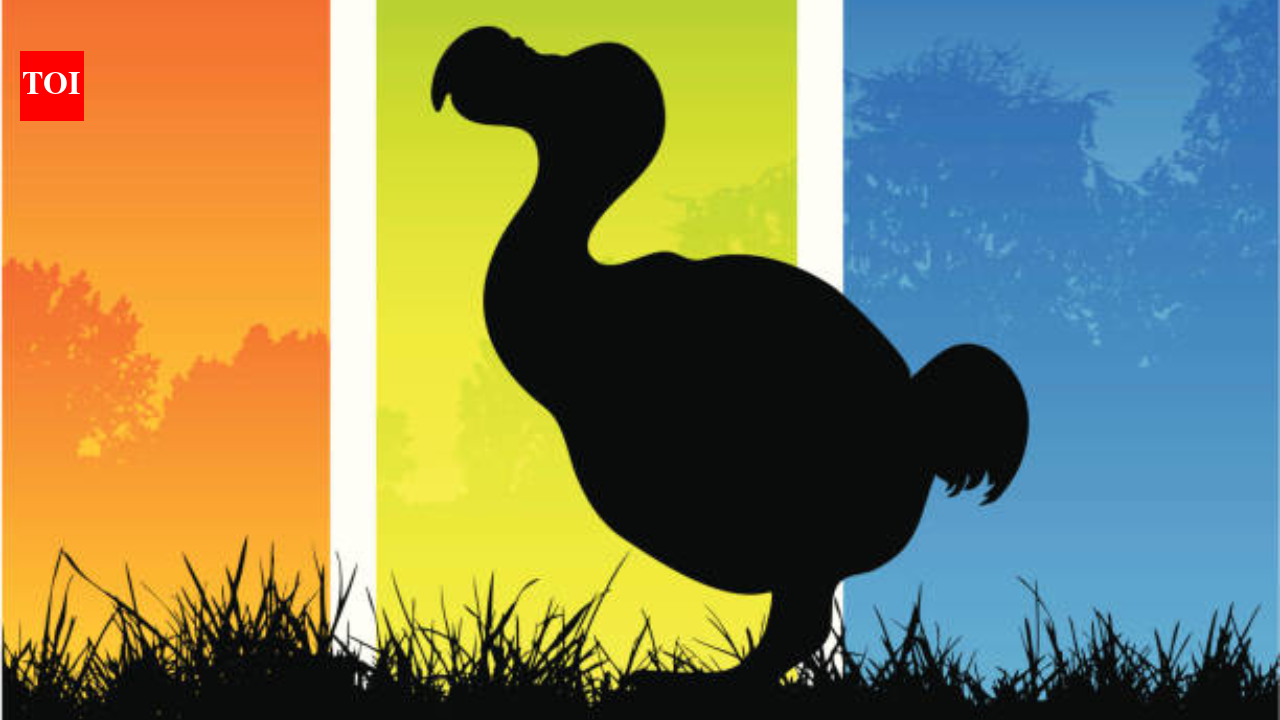
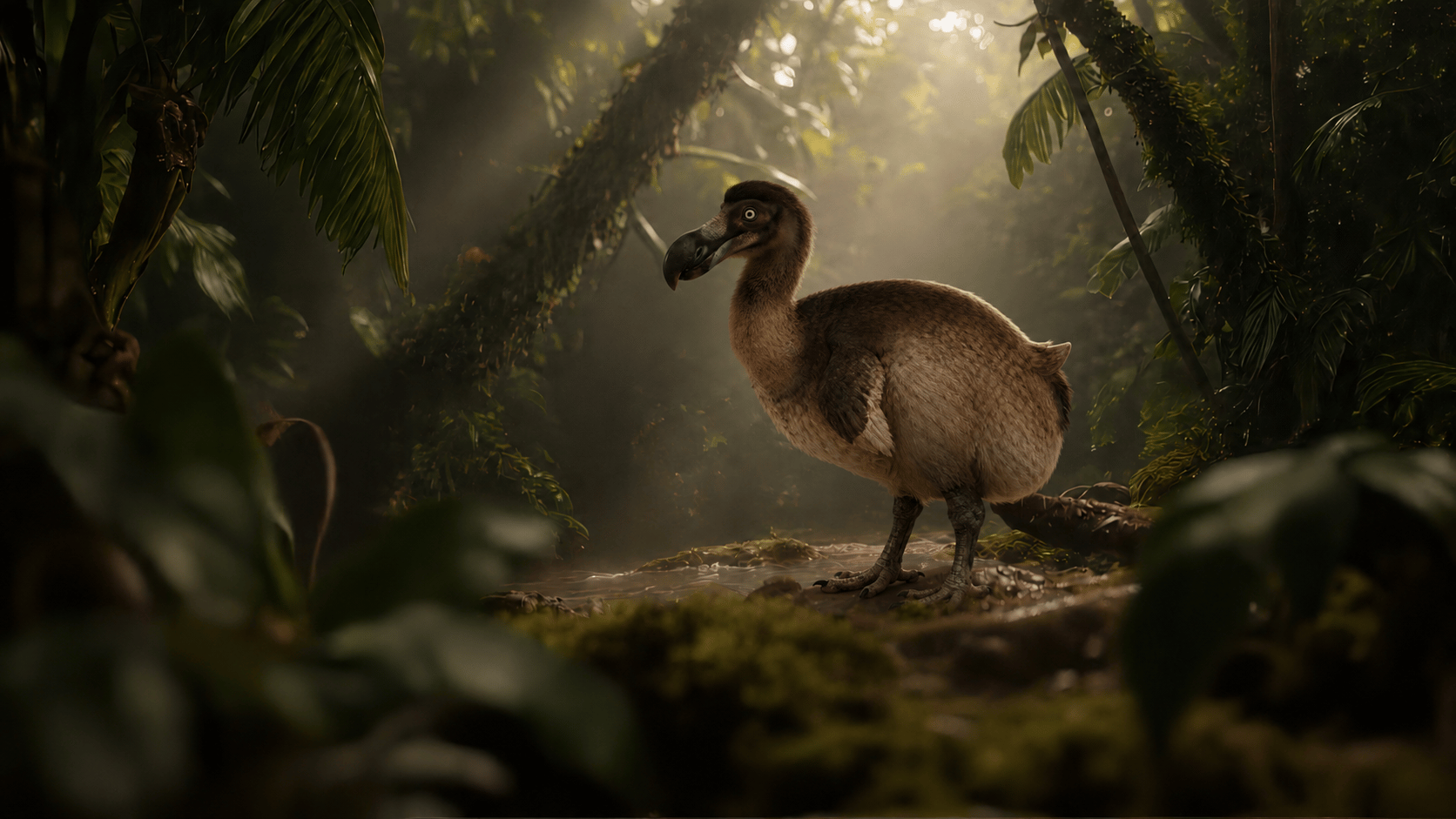
The dodo was a flightless, ground-nesting bird about 3 feet tall and weighing 50 pounds. asserted
dodo → nest → pounds
Having never encountered humans, dodos were fearless of the people who reached Mauritius in the 16th century. asserted
who → encounter → century
Due to consistent pressure from invasive species and human hunting, the last living dodo was seen in 1662. asserted
dodo → live → 1662
It has remained alive in popular culture, including in Lewis Carroll's book "Alice's Adventures in Wonderland." asserted
It → remain → Wonderland

💬Give feedback
🕘History 🎫Support