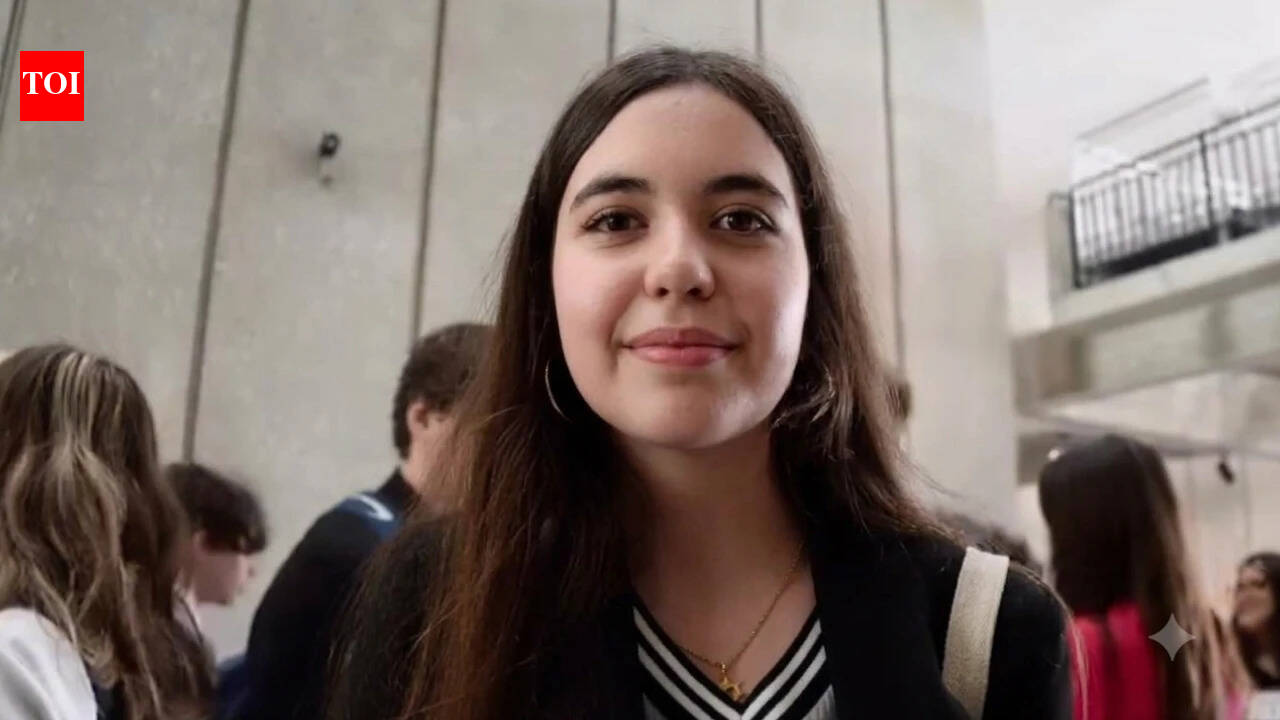
Meet Gabriella Rothberg, 17, who turned a sandwich idea into a patent for meat-flavoured tomatoes

Read the original at Times of India ↗
Cite

TOI Science Desk. (2026, October 15). Meet Gabriella Rothberg, 17, who turned a sandwich idea into a patent for meat-flavoured tomatoes. Times of India. https://timesofindia.indiatimes.com/science/discovery/meet-gabriella-rothberg-the-17-year-old-miami-student-who-began-with-a-sandwich-idea-at-15-and-became-co-inventor-on-a-us-patent-for-genetically-engineered-tomatoes-designed-to-produce-meat-linked-heme/articleshow/134966877.cms

Dated from the outlet's own feed. Check the original for its byline.

Times of India · collected 2026-10-15 · by TOI Science Desk

Quick Summary

Gabriella Rothberg, now 17 from Miami, turned a sandwich-making experience into a biotechnology project when she was 15, leading to her becoming a co-inventor on a US patent for genetically engineered tomatoes that produce heme, an iron-containing molecule linked to meat flavor. Working with her father Jonathan Rothberg and Maddison Marshall at the University of Miami, Gabriella used Agrobacterium to introduce genetic material into tomato cells, aiming to make vegetables taste like meat without processing them into plant-based substitutes. The project is still experimental and has not yet been tested for taste or nutritional benefits, though it could potentially revolutionize how we eat if successful.
Written locally by qwen2.5:14b on 2026-10-15, using this article's own text rather than the other coverage of the same event (that is the story summary below).

AI analysis runs on qwen2.5:14b, locally

Story summary

Gabriella Rothberg, a 17-year-old student from Miami, has become a co-inventor on a US patent for genetically engineered tomatoes designed to produce heme, an iron-containing molecule that contributes to the flavor of meat. The idea originated when Gabriella was making a sandwich for her father at age 15 and wondered if a tomato could be made to taste like meat. Two years later, she and her biotechnology entrepreneur father Jonathan Rothberg were named inventors on US Patent No. 12,668,806, issued in June 2026. The patent has been assigned to Impossible Vines Inc, a company that aims to develop vegetables with meat-like flavors without the need for conventional plant-based processing. However, the genetically engineered tomatoes have not yet undergone taste testing or entered commercial production, and their long-term viability remains uncertain.

Written for “Teen Inventor Patents Tomato Flavoring” on 2026-10-15, grounded in this article and the 0 other(s) covering the same event.

Story

📰 Teen Inventor Patents Tomato Flavoring
Technology · 1 article(s) covering the same event.

Compared with similar articles

Nothing to compare against. No article is close enough to this one for the pipeline to have linked or judged the pair.
How this article was measured signals, leaning charts, publisher record, byline, topics and claims

Signals How these are calculated →

Claims extracted
42
sentences that state something as happening or true
Uncertain
19%
8 of 42 hedged ("reportedly", "may", "according to")
Leaning
not political
takes no side on a contested political question
Publisher signals
59/100
Times of India's corrections and hedging, across everything collected from it. Not a measure of accuracy.
Outlets on this story
1
Technology
Same framing elsewhere
1
articles that frame the event the way this one does
Analyzed 2026-10-15 · how these are computed

How this is being covered How these are calculated →

Article leaning vs. publisher reliability
Source leaning vs. consistency

Publisher

Times of India · 2588 article(s) · 2 correction(s) detected
Running correction rate · 2 correction(s)

Who wrote this

TOI Science Desk
257 article(s) here · 1 carrying a prediction
🔮 She also developed a Michaelis-Menten computational model to identify an optimal aragonite dose, an important step towards exploring how such a system could eventually be adapted for practical use, the report adds.
🔮 A sandwich Gabriella Rothberg was making for her father when she was 15 led to an unusual question- Could a tomato be made to taste like meat?
🔮 According to Archaeology magazine, researchers believe the token may have been deliberately buried at the site by protesters.
🔮 Among all the animals and birds that have gone extinct, the dodo remains unforgettable, not due to some special characteristic, but because, before its human-driven extinction, many thought that nature was inexhaustible and none of god's creations would ever disappear.
🔮 The experiment, reported by The Guardian on October 13, 2026, suggests that technology could eventually support wildlife conservation by helping birds relearn vocal traditions lost as populations decline.
🔮 Now researchers have shown that clues to where it would strike may have been sitting in ground-motion measurements collected years earlier.
🔮 Now, researchers at Northwestern University may have discovered a key vulnerability in that process, a single molecular hotspot that could offer a new target for future treatments.
🔮 His stated ambition is to establish a sustainable lunar base, creating infrastructure that could support continued scientific work and further exploration.
🔮 Lightning signals may be weak or absent for phreatic or low-intensity eruptions, and the authors say real-time lightning data should be combined with observations such as satellite imagery and meteorological radar.
🔮 Polyethylene, one of the most widely produced plastics in the world, may have implications for liver health, according to new research from Texas A&M University.
Wire or desk byline, not an individual reporter.
Also by TOI Science Desk
Nothing else under this byline is closely related to this article, so these are simply their most recent.
All 257 articles by TOI Science Desk →

Topics

Biscayne Bay Beacon Coconut Grove Impossible Vines Inc. Miami Ransom Everglades School

Subjects

Gabriella PERSON · 9× Jonathan Rothberg PERSON · 2× the University of Miami ORG · 2× Biscayne Bay Beacon ORG · 1× Coconut Grove GPE · 1× Gabriella Rothberg PERSON · 1× Impossible Vines Inc. ORG · 1× Miami GPE · 1× Miami New Times ORG · 1× Ransom Everglades School ORG · 1×

Narrative

Two years later, the 17-year-old student from Miami is listed as a co-inventor on a US patent for genetically engineered tomatoes designed to produce heme, an iron-containing molecule associated with the flavour of meat.
framing: assertive · carried by 1 article(s) · first seen 2026-10-15
🔮 A sandwich Gabriella Rothberg was making for her father when she was 15 led to an unusual question- Could a tomato be made to taste like meat?

Claims (42 extracted, 8 hedged)

A sandwich Gabriella Rothberg was making for her father when she was 15 led to an unusual question- Could a tomato be made to taste like meat? uncertain
tomato → make → meat
Two years later, the 17-year-old student from Miami is listed as a co-inventor on a US patent for genetically engineered tomatoes designed to produce heme, an iron-containing molecule associated with the flavour of meat. asserted
student → list → meat
Gabriella, a senior at Ransom Everglades School in Coconut Grove, worked on the project with her father, biotechnology entrepreneur Jonathan Rothberg. asserted
Gabriella → work → father
The two are named as inventors on US Patent No. 12,668,806, issued in June this year. asserted
two → name → June
According to a report by Biscayne Bay Beacon, the patent has been assigned to Impossible Vines Inc. uncertain
patent → accord → Beacon
The idea behind the project is to develop tomatoes that produce heme, which contributes to the characteristic flavour of meat. asserted
which → develop → meat
Gabriella hopes the technology could eventually make vegetables taste more like meat without requiring them to be processed into conventional plant-based meat substitutes. uncertain
vegetables → hop → substitutes
The genetically engineered tomatoes have not undergone taste testing or entered commercial production. asserted
tomatoes → engineer → production
Researchers have also not established whether they can deliver the intended flavour or nutritional benefits. asserted
they → establish → flavour
The patent protects the described technology but does not establish that the tomatoes are ready for consumption. asserted
tomatoes → protect → consumption
How a sandwich idea became a biotechnology project asserted
idea → become → ?
Gabriella began thinking about the project at 15 while preparing a sandwich for her father. asserted
Gabriella → begin → father
She wondered whether it would be possible to change the flavour of a vegetable itself rather than process vegetables into products designed to resemble meat. asserted
it → wonder → meat
That question eventually developed into a biotechnology project called Impossible Vines. asserted
question → develop → project
Speaking to Miami New Times, Gabriella explained what she hoped the technology could achieve. uncertain
technology → speak → what
"So you'll bite into a tomato, and it'll taste like a hamburger," she said. asserted
she → bite → hamburger
To explore the idea, Gabriella worked with Maddison Marshall, a doctoral candidate at the University of Miami. asserted
Gabriella → explore → Miami
Together, they used a bacterium called Agrobacterium to introduce genetic material into tomato plant cells. asserted
they → use → cells
Agrobacterium is used in plant genetic engineering because it can transfer genetic material into plant cells. asserted
it → use → cells
In this project, the researchers used it to work towards developing tomatoes capable of producing heme. asserted
researchers → use → heme
Heme is an iron-containing molecule associated with the flavour of meat. asserted
Heme → contain → meat
The researchers' aim is to enable tomato plants to produce it through genetic modification. asserted
aim → enable → modification
The patent also describes methods for changing other characteristics of plants, including their lycopene content and seed production. asserted
patent → describe → content
Lycopene is a naturally occurring pigment that gives tomatoes their red colour. asserted
that → occur → colour
Researchers faced problems growing the modified plants Gabriella and Marshall also faced difficulties during the early stages of their research. asserted
Gabriella → face → research
For several months, the plants did not develop as expected. asserted
plants → develop → months
The researchers then consulted scientists at the University of Miami to understand what was preventing growth. asserted
what → consult → growth
They eventually discovered that the vitamin concentration in the growth medium was incorrect. asserted
concentration → discover → medium
The growth medium is the material used to provide plant cells with the nutrients needed to develop under laboratory conditions. asserted
medium → use → conditions
After adjusting the formula, the researchers began seeing plant growth within weeks. asserted
researchers → adjust → weeks
Gabriella also reported using artificial intelligence during different stages of the project. asserted
Gabriella → report → project
She used AI tools to help design genetic constructs, prepare patent materials and develop a business plan. asserted
She → use → plan
Gabriella comes from a family of biotechnology researchers Gabriella's interest in science developed in a family with a background in biotechnology and medical research. asserted
interest → come → biotechnology
Her father, Jonathan Rothberg, is a biotechnology entrepreneur who helped pioneer next-generation DNA sequencing. asserted
who → pioneer → sequencing
He had received the National Medal of Technology and Innovation from former US President Barack Obama in 2016. asserted
He → receive → 2016
Gabriella says that scientific discussions were common at home. asserted
discussions → say → home
Family conversations often included subjects such as evolution, astronomy and physics. asserted
conversations → include → evolution
The patent also lists Gabriella alongside her father as an inventor. asserted
patent → list → inventor
Could the tomatoes also help address iron deficiency? uncertain
tomatoes → help → deficiency
Beyond developing tomatoes with a meat-like flavour, Gabriella hopes the technology could eventually help improve access to dietary iron. uncertain
technology → develop → iron
…and 2 more, not listed.

💬Give feedback
🕘History 🎫Support