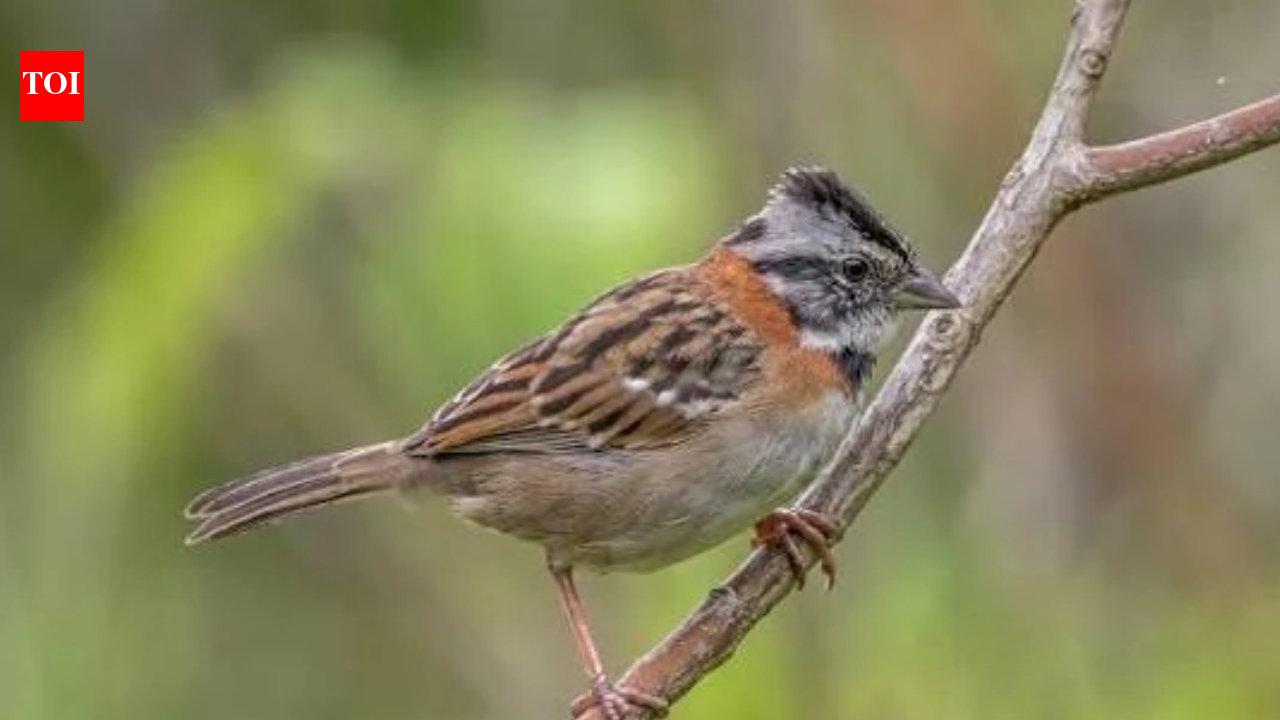
Scientists have found a promising way to help birds recover songs that have disappeared from their natural habitats, using computer-generated recordings to bring old bird calls back into circulation.
asserted
that → find → circulation
The experiment, reported by The Guardian on October 13, 2026, suggests that technology could eventually support wildlife conservation by helping birds relearn vocal traditions lost as populations decline.
uncertain
populations → report → traditions
Related research published in Scientific Reports and findings shared by the Australian National University also highlight the importance of preserving birdsong for endangered species.
asserted
research → publish → species
The approach could offer a new tool for conservationists seeking to restore lost bird vocalizations, preserve cultural behaviors passed between generations, and strengthen efforts to protect endangered bird populations.
uncertain
approach → offer → populations
A forgotten melody returns to the trees
asserted
melody → forget → trees
The experiment took place in Buenos Aires, Argentina, where researchers recreated a song once heard among local rufous-collared sparrows.
asserted
researchers → take → sparrows
The original version had been documented in the 1960s through handwritten musical-style annotations that captured the structure of the birds’ calls.
asserted
that → document → calls
Over the decades, some of these distinctive song patterns faded from the local population.
asserted
some → fade → population
Researchers used the historical records to produce a computer-generated rendition of one of the missing variations and played it in the birds’ habitat.
asserted
Researchers → use → habitat
Within less than three months, a sparrow in the area began incorporating elements of the recreated song into its own vocalisations.
asserted
sparrow → begin → vocalisations
The finding offers an intriguing indication that recordings can potentially reintroduce lost elements of birdsong, although it remains too early to establish whether the behaviour will persist across generations.
asserted
behaviour → offer → generations
The study also draws attention to a less visible consequence of declining wildlife populations: the loss of learned behaviours that help animals communicate, attract mates and maintain social connections.
asserted
animals → draw → connections
Why birdsong matters for survival
asserted
birdsong → matter → survival
For many songbirds, singing is a learned skill rather than an entirely instinctive behaviour.
asserted
singing → learn → behaviour
Young birds acquire vocal patterns by listening to adults, including their fathers and neighbouring birds.
asserted
birds → acquire → fathers
Over time, these shared sounds develop into regional variations, often described as dialects.
asserted
sounds → share → dialects
A decline in population numbers can disrupt this learning process.
asserted
decline → disrupt → process
When fewer experienced birds are available, young individuals may develop incomplete songs or imitate other species.
uncertain
individuals → develop → species
Such changes can affect their ability to communicate with potential mates and integrate into established groups.
asserted
changes → affect → groups
Researchers have increasingly recognised that conservation must account for these learned behaviours alongside genetic diversity.
asserted
conservation → recognise → diversity
Even when birds survive physically, the disappearance of familiar vocal patterns may create additional barriers to successful breeding.
uncertain
disappearance → survive → breeding
Song complexity and consistency can also provide information about an individual’s condition.
asserted
complexity → provide → condition
In some species, a well-developed song plays an important role in courtship and territorial communication, making vocal learning a potentially significant factor in reproductive success.
asserted
learning → develop → success
The potential value of song restoration is particularly clear in the case of Australia’s regent honeyeater, a critically endangered bird whose declining numbers have disrupted the transmission of traditional songs.
asserted
numbers → decline → songs
Research published in Scientific Reports in 2026 examined efforts to teach captive-bred regent honeyeaters the vocal patterns associated with wild populations.
asserted
Research → publish → populations
Scientists combined audio playback with exposure to live adult birds that could serve as tutors.
uncertain
that → combine → tutors
By the end of three breeding seasons, 42% of the male birds in the zoo population were singing versions of the traditional wild song, compared with none of the young birds successfully learning it during the first year of the experiment.
asserted
% → sing → experiment
The findings suggest that carefully designed tutoring programmes can help preserve vocal traditions even when opportunities for learning in the wild become scarce.
asserted
opportunities → suggest → wild
The Australian National University, which reported on the research in March 2026, noted that the regent honeyeater’s traditional song had become increasingly difficult to find in wild populations.
asserted
song → report → populations
Captive breeding programmes could therefore serve an additional purpose by maintaining vocal patterns that might otherwise disappear.
uncertain
that → serve → patterns
.
Can artificial intelligence become a bird tutor?
asserted
intelligence → become → ?
Although the Buenos Aires experiment used a computer-generated recording rather than a fully interactive artificial intelligence system, it points towards a possible future role for AI in conservation.
asserted
it → use → conservation
Synthetic recordings could help researchers recreate vocal patterns for which no usable audio survives, using historical documentation and scientific analysis.
uncertain
audio → help → documentation
They may also allow conservationists to provide young birds with examples of the songs spoken in the regions where they will eventually be released.
uncertain
they → allow → regions
However, playing a recording is not necessarily equivalent to learning from a living bird.
asserted
playing → play → bird
Some species respond more successfully to direct social interaction, while others have different learning windows and varying degrees of innate vocal knowledge.
asserted
others → respond → knowledge
Researchers must also consider regional dialects.
asserted
Researchers → consider → dialects
Birds moved to new habitats may struggle to establish themselves if their songs differ significantly from those of local populations.
uncertain
songs → move → populations
Introducing the appropriate vocal patterns before release could help address this problem.
uncertain
Introducing → introduce → problem
Preserving more than biodiversity
asserted
Preserving → preserve → biodiversity
…and 6 more, not listed.
 The Aporia