In 1823, Glasgow residents tore down a 12-foot wall; 203 years later, archaeologists find remains

Read the original at Times of India ↗
Cite

TOI Science Desk. (2026, October 15). In 1823, Glasgow residents tore down a 12-foot wall; 203 years later, archaeologists find remains. Times of India. https://timesofindia.indiatimes.com/science/archaeology/in-1823-glasgow-residents-tore-down-a-12-foot-wall-topped-with-iron-spikes-and-broken-glass-in-a-fight-over-a-riverside-path-archaeologists-have-now-uncovered-its-remains-and-a-token-bearing-the-citys-motto/articleshow/134964020.cms

Dated from the outlet's own feed. Check the original for its byline.

Times of India · collected 2026-10-15 · by TOI Science Desk

Quick Summary

Archaeologists in Glasgow have uncovered remnants of a wall that residents demolished in 1823. Thomas Harvie, a wealthy distiller, built the wall around his Westthorn estate to block access to the River Clyde, angering local workers who used this path regularly. On Midsummer's Eve in 1823, a crowd tore down part of the 12-foot-high wall; authorities responded with cavalry and arrests. The Digging the Dyke project recently unearthed items like a rare trade token from 1791 and building materials that provide clues about the fortified structures at the site.
Written locally by qwen2.5:14b on 2026-10-15, using this article's own text rather than the other coverage of the same event (that is the story summary below).

AI analysis runs on qwen2.5:14b, locally

Story summary

In October 2026, archaeologists uncovered remains linked to an 1823 confrontation where Glasgow residents tore down walls built by Thomas "Lang Tam" Harvie on his Westthorn estate. Located in Dalmarnock, the walls, which included a 12-foot-high barrier, blocked a route used by local workers along the River Clyde and were equipped with iron spikes and broken glass for protection.

The excavation, part of the 2026 Glasgow Doors Open Days Festival, drew over 400 visitors who engaged in walks, talks, tours, and performances. Harvie's actions angered nearby communities, leading to a large crowd gathering on Midsummer’s Eve that year to dismantle his property walls. Authorities dispatched cavalry but were unable to stop the demolition.

This event highlights the historical significance of community resistance against urban development that infringes on public rights in Glasgow's history.

Written for “Glasgow Wall Remains Found” on 2026-10-15, grounded in this article and the 0 other(s) covering the same event.

Story

📰 Glasgow Wall Remains Found
Other · 1 article(s) covering the same event.

Compared with similar articles

Nothing to compare against. No article is close enough to this one for the pipeline to have linked or judged the pair.
How this article was measured signals, leaning charts, publisher record, byline, topics and claims

Signals How these are calculated →

Claims extracted
35
sentences that state something as happening or true
Uncertain
17%
6 of 35 hedged ("reportedly", "may", "according to")
Leaning
not political
takes no side on a contested political question
Publisher signals
59/100
Times of India's corrections and hedging, across everything collected from it. Not a measure of accuracy.
Outlets on this story
1
Other
Same framing elsewhere
1
articles that frame the event the way this one does
Analyzed 2026-10-15 · how these are computed

How this is being covered How these are calculated →

Article leaning vs. publisher reliability
Source leaning vs. consistency

Publisher

Times of India · 2575 article(s) · 2 correction(s) detected
Running correction rate · 2 correction(s)

Who wrote this

TOI Science Desk
255 article(s) here · 1 carrying a prediction
🔮 According to Archaeology magazine, researchers believe the token may have been deliberately buried at the site by protesters.
🔮 Among all the animals and birds that have gone extinct, the dodo remains unforgettable, not due to some special characteristic, but because, before its human-driven extinction, many thought that nature was inexhaustible and none of god's creations would ever disappear.
🔮 The experiment, reported by The Guardian on October 13, 2026, suggests that technology could eventually support wildlife conservation by helping birds relearn vocal traditions lost as populations decline.
🔮 Now researchers have shown that clues to where it would strike may have been sitting in ground-motion measurements collected years earlier.
🔮 Now, researchers at Northwestern University may have discovered a key vulnerability in that process, a single molecular hotspot that could offer a new target for future treatments.
🔮 His stated ambition is to establish a sustainable lunar base, creating infrastructure that could support continued scientific work and further exploration.
🔮 Lightning signals may be weak or absent for phreatic or low-intensity eruptions, and the authors say real-time lightning data should be combined with observations such as satellite imagery and meteorological radar.
🔮 Polyethylene, one of the most widely produced plastics in the world, may have implications for liver health, according to new research from Texas A&M University.
🔮 Perseverance is now operating beyond the original mission plan, with NASA approving an extended mission that will carry its crater-rim exploration through roughly the end of 2028, as per the report.
🔮 A rare wildflower once found in the scrublands of Las Vegas has not been reliably recorded in the area for nearly a century, highlighting growing concerns about species that may be disappearing before scientists can determine whether they are extinct.
Wire or desk byline, not an individual reporter.
Also by TOI Science Desk
Nothing else under this byline is closely related to this article, so these are simply their most recent.
All 255 articles by TOI Science Desk →

Topics

Dalmarnock Glasgow Glasgow Building Preservation Trust Glasgow City Council Scottish News

Subjects

Glasgow GPE · 8× Harvie PERSON · 3× the House of Lords ORG · 2× Archaeology Scotland ORG · 1× Dalmarnock GPE · 1× Glasgow Building Preservation Trust ORG · 1× Glasgow City Council ORG · 1× Glasgow Life ORG · 1× Scottish News ORG · 1× Thomas "Lang Tam" Harvie PERSON · 1×

Narrative

400 plus people take part in project The recent excavation was accompanied by public activities intended to bring the history of Harvie's Dyke to a wider audience. More than 400 people visited the excavation or participated in related walks, talks, tours and performances organised as part of the 2026 Glasgow Doors Open Days Festival.
framing: assertive · carried by 1 article(s) · first seen 2026-10-15
🔮 According to Archaeology magazine, researchers believe the token may have been deliberately buried at the site by protesters.

Claims (35 extracted, 6 hedged)

More than 200 years after a group of Glasgow residents tore down a wall that prevented them from walking along the River Clyde, archaeologists have uncovered remains linked to the confrontation. asserted
archaeologists → tear → confrontation
According to Scottish News, the discovery was made at Harvie’s Dyke in Dalmarnock, in Glasgow's East End, where a wealthy distiller had built walls around his property in the early 1820s. uncertain
distiller → accord → 1820s
The dispute began when Thomas "Lang Tam" Harvie, a wealthy whisky distiller, purchased the Westthorn estate on the eastern edge of Glasgow. asserted
Harvie → begin → Glasgow
He built two large walls around the property, including one that extended towards the River Clyde and blocked a route that local workers and residents had used for years. asserted
workers → build → years
According to historical accounts, the larger wall stood approximately 12 feet high and was protected by iron spikes and broken glass. uncertain
wall → accord → spikes
A section of the structure also had a watchtower equipped with small cannons. asserted
section → have → cannons
The construction angered nearby communities, particularly colliers and other workers who regularly travelled along the riverside path. asserted
who → anger → path
On Midsummer's Eve in 1823, a large crowd gathered and began pulling down the wall. asserted
crowd → gather → wall
Authorities sent cavalry to control the disturbance, and dozens of people were arrested. asserted
dozens → send → people
Some were later imprisoned. asserted
Some → imprison → ?
Although Harvie rebuilt the walls, the incident led to a legal battle that continued for six years. asserted
that → rebuild → years
Now, archaeologists investigating the site have found physical evidence connected to the structures at the centre of that dispute. asserted
archaeologists → investigate → dispute
A 1791 token and remains of old structures The discoveries were made during the Digging the Dyke project, which brought together Glasgow Building Preservation Trust, Glasgow City Council, Glasgow Life, Archaeology Scotland and historian Professor Chris Whatley of the University of Dundee. asserted
which → make → Dundee
Researchers examining the location of the demolished eastern wall uncovered several objects, including a rare Glasgow trade token dating to 1791. asserted
Researchers → examine → 1791
The token carries the city's motto, "Let Glasgow Flourish". asserted
Glasgow → carry → motto
According to Archaeology magazine, researchers believe the token may have been deliberately buried at the site by protesters. uncertain
token → accord → protesters
However, this remains a possibility rather than a confirmed explanation for how it reached the location. asserted
it → remain → location
The excavation also revealed mortar, floor surfaces, roofing slate and fragments of plaster. asserted
excavation → reveal → plaster
Archaeologists believe these materials could have come from a fortified summerhouse that once stood overlooking the riverside pathway. uncertain
that → believe → pathway
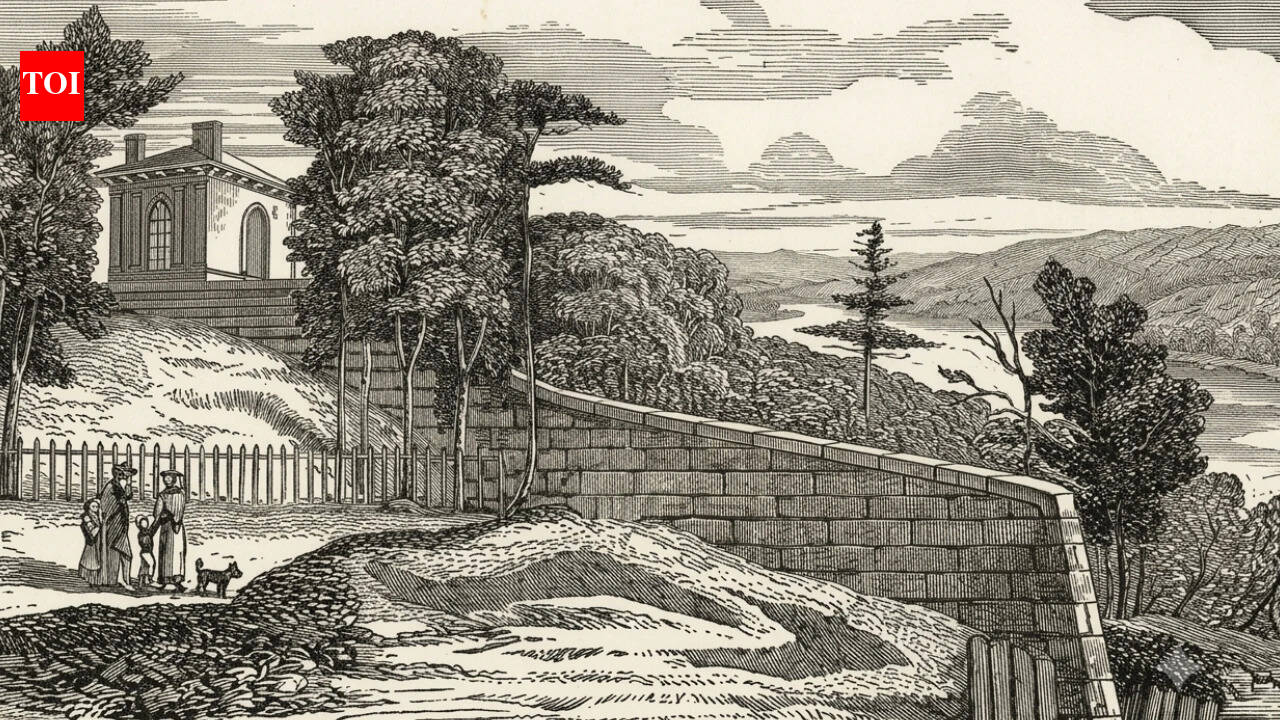
Historical illustrations show a structure of this kind forming part of the property's defences. asserted
structure → show → defences
The newly discovered building materials may therefore help researchers understand what stood at the site during the confrontation. uncertain
what → discover → confrontation
Although much of Harvie's Dyke was demolished, a surviving section of the wall can still be seen at Thorndyke Lane in Glasgow's East End. asserted
section → demolish → End
The excavation also revealed a rare 1791 trade token bearing the city's motto, "Let Glasgow Flourish". asserted
Glasgow → reveal → motto
How the dispute reached the House of Lords asserted
dispute → reach → Lords
The destruction of the wall in 1823 did not immediately restore public access to the river. asserted
destruction → restore → river
Harvie rebuilt the structures, and the disagreement developed into a prolonged legal dispute over whether residents had the right to continue using the established pathway. asserted
residents → rebuild → pathway
The case eventually reached the House of Lords, which ruled in 1828 in favour of those defending public access to the riverbank. asserted
which → reach → riverbank
The ruling recognised what became known as the "liberties of the banks of the Clyde". asserted
what → recognise → Clyde
The outcome was celebrated across Glasgow. asserted
outcome → celebrate → Glasgow
Songs, poems and commemorative medals marked the campaign and the success of those who had challenged the landowner. asserted
who → mark → landowner
Harvie's whisky was also boycotted, while the lengthy legal proceedings reportedly consumed much of his fortune. uncertain
proceedings → boycott → fortune
He eventually became bankrupt and died in poverty around a decade later. asserted
He → become → poverty
Despite its importance at the time, the confrontation gradually disappeared from popular memory. asserted
confrontation → disappear → memory
400 plus people take part in project The recent excavation was accompanied by public activities intended to bring the history of Harvie's Dyke to a wider audience. More than 400 people visited the excavation or participated in related walks, talks, tours and performances organised as part of the 2026 Glasgow Doors Open Days Festival. asserted
people → take → Festival
Professor Chris Whatley, who examined the dispute in his 2025 book Harvie's Dyke: The People, their Liberty and the Clyde, has described the confrontation as a victory for ordinary Glasgow residents against a landowner who refused to compromise. asserted
who → examine → landowner

💬Give feedback
🕘History 🎫Support