Supreme Court reverses ‘inappropriate’ ruling in FCC fight over favorable campaign ad rate rules

Read the original at Washington Examiner ↗
Cite

Birle, J. (2026, October 14). Supreme Court reverses ‘inappropriate’ ruling in FCC fight over favorable campaign ad rate rules. Washington Examiner. https://www.washingtonexaminer.com/news/supreme-court/4766308/supreme-court-reverses-ruling-fcc-fight-favorable-campaign-ad-rate-rules/

Dated from the outlet's own feed. Check the original for its byline.

Washington Examiner · collected 2026-10-14 · by Jack Birle

Quick Summary

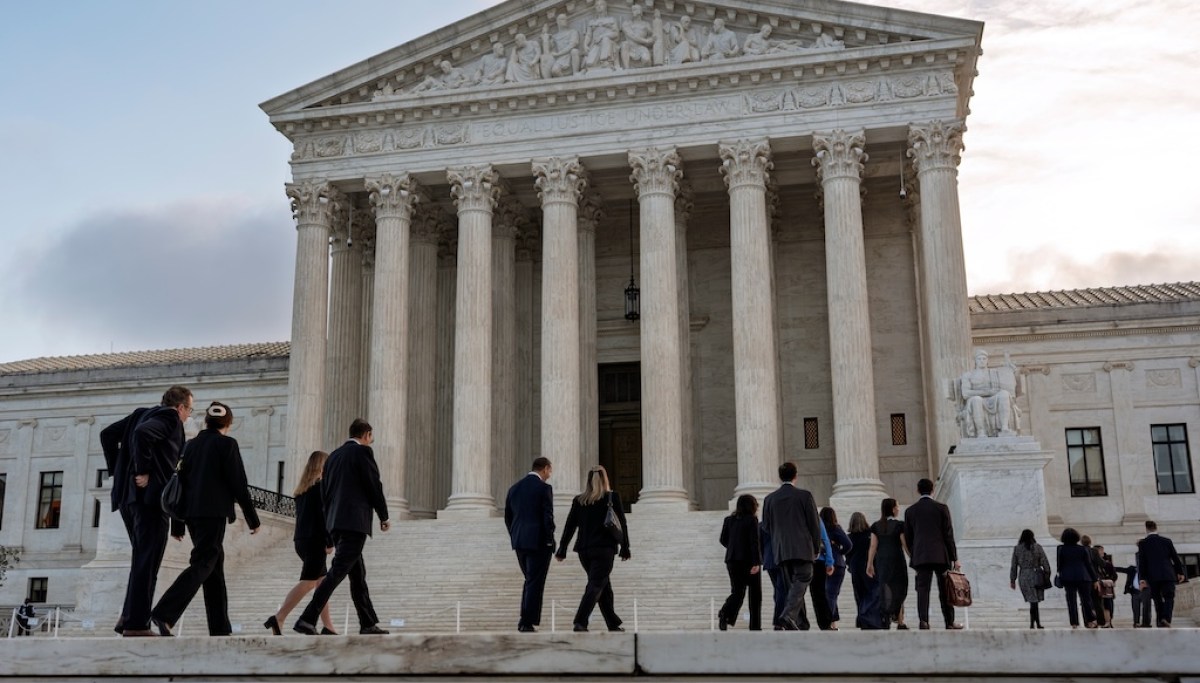
The Supreme Court ruled 7-2 to reverse a Fourth Circuit decision that would have compelled the Federal Communications Commission (FCC) to issue a final ruling on a revised rule allowing political parties and joint fundraising committees access to favorable television advertising rates. The case involved Democratic congressional candidates challenging the FCC’s revised rule, which Republicans support due to their funding advantages at the party level. Chief Justice John Roberts had temporarily halted the Fourth Circuit’s order while the Supreme Court considered the emergency petition; this recent ruling upholds the FCC's discretion in setting its own procedures and timeline for issuing such rulings.
Written locally by qwen2.5:14b on 2026-10-14, using this article's own text rather than the other coverage of the same event (that is the story summary below).

AI analysis runs on qwen2.5:14b, locally

Story summary

The Supreme Court ruled 7-2 on October 14, 2026, to halt a Fourth Circuit decision forcing the Federal Communications Commission (FCC) to finalize a rule allowing political parties and joint fundraising committees access to more favorable television advertising rates typically reserved for individual candidates. The case involved a dispute over whether these entities should be granted lower unit charges during election periods. Democrats challenging this revision argued it undermines their financial advantage, while Republicans supported the new rule due to their significant funding at the party level. Justices Sonia Sotomayor and Ketanji Brown Jackson dissented in favor of denying the administration’s appeal, but the majority decision solidified Republican candidates' edge in campaign advertising as midterms approached.

Written for “Supreme Court Rules On FCC Ad Rates” on 2026-10-14, grounded in this article and the 1 other(s) covering the same event.
Why this leaning score
This article does not take a side on a contested political question, so it has no leaning score. That is an answer rather than a gap: a match report or a rescue can be warmly or critically written without being left or right, and scoring it anyway is how approval of a subject gets recorded as a political position.
No political leaning scored for article 80555 · logged 2026-10-14

Story

📰 Supreme Court Rules On FCC Ad Rates
Politics · 2 article(s) covering the same event. See how they differ ↓

Compared with similar articles

This article reads unscored and hedges 6% of its claims. Each row says how that neighbour differs.
Daily Mail
⚖️ leaning not scored 🔴 5% hedged 1 of 19 📰 publisher trust 64
“The articles describe different legal actions related to campaign ads and FCC rules, not the same specific incident.”
Los Angeles Times
⚖️ Leans left 🔴 0% hedged 0 of 31 📰 publisher trust 95
“Both articles describe the Supreme Court's decision on October 14, 2026, that sided with political parties and joint fundraising committees in allowing them to access more favorable television advertisement rates.”
How this article was measured signals, leaning charts, publisher record, byline, topics and claims

Signals How these are calculated →

Claims extracted
17
sentences that state something as happening or true
Uncertain
6%
1 of 17 hedged ("reportedly", "may", "according to")
Leaning
not political
takes no side on a contested political question
Publisher signals
68/100
Washington Examiner's corrections and hedging, across everything collected from it. Not a measure of accuracy.
Outlets on this story
2
Politics
Same framing elsewhere
1
articles that frame the event the way this one does
Analyzed 2026-10-14 · how these are computed

How this is being covered How these are calculated →

Article leaning vs. publisher reliability
Source leaning vs. consistency

Publisher

Washington Examiner · 2747 article(s) · 5 correction(s) detected
Running correction rate · 5 correction(s)

Who wrote this

Jack Birle
24 article(s) here · 1 carrying a prediction
🔮 The high court ruled 7-2 to halt a ruling by the U.S. Court of Appeals for the 4th Circuit that would have forced the FCC to issue a final ruling on a revised rule allowing political parties and joint fundraising committees to access the same, more favorable television advertisement rates that are typically reserved for political candidates.
🔮 A lower federal court had ordered discovery into whether DOGE is subject to FOIA, but the Trump administration has argued the “sweeping, intrusive discovery” would effectively give the watchdog the documents it wants through the request before the court could even determine if it is subject to the public records request.
🔮 A female high school wrestler in Washington urged the Supreme Court earlier this week to intervene in a lawsuit over the state’s laws allowing biological men to compete in women’s sports, as the high court could issue another key ruling about transgender sports policies months after its landmark June decision.
🔮 Roberts granted an administrative stay of a ruling by the U.S. Court of Appeals for the 4th Circuit that would have forced the FCC to issue a final ruling on a revised rule allowing political parties and joint fundraising committees to access the more favorable television advertisement rates that are typically reserved for political candidates.
🔮 The Justice Department’s Civil Rights Division brought evidence to a federal grand jury earlier this week on charges of lying to Congress and will present additional evidence and witnesses later this month, according to a Thursday report from Punchbowl News.
🔮 The case is expected to have sweeping ramifications for similar lawsuits that climate activists and Democrat-led jurisdictions have attempted to bring against oil companies, either broadly allowing them to continue or barring them as a matter of federal law.
🔮 The case is expected to have sweeping ramifications for similar lawsuits that climate activists and Democrat-led jurisdictions have attempted to bring against oil companies, either broadly allowing them to continue or shutting them down as barred by federal law.
🔮 The Supreme Court returns for its new term on Monday, and oral arguments in a major case over the fate of a costly climate change lawsuit brought by Boulder County, Colorado, will kick off a term set to feature several blockbuster legal battles.
🔮 The Supreme Court announced Thursday that it will take up a challenge to the Trump administration’s policy of mandatory detention for illegal immigrants, setting up one of the biggest tests yet for President Donald Trump’s immigration agenda at the high court.
🔮 The panel of 11 U.S. circuit judges that heard Tuesday’s arguments grilled Shumate over his bid to quash Boasberg’s inquiry, questioning why Boasberg could not continue gathering information before determining if he wanted to make a criminal referral for contempt.
Also by Jack Birle
Nothing else under this byline is closely related to this article, so these are simply their most recent.
All 24 articles by Jack Birle →

Topics

Commission Democratic FCC The Supreme Court the 4th Circuit

Subjects

FCC ORG · 6× Commission ORG · 5× The Supreme Court ORG · 3× Democratic NORP · 2× the 4th Circuit ORG · 2× Republicans NORP · 1× The Fourth Circuit’s ORG · 1× the Federal Communications Commission ORG · 1× the Fourth Circuit ORG · 1× the U.S. Court of Appeals ORG · 1×

Narrative

The high court ruled 7-2 to halt a ruling by the U.S. Court of Appeals for the 4th Circuit that would have forced the FCC to issue a final ruling on a revised rule allowing political parties and joint fundraising committees to access the same, more favorable television advertisement rates that are typically reserved for political candidates.
framing: assertive · carried by 1 article(s) · first seen 2026-10-14
🔮 The high court ruled 7-2 to halt a ruling by the U.S. Court of Appeals for the 4th Circuit that would have forced the FCC to issue a final ruling on a revised rule allowing political parties and joint fundraising committees to access the same, more favorable television advertisement rates that are typically reserved for political candidates.

Claims (17 extracted, 1 hedged)

The Supreme Court handed the Federal Communications Commission a victory on Wednesday in a legal battle over who is entitled to favorable advertising rates in the closing weeks of the costly, hotly contested midterm elections. asserted
who → hand → elections
The high court ruled 7-2 to halt a ruling by the U.S. Court of Appeals for the 4th Circuit that would have forced the FCC to issue a final ruling on a revised rule allowing political parties and joint fundraising committees to access the same, more favorable television advertisement rates that are typically reserved for political candidates. asserted
that → rule → candidates
The Democratic congressional candidates who brought the challenge are hoping to strike down the revised rule due to their cash advantage with individual candidates, while Republicans have pushed for the new rule due to their significant cash advantage at the party level. asserted
Republicans → bring → level
“The Fourth Circuit’s decision to issue an ‘extraordinary’ writ was inappropriate under the circumstances. asserted
decision → issue → circumstances
The Communications Act requires the Commission to act on every application it receives, but it does not obligate the Commission to act within a particular timeframe. asserted
it → require → timeframe
The Commission may exercise its discretion to set its own procedures and schedule for resolving such applications,” the justices’ per curiam ruling said. uncertain
ruling → exercise → applications
“Undeterred, the Fourth Circuit issued a mandamus order requiring the Commission to issue a final decision on the candidates’ application just five months after it was filed and within just 48 hours—all while the Commission’s deliberation process was still ongoing. asserted
process → issue → hours
Our system of separation of powers does not allow the Judiciary to meddle in ‘the workings of a coordinate branch of the Government’ in this manner.” asserted
Judiciary → allow → manner
“To comply with the mandamus order, the FCC must triage its ongoing deliberation process and prepare a final order on an extremely expedited timeline. asserted
FCC → comply → timeline
That the mandamus order requires the FCC to abandon its deliberation process is itself an injury that cannot be remedied after the fact. asserted
that → require → fact
The FCC thus satisfies the stay factors,” the majority ruling said. asserted
ruling → satisfy → factors
Justices Sonia Sotomayor and Ketanji Brown Jackson dissented from the ruling but did not elaborate on their decision to dissent. asserted
Sotomayor → dissent → decision
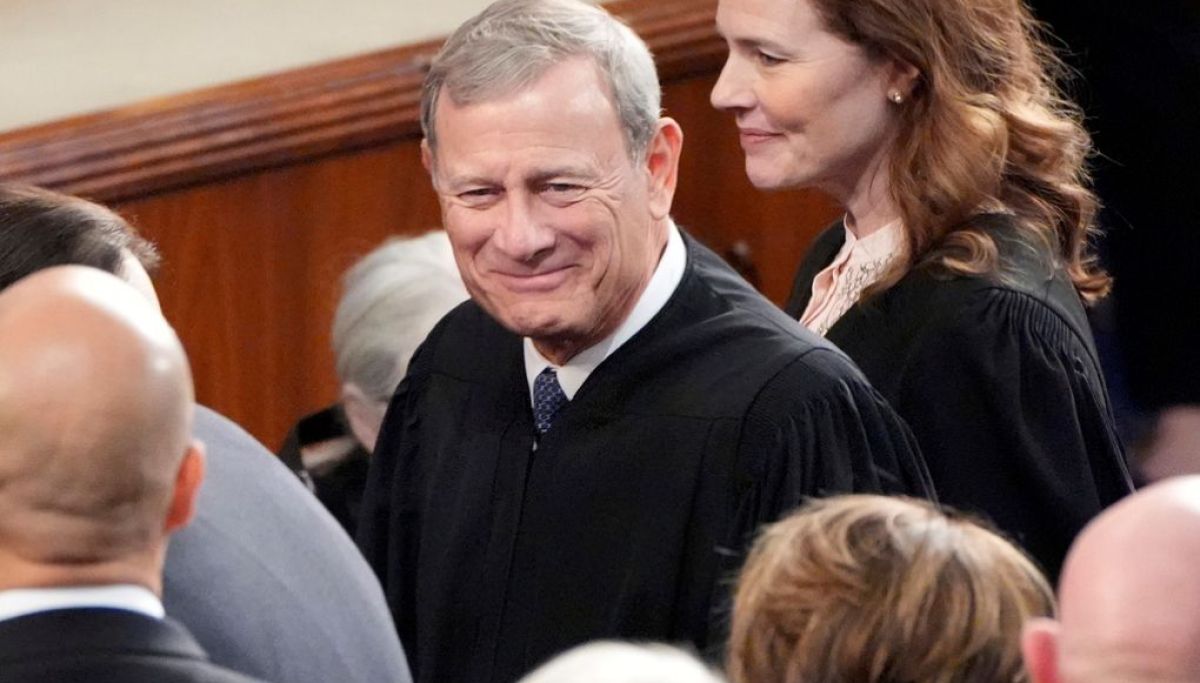
The 4th Circuit’s ruling was set to take effect last Friday, but Chief Justice John Roberts halted the lower court’s order temporarily last week while the full Supreme Court considered the emergency petition. asserted
Court → set → petition
The emergency petition was the second time the legal battle had made its way to the Supreme Court in as many months. asserted
battle → make → months
In September, the Supreme Court ruled 8-1 that the 4th Circuit had prematurely halted the rule, finding that the FCC must issue a decision on the Democratic candidates’ petition for review before the appeals court can get involved. asserted
court → rule → review
The battle over the FCC’s favorable ad rate rule is the latest election-related fight to make its way to the Supreme Court’s emergency docket in recent months. asserted
battle → relate → months
The other major fight on the emergency docket over the past several months has been regarding the Trump administration’s new mail ballot order, which the high court allowed to remain blocked through the midterm elections. asserted
court → regard → elections

💬Give feedback
🕘History 🎫Support