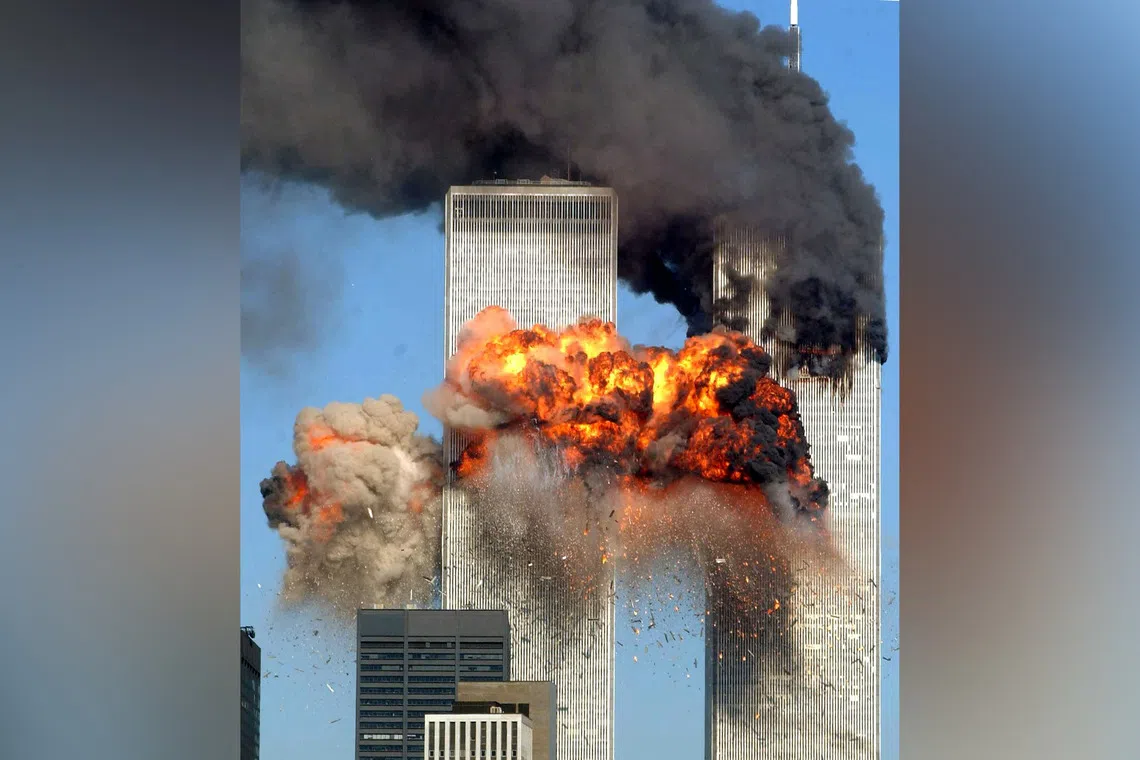
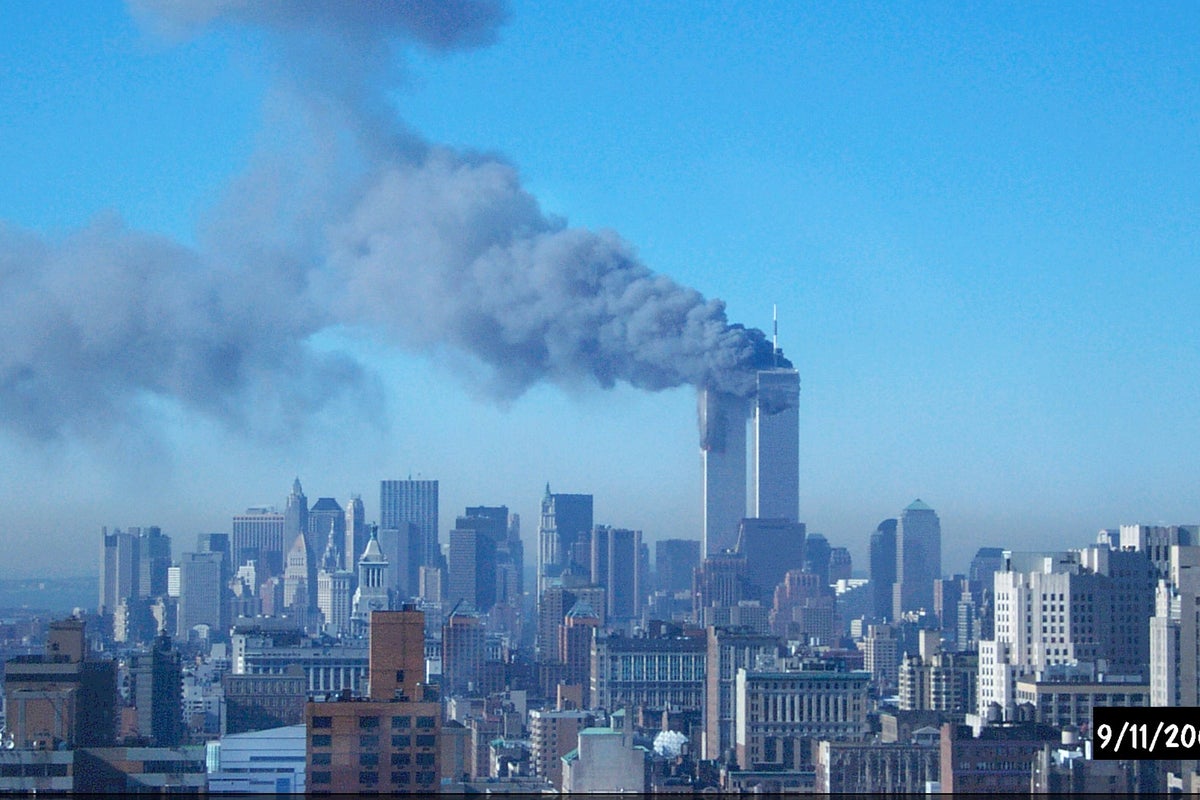
The first murder I witnessed was at age 3, on September 11, 2001.
asserted
I → witness → September
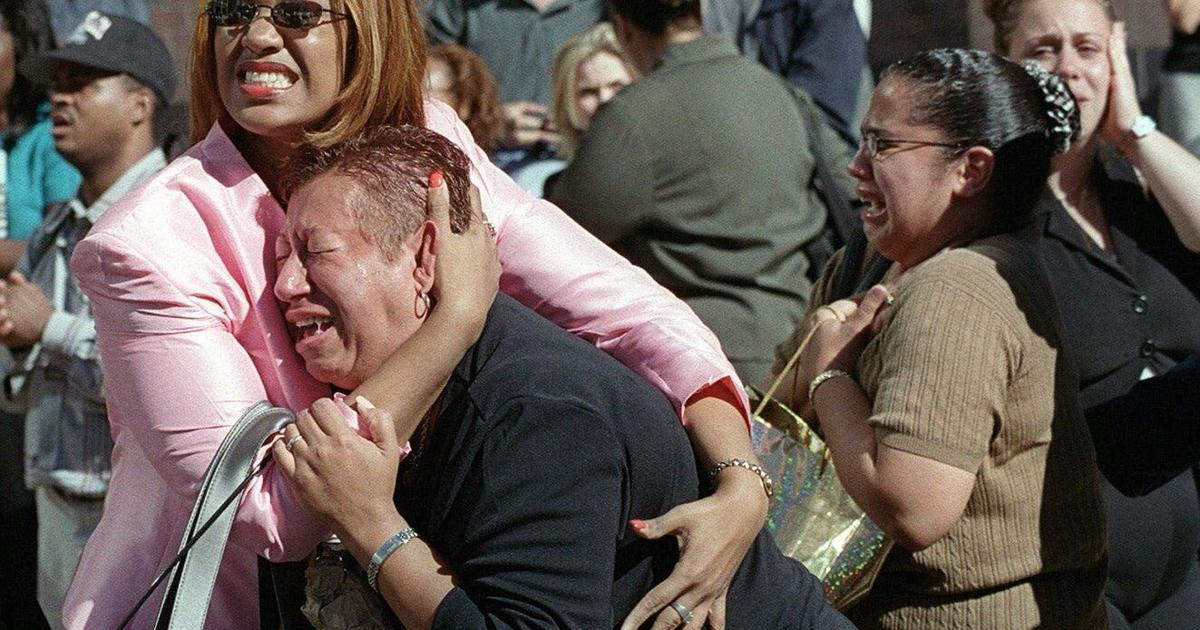
Although I was too young to fully grasp what the burning towers across the Hudson River meant, I soon came to understand that many families around us had lost someone forever.
asserted
families → grasp → someone
(I later learned that, like many other New Yorkers, my aunt barely missed becoming one of the victims by being late to work.)
asserted
aunt → learn → work
And I heard that a stranger from a strange land named "Osama bin Laden" was responsible.
asserted
stranger → hear → land
A little under a decade later, the U.S. government announced that it had killed bin Laden, to the jubilation of my middle school classmates.
asserted
it → announce → classmates
But the end of bin Laden did not bring the relief that Americans were hoping for.
asserted
Americans → bring → that
President Barack Obama was quick to warn the public that "his death does not mark the end of our effort."
asserted
death → warn → effort
In fact, the worst of the war on terror was yet to come.
asserted
worst → come → terror
The U.S. military continues to use Congress' authorization for war on Al Qaeda to go after a dizzying array of enemies.
asserted
military → continue → enemies
Despite several accused perpetrators sitting in the U.S. military prison at Guantánamo Bay, there has never been a "9/11 trial."
asserted
perpetrators → accuse → Bay
A quarter century later, 9/11 still feels like an open, festering wound in American society, with neither closure nor justice served.
asserted
closure → feel → society
Instead of treating the massacre of American civilians as a criminal matter, the U.S. government took it as an opportunity to radically expand its own power, imposing a permanent state of emergency at home and waging war to reshape the Middle East.
asserted
government → treat → East
Those wars were often against targets that had little or nothing to do with 9/11, requiring the government to confuse and misdirect the public.
asserted
that → have → public
For all the murderous sophistication of the plane hijackings, the network behind them was fairly easy to unmask and capture, partly because the U.S. government had already started to surveil Al Qaeda.
asserted
government → unmask → Qaeda
But the administration of George W. Bush did not hand them over to law enforcement professionals who could secure swift convictions.
uncertain
who → hand → convictions
Instead, the Bush administration experimented with new legal categories ("enemy combatants") to deprive the suspects of rights, a new infrastructure of secret prisons to hide them from view, and new torture tactics to test on them.
asserted
administration → experiment → them
The system scrambled innocence and guilt.
asserted
system → scramble → innocence
While bystanders like Murat Kurnaz and Mohamedou Ould Slahi were disappeared and permanently scarred through no fault of their own, admitted 9/11 conspirators like Khalid Sheikh Mohammed (KSM) have gone decades without being judged by a court.
asserted
conspirators → disappear → court
When Obama tried in 2011 to put KSM before a civilian court near the scene of his crime, a process that might give New Yorkers some closure, hawks in Congress blocked the trial.
uncertain
hawks → try → trial
Fifteen years later, the military tribunal trying KSM is still working to sort out genuine evidence from forced confessions under torture.
asserted
tribunal → try → torture
No wonder Obama's advisers worked from the assumption that they would kill, not capture, bin Laden.
asserted
they → work → Laden
The raid on bin Laden was being planned at the same time as the legal headache around the planned KSM trial was unfolding, which clearly weighed on U.S. planners.
asserted
which → plan → planners
Sure, torture might have been incompatible with the peacetime justice system, proponents argue, but it was a necessary emergency measure to find further attackers.
uncertain
it → argue → attackers
Congressional investigators with access to secret CIA records tested this argument and found that torture produced only "faulty intelligence."
asserted
torture → test → intelligence
Perhaps another explanation is needed.
asserted
explanation → need → ?
FBI agent Ali Soufan, who was one of the earliest agents sent to hunt Al Qaeda and later came out as an opponent of torture, writes that the CIA aimed to make a suspect "see his interrogator as a god who controls his suffering."
asserted
who → send → suffering
The Bush administration exhibited the same megalomaniacal attitude toward the entire world.
asserted
administration → exhibit → world
As an administration official infamously told The New York Times, "We're an empire now, and when we act, we create our own reality…and you, all of you, will be left to just study what we do."
asserted
we → tell → what
Although the mass murderers of Al Qaeda (and people unlucky enough to be mistaken for them) made for a politically palatable target, the appetite of the administration was bigger yet.
asserted
appetite → mistake → administration
Their real goal was, in the approving words of New York Times journalist Thomas Friedman, to tell the entire Muslim world to "suck on this."
asserted
goal → tell → this
Or, in a turn of phrase that the National Review attributed to neoconservative scholar Michael Ledeen, "Every ten years or so, the United States needs to pick up some small crappy little country and throw it against the wall, just to show the world we mean business."
asserted
we → attribute → business
The neoconservative moment was happy to provide a list of "crappy little countries" to pick on.
asserted
moment → provide → countries
The Project for the New American Century was already pushing to finish off Iraqi dictator Saddam Hussein, whom the U.S. had defeated and isolated in the Persian Gulf War of 1991.
asserted
U.S. → push → 1991
A Clean Break, a policy paper written by American neoconservatives for Israeli Prime Minister Benjamin Netanyahu in 1999, suggested pairing Iraqi regime change with a containment campaign against Iran and Syria.
uncertain
Break → write → Iran
Members of the Project for the New American Century and authors of A Clean Break ended up staffing the Bush administration.
asserted
Members → end → administration
There was a wrinkle: None of the neoconservatives' targets actually had anything to do with 9/11.
asserted
None → be → 9/11
So they just lied to the public.
asserted
they → lie → public
U.S. officials spread conspiracy theories about Iraq maintaining ties to Al Qaeda while hiding "weapons of mass destruction."
asserted
Iraq → spread → destruction
National Security Adviser Condoleezza Rice implied that the next 9/11 would come in the form of a "mushroom cloud."
asserted
9/11 → imply → cloud
The greatest conspiracy theory of them all, cooked up by speechwriter David Frum, posited that a global "axis of evil" was plotting to build nuclear weapons and give them to terrorists.
asserted
axis → cook → terrorists
…and 47 more, not listed.
 The Aporia