- Published
Saudi Arabia is facing a difficult dilemma.
asserted
Arabia → publish → dilemma
Ever since the US and Israel launched their war on Iran on 28 February, the Saudis have largely tried to stay out of it.
asserted
Saudis → launch → it
But now, after being attacked from three sides, the Saudis have had enough.
asserted
Saudis → attack → enough
This week, they carried out joint strikes with the US on Iranian proxy militias in Iraq who they believe have been launching drones at the Kingdom.
asserted
they → carry → Kingdom
For Saudi Arabia the dilemma now is whether to keep on hitting back as a deterrent, or whether to try to de-escalate the situation, perhaps by paying off some of their adversaries.
asserted
dilemma → keep → adversaries
So who is attacking who and why?
asserted
who → attack → who
There are broadly two sides in the conflict that has been consuming the Gulf and other parts of the Middle East for five months now.
asserted
that → be → months
Allied to them are the Houthis in Yemen, a tribal group who took over much of the country in 2014.
asserted
who → ally → 2014
Also backed by Iran are the Popular Mobilisation Forces in Iraq, the paramilitary group that has allegedly carried out 30 drone strikes on Saudi Arabia and has now been attacked in return.
Then there is Hezbollah in Lebanon, still a potent force but one that is currently lying low.
uncertain
that → back → Lebanon
On the opposite side of this conflict is the US with its immensely powerful Central Command (Centcom) forces plus - to varying degrees - the Gulf Arab states and Jordan.
asserted
US → vary → degrees
Israel remains a close US ally but is currently not an active participant in this war.
asserted
Israel → remain → war
Iran has most recently been concentrating its drone and missile attacks on Jordan, Kuwait and Bahrain, as well as targeting any commercial shipping that tries to slip through the Strait of Hormuz while avoiding Iran's new rules and routing.
asserted
that → concentrate → rules
The addition of Iraqi militias and the Houthis in Yemen is a relatively new phenomenon and it shows how - without a lasting peace deal between the US and Iran - the region risks becoming ever more embroiled in a widening conflict.
asserted
region → show → conflict
There are a number of reasons why Saudi Arabia is trying not to get sucked into a full-scale conflict.
asserted
Arabia → be → conflict
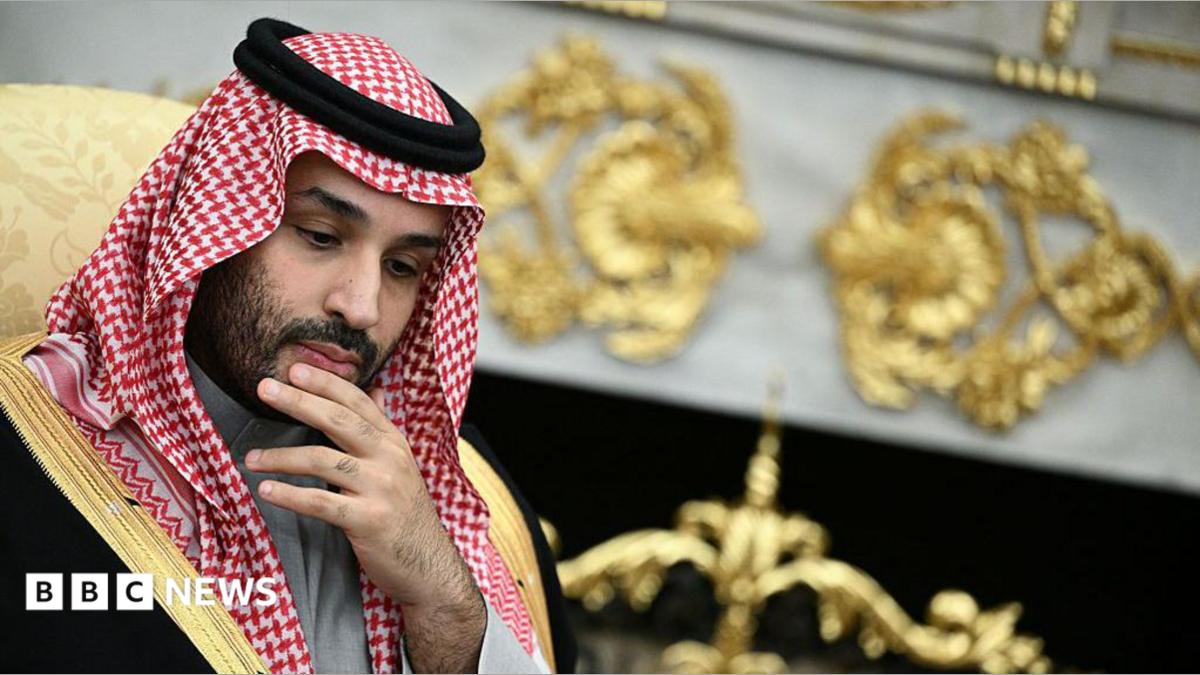
Its de facto ruler, the relatively young Crown Prince Mohammed Bin Salman, has embarked the country on a course known as "Vision 2030".
asserted
ruler → embark → Vision
His aim is to diversify the Kingdom away from its dependence on oil revenues and create vibrant, modern, domestic industries that will provide meaningful jobs for the hundreds of thousands of graduates and school leavers pouring onto the job market each year.
asserted
that → diversify → market
Part of Vision 2030 involves attracting foreign investment.
asserted
Part → involve → investment
Part of it also involves building things like data centres that are vulnerable to attack.
asserted
that → involve → attack
This is not going to work if Saudi Arabia finds itself under an enduring, long-term threat from drones fired across its southern border by the Houthis in Yemen or ballistic missiles fired directly by Iran.
asserted
Arabia → go → Iran
Back in September 2019, the Saudis suffered an unpleasant shock.
asserted
Saudis → suffer → shock
With relations with Iran in a poor state, the Saudis woke up to find that an Iranian proxy militia in Iraq had launched a fleet of drones at two of its most vital oil facilities, at Abqaiq and Khurais.
asserted
militia → wake → Abqaiq
At the time there was a suggestion that the attack had come from the Houthis in Yemen but I visited the site straight afterwards and I could clearly see the holes in the superstructures all facing northwards.
uncertain
I → be → superstructures
That attack knocked half of Saudi oil exports offline for several days and it was a wake-up call to Riyadh as to just how vulnerable its critical national infrastructure is to attack.
asserted
infrastructure → knock → attack
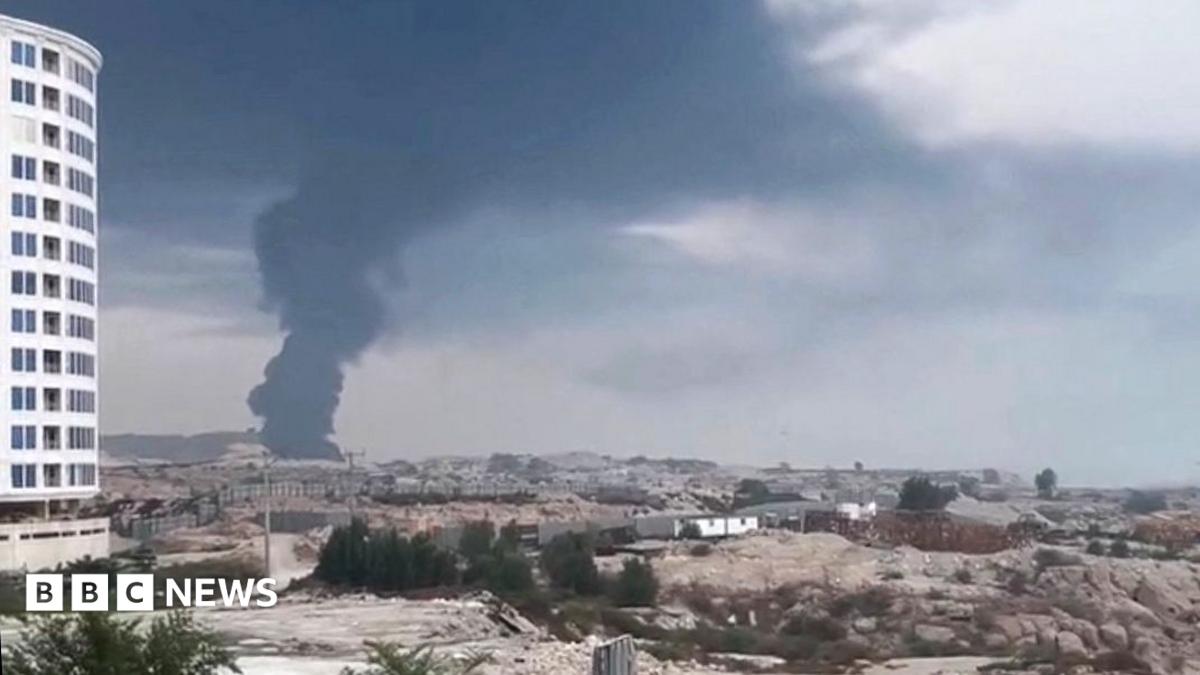
On Monday, satellite images showed the Abqaiq oil facility was struck by drones launched once again by Iranian proxy militias in Iraq.
asserted
facility → show → Iraq
Iran retaliated against US and Israeli attacks in February by effectively closing off the Strait of Hormuz, a critical shipping channel between Iran and the Gulf through which 20% of the world's oil and liquified natural gas travelled.
asserted
% → retaliate → oil
In response, the Saudis pumped as much oil as they could – around five million barrels per day - through their east-west pipeline to their export terminal on the Red Sea, on their opposite coast, at Yanbu.
uncertain
they → pump → Yanbu
From there it was loaded onto tankers that headed south, out into the Arabian Sea and off to markets in Asia.
asserted
that → load → Asia
But on 13 July, the Saudis bombed Sanaa airport just outside the Yemeni capital.
asserted
Saudis → bomb → capital
The strike was claimed by Yemen's Saudi-supported government, which said it wanted to prevent an Iranian plane from landing.
asserted
it → claim → landing
In retaliation, the Houthis attacked regional Saudi airports at Abha and Jizan.
asserted
Houthis → attack → Abha
More worryingly for Riyadh, the Houthis have begun attacking Saudi shipping in the Red Sea, making it extremely dangerous for ships to pass through the narrow Bab El Mandeb strait at the southern end of the Red Sea.
asserted
ships → begin → Sea
That in turn chokes off Saudi oil exports to Asia.
asserted
That → choke → Asia
Saudi Arabia spent seven years trying to bomb the Houthis into submission and failed.
asserted
Arabia → spend → submission
The war that raged across Yemen was one of the worst humanitarian disasters of our time and its effects are still being felt.
asserted
effects → rag → time
In 2022, Saudi Arabia agreed to an uneasy truce with the Houthis and there were reports of payoffs, but now the richest country in the region, Saudi Arabia, is once more facing the threat of drone and missile attacks from its southern neighbour at the same time as attacks from Iraq to the north.
asserted
country → agree → north
None of this was envisaged in the plans for Vision 2030.
asserted
None → envisage → Vision
 The Aporia