Don’t blame Ukraine: Prices go up and up, thanks to Trump’s wars

Read the original at The Sydney Morning Herald ↗
The Sydney Morning Herald · collected 2026-10-13 · by Stephen Bartholomeusz

Quick Summary

The article criticizes former President Donald Trump for his role in escalating inflation rates in the U.S., particularly through his decision to go to war with Iran, which led to significant increases in oil and fuel costs. It also highlights how Trump's tariffs have further contributed to rising consumer prices, as a study by the New York Fed shows that about 90% of these tariffs were passed on to consumers and businesses, leading to higher import prices and indirect price hikes for domestic goods. The article emphasizes that these factors are likely to influence the Federal Reserve’s decision-making regarding interest rates in light of upcoming midterm elections where inflation is a key issue.
Written locally by qwen2.5:14b on 2026-10-13, using this article's own text rather than the other coverage of the same event (that is the story summary below).

AI analysis runs on qwen2.5:14b, locally

Story summary

Donald Trump's trade and military policies, including his tariffs and Middle East conflicts, have significantly contributed to rising inflation in the United States. The latest expected data for September shows that headline inflation might rise from 3.4% in August to 3.6% or 3.7%, with core inflation either steady at 2.5% or slightly declining to 2.4%. This disparity highlights the impact of higher energy prices, particularly gasoline and diesel, which surged following Trump's actions against Iran. Oil prices rose from around $US70 a barrel before February attacks by the US and Israel on Iran to over $US106 a barrel today. These economic pressures are among the key issues ahead of the upcoming midterm elections.

Written for “Trump Wars Inflation” on 2026-10-13, grounded in this article and the 0 other(s) covering the same event.
Why this leaning score
The article's own words the score was based on. Each is quoted verbatim and was checked against the article text before being stored, so you can find it in the original.
Reading Leans left (beta estimate) Confidence high
Leaning: leans left for article 75476 (high confidence, 7 verified quotes) · logged 2026-10-13

Signals How these are calculated →

Claims extracted
46
claim-shaped sentences
Uncertain
9%
4 of 46 hedged
Leaning
Leans left
of the writing, not the subject · beta estimate
Correction & hedging signals
60.9
corrections and hedging in what we collected; not a measure of accuracy
Outlets on this story
1
Politics
Narrative spread
1
articles carrying this framing
Analyzed 2026-10-13 · how these are computed

Story

📰 Trump Wars Inflation
Politics · 1 article(s) covering the same event.

How this is being covered How these are calculated →

Article leaning vs. publisher reliability
Source leaning vs. consistency

Compared with similar articles

This article reads leans left and hedges 9% of its claims. Each row says how that neighbour differs.
Washington Examiner
⚖️ Leans left 🔴 2% hedged 1 of 49 📰 publisher trust 68
“The articles discuss different aspects of rising diesel fuel costs and their causes, with Article A focusing on the Russia-Ukraine war's contribution and Article B criticizing Trump for blaming Ukraine.”
Washington Examiner
⚖️ Leans strongly right further right than this 🔴 8% hedged 3 of 38 📰 publisher trust 68
“The articles discuss different aspects of Trump's impact on inflation and his attempts to influence public perception, but do not describe the same specific incident or time frame.”
ABC News (AU)
⚖️ Leans left 🔴 7% hedged 3 of 41 📰 publisher trust 61
“The articles discuss different aspects of Trump's stance on Ukraine and Russia, with distinct focuses and timelines.”
The Guardian
⚖️ leaning not scored 🔴 18% hedged 4 of 22 📰 publisher trust 60
“The articles discuss related topics regarding Trump's deal with Putin but do not describe the exact same incident or occurrence.”
Toronto Star
⚖️ Leans left 🔴 0% hedged 0 of 5 📰 publisher trust 63
“The articles discuss different aspects of economic conditions and events, with Article A providing an overview of various reports due in a week while Article B focuses on blaming Trump for inflation issues.”
Toronto Star
⚖️ leaning not scored 🔴 22% hedged 6 of 27 📰 publisher trust 63
“The articles discuss related issues but do not describe the same specific incident; Article A covers the announcement of a deal, while Article B comments on its implications and upcoming inflation data.”
The Hindu
⚖️ leaning not scored 🔴 6% hedged 3 of 47 📰 publisher trust 96
“The articles discuss related topics but describe different aspects and times of events, with Article A focusing on Trump's comments about Ukraine needing a new president, while Article B critiques Trump's deal with Russia for diesel.”

Publisher

The Sydney Morning Herald · 3406 article(s) · 10 correction(s) detected
Running correction rate · 10 correction(s)
2026-10-12
Prisons boss won’t say who asked for human rights law carve-out
2026-10-09
Sam Wood held in high-security prison after failed bid for freedom
2026-10-09
Sam Wood moved to correctional centre following failed bail application
2026-10-09
P-plater accused of horror Newcastle car crash bailed to family home in Sydney’s eastern suburbs
2026-10-08
Snowtown murderer seen leaving correctional facility
2026-10-08
Oliver Curtis’ transformation from jailbird to corporate kingpin has gone awry
2026-10-03
Tennessee’s prisons chief to resign after failed execution of Christa Pike
2026-09-28
Inside the prison left abandoned for years – now set to reopen as DV offenders weigh on system
2026-09-19
What will happen to your most cherished possessions when you die? You don’t want to know
2026-09-18
What will happen to your most cherished possessions when you die? You don’t want to know

Who wrote this

Stephen Bartholomeusz
13 article(s) here · 1 carrying a prediction
🔮 When the latest inflation data is released on Wednesday morning in the US, it is expected to show that the inflation rate in the world’s largest economy rose again in September, adding to the cost-of-living pressures that are the key issue in the midterms.
🔮 Donald Trump announced a deal last Friday under which Russia will supply the US and the global market with diesel that Russia may not have and America doesn’t need.
🔮 A delegation of European Union trade negotiators is in Beijing, hoping to avert what could be a full-scale trade confrontation with China.
🔮 The equal weight index has risen 10.8 per cent this year and has actually fallen almost 3 per cent in the past month – the market might be at record levels, but its performance is very narrowly based. Indeed, only four stocks – Nvidia, Apple, Micron and AMD – account for roughly half the S&P 500’s rise this year.
🔮 Inflation rates are too high, growth rates are weak and there’s not the political will or ability to address the threat of a self-fuelling cycle of escalating debts and interest costs.
🔮 Will his gambit work?
2026-10-05 · assertive framing · Trump’s bluff is too late to save him
🔮 The “forced labour” tariffs are a transparent attempt to recreate the global tariff regime that the Court of International Trade ruled illegal last May; a judgment that the US Supreme Court confirmed in February.
🔮 While the leading frontier AI lab says it will have its second successive quarter of profitability, at an operating level, in the September quarter, last year it lost more than $US8 billion at an operating level – up from $US2.98 billion in 2024 – while reporting a net loss of $US42 billion.
🔮 With the US flirting with stagflation last year – low growth but relatively high levels of inflation – and unsettling discussions about how the Trump administration might respond to public finances that are spiralling out of control, gold’s “safe haven” status was another factor in the price surge.
🔮 The sudden spike in US bond yields over the past week to near 20-year highs raises a multi-trillion dollar question: Will those higher debt returns crash the sharemarket, and in the process derail the boom in artificial intelligence-related investment?
Also by Stephen Bartholomeusz
Nothing else under this byline is closely related to this article, so these are simply their most recent.
All 13 articles by Stephen Bartholomeusz →

Topics

Fed Iran Israel Ukraine the Federal Reserve Bank’s

Subjects

Trump PERSON · 6× Fed ORG · 3× Iran GPE · 2× Donald Trump’s PERSON · 1× Israel GPE · 1× Open Market Committee ORG · 1× The New York Fed ORG · 1× Ukraine GPE · 1× Vladimir Putin PERSON · 1× the Federal Reserve Bank’s ORG · 1×

Narrative

Most of Trump’s baseline tariffs on the rest of the world were implemented, with delays, in the middle of last year. Having been deemed illegal by the Supreme Court in February, those “Liberation Day” tariffs were quickly replaced by interim tariffs with a uniform rate of 10 per cent, until they were in turn displaced by the “forced labour” tariffs of either 10 per cent or 12.5 per cent on 60 economies that Trump announced in July this year.
framing: assertive · carried by 1 article(s) · first seen 2026-10-13
🔮 When the latest inflation data is released on Wednesday morning in the US, it is expected to show that the inflation rate in the world’s largest economy rose again in September, adding to the cost-of-living pressures that are the key issue in the midterms.
2026-10-13 · The Sydney Morning Herald
Don’t blame Ukraine: Prices go up and up, thanks to Trump’s wars · assertive framing

Claims (46 extracted, 4 hedged)

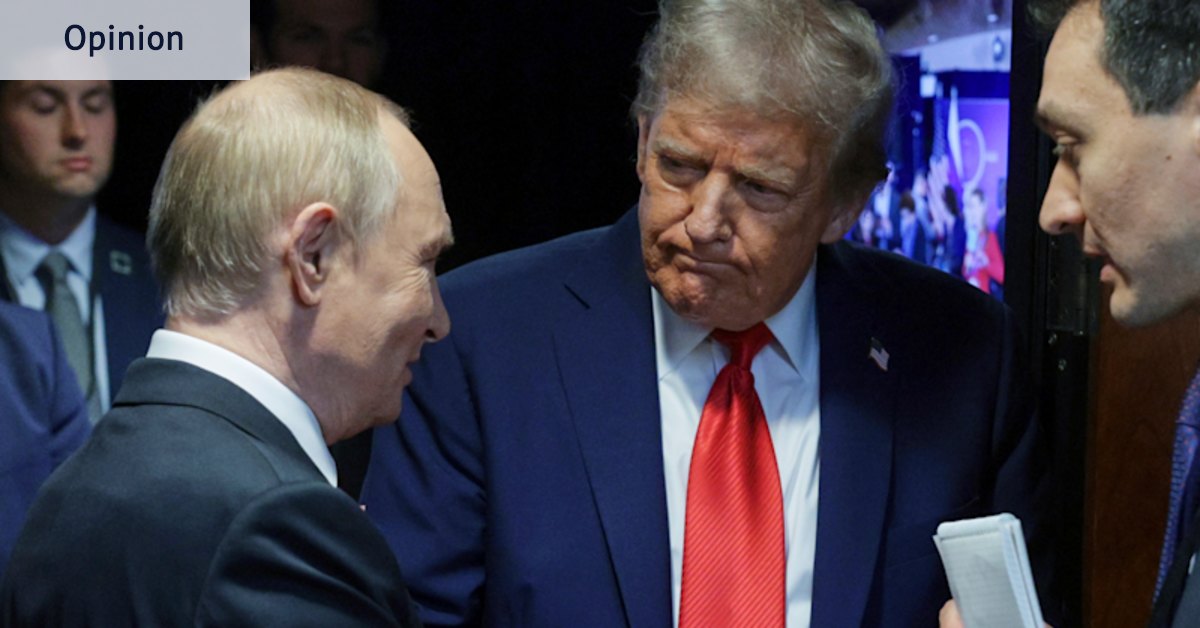
Donald Trump’s “diesel-for-sanctions” deal with Vladimir Putin is an indication of how desperate he has become in the lead-up to next month’s midterm elections. asserted
he → become → elections
Rather than seeking to shift blame for his polling woes to Ukraine, he should look in the mirror. asserted
he → seek → mirror
When the latest inflation data is released on Wednesday morning in the US, it is expected to show that the inflation rate in the world’s largest economy rose again in September, adding to the cost-of-living pressures that are the key issue in the midterms. asserted
that → release → midterms
The consensus among US economists is that headline inflation will have risen from August’s 3.4 per cent to 3.6 per cent or 3.7 per cent, with “core” inflation (excluding energy and food costs) either steady or edging up from 2.5 per cent to 2.4 per cent. asserted
inflation → rise → cent
That disparity between headline and core rates points to the major factor in the persistently high US inflation rate -- the surge in gasoline and diesel prices that has occurred as a result of Trump’s decision to go to war in the Middle East. asserted
that → point → East
The day before the February attacks by the US and Israel on Iran, oil was trading at $US70 a barrel. asserted
oil → trade → US70
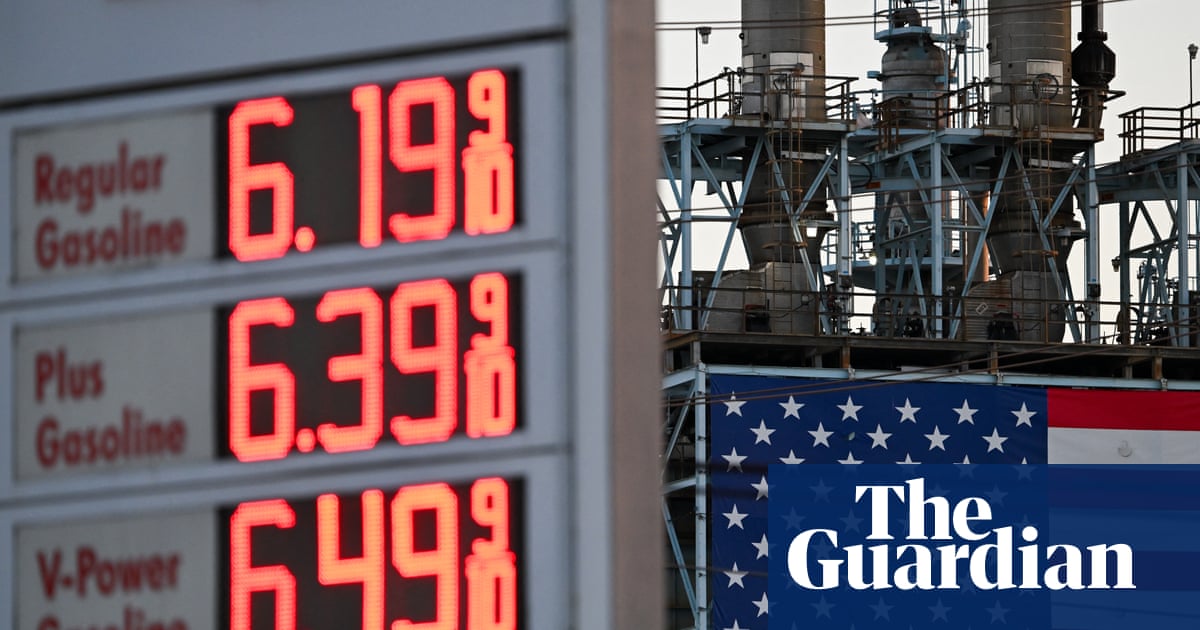
US gasoline prices average $US2.28 a gallon on the eve of the attacks. asserted
prices → average → attacks
Today, they average $US4.35 a gallon. asserted
they → average → US4.35
Diesel cost, on average, about $3.80 a gallon on February 27. asserted
Diesel → cost → February
As has often been the case with Trump, his ego and impulses – in this case the desire to bend the Fed to his will, or in the war with Iran, his expectations of an easy and glorious victory – undermine his ambitions. asserted
ego → bend → ambitions
Those increased costs not only feed directly into households’ costs of living, but they also, over time, bleed into the wider economy as the delayed impact on transport costs and agricultural production flows through and impacts consumer prices and corporate margins. asserted
impact → increase → prices
When the members of the Federal Reserve Bank’s Open Market Committee meet in a fortnight to decide whether to raise their policy rate for a second successive meeting, however, they won’t just be considering the direct and indirect costs of energy. asserted
they → meet → energy
The focus on energy costs has tended to relegate the other major Trump-inspired source of inflation to the sidelines of discussion - but, as with fuel prices, the impact of his tariffs is still working its way through the US economy. asserted
impact → tend → economy
The New York Fed produced a research paper last year that concluded that about 90 per cent of Trump’s 2025 tariffs were passed through to US import prices and were absorbed by domestic businesses and consumers. asserted
cent → produce → businesses
Last week, the Fed researchers produced an update. asserted
researchers → produce → update
They found that for every percentage point increase in average tariffs, consumer prices increased by about a quarter of a per cent after one year. asserted
prices → find → year
About two-thirds of the effect arose because tariffs raised the prices of imported goods, while the rest arose indirectly as US companies paid more for imported parts and materials and because US producers raised their prices when competing imports cost more. asserted
imports → arise → more
A good illustration of the second round effects of the tariffs is steel, where Trump imposed a 50 per cent tariff on imports in February last year. asserted
Trump → impose → February
US steel prices have risen faster than anywhere else in the world, with hot-rolled coil prices up more than half. asserted
prices → rise → world
That’s great and immensely profitable for the handful of US domestic steel mills, but not so great for downstream manufacturers and, ultimately, US consumers. asserted
That → ’ → manufacturers
The Fed analysis found that the direct effect of higher import prices flowed through quite quickly. asserted
effect → find → prices
About half the increased costs were in place after three months and all of them by six months, with retailers taking a few months to lift their prices. asserted
retailers → increase → prices
The indirect effects – the increased input costs to US manufacturers – took longer to surface. asserted
effects → increase → manufacturers
In the first six months, US producer prices rose slightly, but the response then builds and roughly doubles over the next six months, they said. asserted
they → rise → months
Most of Trump’s baseline tariffs on the rest of the world were implemented, with delays, in the middle of last year. Having been deemed illegal by the Supreme Court in February, those “Liberation Day” tariffs were quickly replaced by interim tariffs with a uniform rate of 10 per cent, until they were in turn displaced by the “forced labour” tariffs of either 10 per cent or 12.5 per cent on 60 economies that Trump announced in July this year. asserted
Trump → implement → July
There are, of course, other sector-specific tariffs that Trump imposed last year on “national security” and other grounds, like those on steel and aluminium, but the significant point here is that the tariffs have been a moving feast and that the delay before their full impact on end-prices is felt means they are still feeding into the inflation rate. asserted
they → be → rate
The Fed researchers said that, in a scenario where a 10 per cent tariff is imposed on all imports (which is the base case for Trump’s forced labour tariffs) consumer goods prices would be 2.6 per cent higher after 12 months, or about a quarter of the tariff increase. asserted
prices → say → increase
Thus, the impact of both higher energy costs as a result of the war on Iran and higher consumer goods prices due to Trump’s tariffs is still flowing through the US economy. asserted
impact → flow → economy
The inflation rate also isn’t being helped by the massive investments being made in artificial intelligence and its flow-on effects to the prices of capital, semiconductors, construction costs and electricity and water. asserted
rate → help → capital
AI companies are spending about $US750 billion ($1.1 trillion) this year and are forecast to spend at least another $US2 trillion (if the boom in the sector lasts) over the next two years. asserted
boom → spend → years
In the long run, AI may (or may not) increase productivity and decrease inflation rates but, in the near term, the frenzy adds to inflation. uncertain
frenzy → increase → inflation
Trump’s deal with Putin will have a minor impact on US diesel prices, if any. asserted
deal → have → prices
The volumes of diesel are too small to have a material effect. asserted
volumes → have → effect
If the war in Iran ended tomorrow, it would have a much greater impact, even though it might take months and, in some instances years, for the damage done to infrastructure in the Middle East and confidence in passing through the Strait of Hormuz to be fully remedied and supplies of oil and refined products to be fully restored. uncertain
supplies → end → oil
Similarly, if Trump stopped announcing new tariffs, or better still withdrew all those he’s put in place or has announced, the inflation rate would subside and probably be very close to the Fed’s 2 per cent target. asserted
rate → stop → target
Unless there is an increase in the inflation rate above expectations this week, the Fed is likely to sit on its hands later this month rather that raise rates again days before the midterms. asserted
Fed → be → midterms
Market expectations have fallen back from a near-certainty of another 25 basis point increase following Fed chairman Kevin Warsh’s hawkish commentary after last month’s meeting. asserted
expectations → fall → meeting
They are now pricing in a less than 20 per cent chance that the Fed will move again this month. asserted
Fed → price → chance
A rate rise is fully priced in for December. asserted
rise → price → December
In any event, a cut in interest rates to the 1 per cent or less that Trump consistently calls for aren’t going to happen while the inflation rate remains pumped up by his war and tariffs – unless he can find another solution. And he thinks he has one. asserted
he → call → one
…and 6 more, not listed.

💬Give feedback
🕘History 🎫Support