The Sydney Morning Herald
· collected 2026-10-06 · by Stephen Bartholomeusz
Bond investors have been searching for weak points in a debt-laden global economy.
asserted
investors → search → economy
But it’s France, which has now become the flashpoint for a European and, perhaps, global crisis.
asserted
which → ’ → crisis
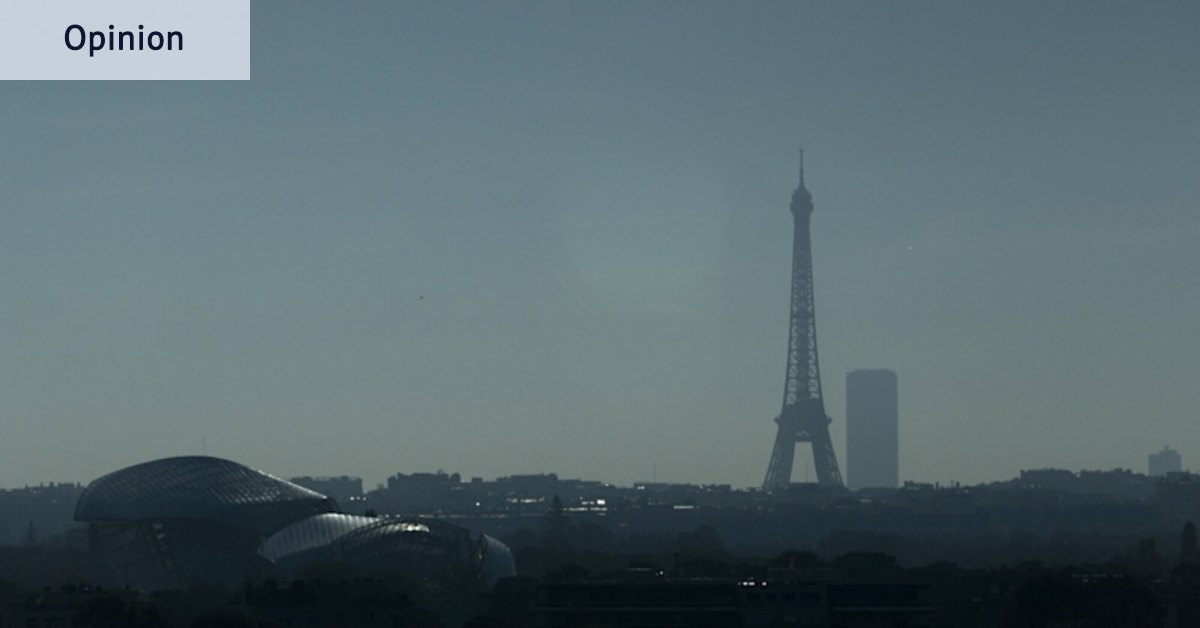
France is grappling with a major debt crisis, with the yields on its bonds soaring.
asserted
yields → grapple → bonds
The spread between the yields on France’s bonds relative to Germany’s, which are regarded as the eurozone’s safe haven, have blown out to levels not seen since the region’s debt crisis a decade and a half ago.
asserted
which → regard → crisis
So precarious has France’s perceived position become that investors have coined a new term - “FROGS”, the acronym for French Oversized Government and Social Security – to describe the crisis.
asserted
investors → perceive → crisis
For much of this century, the focus on eurozone debt was on the countries on its periphery, the so-called “PIIGS” - Portugal, Italy, Ireland, Greece and Spain.
asserted
focus → call → periphery
But now even Italy and Greece’s bonds, long seen as the point of most vulnerability in the region, trade at lower yields than France’s.
asserted
bonds → see → France
The yield on France’s 10-year government debt touched 4.96 per cent last week, before edging back to 4.85 per cent.
asserted
yield → touch → cent
While lower than the equivalent US bond yield of 5.31 per cent, it compares with German bund yields of 3.49 per cent, Italy’s 4.65 per cent and Greece’s 4.49 per cent.
asserted
it → compare → cent
The spread between French and German 10-year yields has widened from 71 basis points at the start of the year to 136 basis points.
asserted
spread → widen → points
France’s prime minister warned last week that ‘reality is catching up with us.’
asserted
reality → warn → us
Some of the factors impacting the French debt are similar to those that have driven yields up in the US, Japan, the UK and elsewhere, including Australia, where the yield on 10-year bonds is 5.4 per cent, having started this year at 4.8 per cent.
asserted
yield → impact → cent
There’s too much global government debt, with swelling budget deficits adding to the pile.
asserted
deficits → ’ → pile
Inflation rates are too high, growth rates are weak and there’s not the political will or ability to address the threat of a self-fuelling cycle of escalating debts and interest costs.
asserted
rates → ’ → debts
The US has been the epicentre of the implosion in bond prices (as prices fall the yields rise), with its $US40 trillion-plus ($57 trillion-plus) mountain of public debt, a gross debt-to-GDP ratio of more than 120 per cent, a budget deficit of almost 6 per cent of GDP, inflation of 3.4 per cent and erratic governance causing the rising tide of US yields.
asserted
yields → fall → yields
It has gross government debt of about €3.6 trillion ($5.8 trillion), a debt-to-GDP ratio of 119 per cent, a budget deficit of about 5.4 per cent and an inflation rate of 3 per cent.
asserted
It → have → cent
It also has, however, a parliament that is almost unworkable, dominated by its extreme edges.
asserted
that → have → edges
It doesn’t have the luxury that the US has of issuing the world’s reserve currency or with markets that, despite the profligacy of the Trump administration, is still the world’s financial haven in times of stress.
asserted
that → have → stress
With a presidential election next April -- where the Left wants more, not less, social spending and the far right, while talking about fiscal restraint, has opposed most measures that would deliver it and has yet to enunciate a plan for reducing the deficit – it is little wonder than investors, particular foreign investors, are shifting their funds to Germany, Switzerland or, in the case of the Japanese, which are large holders of French debt, repatriating them.
asserted
which → want → them
France’s prime minister, referring to the big surge in the government’s cost of borrowings and its impact on fiscal stability, warned last week that “reality is catching up with us.”
asserted
reality → refer → us
The government has presented a draft budget that would cut spending by €54 billion next year via a mix of spending cuts and tax increases, which would – if it could get through parliament – reduce the deficit to 5 per cent of GDP, which has been the target for this year.
uncertain
which → present → year
Without change, the deficit would be headed towards 7 per cent by the end of the decade.
asserted
deficit → head → decade
The proposed budget has already triggered waves of street protests by unions, public servants and students, all clamouring for increased spending.
asserted
all → propose → spending
With the political deadlock that has characterised the parliament through the near-decade of Emmanuel Macron’s presidency and the election looming, the prospect of any major structural change to France’s deteriorating public finances is probably remote.
asserted
prospect → characterise → finances
The European Commission has estimated that the policy status quo would lead to a rise in the cost of servicing France’s debt to €124 billion in 2030, or 60 per cent more than its defence budget.
asserted
quo → estimate → budget
Once interest costs exceed defence spending – as is the case in the US – it is a signal for some economists that a country is in inevitable acute financial stress and geopolitical decline.
asserted
country → exceed → stress
Italy and Greece’s debts (in Greece’s case, with some help from the European Commission) have been stabilised and the scale of their debts relative to the size of their economies has diminished considerably since the eurozone debt crisis peaked in 2012.
asserted
crisis → stabilise → 2012
That’s why their bond yields are lower than France’s – for investors, it’s the trajectories that count.
asserted
that → ’ → investors
While the entire eurozone economy has been experiencing meagre – less than 1 per cent – economic growth amid the energy crisis caused by the wars in Ukraine and the Middle East, Trump’s trade wars and a flood of cheap Chinese imports, France’s deteriorating position is a real concern for the region.
asserted
position → experience → region
And it has potential global implications, as France is the second-largest economy in the eurozone and the seventh-largest in the world.
asserted
France → have → world
While Germany might have the larger economy, France has at times been the loudest and most powerful voice in the region’s affairs and, particularly during Macron’s presidency, in geopolitics.
uncertain
France → have → geopolitics
When then European Central Bank president Mario Draghi vowed to “do whatever it takes” in 2012 to end that debt crisis, it was the smaller economies that needed salvaging.
asserted
that → vow → crisis
France is far larger, more important and more central to the entire “European Project” that the Europeans have been pursuing for decades.
asserted
Europeans → pursue → decades
French instability is a threat to the goal of increasing political, economic, and social integration across the region.
asserted
instability → increase → region
An unwillingness or inability to do the obvious – more rigidly impose the EC’s fiscal disciplines, and implement the recommendations Draghi made in a 2024 report that would create single capital and energy markets and allow joint debt to be issued, among other things – complicates France’s position and any response to its bond crisis by the EC and European Central Bank.
asserted
debt → impose → EC
Their concern will be that France’s vulnerability could see the selloff of its debt gain momentum and build into a full financial crisis.
uncertain
selloff → see → crisis
While they might have to tear up some of their own rules to act, the central authorities would have no option but to intervene and bail the French out, which is the type of judgement markets like to seize on.
uncertain
markets → have → judgement
The aftermath of the 2008 financial crisis and then the pandemic encouraged governments to issue ever-increasing amounts of debt that was historically cheap at the time of issue.
asserted
that → encourage → issue
At some point, as conditions and interest rates normalised, there was going to be a price to be paid for the extraordinarily sovereign debt levels that have been the result.
asserted
that → normalise → levels
It would seem that moment might be approaching, with the focus on the sustainability of those debts sharpened by the rapid and sizeable debt added by the second Trump administration – nearly $US8 trillion in less than 20 months – the election of an expansionist prime minister in debt-laden Japan and, now, the rapidly deteriorating public finances of France.
uncertain
focus → seem → France
 The Aporia