Henry Kissinger warned about the dangers of self-learning machines making the world "100% vulnerable" and called for US-China talks to prevent catastrophic consequences. However, current geopolitical dynamics suggest this advice may not be practical, as China sees joining such discussions or imposing guardrails on AI progress as a way to reinforce America's technological advantages. With the upcoming summit between Presidents Trump and Xi Jinping, tensions are high; Trump views leading in AI as crucial for national dominance, reflecting a zero-sum mindset that could exacerbate rather than mitigate potential risks.
Written by the local model on 2026-09-15,
using this article's own text rather than the other coverage of the
same event (that is the story summary below).
Story summary
The late Henry Kissinger, known for his work on nuclear arms control during the Cold War and as a diplomat between the US and China, was increasingly concerned about artificial intelligence (AI) towards the end of his life. He warned that self-learning machines could pose an unprecedented global threat by being able to target anything with destructive capabilities, making the world "100% vulnerable." Kissinger advocated for talks similar to nuclear arms control agreements between the US and Soviet Union to prevent catastrophic AI-related consequences.
However, efforts to apply Cold War-era approaches to modern technological concerns have faltered. Current leaders like US President Donald Trump, who is preparing for a summit with Chinese leader Xi Jinping, find that the template of mutual restraint in nuclear arms does not translate well into discussions about AI governance. China particularly resists engaging in talks akin to those on nuclear limitations, viewing such agreements as potentially enabling US recklessness rather than fostering stability. This attitude underscores the significant challenges ahead in managing the global risks posed by advanced technologies like AI.
Written for “AI Race Between Us And China” on 2026-09-17,
grounded in this article and the 0 other(s) covering the same event.
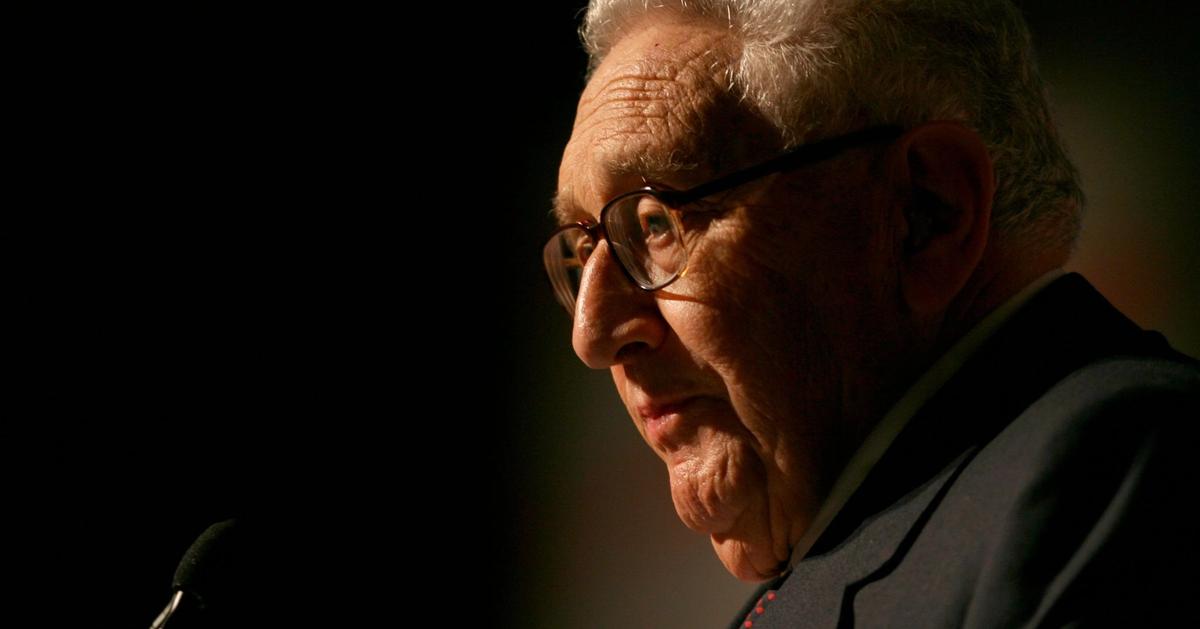
The late Henry Kissinger initially made his name as an academic writing about nuclear arms control during the Cold War, and latterly forged his reputation as the architect of US-China detente.
In his final years, however, Kissinger was fixated on what he believed to be an even greater danger: For the first time in human history, he observed, a technology — self-learning machines — could potentially target anything, anywhere, with any kind of destruction, making the world “100% vulnerable.”
He had become an AI doomer.
uncertain
He → make → destruction
And he pleaded for the US and China to open talks to avoid “catastrophic consequences.”
asserted
US → plead → consequences
The template would be nuclear arms control agreements with the Soviet Union, which he himself negotiated.
asserted
he → negotiate → which
Alas, Kissinger may have been uncannily prescient about technology and its impact on global power, but his prescriptions on how to avert AI disaster haven’t aged well.
uncertain
prescriptions → avert → disaster
As US President Donald Trump prepares for a summit this month with Chinese leader Xi Jinping, Cold War analogies have become pointless — and the reasons why are instructive.
asserted
reasons → prepare → Jinping
Beijing refuses to consider nuclear arms-limitation talks for precisely the reasons it would balk at joining the US in slowing AI progress, or “pacing the frontier” in tech jargon.
asserted
it → refuse → jargon
The US has many more nuclear warheads.
asserted
US → have → warheads
It also has at least a six-month lead in AI models, and vastly more compute.
asserted
It → have → models
From Beijing’s perspective, restraint in both domains would only lock in Washington’s advantages, leaving China open to bullying and blackmail.
asserted
restraint → lock → bullying
No Chinese leader would perform that kind of kowtow.
asserted
leader → perform → kowtow
For similar reasons, China spurns guardrails.
asserted
China → spurn → guardrails
Moscow and Washington had elaborate protocols to avoid inadvertent escalation during the Cold War, but Beijing thinks they would simply encourage US recklessness: The US and China can’t even agree on “rules-of-the-road” to prevent accidents involving ships and planes in geopolitical flashpoints, like the South China Sea, from spiraling into armed conflict.
asserted
US → have → conflict
Some analysts argue that the Obama administration set a hopeful precedent on AI cooperation by coaxing China to join the Paris Climate Agreement in 2016.
asserted
administration → argue → 2016
In fact, China had its own powerful reasons to sign up for climate action, not least a public revolt against killer smog blanketing its megacities, and a security imperative to swap out imported oil for home-grown green technologies.
asserted
China → have → technologies
On the present trajectory, the US and China are hurtling toward the very calamity that Kissinger warned about.
asserted
Kissinger → hurtle → that
In the run-up to next week’s meeting, he’s framed the stakes in zero-sum terms.
asserted
he → frame → terms
“We’re leading China in AI,” he told reporters over the weekend.
asserted
he → lead → weekend
“And frankly, I want to keep it that way because whoever wins AI, wins.”
asserted
wins → want → AI
Scott Bessent, the US Treasury Secretary who’s preparing the summit, put it even more starkly, warning that if the US loses the AI race to China, “there is no day after tomorrow.”
asserted
US → prepare → tomorrow
This is classic game theory that calls to mind the chilling 1950s debates over second strikes and counterforce.
asserted
that → call → strikes
Both sides have a clear interest in slowing the development of the most advanced AI models — the Hugging Face attack was a wake-up call in the US; China has been confronted with the prospect of rogue agents taking over WeChat, its ubiquitous chat and payments platform.
asserted
agents → have → WeChat
But they don’t trust each other enough to do so.
asserted
they → trust → other
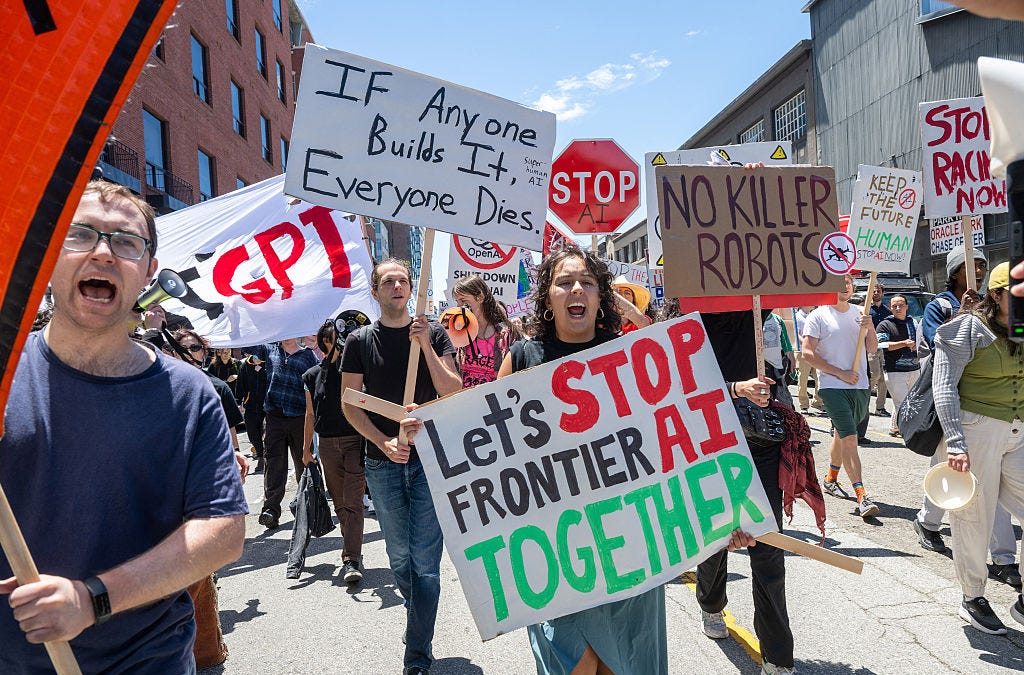
Silicon Valley labs assume that if they pause, China will race ahead anyway.
asserted
China → assume → ?
In an interview with The Economist in 2023, just before his 100th birthday, Kissinger warned that the US and China had five to 10 years to avoid an AI disaster.
asserted
US → warn → disaster
The clock is ticking.
asserted
clock → tick → ?
But, for now at least, neither side is watching the dials.
asserted
side → watch → dials
 The Aporia