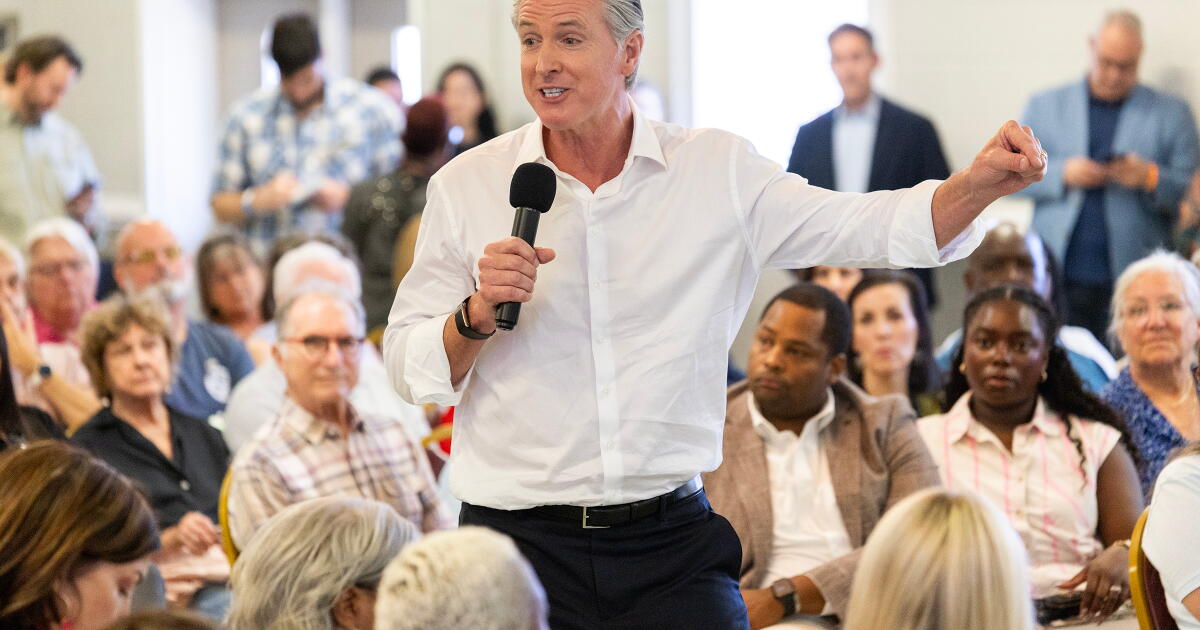
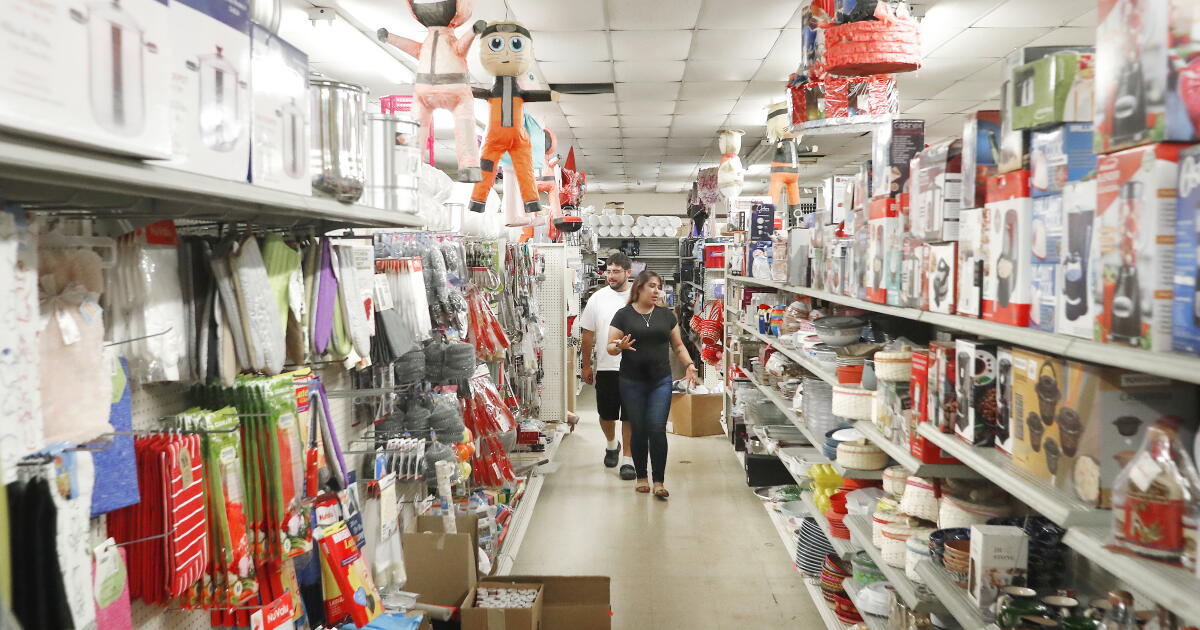
With Senate majority up for grabs, candidates fight for ‘kingmaker’ voters
-
asserted
candidates → fight → voters
Analysts predict that Democrats are on track for the House majority.
asserted
Democrats → predict → majority
A Gallup poll found that 45% of American adults identify as political independents, a record high.
asserted
% → find → independents
With the midterm elections just over three weeks away, the fight for control of the U.S. Senate is intensifying in battleground states, as Democrats push into red regions and Republicans pour money into key contests.
asserted
Republicans → intensify → contests
Campaigns are entering a crucial stretch for persuading the independent voters who will probably determine outcomes in swing races.
asserted
who → enter → races
Nearly all of the most competitive Senate races are in states with significant swaths of people unaffiliated with either major party — the “kingmakers” in these high-stakes midterms, said Jeremy Gruber, an independent-voting expert.
asserted
Gruber → say → midterms
“Independent voters are going to be deciding this election in every respect,” said Gruber, senior vice president of Open Primaries, an organization that advocates for states to open primary elections to unaffiliated voters.
asserted
states → go → voters
The urgency around courting nonaligned voters has been on display at recent debates, in ads flooding the airwaves and in the campaign money pouring into key states.
asserted
urgency → court → states
For Republicans, it has become an effort to put distance between themselves and President Trump; for Democrats, it’s often a rhetorical shift toward the center and away from the far left.
asserted
it → become → left
In Iowa, Republican Ashley Hinson used a Wednesday night debate to emphasize her willingness to break with Trump.
asserted
Hinson → use → Trump
In Kansas, Democrat Adam Hamilton is circulating a video in which he describes himself as both liberal and conservative.
asserted
he → circulate → himself
In Alaska, a GOP-backed ad blitz launched last week aims to persuade voters that Democrat Mary Peltola isn’t independent-minded.
asserted
Peltola → back → voters
Though many unaffiliated voters have made up their minds, those who remain undecided will begin making decisions soon, as mail ballots go out and early voting begins in some states.
asserted
voting → make → states
“For Republicans who are running behind and are looking at a potentially devastating midterm election performance, what they really need to do is target the independents who lean Republican,” said Karen Kedrowski, an Iowa State University political scientist.
asserted
Kedrowski → run → Republican
“For Democrats in some place like Iowa ... what they need to do is make it seem safe [to independents] to vote for a Democratic candidate.”
asserted
it → need → candidate
Reflecting the complex electoral balance, most Republicans have attempted to separate themselves without naming any firm difference with the president.
asserted
Republicans → reflect → president
Unaffiliated constituents have long been key to victory in swing states, particularly where races are traditionally decided by small margins.
asserted
races → decide → margins
They have been viewed as particularly persuadable this year, as public dissatisfaction with Trump’s economic policies puts the votes of swing voters who backed him in 2024 up for grabs.
asserted
who → view → grabs
Forecasters predict that Democrats are on track for the House majority and could hold a majority of gubernatorial seats for the first time since 2010.
uncertain
Democrats → predict → 2010
Though Senate control remains a toss-up, Democrats’ chances are viewed by forecasters to have significantly improved since the summer.
asserted
chances → remain → summer
A set of New York Times/Siena polls reported last week showed Democratic candidates for the Senate ahead in Texas, Michigan, Alaska and Ohio and neck-and-neck in Kansas and Iowa — all states Trump carried in 2024.
asserted
Trump → report → 2024
Republicans, meanwhile, are feeling increasingly bullish about their chances in Maine, New Hampshire and Minnesota, all states that went blue in the last presidential election.
asserted
that → feel → election
Republicans hold a significant fundraising advantage, however, and party donors are pouring money into key races, hoping the spending can cut into the Democrats’ edge.
asserted
spending → hold → edge
By September’s end, GOP advertisers had more than doubled their spending compared with August, outstripping Democrats, according to tracker AdImpact.
uncertain
advertisers → double → AdImpact
Among the nine Senate races considered the tightest by forecasters, Republicans have outspent Democrats in all, AdImpact reported.
asserted
AdImpact → consider → Democrats
But on Friday, the Cook Political Report, a leading election forecaster, moved 18 House races in Democrats’ direction, saying that heavy ad spending by Republicans has not begun to move the needle in their favor.
asserted
spending → lead → favor
Democrats view themselves as in their “strongest position yet” to win the majority, Sen. Kirsten Gillibrand (D-N.Y.), who chairs the Democratic Senatorial Campaign Committee, said in a statement last week.
asserted
who → view → statement
“In this final stretch of the election, Democrats will continue to vigorously campaign and fight for every vote across the expanded map,” Gillibrand said.
asserted
Gillibrand → continue → map
Republicans are confident about their ability to persuade voters in key states, said Bernadette Breslin, a spokesperson for the National Republican Senatorial Committee.
asserted
Breslin → persuade → Committee
“Republicans will defend the Senate majority across key battlegrounds that have trended reliably red,” Breslin said, “with candidates like Mike Rogers [in Michigan] and Roger Marshall [in Kansas] winning over independents by exposing their Democratic opponents’ radical, unaffordable agendas.”
asserted
candidates → defend → agendas
Along with the decisions of independent and swing voters, the midterm outcomes could also hinge on the level of turnout within each party, analysts say.
uncertain
analysts → hinge → party
If a portion of the party faithful stay home in a given place — for instance, disillusioned conservatives in Kansas or frustrated Black Democrats in Michigan — that could swing individual races, analysts said.
uncertain
analysts → stay → races
The number of independent voters reached a record high this year, with 45% of American adults identifying as political independents in Gallup polling.
asserted
% → reach → polling
The trend is partly driven by majorities of millennial and Gen Z voters choosing to be unaffiliated with either party, according to Gallup research.
uncertain
trend → drive → research
Such voters make up a majority in Alaska and between 30% and 40% of all registered voters in Maine, Iowa, New Hampshire, North Carolina and Ohio.
asserted
voters → make → Maine
They account for about 29% in Kansas and about 16% in Texas and Michigan, according to state data compiled by the Independent Voter Project.
uncertain
They → account → Project
Across recent polls, independent voters have favored Democrats and expressed dissatisfaction with Trump.
asserted
voters → favor → Trump
In a late September poll from Emerson College Polling, 66% of independents said Trump has done worse than expected during his second term in office.
asserted
Trump → say → office
In Texas, Democrat James Talarico led Republican Ken Paxton among independents by 32 points in a September poll by Texas Public Opinion Research.
asserted
Talarico → lead → Research
The Democratic candidate in Ohio, Sherrod Brown, led Republican Sen. Jon Husted by 27 points among independents in a CNN poll released Thursday.
asserted
candidate → lead → poll
…and 18 more, not listed.
 The Aporia