South Korea recalled its ambassador to Ukraine on Wednesday due to Kyiv's public disclosure of the repatriation of two North Korean prisoners of war. Seoul claims this endangered the soldiers' families in North Korea, while Ukraine denies breaking any confidentiality agreement and considers it a diplomatic misunderstanding. Additionally, reports indicate that South Korean ports shipped over 176,000 tonnes of fuel oil to Russia between July and August, raising concerns about aiding Russia's energy needs amid its invasion of Ukraine.
Written locally by qwen2.5:14b on 2026-10-08,
using this article's own text rather than the other coverage of the
same event (that is the story summary below).
Story summary
In January 2025, Ukraine captured two North Korean soldiers fighting alongside Russia in the conflict. These soldiers expressed a desire to move to South Korea, and after negotiations, they were transferred secretly to Seoul in September 2025. The situation escalated when Ukrainian President Volodymyr Zelensky publicly disclosed their transfer during his speech at the U.N. General Assembly, which was meant to be confidential. This disclosure put the soldiers' families back in North Korea at risk and complicated diplomatic relations on the Korean Peninsula.
In response, South Korea's President Lee Jae Myung accused Ukraine of breaching a confidentiality agreement aimed at protecting the soldiers' families from retaliation by the North Korean regime. The South Korean government recalled its ambassador to Ukraine as tensions escalated over this breach. While Kyiv initially denied there was an official non-disclosure agreement, it later acknowledged that secrecy had been requested by both sides but contended no formal pact existed.
Despite some initial attempts at resolving the misunderstanding through diplomatic channels, South Korea decided on a more confrontational approach by recalling its ambassador to Ukraine as of mid-October 2025. Both countries have expressed hope for continued dialogue and resolution of outstanding issues, though concrete steps remain unclear.
Written for “South Korea Ukraine Diplomatic Row POWs” on 2026-10-08,
grounded in this article and the 5 other(s) covering the same event.
Why this leaning score
The model judged this article politically coded and scored it -0.35, but every quote it verified points right, so the score is not published.
Written under an earlier scoring contract, which gave a paragraph
rather than checkable quotes. Re-analysing this article replaces it.
Leaning score withheld for article 65467: score contradicts its own evidence · logged 2026-10-08
Seoul said Kyiv's public disclosure of the repatriation of two North Korean prisoners endangered their families in North Korea, where relatives of those who fall into enemy hands face punishment.
asserted
who → say → punishment
Ukraine has rejected South Korea's accusations.
asserted
Ukraine → reject → accusations
South Korea recalled its ambassador to Ukraine on Wednesday over Kyiv's public disclosure of the repatriation of two North Korean prisoners of war, in a continued public dispute between the two countries.
asserted
Korea → recall → countries
Seoul's foreign ministry announced it was recalling ambassador Park Ki-chan, citing the unauthorised disclosure of information about the handover.
asserted
it → announce → handover
The ministry said it hoped to resolve outstanding issues through continued consultations and that the South Korean embassy in Kyiv would remain open.
asserted
embassy → say → Kyiv
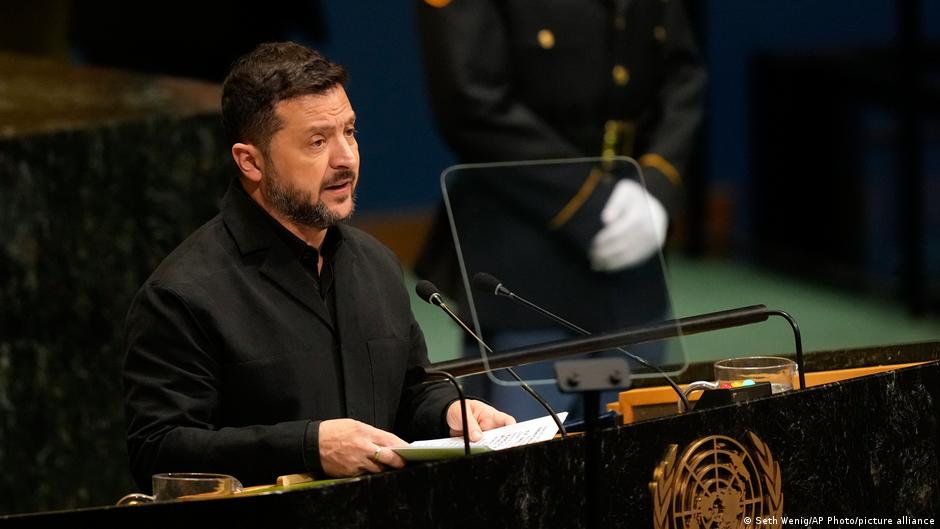
The dispute began on 23 September, when Ukrainian President Volodymyr Zelenskyy stated at the UN General Assembly that North Korean soldiers captured fighting on Russia's side had been repatriated.
asserted
soldiers → begin → side
Seoul argues the disclosure endangered the soldiers' families in North Korea, where the regime is known to punish the relatives of defectors and those who fall into enemy hands.
asserted
who → argue → hands
Ukraine rejected the accusations.
asserted
Ukraine → reject → accusations
Zelenskyy's adviser Dmytro Lytvyn said at the end of September that no confidentiality agreement existed.
asserted
agreement → say → September
"There was no such agreement, that is not true.
asserted
that → be → ?
And it would be wrong to conceal what happens to particular prisoners," he wrote on social media.
asserted
he → conceal → media
Ukrainian Foreign Minister Andrii Sybiha described it as a diplomatic misunderstanding and expressed hope for a swift resolution.
asserted
Sybiha → describe → resolution
South Korean President Lee Jae-myung had previously warned of "additional measures" if Kyiv did not acknowledge a breach of a confidentiality agreement and issue a public apology.
asserted
Kyiv → warn → apology
On Tuesday, South Korean Foreign Minister Cho Hyun said Seoul had received an apology from Ukraine, but it fell short of what his country expected.
asserted
country → say → what
Reports indicate that South Korean ports shipped more than 176,000 tonnes of fuel oil, mostly diesel, to Russia in July and August, based on port documents and vessel-tracking data published by The Guardian.
asserted
ports → indicate → Guardian
Seven tankers, three of which are subject to UK and EU sanctions, made 14 voyages over the two-month period, according to reports.
uncertain
three → make → reports
Vladyslav Vlasjuk, Ukraine's presidential envoy on sanctions policy, said the timing was no coincidence.
asserted
timing → say → policy
"These deliveries began precisely when Ukrainian strikes on Russian oil refineries reduced processing volumes and caused a fuel shortage in the Russian Federation.
asserted
strikes → begin → Federation
In other words, imports from South Korea effectively helped Russia offset the consequences of losing its own refining capacity," he wrote on social media.
asserted
he → help → media
Kyiv's reaction came despite Seoul joining the coalition of countries that imposed enhanced export controls on Russia after its full-scale invasion of Ukraine in early 2022.
asserted
that → come → 2022
In 2024, South Korea expanded its list of controlled goods to more than 1,400 items and tightened restrictions on so-called Common High Priority Items, components Russia procures through third countries for use in missiles, drones and other weapons.
asserted
Russia → expand → missiles
Seoul has also sanctioned Russian ships, companies and individuals involved in military cooperation with North Korea.
asserted
Seoul → sanction → Korea
In response to reports, South Korea's foreign ministry said Seoul "supports and is actively participating in global efforts to end the war in Ukraine and restore peace."
asserted
Seoul → say → peace
It declined to comment on specific shipments or the arrival of sanctioned vessels, saying the country strictly observes its own export-control measures against Russia.
asserted
country → decline → Russia
 The Aporia