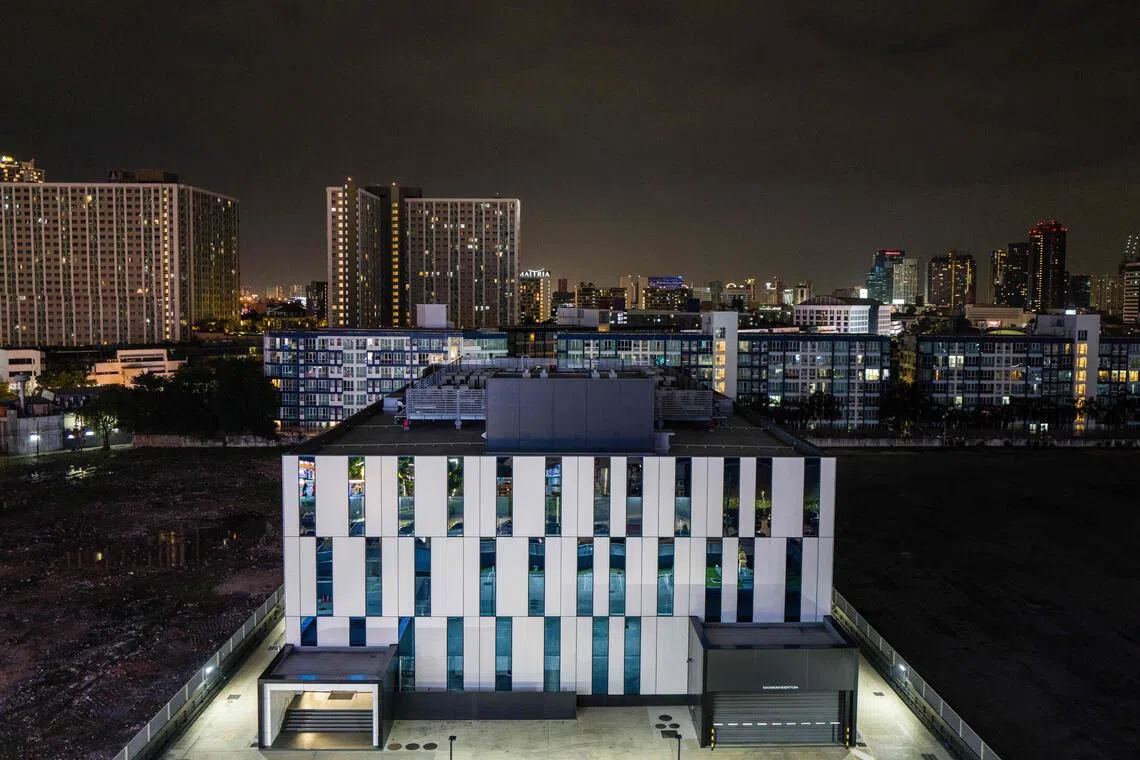
Asian data center boom faces backlash

Semafor · collected 2026-09-06 · by Brendan Ruberry
Read the original at Semafor ↗

Summary

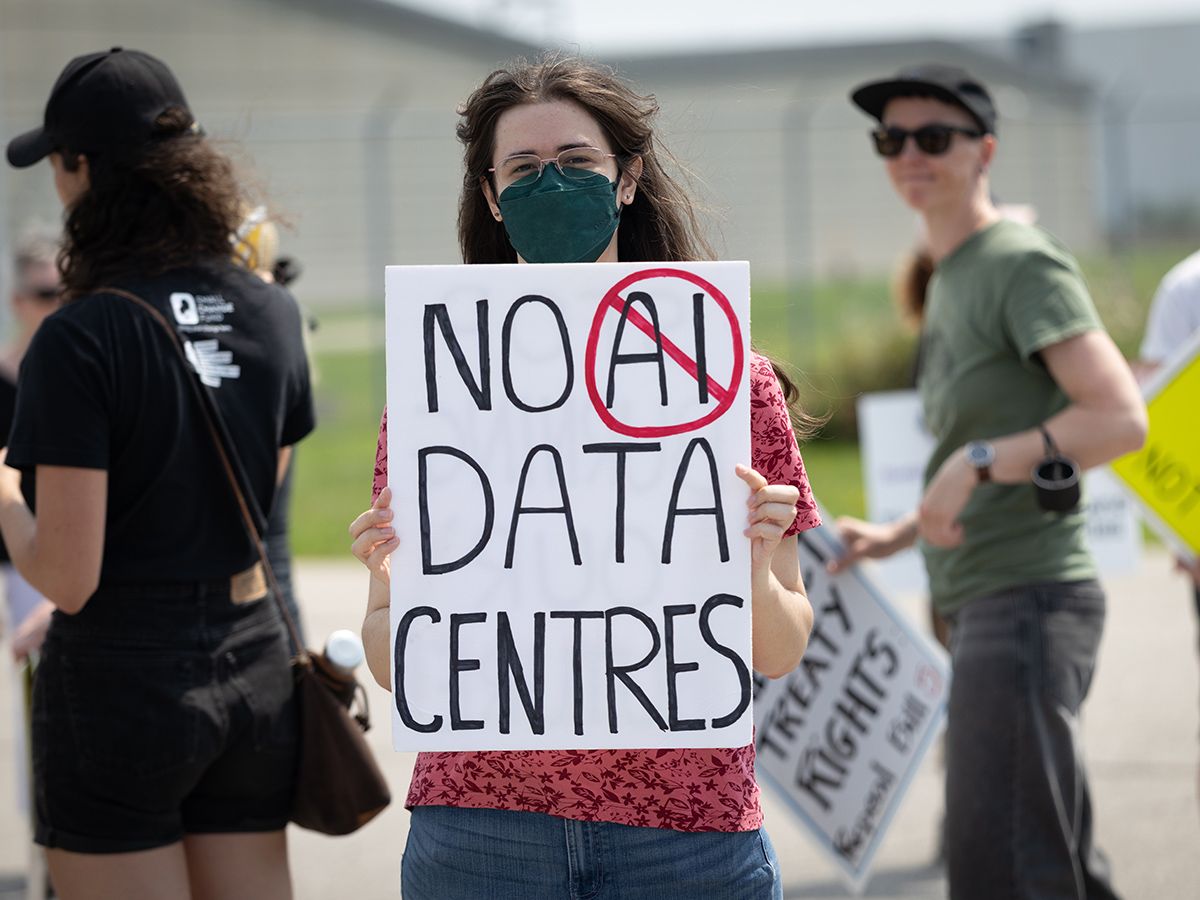
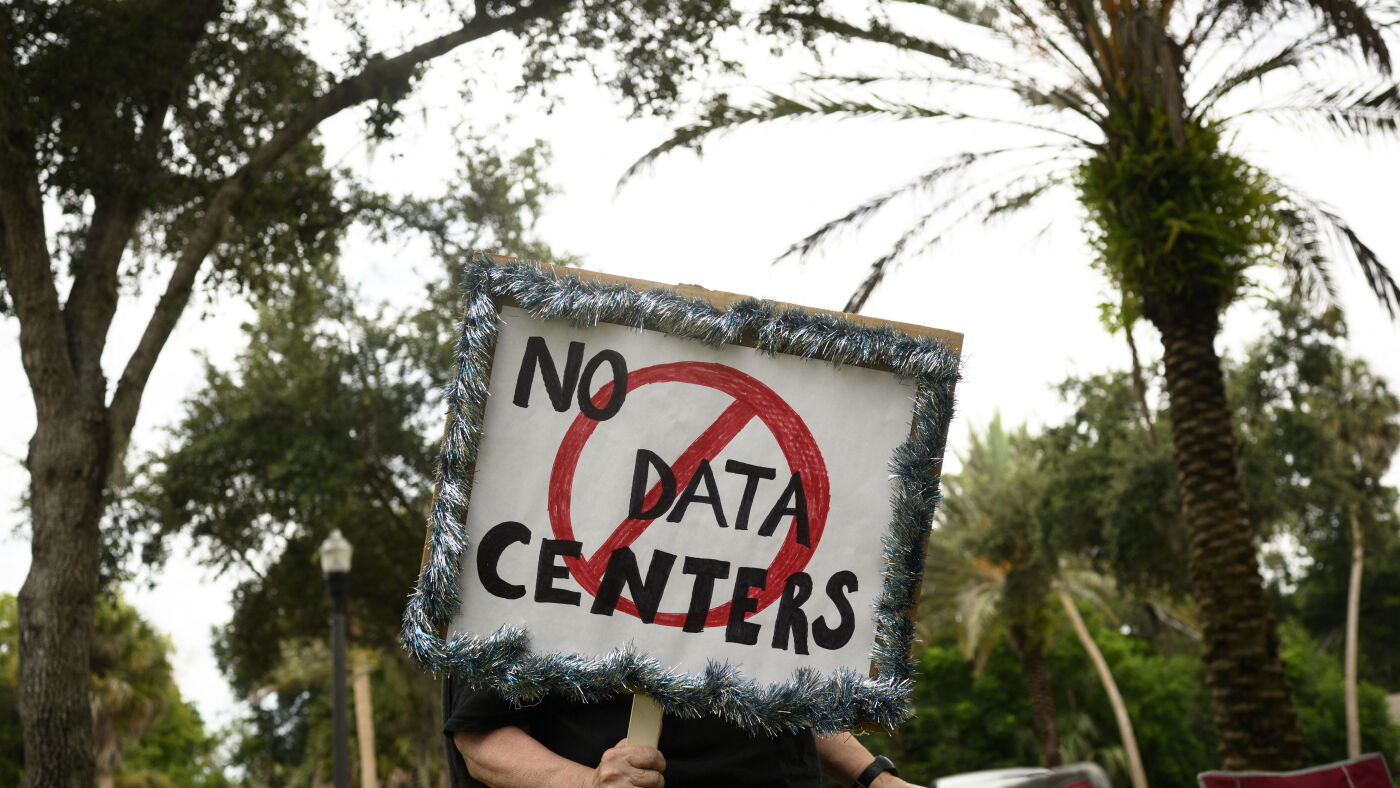
Governments across Asia are pushing for a surge in data center development to capitalize on the region's AI investment boom, but this effort is facing opposition from local communities concerned about environmental and health impacts. The backlash has led companies to redirect investments to areas with less resistance. Data center demand remains strong in the region, according to an analyst, but issues arise when developers fail to engage with local communities. Lenders have provided nearly $29 billion in funding for data centers since the start of the year, but are becoming more selective in their investments.
Written by the local model on 2026-09-07, using this article's own text rather than the other coverage of the same event (that is the story summary below).

Signals How these are calculated →

Claims extracted
5
claim-shaped sentences
Uncertain
0%
0 of 5 hedged
Leaning
Leans left
of the writing, not the subject
Publisher trust
96.2
red-flag proxy, not a credibility rating
Outlets on this story
1
Technology
Narrative spread
1
articles carrying this framing
Analyzed 2026-09-07 · how these are computed

AI analysis (generated at analysis time, not now)

Story summary

In recent months, there has been a growing backlash against the rapid expansion of data centers in Asia, particularly in India and Australia. Governments had encouraged this growth in an effort to capitalize on the boom in AI investment, but local residents have raised concerns about the environmental and health impacts of these large facilities. Despite these concerns, demand for data center space remains high, with companies simply shifting their investments to areas where they are less likely to face opposition. The financial costs of building these centers are also becoming a concern, as lenders have provided nearly $29 billion in funding since the start of the year, but are now being more selective about which projects to support.
Written for “Asian Data Center Expansion” on 2026-09-07, grounded in this article and the 0 other(s) covering the same event.
Why this leaning score
The article's own words the score was based on. Each is quoted verbatim and was checked against the article text before being stored, so you can find it in the original.
Score -0.35 Confidence high
Leaning score -0.35 for article 6310 (high confidence, 1 verified quote) · logged 2026-09-07

Story

📰 Asian Data Center Expansion
Technology · 1 article(s) covering the same event. This is the one the site leads with.

How this is being covered How these are calculated →

Article leaning vs. publisher reliability
Source leaning vs. consistency

Compared with similar articles

This article reads leans left and hedges 0% of its claims. Each row says how that neighbour differs.
Why does everyone hate data centers? different event · 100%
Silver Bulletin
⚖️ Leans left 🔴 4% hedged 26 of 608
“Article A discusses a personal interest and potential disruption of society by AI, while Article B reports on backlash against data center buildouts in Asia due to environmental and health concerns”
World & Nation
⚖️ Leans left 🔴 12% hedged 8 of 64 📰 publisher trust 95
“Article A focuses on backlash against data centers in California and its impact on midterms, while Article B covers backlash against data centers across Asia, making them two separate events.”
NBC News Top Stories
⚖️ leaning not scored 🔴 8% hedged 3 of 39 📰 publisher trust 95
“Article A refers to a local issue in Iowa, while Article B describes a broader regional trend in Asia, with no mention of a shared specific event or incident.”
News - South China Morning Post
⚖️ Centre further right than this 🔴 25% hedged 1 of 4 📰 publisher trust 94
“The articles cover different topics, with Article A discussing the economic competitiveness of Chinese AI firms and Article B addressing backlash against data center construction in Asia.”
NBC News Top Stories
⚖️ Leans left 🔴 9% hedged 4 of 46 📰 publisher trust 95
“The articles cover a different region and policy, one mentioning an Iowa county moratorium and the other discussing Asian data center buildout in general”
Semafor
⚖️ leaning not scored 🔴 8% hedged 2 of 24 📰 publisher trust 96
“The two articles cover different aspects of a related topic, namely the data center boom, but describe distinct events and locations.”
Washington Examiner
⚖️ Leans strongly right further right than this 🔴 3% hedged 1 of 31 📰 publisher trust 96
“Article A discusses Americans' opposition to AI data centers, while Article B reports on backlash against data center construction in Asia.”
The Standard
⚖️ Leans strongly left further left than this 🔴 0% hedged 0 of 27 📰 publisher trust 96
“Article A refers to a protest in Larbert, Scotland against an AI data centre development, while Article B reports on a broader trend of backlash against data centre developments in Asia, with no mention of the specific event in Larbert”
News - South China Morning Post
⚖️ Leans left 🔴 27% hedged 3 of 11 📰 publisher trust 94
“Article A specifically mentions Thailand suspending the building of 49 data centres, while Article B talks about backlash against data centre buildouts in Asia without referencing a specific country or project”
Noahpinion
⚖️ Leans left 🔴 6% hedged 4 of 67
“Article A discusses a proposed pause on data center construction, while Article B reports on backlash against existing data center buildout in Asia”

Publisher

Semafor · 117 article(s) · 0 correction(s) detected
SignalValueWeight
Correction rate 0.000 0.4
Uncertainty density 0.077 0.25
Assertive mismatch rate 0.000 0.35
No corrections detected for this publisher. That may mean careful reporting, or simply that nothing has been checked.

Who wrote this

Brendan Ruberry
13 article(s) here · 0 carrying a prediction
🔮 While AI slop is worth cleaning up, Thompson said he fears “AI-writing witch hunts would be an unwelcome addition to online life.”
2026-09-06 · assertive framing · Textual sleuths fight AI slop with Pangram
🔮 Uber announced Wednesday that it will axe 10% of its global corporate workforce in its biggest cuts since the pandemic, as the ride-sharing firm contends with the threat from robotaxis.
🔮 Already grappling with the fallout of the Hugging Face incident, OpenAI reportedly declined to disclose the May event, raising new questions about transparency and oversight of the rapid development of frontier AI.
2026-09-06 · mixed framing · OpenAI implicated in another hack
🔮 Women accounted for 98% of the 162,000 jobs the US added in August, an unprecedented figure that could point to broader labor market shifts.
2026-09-06 · speculative framing · Women account for nearly all new US jobs in August
🔮 Russia’s Vladimir Putin suggested Thursday that a settlement to end the war was possible, while Ukraine predicted a “new dynamic” in peace efforts, marking a notable shift in rhetoric that could open a window for diplomatic progress.
2026-09-06 · mixed framing · Russia, Ukraine eye diplomacy effort
🔮 A persistent weakness in China’s growth model, consumer spending weakened in July; Beijing rolled out new loan interest subsidies to try to spur demand — though ING analysts suggested their impact would be “relatively marginal.”
🔮 Astra is the startup’s first to cross the “critical” cybersecurity capability threshold, OpenAI said, and will be initially limited to businesses to allow them to address vulnerabilities.
2026-09-06 · assertive framing · OpenAI begins phased rollout of GPT-6 Astra model
🔮 Both Waller and the New York Fed President John Williams suggested tariffs and war-related energy spikes’ inflationary effects were temporary and fading, but “there’s no clear signs right now” whether existing policy will bring inflation down to target, Williams said.
2026-09-06 · mixed framing · US Fed Governor Waller floats September rate hold
Also by Brendan Ruberry
Nothing else under this byline is closely related to this article, so these are simply their most recent.
All 13 articles by Brendan Ruberry →

Topics

Australia Barclays Bloomberg India Nikkei

Subjects

Australia GPE · 1× Barclays ORG · 1× Bloomberg ORG · 1× India GPE · 1× Nikkei ORG · 1×

Narrative

The buildout in Asia is running into financial limits as well: Lenders have dished out nearly $29 billion to fund data centers since the start of the year, but are now starting to grow more selective, Barclays bankers told Bloomberg.
framing: assertive · carried by 1 article(s) · first seen 2026-09-07
2026-09-07 · Semafor
Asian data center boom faces backlash · assertive framing

Claims (5 extracted, 0 hedged)

Asia’s rapid data center buildout is sparking local pushback, as governments’ urge to capture value in the AI investment boom runs into constituents’ environmental and health concerns. asserted
urge → spark → concerns
Backlash is growing from India to Australia, Nikkei reported, leading not to less demand overall but redirected investments, as companies shift to areas with less opposition. asserted
companies → grow → opposition
“Demand is still red-hot across pretty much every market in the region,” one analyst said. asserted
analyst → say → region
“Where you’ll find issues is where [developers] don’t engage with the community. asserted
developers → find → community
The buildout in Asia is running into financial limits as well: Lenders have dished out nearly $29 billion to fund data centers since the start of the year, but are now starting to grow more selective, Barclays bankers told Bloomberg. asserted
bankers → run → Bloomberg
💬 Give feedback
🕘 History 🎫 Support