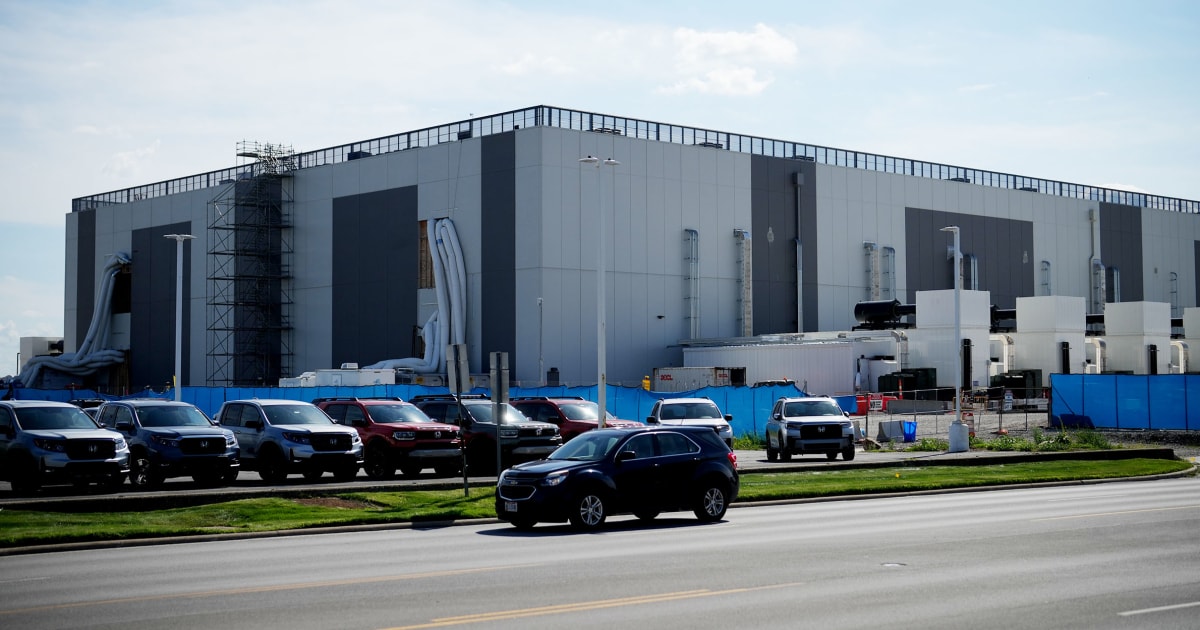
AI data centres are less thirsty now, tech giants say

The Straits Times World News · collected 2026-09-07 · by The Straits Times
Read the original at The Straits Times World News ↗

Summary

Tech giants such as Microsoft, Amazon Web Services (AWS), and Meta claim to have solved the water consumption issue at their AI data centres by implementing closed-loop cooling systems, which use no net water loss. According to Nvidia's June report, its DSX system can eliminate almost all water consumption at some facilities. Industry estimates suggest that data centres consumed 222 billion litres of water worldwide for cooling in 2025 and could nearly triple to 644 billion litres by 2030 if adaptive measures are not taken. The companies argue that using closed-loop systems allows them to reduce water use without increasing energy consumption, although some experts warn that there is still a trade-off between water and power usage.
Written by the local model on 2026-09-07, using this article's own text rather than the other coverage of the same event (that is the story summary below).

Signals How these are calculated →

Claims extracted
26
claim-shaped sentences
Uncertain
27%
7 of 26 hedged
Leaning
Leans right
of the writing, not the subject
Publisher trust
94.5
red-flag proxy, not a credibility rating
Outlets on this story
2
Environment
Narrative spread
1
articles carrying this framing
Analyzed 2026-09-07 · how these are computed

AI analysis (generated at analysis time, not now)

Story summary

OpenAI CEO Sam Altman has made a statement downplaying concerns about the water usage of data centers like ChatGPT, saying that 38,000 queries use only as much water as it takes to grow a single almond in California. This comparison was made during an appearance on the "Sources" podcast, where Altman acknowledged that the industry's water usage is a concern, but argued that consumers' own actions have a greater impact on water consumption. He noted that modern data centers no longer use evaporative cooling methods, which were once criticized for their high water usage. In contrast, data centers globally consumed 222 billion liters of water in 2025, according to consultancy Rystad Energy, and this number is expected to triple to 644 billion liters by 2030 without adaptive measures.

Written for “Environmental Impact of AI” on 2026-09-07, grounded in this article and the 1 other(s) covering the same event.
Why this leaning score
The article's own words the score was based on. Each is quoted verbatim and was checked against the article text before being stored, so you can find it in the original.
Score +0.35 Confidence medium
Leaning score +0.35 for article 6489 (medium confidence, 3 verified quotes) · logged 2026-09-07

Story

📰 Environmental Impact of AI
Environment · 2 article(s) covering the same event. This is the one the site leads with.

How this is being covered How these are calculated →

Article leaning vs. publisher reliability
Source leaning vs. consistency

Compared with similar articles

This article reads leans right and hedges 27% of its claims. Each row says how that neighbour differs.
New York Post
⚖️ Leans right 🔴 14% hedged 4 of 28 📰 publisher trust 58
“Both articles mention OpenAI CEO Sam Altman addressing concerns over ChatGPT's water usage, implying a recent and likely identical public appearance or statement.”
Why does everyone hate data centers? different event · 100%
Silver Bulletin
⚖️ Leans left further left than this 🔴 4% hedged 26 of 608
“Article A does not mention data centers or AI progress disrupting society, while Article B discusses tech giants' claims that AI data centres are less thirsty for water”
National Post
⚖️ Leans left further left than this 🔴 6% hedged 3 of 52 📰 publisher trust 96
“Article A discusses data centre backlash and moratoriums in Canada, while Article B mentions public anger in the US over water consumption by data centres”
Latest & Breaking News on Fox News
⚖️ leaning not scored 🔴 6% hedged 2 of 35 📰 publisher trust 95
“The articles mention data centers and their role in modern life, but they cover different aspects of this topic: Article A discusses the importance and ubiquity of data centers, while Article B focuses on the environmental impact of water consumption in AI data centers”
NPR Topics: News
⚖️ Leans left further left than this 🔴 9% hedged 4 of 45 📰 publisher trust 58
“Article A discusses political advertising and campaign spending on data centers in various states, while Article B reports on tech giants' efforts to reduce water consumption in data centers, indicating separate topics”
The Standard
⚖️ Leans strongly left further left than this 🔴 0% hedged 0 of 27 📰 publisher trust 96
“Article A reports on protesters calling for a moratorium on AI data centres in Larbert, Scotland, while Article B discusses tech giants' claims that their AI data centre water consumption is solvable, and mentions a specific report from Nvidia but does not relate to the same event or location”
World & Nation
⚖️ Leans left further left than this 🔴 12% hedged 8 of 64 📰 publisher trust 95
“Article A discusses public backlash against data centers on fairgrounds in California, while Article B mentions tech giants' claims that new technology can reduce water consumption at data centers”
The Independent World
⚖️ Leans strongly right further right than this 🔴 15% hedged 12 of 78 📰 publisher trust 58
“Article A discusses President Trump's tweet on data centers and its impact on midterms, while Article B talks about tech giants' efforts to reduce water consumption in data centers”
Washington Examiner
⚖️ Leans strongly right further right than this 🔴 3% hedged 1 of 31 📰 publisher trust 96
“Article A discusses a Gallup survey and general public aversion to data centers, while Article B reports on a specific solution offered by Nvidia to reduce water consumption in data centers”
Latest & Breaking News on Fox News
⚖️ leaning not scored 🔴 14% hedged 3 of 21 📰 publisher trust 95
“Article A mentions protests against AI data centers and Flock cameras, while Article B focuses on tech giants' efforts to reduce water consumption at data centers”

Publisher

The Straits Times World News · 205 article(s) · 0 correction(s) detected
SignalValueWeight
Correction rate 0.000 0.4
Uncertainty density 0.109 0.25
Assertive mismatch rate 0.000 0.35
No corrections detected for this publisher. That may mean careful reporting, or simply that nothing has been checked.

Who wrote this

The Straits Times
134 article(s) here · 1 carrying a prediction
🔮 Raul Castro was indicted in May by a US court for the deaths of four Americans when two small planes belonging to an anti-Castro group were shot down in 1996. He was serving as defence minister at the time.
2026-09-07 · assertive framing · Raul Castro appears on Cuban television
🔮 Hormuz traffic dips to lowest since May after US, Iranian strikes on ships AI generated
🔮 European Commission President Ursula von der Leyen is expected to unveil on Sept 7 a boost in European Union investments in Greenland and closer political ties with the Danish Arctic territory, which US President Donald Trump has insisted should belong to the United States.
🔮 Without adaptive measures, the figure could nearly triple to 644 billion litres by 2030, Rystad estimates.
🔮 US President Donald Trump’s name-changing spree found an unlikely new target on Sept 6 when he suggested that the state of New Mexico could become “New America”.
🔮 US President Donald Trump will pay his respects at the Pentagon rather than in New York, where the attacks by hijacked passenger planes on the World Trade Center towers claimed the largest number of the 2,977 total victims recorded on that day.
2026-09-07 · assertive framing · 25 years on, America seeks to keep 9/11 memories alive
🔮 US Republicans will gather in Dallas, Texas, this week for a two-day convention aimed at convincing voters that Donald Trump is effectively on the ballot in November – even as the deeply unpopular President threatens to become a liability for his own party.
🔮 Pollution from increasingly intense wildfires and heatwaves could undermine global efforts to improve air quality and protect human health, the United Nations’ weather agency said on Sept 7, warning that climate change is making it harder to meet international air quality goals.
🔮 The Boeing 767-300, operated by 21 Air as Prime Air Flight 7598, overshot the runway around 2pm after arriving from Luis Munoz Marin International Airport in San Juan, Puerto Rico, according to the Federal Aviation Administration (FAA). The plane slammed into multiple vehicles near the airport, trapping some people inside, according to Miami-Dade Fire Rescue, which reported heavy flames and smoke when it responded to the incident. Along with the five people who were killed, another five were injured, three of whom were in critical condition, Miami-Dade Mayor Daniella Levine Cava said at a news conference. “We’ll continue to update you as soon as information is confirmed, and tonight our entire community is joined in prayers and grieving for those who are affected,” she said.
🔮 The Federal Aviation Administration said it will investigate the crash.
Also by The Straits Times
Raul Castro appears on Cuban television
2026-09-07 · The Straits Times World News
EU to give Greenland a cash boost amid Trump annexation drive
2026-09-07 · The Straits Times World News
Trump suggests renaming New Mexico state ‘New America’
2026-09-07 · The Straits Times World News
Nothing else under this byline is closely related to this article, so these are simply their most recent.
All 134 articles by The Straits Times →

Topics

AWS Microsoft NEW YORK Nvidia SpaceX

Subjects

Nvidia ORG · 5× AFP ORG · 2× AWS ORG · 2× Microsoft ORG · 2× Rystad ORG · 2× SpaceX ORG · 2× American NORP · 1× NEW YORK GPE · 1× Rystad Energy ORG · 1× the United States GPE · 1×

Narrative

Nvidia’s new method uses a closed-loop cooling system in which liquid flows directly through the servers, as close as possible to the chips, whose temperature can rise above 80 deg C. The problem is that “there’s a pretty direct trade-off between how much water is used and how much energy is used” for temperature control, said Andy Masley, an independent researcher who covers AI and data centres.
framing: mixed · carried by 1 article(s) · first seen 2026-09-07
🔮 Without adaptive measures, the figure could nearly triple to 644 billion litres by 2030, Rystad estimates.
2026-09-07 · The Straits Times World News
AI data centres are less thirsty now, tech giants say · mixed framing

Claims (26 extracted, 7 hedged)

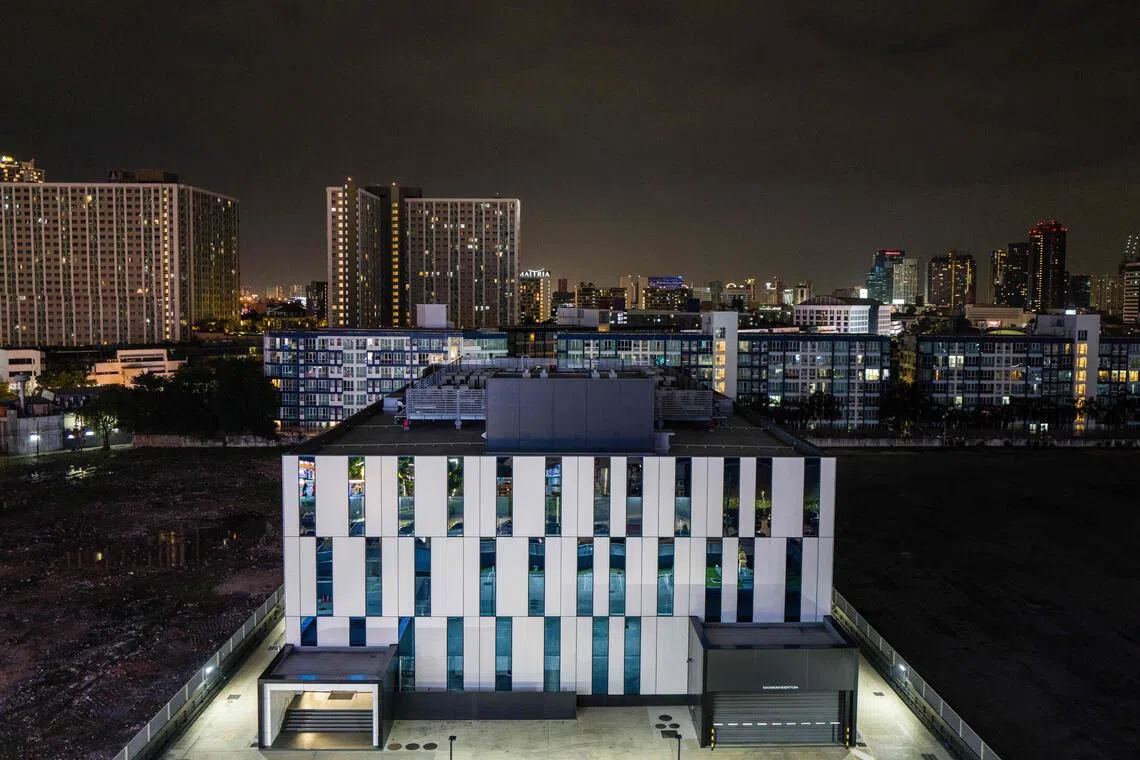
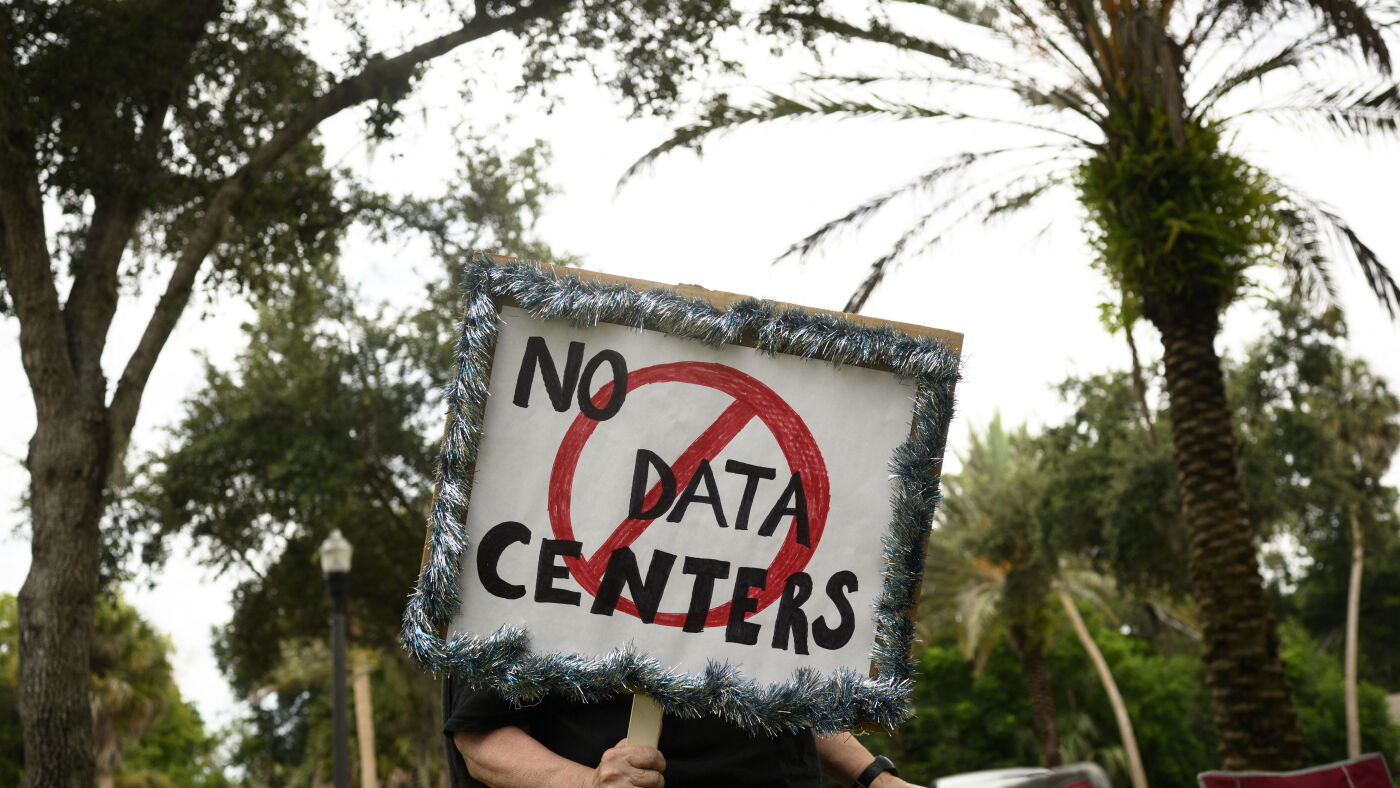
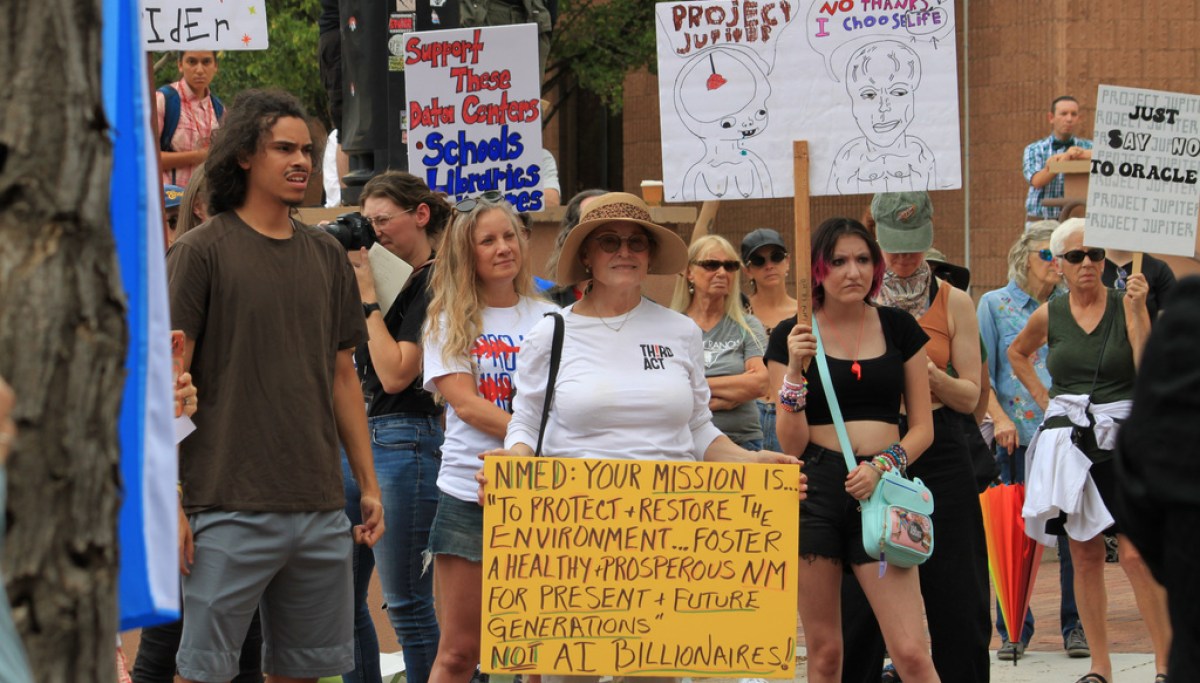
AI data centres are less thirsty now, tech giants say NEW YORK – Data centres are running into a wall of public anger in the United States over their thirst for water and power. asserted
centres → say → water
The tech giants spending billions of dollars on them say the water part, at least, is solvable. asserted
part → spend → them
Data centres are the warehouses full of computer servers that run the internet and, increasingly, artificial intelligence. asserted
that → run → internet
The computers get hot and keeping them cool takes water. asserted
keeping → get → water
American chip giant Nvidia said in a June report that it can eliminate water consumption almost entirely at some facilities when deploying DSX, its newest system for designing and managing AI data centres. asserted
it → say → centres
It is a bold claim and one that the industry is under mounting pressure to make good on. uncertain
industry → mount → pressure
In 2025, data centres consumed 222 billion litres of water worldwide for cooling, according to consultancy Rystad Energy. uncertain
centres → consume → Energy
Without adaptive measures, the figure could nearly triple to 644 billion litres by 2030, Rystad estimates. uncertain
Rystad → triple → 2030
Steps to limit the growth could keep it under double. uncertain
Steps → limit → double
Nvidia’s new method uses a closed-loop cooling system in which liquid flows directly through the servers, as close as possible to the chips, whose temperature can rise above 80 deg C. The problem is that “there’s a pretty direct trade-off between how much water is used and how much energy is used” for temperature control, said Andy Masley, an independent researcher who covers AI and data centres. asserted
who → use → AI
Cutting back on water use usually means more power as the liquid in those sealed pipes still has to be cooled down somehow, usually by blowing air over it – and that takes electricity. asserted
that → cut → electricity
Nvidia gets around some of this by letting the liquid enter the servers warmer than usual, at 45 deg C. Most other closed-loop systems ran at about 32 deg C in 2024, according to the Uptime Institute, which certifies data centres. By starting with warmer water, Nvidia does not need to pump in cooled air year-round. uncertain
Nvidia → get → air
Josh Parker, Nvidia’s head of sustainability, said “simple fans circulating the air” are often enough, although sometimes, a mix of methods is needed. asserted
mix → say → methods
Public relations Microsoft, Amazon Web Services (AWS) and Meta told AFP that they also use closed-loop systems, which they said involve no net water loss. asserted
they → tell → loss
The two cloud computing giants, which have been expanding their already huge data centre footprints, used more water overall between 2022 and 2025, but the water-use efficiency improved by 25 per cent at Microsoft and 37 per cent at AWS, according to their most recent sustainability reports. uncertain
efficiency → expand → reports
There is no industrywide consistency, however, in how companies report data on so-called environmental, social and governance (ESG) efforts. asserted
companies → be → efforts
Elon Musk’s SpaceX, now a major player in data centres after it acquired his AI company, xAI, has never published an ESG report. asserted
it → acquire → report
In June, ratings agency MSCI gave SpaceX its lowest ESG score. asserted
MSCI → give → score
Ren Shaolei, an engineering professor at the University of California, Riverside, said that “because water is generally much cheaper than electricity”, companies have less incentive to cut water use on cost grounds alone. asserted
companies → say → grounds
There are incentives, Ren said, but they have more to do with public relations amid the growing backlash to data centres across the US. asserted
they → be → US
Another obstacle is that upgrading an older data centre to newer, less thirsty technology is expensive. asserted
upgrading → upgrade → technology
This may matter less than it sounds. uncertain
it → matter → ?
Older data centres are smaller and less powerful than the enormous new ones being built now, so they need less cooling in the first place, said Minh Khoi Le, who leads data centre and hydrogen research at Rystad. asserted
who → build → Rystad
And the water a data centre uses directly is only part of the story. asserted
centre → use → story
Water is used to generate the electricity that powers the data centre and to manufacture its chips and servers. asserted
that → use → chips
In the US, that hidden water use can be twice the amount a data centre consumes on its own. asserted
centre → hide → own

💬 Give feedback
🕘 History 🎫 Support